Support our educational content for free when you purchase through links on our site. Learn more
How to Play Ukulele: 15 Easy Songs & Pro Tips for 2026 🎸

Ready to unlock the joyful world of ukulele playing? Whether you’re a complete beginner or someone who’s struggled to get those chords sounding right, this guide is your ultimate companion. We’ll walk you through everything—from choosing the perfect ukulele size and mastering those essential chords, to conquering the notorious E chord and even fingerpicking like a pro. Plus, we’ve curated 15 beginner-friendly songs that will have you strumming and singing in no time!
Here’s a little secret: many players get stuck early on because they don’t know the right techniques or get frustrated by tricky chords. But with the insider tips and step-by-step instructions we share, you’ll breeze through those hurdles. Curious about how to sing and play simultaneously or which accessories can make your journey smoother? We’ve got you covered. So grab your uke, and let’s make some music!
Key Takeaways
- Ukulele is one of the easiest instruments to learn, thanks to its four strings and simple chord shapes.
- Choosing the right size (soprano, concert, tenor, or baritone) impacts comfort and tone—concert size is often best for beginners.
- Master the basic chords: C, F, G, and Am to play hundreds of songs. Don’t fear the E chord—it’s challenging but conquerable!
- Start with simple strumming patterns like the iconic Island Strum to bring your chords to life.
- Singing while playing is a skill you build gradually—start slow with one strum per bar and add complexity over time.
- Use online lessons, community groups, and quality beginner ukuleles from brands like Kala, Luna, and Cordoba for the best learning experience.
- Regular practice, patience, and proper instrument setup are key to fast progress and lasting enjoyment.
Ready to strum your way to ukulele stardom? Let’s dive in!
Table of Contents
- ⚡️ Quick Tips and Facts to Kickstart Your Ukulele Journey
- 🎶 Ukulele Origins and Evolution: A Strum Through History
- 🎸 An Intro to the Ukulele: Understanding Your Four-Stringed Friend
- 🛍️ Buying Your First Ukulele: Choosing the Perfect Ukulele for Beginners
- 🔧 Ukulele Anatomy and Setup: How to Tune and Maintain Your Ukulele Like a Pro
- 🎼 Mastering Ukulele Chords: The Ultimate Beginner’s Chord Guide
- 🎵 Strumming Patterns and Rhythm: Bringing Your Ukulele to Life
- 🎤 Singing and Playing: How to Accompany Yourself on Ukulele
- 📚 Essential Ukulele Songs for Beginners: 15 Easy Tunes to Practice
- 🎯 Advanced Techniques: Fingerpicking, Hammer-Ons, Pull-Offs, and More
- 🧰 Troubleshooting Common Ukulele Problems: From Buzzing Strings to Fret Issues
- 🎥 Best Online Ukulele Lessons and Resources: Learn Anywhere, Anytime
- 👥 Joining the Ukulele Community: Groups, Forums, and Jam Sessions
- 💡 Tips and Tricks from Ukulele Pros: Insider Secrets to Speed Up Your Progress
- 🎁 Ukulele Accessories You Didn’t Know You Needed
- 🧠 How Playing Ukulele Benefits Your Brain and Wellbeing
- 🎉 Ukulele Myths Debunked: What You Really Need to Know Before You Start
- 🏆 Conclusion: Your Next Steps to Ukulele Stardom
- 🔗 Recommended Links for Ukulele Enthusiasts
- ❓ Frequently Asked Questions (FAQ) About Playing Ukulele
- 📚 Reference Links and Further Reading
⚡️ Quick Tips and Facts to Kickstart Your Ukulele Journey
Alright, future ukulele virtuosos! 👋 So, you’re thinking about diving into the wonderful world of the ukulele? Excellent choice! Here at Guitar Brands™, we’ve seen countless musicians, from seasoned pros to absolute beginners, fall in love with this charming four-stringed instrument. It’s often touted as the easiest instrument to learn, and honestly, we agree! If you’re looking for a comprehensive guide to guitars, you might be surprised how much crossover there is in the joy of playing stringed instruments, but for now, let’s focus on the uke! For more specific ukulele content, check out our dedicated ukulele section: Guitar Brands™ Ukulele.
Here are some quick-fire facts and tips to get your fingers tingling and your spirit soaring:
- Small but Mighty: Don’t let its size fool you! The ukulele packs a punch of joy and can be incredibly expressive.
- Four Strings, Endless Fun: Unlike a guitar’s six strings, the ukulele’s four strings make chords much simpler to grasp initially. Less to worry about, more to play!
- Instant Gratification: You can literally learn your first chord and play a simple song in minutes. No kidding! Will Grove-White, a popular ukulele instructor, even says, “The ukulele is an easy instrument to learn and quickly rewarding.” We couldn’t agree more.
- Portable Party Starter: Take it anywhere! Beach, campfire, living room couch – the ukulele is your go-to companion for impromptu jam sessions.
- Budget-Friendly Entry: You don’t need to break the bank to get a decent beginner ukulele. We’ll dive into this more, but expect to find great options for a reasonable investment.
- Myth Buster: No, you don’t need musical experience. If you can count to four (or even just one!), you can play the ukulele. Seriously, it’s that accessible.
Ready to strum your way to happiness? Let’s get into the nitty-gritty!
🎶 Ukulele Origins and Evolution: A Strum Through History

Ever wondered where this delightful little instrument came from? It’s a tale as rich and vibrant as a Hawaiian sunset! The ukulele, often associated with the sunny shores of Hawaiʻi, actually has its roots much further afield.
The story begins in the late 19th century when Portuguese immigrants arrived in Hawaiʻi, bringing with them instruments like the braguinha (a small, four-stringed instrument similar to a cavaquinho) and the rajão (a five-stringed instrument). These instruments quickly captivated the local population. As Live Ukulele notes, “The ukulele is a four-stringed fretted instrument with origins in Hawaiʻi,” but its direct ancestors are clearly Portuguese.
Hawaiian craftsmen, inspired by these new sounds and instruments, began to adapt them, leading to the birth of what we now know as the ukulele. The name itself is often translated as “jumping flea,” perhaps referring to the quick movement of a player’s fingers across the fretboard, or perhaps to the lively, “jumping” sound it produces. Another popular theory suggests it means “the gift that came here” (uku = gift, lele = to come). Either way, it perfectly captures the instrument’s energetic spirit!
From its humble beginnings, the ukulele quickly became a staple in Hawaiian music and culture, embraced by royalty like King Kalākaua. It then spread to the mainland United States and eventually worldwide, experiencing surges in popularity throughout the 20th century, particularly in the 1920s and again in recent decades. It’s a testament to its enduring charm and accessibility that it continues to capture hearts globally.
🎸 An Intro to the Ukulele: Understanding Your Four-Stringed Friend
So, you’ve decided to embark on this musical adventure! Fantastic! Before you start strumming, let’s get acquainted with your new best friend: the ukulele. It might look like a miniature guitar, but it has its own unique personality and charm.
What Makes a Ukulele a Ukulele?
At its core, the ukulele is a four-stringed, fretted instrument that’s part of the lute family. Its smaller size, nylon (or fluorocarbon) strings, and distinct tuning give it that bright, cheerful, and often “plucky” sound we all love. It’s incredibly forgiving for beginners, making it a fantastic entry point into the world of stringed instruments.
And how do you say it? While in Hawaiʻi, it’s often pronounced “oo-koo-leh-leh,” in the USA and UK, “you-ka-lay-lee” is perfectly acceptable and widely understood. Don’t stress too much about it; just make some music!
The Four Main Ukulele Sizes: Finding Your Perfect Match
One of the first things you’ll notice when shopping for a ukulele is that they come in different sizes. Each size offers a slightly different feel, tone, and playability. Choosing the right one is crucial for your comfort and enjoyment.
Here’s a quick rundown of the main types:
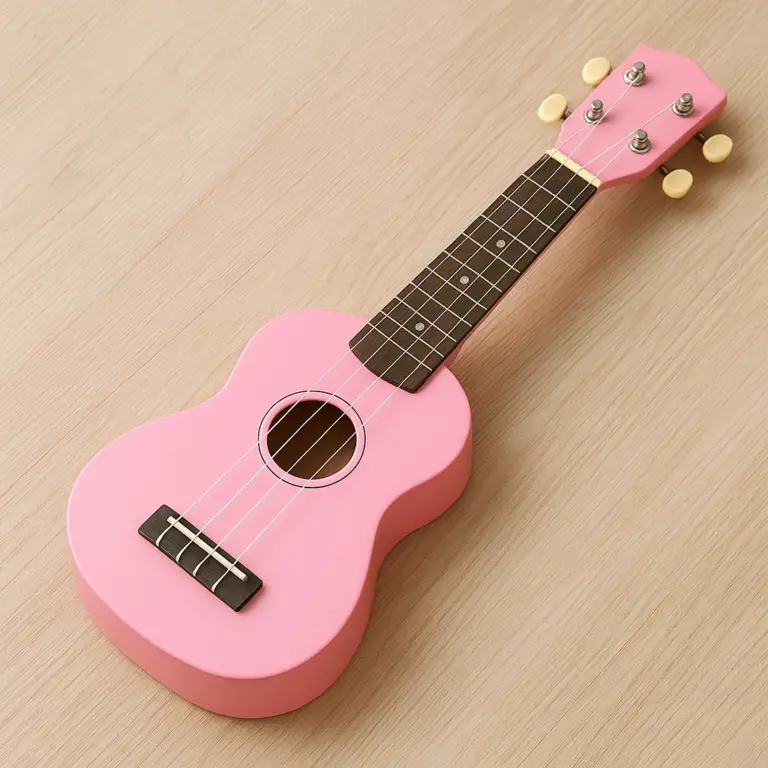
1. Soprano Ukulele 🌸
- Size: The smallest and most traditional size, typically around 21 inches (53 cm) long.
- Sound: Known for its classic, bright, and “plucky” sound. It’s what most people imagine when they think of a ukulele.
- Playability: Shorter scale length means frets are closer together, which can be great for smaller hands but might feel cramped for larger fingers.
- Our Take: A fantastic choice for that authentic, cheerful ukulele sound. If you have smaller hands or want the most portable option, the soprano is a winner.
2. Concert Ukulele 🎶
- Size: A step up from the soprano, usually around 23 inches (58 cm) long.
- Sound: Offers a slightly fuller, warmer tone than the soprano, with a bit more resonance.
- Playability: The slightly longer scale length provides more space between frets, making it more comfortable for many beginners, especially those with average-sized hands.
- Our Take: This is often the recommended size for beginners, and Live Ukulele agrees, stating, “A concert is the middle of the road as far as sizes go.” It strikes a great balance between portability, playability, and tone. It’s also the size our instructor in the featured video uses and recommends for their course!
3. Tenor Ukulele 🎸
- Size: Larger still, typically around 26 inches (66 cm) long.
- Sound: Produces an even richer, louder, and more resonant tone, with excellent sustain. It has a more “guitar-like” feel.
- Playability: The longer scale length and wider fret spacing make it very comfortable for players with larger hands or those transitioning from guitar. Popular among professionals for its versatility.
- Our Take: If you’re serious about performance, want a deeper sound, or have bigger hands, the tenor is an excellent choice. It’s also great for fingerpicking.
4. Baritone Ukulele 🎤
- Size: The largest of the standard ukuleles, around 30 inches (76 cm) long.
- Sound: Has the deepest, most resonant tone, often described as mellow and warm. It’s tuned differently (D G B E), just like the top four strings of a guitar.
- Playability: Feels very much like a small guitar, making it a natural fit for guitarists.
- Our Take: While technically a ukulele, its tuning and sound are quite distinct. If you’re a guitarist looking for a ukulele that feels familiar, or you simply prefer a deeper, richer sound, the baritone is for you. However, be aware that most ukulele chord charts are for GCEA tuning, so you’ll need baritone-specific charts or to transpose.
Here’s a quick comparison table to help you visualize the differences:
| Feature | Soprano Ukulele | Concert Ukulele | Tenor Ukulele | Baritone Ukulele |
|---|---|---|---|---|
| Length (approx.) | 21 inches (53 cm) | 23 inches (58 cm) | 26 inches (66 cm) | 30 inches (76 cm) |
| Tuning | G C E A (standard re-entrant) | G C E A (standard re-entrant) | G C E A (often low G) | D G B E (like guitar) |
| Sound | Bright, plucky, classic | Fuller, warmer, balanced | Rich, loud, resonant | Deep, mellow, guitar-like |
| Fret Spacing | Closest | Medium | Wider | Widest |
| Ideal For | Small hands, portability, traditional sound | Most beginners, balanced feel | Larger hands, professionals, fingerpicking | Guitarists, deep tone lovers |
Ultimately, the best size for you comes down to personal preference. If you can, try out a few different sizes at a local music store to see what feels most comfortable in your hands.
🛍️ Buying Your First Ukulele: Choosing the Perfect Ukulele for Beginners
Alright, you’re hooked! Now comes the exciting part: getting your very own ukulele. This is where many beginners get overwhelmed, but don’t fret (pun intended!). We’re here to guide you through choosing the perfect ukulele for your first strumming adventures.
What to Look For in a Beginner Ukulele
When you’re just starting out, you don’t need a professional-grade instrument. Your main goal is to find something that’s playable, sounds decent, and won’t discourage you.
Here’s what we recommend focusing on:
- Playability: This is paramount! An instrument that’s hard to play will quickly gather dust. Look for:
- Low Action: This refers to the height of the strings above the fretboard. Lower action means less effort to press down strings, making it easier on your fingers.
- Smooth Frets: Run your hand along the neck. Are the fret ends smooth, or do they feel sharp? Sharp frets can be uncomfortable.
- Straight Neck: A warped neck can cause buzzing or make the instrument unplayable.
- Sound Quality: While you won’t get concert-hall acoustics from a beginner model, it should sound pleasant and in tune. Avoid anything that sounds tinny or dead.
- Construction: Look for a solid build. Check for any visible cracks, loose bracing inside, or poorly glued joints.
- Tuning Stability: A ukulele that constantly goes out of tune is frustrating. Good quality tuning pegs (geared tuners are best) are a must.
- Material: Most beginner ukuleles are made from laminate wood (plywood). While solid wood offers superior tone, laminate is more durable and less susceptible to humidity changes, making it a great, affordable choice for beginners.
Our Top Recommendations for Beginner Ukuleles
Based on our experience and consumer insights, here are some brands that consistently deliver quality and value for beginners. Live Ukulele suggests a price range of “$100-200” for beginners, and we generally agree that this sweet spot offers a good balance of quality without overspending.
1. Kala Brand Music Co. 🌟
Kala is a powerhouse in the ukulele world, offering an incredible range of instruments from beginner to professional. Their Makala Dolphin and Waterman series are iconic entry-level choices, while their Kala Learn to Play Starter Kits are practically legendary.
- Design: 9/10 (Classic, often vibrant colors, iconic dolphin bridge on Makala)
- Functionality: 9/10 (Excellent playability for the price, holds tune well)
- Sound Quality: 8/10 (Bright, cheerful, classic uke sound)
- Durability: 9/10 (Well-built, especially the Waterman which is water-resistant!)
- Value for Money: 10/10 (Hard to beat for a beginner)
Our Take: Kala is often our first recommendation. Their Kala KA-15S Soprano is a fantastic, no-frills option that sounds great, and their Kala Learn to Play kits come with everything you need to start, including online lessons. We’ve personally recommended these to countless aspiring strummers, and they always come back smiling.
👉 Shop Kala Ukuleles on:
- Kala Ukuleles: Amazon | Guitar Center | Sweetwater | Kala Official Website
2. Luna Guitars 🌙
Luna ukuleles are known for their beautiful aesthetics and surprisingly good sound for their price point. They often feature unique laser-etched designs that make them stand out.
- Design: 10/10 (Visually stunning, often with intricate designs)
- Functionality: 8/10 (Good playability, comfortable necks)
- Sound Quality: 8/10 (Warm, clear tone)
- Durability: 8/10 (Solid construction)
- Value for Money: 9/10 (Great combination of looks and sound)
Our Take: If you want an instrument that looks as good as it sounds, Luna is a strong contender. Their Luna Tattoo Concert Ukulele is a popular choice, offering a comfortable concert size with a distinctive design.
👉 Shop Luna Ukuleles on:
- Luna Ukuleles: Amazon | Guitar Center | Sweetwater | Luna Guitars Official Website
3. Cordoba Guitars 🇪🇸
While known for their classical guitars, Cordoba also produces excellent ukuleles that reflect their commitment to craftsmanship. They tend to have a slightly more traditional, refined feel.
- Design: 8/10 (Elegant, classic aesthetic)
- Functionality: 9/10 (Excellent playability, often with a slightly wider nut for comfort)
- Sound Quality: 9/10 (Rich, resonant, often a bit louder)
- Durability: 9/10 (High-quality construction)
- Value for Money: 8/10 (A bit higher price point, but worth it for the quality)
Our Take: Cordoba ukuleles, like the Cordoba 15CM Concert Ukulele, offer a step up in sound and feel without breaking the bank. If you appreciate a more refined instrument and a slightly warmer tone, Cordoba is a fantastic choice.
👉 Shop Cordoba Ukuleles on:
- Cordoba Ukuleles: Amazon | Guitar Center | Sweetwater | Cordoba Guitars Official Website
Where to Buy Your Ukulele
- Local Music Stores: As Live Ukulele suggests, “Prefer local music stores for testing.” This is our top recommendation! You can hold the instrument, feel the neck, listen to its sound, and even get advice from staff. Plus, you’re supporting your local community.
- Online Retailers: Sites like Amazon, Guitar Center, and Sweetwater offer vast selections and competitive pricing. Just be sure to check return policies and read reviews.
- Specialty Ukulele Sites: Sites like The Ukulele Site and Mims Ukes (as mentioned by Live Ukulele) are excellent resources for higher-end or unique instruments, and often have knowledgeable staff.
Our Personal Anecdote: One of our team members, a seasoned guitarist, decided to pick up a ukulele on a whim. He bought a cheap, unbranded uke online for a ridiculously low price. The action was sky-high, the frets were sharp, and it wouldn’t stay in tune for more than five minutes. He almost gave up! Then, he invested in a Kala Learn to Play kit, and suddenly, the joy clicked. The moral of the story? Don’t let a bad instrument ruin your learning experience! A decent beginner ukulele is an investment in your musical journey.
For more general advice on choosing stringed instruments, check out our Guitar Buying Guide.
🔧 Ukulele Anatomy and Setup: How to Tune and Maintain Your Ukulele Like a Pro
Now that you’ve got your ukulele (or are about to get one!), let’s get familiar with its parts and how to get it ready to sing. Understanding the anatomy helps with learning and maintenance, just like knowing the parts of a car helps you drive it!
The Essential Parts of Your Ukulele
Think of your ukulele as having three main sections: the headstock, the neck, and the body.
-
Headstock:
- Tuners (or Tuning Pegs): These are the gears that you turn to adjust the tension of the strings, thereby changing their pitch. Geared tuners are generally preferred for beginners as they offer more precise and stable tuning than friction tuners.
- Nut: A small strip (often plastic or bone) at the top of the fretboard, where the strings pass through grooves. It helps set the string height and spacing.
-
Neck:
- Fretboard (or Fingerboard): The wooden strip on the front of the neck where you press down the strings.
- Frets: The metal strips embedded in the fretboard. When you press a string down behind a fret, you shorten the vibrating length of the string, raising its pitch.
- Strings: The four strings that produce the sound. Ukuleles typically use nylon or fluorocarbon strings. ❌ Never use steel strings on a ukulele! They are designed for much higher tension and will likely damage your instrument.
- Fret Markers (or Inlays): Small dots or designs on the fretboard (usually at the 5th, 7th, 10th, and 12th frets) to help you navigate.
-
Body:
- Soundboard (or Top): The main front piece of wood that vibrates to produce sound. Its quality significantly impacts the ukulele’s tone.
- Sound Hole: The opening in the soundboard that allows the sound to project.
- Bridge: Where the strings are anchored to the body.
- Saddle: A small strip (like the nut) on the bridge that supports the strings and helps transmit vibrations to the soundboard.
Tuning Your Ukulele: Your First Step to Making Music
Before every practice session, before every song, you must tune your ukulele. Trust us, there’s nothing more frustrating than trying to learn on an out-of-tune instrument. As Will Grove-White wisely advises, “Remember, all ukuleles go out of tune, so check your tuning if it starts sounding rubbish.”
Standard Ukulele Tuning (G C E A)
The most common tuning for soprano, concert, and tenor ukuleles is G C E A. This is often referred to as re-entrant tuning (high G), meaning the G string (the one closest to your face) is tuned higher than the C and E strings. Some tenor players prefer “low G” tuning, where the G string is tuned an octave lower, offering a fuller sound. For now, stick with high G.
Here’s how the strings are typically ordered from the top (closest to your face) to the bottom (closest to the floor):
- G (often a thinner string, tuned high)
- C
- E
- A
How to Tune with an Electronic Tuner
This is by far the easiest and most accurate method for beginners.
-
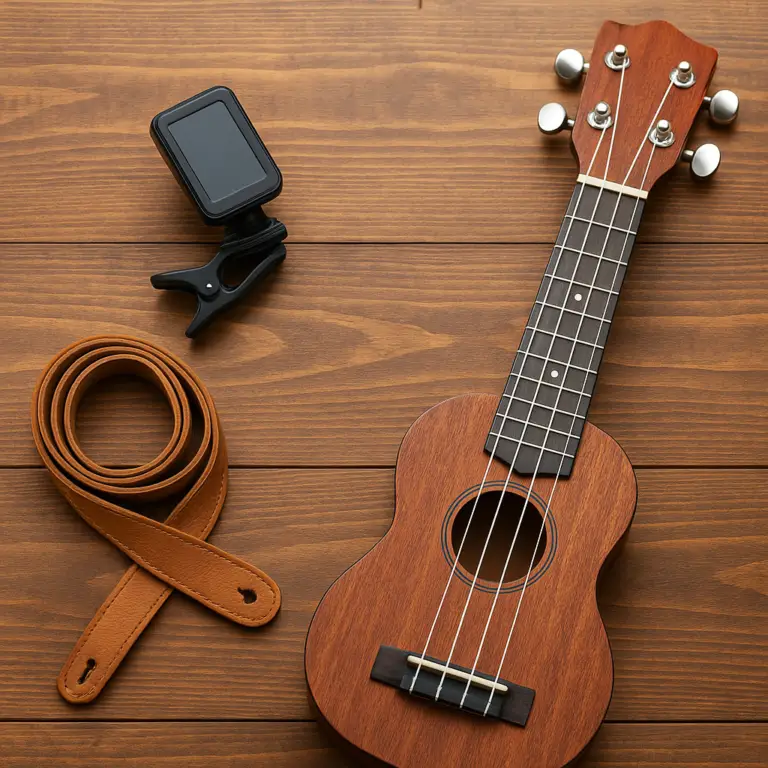
Get a Clip-On Tuner: These little gadgets are your best friend. They clip onto the headstock and sense vibrations directly from the instrument, making them accurate even in noisy environments. Brands like Snark, D’Addario, and Korg make excellent, affordable clip-on tuners.
- 👉 CHECK PRICE on:
- Snark SN6X Clip-On Tuner: Amazon | Guitar Center | Sweetwater
- D’Addario Micro Headstock Tuner: Amazon | Guitar Center | Sweetwater
- 👉 CHECK PRICE on:
-
Clip it On: Attach the tuner to your ukulele’s headstock.
-
Pluck a String: Pluck one string at a time. The tuner display will show you the note it detects.
-
Adjust:
- If the note is flat (too low), turn the corresponding tuning peg clockwise (tighten the string) until the tuner shows the correct note and indicates it’s in tune (usually a green light or a needle in the center).
- If the note is sharp (too high), turn the corresponding tuning peg counter-clockwise (loosen the string) until it’s in tune.
-
Repeat: Go through all four strings (G, C, E, A) until they are all in tune.
-
Double-Check: New strings, especially, will stretch. Tune them, play for a minute, then tune again. You might have to do this a few times.
Pro Tip: When tuning, always try to tune up to the correct pitch. If you’re sharp, detune slightly below the target note, then tune back up to it. This helps the string settle and improves tuning stability.
How to Hold the Ukulele: Getting Comfortable
Proper posture and holding technique are important for comfort and ease of playing.
- Right-Handed Players:
- Hold the ukulele against your chest, with the back of the body resting against your stomach/chest.
- The neck should extend to your left.
- Your right forearm should drape over the upper bout (the wider part of the body) of the ukulele, gently holding it against your body. This frees up your right hand for strumming.
- Your left hand will support the neck and fret the strings. Don’t grip the neck too tightly; let your thumb rest comfortably on the back.
- Left-Handed Players: You can either learn to play a right-handed ukulele “upside down” (which many do) or purchase a left-handed ukulele (though they are less common). If you’re just starting, we recommend trying the standard right-handed hold first, as it opens up more options for instruments and lessons.
Our Personal Take: Don’t get too hung up on “perfect” posture initially. The most important thing is to be comfortable and relaxed. If you’re tense, your playing will suffer. Find a position that feels natural, allows you to see the fretboard, and lets your strumming arm move freely. Live Ukulele states, “Proper technique not critical initially but helpful,” and we agree. Focus on making music, and good habits will follow.
🎼 Mastering Ukulele Chords: The Ultimate Beginner’s Chord Guide
This is where the magic truly begins! Learning chords is your gateway to playing thousands of songs. The beauty of the ukulele is how quickly you can pick up a few basic chords and start making recognizable music. As Live Ukulele enthusiastically points out, “Once it’s tuned, you’ve already learned your first chord: the open strings.” And they’re right – strumming the open GCEA strings gives you a G6 chord!
The Basics of Fretboard Navigation
- Frets: Remember those metal strips? When you press a string down behind a fret, you’re “fretting” that note. The closer to the bridge you fret, the higher the pitch.
- Fingers: We typically use our index finger (1), middle finger (2), ring finger (3), and pinky finger (4) to fret notes.
- Pressure: You need enough pressure to make a clear, ringing sound, but not so much that your hand cramps. Aim for the tip of your finger, just behind the fret. Avoid touching other strings!
Your First Chords: Instant Gratification!
Let’s get straight to it. These are the chords that will unlock a world of songs.
1. C Major (C) 🥳
This is often the very first chord taught, and for good reason: it only requires one finger!
- How to Play: Place your ring finger (3) on the 3rd fret of the A string (the bottom string, closest to the floor).
- Strum: Strum all four strings. It should sound bright and happy!
Our instructor in the featured video also starts with C Major, advising us to “really curl over our fingers like kind of a claw hand like this” to avoid muting other strings. This is excellent advice for all chords!
2. F Major (F) 🤩
Another fundamental chord that, combined with C, opens up many possibilities.
- How to Play:
- Place your index finger (1) on the 1st fret of the E string (second from the bottom).
- Place your middle finger (2) on the 2nd fret of the G string (top string, closest to your face).
- Strum: Strum all four strings.
Live Ukulele highlights the power of these two, saying, “You can play many songs with just these two chords.” They’re not wrong!
3. G Major (G) ✨
Add G Major to C and F, and you’ve got the “three-chord wonder” combination that forms the basis of countless popular songs.
- How to Play:
- Place your index finger (1) on the 2nd fret of the C string (second from the top).
- Place your middle finger (2) on the 2nd fret of the A string (bottom string).
- Place your ring finger (3) on the 3rd fret of the E string (second from the bottom).
- Strum: Strum all four strings.
The featured video instructor notes that this G Major shape is like a “D Major shape” if you’re familiar with guitar, which is a great way to think about it for guitarists transitioning to uke.
4. A Minor (Am) 😌
This chord has a slightly melancholic, yet beautiful sound.
- How to Play: Place your middle finger (2) on the 2nd fret of the G string (top string).
- Strum: Strum all four strings.
Will Grove-White’s “Lesson One” actually starts with an A Minor 7th (just strumming open strings, which is GCEA or G6, but he calls it A minor 7th for simplicity), then moves to C. Our approach gives you the full A minor right away!
Chord Chart Basics
Chord charts are your best friend for learning new shapes. They represent the ukulele fretboard as if you’re looking at it head-on.
- Vertical Lines: Represent the strings (from left to right: G C E A).
- Horizontal Lines: Represent the frets (the top line is the nut, then 1st fret, 2nd fret, etc.).
- Dots: Show where to place your fingers.
- Numbers: Indicate which finger to use (1=index, 2=middle, 3=ring, 4=pinky).
- “O” above a string: Means play the open string (don’t fret it).
- “X” above a string: Means don’t play that string (mute it). (Less common on ukulele as you usually strum all four).
Here’s a table of these essential beginner chords:
| Chord Name | G String (top) | C String | E String | A String (bottom) | Fingers Used |
|---|---|---|---|---|---|
| C Major | 0 (open) | 0 (open) | 0 (open) | 3rd Fret | Ring (3) |
| F Major | 2nd Fret | 0 (open) | 1st Fret | 0 (open) | Middle (2), Index (1) |
| G Major | 0 (open) | 2nd Fret | 3rd Fret | 2nd Fret | Index (1), Ring (3), Middle (2) |
| A Minor | 2nd Fret | 0 (open) | 0 (open) | 0 (open) | Middle (2) |
The Infamous E Chord: Don’t Let it Scare You! 😱
Ah, the E chord. If you spend any time in ukulele forums or groups, you’ll quickly learn that the E chord is notoriously challenging for beginners. Ukulelego.com dedicates an entire article to “Mastering the E Chord,” stating, “E chord is challenging for beginners, often avoided or substituted with E7 or transposed songs.” They also wisely warn, “Avoiding the E chord limits progress.”
Why is it so tricky? It often requires a barre (holding down multiple strings with one finger) or an awkward finger stretch. But don’t despair! We’re here to tell you it’s conquerable.
Common E Chord Variations and Tips:
-
The “Barre” E (Most Common):
- How to Play: Barre your index finger (1) across the 2nd fret of the G, C, and E strings. Then place your middle finger (2) on the 4th fret of the A string.
- Why it’s hard: Requires significant finger strength and precision to get all three barred strings to ring clearly.
- Ukulelego’s Tip: They suggest using your third finger to bar strings 2, 3, and 4 at fret 4, which is a different shape but also a barre. The key is finding what works for your hand.
-
The “Three-Finger” E (Often Easier for Some):
- How to Play:
- Index finger (1) on the 2nd fret of the G string.
- Middle finger (2) on the 4th fret of the C string.
- Ring finger (3) on the 4th fret of the A string.
- Pinky finger (4) on the 3rd fret of the E string.
- Why it’s hard: Still a bit of a stretch, but avoids the full barre.
- How to Play:
-
The “Easy” E (Ukulelego’s Recommendation):
- How to Play: Fret the B note on the G string at fret 4 (using your index or middle finger), and then mute or avoid strumming the bottom A string. This simplifies the chord to its essential three notes.
- Our Take: This is a fantastic workaround for beginners! It might not be the full E chord, but it gets you through the song and builds confidence.
Our Expert Advice on the E Chord:
- Don’t avoid it forever! Ukulelego is right: “It’s hugely limiting to you and your ukulele playing to avoid the E chord.”
- Practice daily, even for a minute. Consistent, short bursts are more effective than one long, frustrating session. “Take a minute every day to work on your E chords,” they advise.
- Experiment with fingerings. What works for one person might not work for another. Try different fingers for the barre or the individual notes.
- Build finger strength. Squeeze a stress ball, do finger exercises. Stronger fingers make all chords easier.
- It will click. Seriously, one day, it just will. Keep at it!
Practice Tips for Chords
- “Chord-to-Chord” Practice: Pick two chords (like C and F) and switch between them slowly, focusing on clean transitions. Speed comes later.
- The “One-Minute Change”: Set a timer for one minute. See how many times you can cleanly switch between two chords. Try to beat your score each day!
- Listen Carefully: Does every string ring out clearly? Are there any muted strings? Adjust your finger pressure and position.
- Relax! Tension is the enemy of good playing. Shake out your hands, take a deep breath.
Mastering these chords is your first big step. What comes next? Bringing them to life with rhythm!
🎵 Strumming Patterns and Rhythm: Bringing Your Ukulele to Life
You’ve got your chords down – fantastic! But a chord held indefinitely isn’t exactly a song, is it? This is where strumming patterns and rhythm come in, transforming static shapes into vibrant, moving music. Think of chords as the colors on your palette, and strumming as the brushstrokes that create the painting.
The Art of the Strum: Downstrokes and Upstrokes
For most ukulele playing, your right hand (or left, if you’re a lefty) is your rhythm engine. You’ll primarily use your index finger or thumb to strum across the strings.
- Downstroke (⬇️): Strumming from the G string (top) down to the A string (bottom).
- Upstroke (⬆️): Strumming from the A string (bottom) up to the G string (top).
Our Personal Tip: Don’t use your fingernail for every strum! While some players prefer it for a brighter sound, using the fleshy part of your index finger (or a combination of nail and flesh) for downstrokes and the nail for upstrokes can give you a warmer, more versatile tone and save your nails! You can also use a felt pick, which we’ll discuss in the accessories section.
Keeping Time: The Foundation of Rhythm
Rhythm is all about timing. Before you even think about fancy patterns, focus on a steady beat.
- Count it Out: Live Ukulele suggests, “steady down-stroke, count ‘1…2…3…4…'” This is excellent advice. Start by simply strumming down on each beat:
- ⬇️ (1) ⬇️ (2) ⬇️ (3) ⬇️ (4)
- Use a Metronome: A metronome is a musician’s best friend. It provides a steady click to help you keep perfect time. Many free metronome apps are available for your phone. Start slow (e.g., 60 BPM) and gradually increase the tempo as you get more comfortable.
Basic Strumming Patterns for Beginners
Once you can keep a steady beat, you can start adding upstrokes and varying your rhythm. Here are a few foundational patterns:
1. The “Island Strum” (Down, Down-Up, Up, Down-Up) 🏝️
This is arguably the most iconic ukulele strum, giving many songs that quintessential Hawaiian feel.
- Pattern: ⬇️ ⬇️⬆️ ⬆️ ⬇️⬆️
- Counting: 1 (and) 2 (and) 3 (and) 4 (and)
- ⬇️ (on 1)
- ⬇️⬆️ (on 2 and)
- ⬆️ (on 3)
- ⬇️⬆️ (on 4 and)
- Practice Tip: Try this with your C Major chord. It might feel awkward at first, but keep it slow and steady. The key is a relaxed wrist and a consistent motion.
2. The “Down, Down-Up, Up-Down-Up” Strum (Simple & Versatile)
This pattern is incredibly common in pop and folk songs.
- Pattern: ⬇️ ⬇️⬆️ ⬆️⬇️⬆️
- Counting: 1 (and) 2 (and) 3 (and) 4 (and)
- ⬇️ (on 1)
- ⬇️⬆️ (on 2 and)
- (miss 3)
- ⬆️⬇️⬆️ (on and 4 and)
- Practice Tip: Focus on the rhythm of the upstrokes. The “up-down-up” at the end should feel like a quick, flowing motion.
3. The “Calypso Strum” (Down, Down-Up, Up, Down) 💃
A lively, syncopated strum that adds a fun bounce to your playing.
- Pattern: ⬇️ ⬇️⬆️ ⬆️ ⬇️
- Counting: 1 (and) 2 (and) 3 (and) 4 (and)
- ⬇️ (on 1)
- ⬇️⬆️ (on 2 and)
- ⬆️ (on 3)
- ⬇️ (on 4)
- Practice Tip: The pause after the first downstroke is crucial for the feel of this strum.
Strumming with Dynamics and Feel
Once you’re comfortable with the basic patterns, start thinking about dynamics (how loud or soft you play) and feel.
- Accent Strokes: Emphasize certain strums to give the rhythm more character. Often, the first beat of a measure (the “1”) is accented.
- Muting: Gently rest your strumming hand on the strings to mute them, creating a percussive “chunk” sound. This adds rhythm and can make your playing sound more professional.
- Relaxed Wrist: This is crucial! A stiff wrist will lead to fatigue and an unnatural sound. Keep your wrist loose and let your hand swing freely.
Our Anecdote: I remember struggling with strumming when I first started. My wrist was so stiff, and my strumming sounded like a robot trying to play music! A seasoned ukulele player told me, “Imagine you’re shaking water off your hand.” That simple metaphor changed everything. My wrist loosened up, and suddenly, the rhythm flowed. Don’t underestimate the power of a relaxed wrist!
Practice these patterns slowly with your basic chords (C, F, G, Am). The goal is to make the transitions between chords smooth while maintaining a consistent rhythm. It’s a dance between your left hand (chords) and your right hand (rhythm)!
🎤 Singing and Playing: How to Accompany Yourself on Ukulele
One of the greatest joys of playing the ukulele is its natural ability to accompany your voice. It’s like having your own portable backing band! Many people pick up the ukulele precisely for this reason – to sing along to their favorite tunes. But coordinating your voice with your strumming can feel like patting your head and rubbing your belly at the same time. Don’t worry, we’ve got some tips to make it easier.
The Challenge: Multitasking Your Brain and Hands
When you’re singing and playing, your brain is doing a lot of heavy lifting:
- Remembering lyrics
- Staying in tune vocally
- Remembering chord changes
- Maintaining strumming rhythm
It’s a lot! This is why it’s crucial to master each component separately before trying to combine them.
Step-by-Step Guide to Singing and Playing
Step 1: Master the Chords and Strumming Pattern Separately
- Chords First: Make sure you can switch between the chords of your chosen song smoothly and without hesitation. Practice them until they’re muscle memory.
- Strumming Second: Practice the strumming pattern for the song until it feels natural and consistent, without any chords.
- Combined (No Singing): Now, play the chords with the strumming pattern, focusing solely on the instrument. Can you play the entire song without mistakes? If not, go back and practice the transitions.
Step 2: Learn the Song’s Melody and Lyrics
- Sing A Cappella: Sing the song’s melody and lyrics without the ukulele. Make sure you know the tune and words inside out. You should be able to sing it confidently without any musical accompaniment.
- Find the Chord Changes: Pay attention to where the chord changes happen in relation to the lyrics. Usually, a chord changes on a specific word or beat.
Step 3: Start Simple: Strum on the Downbeat
This is the easiest way to combine singing and playing.
- Strum Once Per Bar: As the instructor in the featured video humorously notes, “Musicians can only count to four.” For basic rhythm, they advise to “simply strum the taught chords when the chord name appears above the lyrics… on the first beat of each bar.” This means you’ll strum a chord once, usually on the “1” count, and let it ring out while you sing the line.
- Example: For “You Are My Sunshine” (which the video demonstrates with C, F, G):
- (C) You are my (F) sunshine, my only (C) sunshine.
- (G) You make me (C) happy when skies are (F) gray.
- (C) You’ll never (G) know, dear, how much I (C) love you.
- (F) Please don’t take my (C) sunshine a** (G)** way.
- Here, you’d strum C on “You,” F on “sunshine,” C on “sunshine,” and so on.
Step 4: Gradually Add More Complex Strumming
Once you’re comfortable with the single-strum-per-bar method, you can slowly integrate the full strumming pattern you practiced in Step 1.
- Slow Down: Seriously, slow it down. Use a metronome if needed.
- Focus on the First Beat: Make sure your chord change and the first downstroke of your strumming pattern align with the correct word or beat in the song.
- Don’t Stop! If you make a mistake, keep going. The show must go on!
Choosing Your First Sing-Along Songs
Pick songs that are:
- Familiar: You already know the melody and lyrics.
- Simple Chords: Use only the basic C, F, G, Am chords.
- Slow Tempo: Easier to coordinate.
Live Ukulele suggests “Itsy Bitsy Spider” with F C7 F. The featured video offers a fantastic starting point with “You Are My Sunshine” using just C, F, and G Major. They also mention “Happy Birthday,” “Lean on Me” by Bill Withers, and a simplified “Twist and Shout” by The Beatles as great options with these three chords.
Our Anecdote: I remember trying to sing and play “Riptide” by Vance Joy way too early in my ukulele journey. It has a fast strumming pattern and quick chord changes. It was a disaster! My voice was off-key, my strumming was erratic, and my chords were buzzing. I learned a valuable lesson: start with truly simple songs. “You Are My Sunshine” or “Happy Birthday” are perfect for building that crucial coordination.
The key is patience and repetition. It will feel clunky at first, but with consistent practice, your hands and voice will learn to work together seamlessly. Soon, you’ll be serenading your friends and family with ease!
📚 Essential Ukulele Songs for Beginners: 15 Easy Tunes to Practice
You’ve got your chords, you’ve got your strumming, and you’re ready to sing! Now, what to play? The best way to solidify your skills and keep your motivation high is to play songs you love. We’ve curated a list of 15 fantastic, easy ukulele songs that use mostly beginner-friendly chords (C, F, G, Am, and sometimes a D or E7). This list is designed to give you plenty of material to practice and enjoy, far exceeding the few examples often given elsewhere!
Remember, for most of these, a simple Down, Down-Up, Up, Down-Up (Island Strum) or even just Down-Down-Down-Down strum will sound great.
Here are 15 easy ukulele songs to get you started:
Songs Using C, F, G (or G7), Am
-
You Are My Sunshine ☀️
- Chords: C, F, G7 (or G)
- Why it’s great: A classic, universally known, and uses the foundational C-F-G7 progression. Perfect for singing along.
- As demonstrated in the featured video!
-
Happy Birthday 🎂
- Chords: C, G7 (or G), F
- Why it’s great: You’ll be everyone’s favorite person at parties! Simple and always in demand.
- Also mentioned in the featured video!
-
Twist and Shout (Simplified) 🕺
- Chords: C, F, G7 (or G)
- Why it’s great: A high-energy Beatles classic that’s surprisingly simple on uke.
- Mentioned as an easy option in the featured video!
-
Lean on Me (Bill Withers) 🤝
- Chords: C, F, G
- Why it’s great: A soulful, uplifting tune that sounds fantastic on ukulele.
- Mentioned as an easy option in the featured video!
-
Three Little Birds (Bob Marley) 🐦
- Chords: C, F, G
- Why it’s great: “Don’t worry about a thing, ’cause every little thing gonna be alright!” The perfect chill-out song.
-
I Will Follow You Into The Dark (Death Cab for Cutie) 🖤
- Chords: C, F, G, Am
- Why it’s great: A beautiful, melancholic tune that introduces Am.
-
Riptide (Vance Joy) 🌊
- Chords: Am, G, C, F
- Why it’s great: A modern ukulele anthem! While the original strumming is fast, you can simplify it.
-
Stand By Me (Ben E. King) 🌉
- Chords: C, G, Am, F
- Why it’s great: A timeless classic with a simple, repeating chord progression.
-
Brown Eyed Girl (Van Morrison) 👧
- Chords: G, C, D, Em (or E7 for simpler)
- Why it’s great: Introduces the D chord, which is a common next step. You can substitute Em with E7 if Em is too tricky initially.
-
Sweet Caroline (Neil Diamond) 🎶
- Chords: C, G, F
- Why it’s great: A crowd-pleaser that’s easy to strum and sing along to.
-
Octopus’s Garden (The Beatles) 🐙
- Chords: C, G, Am, F
- Why it’s great: A fun, whimsical Beatles tune that’s very ukulele-friendly.
-
Leaving on a Jet Plane (John Denver) ✈️
- Chords: G, C, D
- Why it’s great: A beautiful folk song that’s perfect for a campfire sing-along.
-
House of the Rising Sun (The Animals) 🏠
- Chords: Am, C, D, F, E7
- Why it’s great: A slightly more challenging but incredibly rewarding song that introduces E7 (a simpler alternative to E Major).
-
Imagine (John Lennon) 🕊️
- Chords: C, F, G, Am, Dm, E7
- Why it’s great: A powerful song that, while having a few more chords, is slow enough to practice transitions.
-
Somewhere Over the Rainbow (Israel Kamakawiwoʻole version) 🌈
- Chords: C, G, Am, F, E7
- Why it’s great: The ultimate ukulele song! Iz’s iconic version is a must-learn. It has a few more chords, but the slow tempo makes it achievable.
Our Recommendation: Start with the songs that only use C, F, and G/G7. Once you’re comfortable, add Am. Then, slowly introduce D, E7, and other chords. The key is to build your repertoire gradually. Don’t try to learn all 15 at once! Pick one or two, master them, and then move on.
You’ll be amazed at how quickly you can go from zero to playing recognizable tunes. The joy of singing along to your own strumming is truly unparalleled!
🎯 Advanced Techniques: Fingerpicking, Hammer-Ons, Pull-Offs, and More
So, you’ve mastered your basic chords, your strumming is smooth, and you’re singing along like a pro. What’s next on your ukulele journey? The world of advanced techniques! While we’re focusing on getting you started, it’s exciting to know there’s a whole universe of sounds waiting to be explored beyond simple strumming. These techniques will add texture, complexity, and a whole new level of expression to your playing.
1. Fingerpicking (or Fingerstyle) 🤏
Instead of strumming all four strings at once, fingerpicking involves plucking individual strings with your fingers (or thumb and fingers) in a specific pattern. This creates a more intricate, melodic sound.
- How it works: Typically, your thumb handles the G and C strings, while your index finger handles the E string, and your middle finger handles the A string.
- Benefits: Allows for playing melodies, arpeggios (broken chords), and creating beautiful, intricate accompaniments.
- Getting Started: Begin with simple patterns, like plucking G-C-E-A in sequence, or a simple “PIMA” pattern (Thumb, Index, Middle, Ring) on a single chord.
- Songs to Try: Many classical pieces, folk songs, and even modern pop songs can be adapted for fingerstyle ukulele. “Somewhere Over the Rainbow” (Iz’s version) is a great example of how fingerpicking can elevate a song.
2. Hammer-Ons (H) and Pull-Offs (P) 💪
These are techniques that allow you to play two notes with a single pluck, adding fluidity and speed to your playing. They’re often referred to as “slurs.”
- Hammer-On: You pluck a string, and then, without plucking again, you quickly and firmly “hammer” another finger down onto a higher fret on the same string, causing a new note to sound.
- Pull-Off: The opposite of a hammer-on. You fret two notes on the same string (e.g., ring finger on 3rd fret, index finger on 2nd fret). You pluck the string, then quickly “pull off” the higher-fretted finger (ring finger), allowing the lower-fretted note (index finger) to sound without another pluck.
- Benefits: Creates a smooth, connected sound, adds ornamentation, and can make fast passages easier to play.
3. Slides (S or /) ➡️
A slide involves moving your fretting finger up or down the fretboard while maintaining pressure, creating a smooth transition between notes.
- How it works: Fret a note, pluck it, and then slide your finger up or down to another fret on the same string.
- Benefits: Adds a vocal-like quality and expressive flair to your melodies.
4. Vibrato (~) 〰️
Vibrato is a slight, rapid fluctuation in pitch that adds warmth and sustain to a note.
- How it works: After fretting and plucking a note, gently rock your fretting finger back and forth or side to side on the string, causing the pitch to waver slightly.
- Benefits: Makes notes sing and adds emotional depth.
5. Muting and Palm Muting 🤫
These techniques control the sustain of notes, adding percussive elements and rhythmic drive.
- Muting (Fretting Hand): Lightly touch a string with a fretting finger (without pressing down) to prevent it from ringing, often used to clean up chords or create rhythmic “chops.”
- Palm Muting (Strumming Hand): Gently rest the side of your strumming hand (the fleshy part below your pinky) on the strings near the bridge while strumming. This dampens the sound, creating a punchy, percussive effect.
- Benefits: Adds rhythmic texture, makes strumming sound tighter, and can create a “chugging” sound.
6. Chord Melodies 🎼
This advanced technique involves playing both the melody and the harmony (chords) simultaneously on the ukulele.
- How it works: You arrange a song so that the highest note of each chord forms the melody, while the other notes provide the harmonic accompaniment.
- Benefits: Allows you to play a complete instrumental version of a song without singing.
- Getting Started: Start with very simple melodies and chords, focusing on clear articulation of each note.
Our Expert Take: Don’t feel pressured to learn these all at once! The beauty of the ukulele is that you can enjoy it at any level. These techniques are milestones on a longer journey. When you feel ready, pick one that excites you and dedicate some practice time to it. Even incorporating a simple hammer-on or a basic fingerpicking pattern can dramatically change the sound of a song you already know. The ukulele is a surprisingly versatile instrument, and these techniques will help you unlock its full potential!
🧰 Troubleshooting Common Ukulele Problems: From Buzzing Strings to Fret Issues
Every musician, from beginner to pro, encounters issues with their instrument. The ukulele is no exception! Don’t let a buzzing string or a stubborn chord derail your progress. Most common problems have simple solutions. Here at Guitar Brands™, we’ve heard (and fixed!) it all. Let’s tackle some of the most frequent ukulele woes.
1. Buzzing Strings 🐝
This is probably the most common complaint from beginners. A buzzing string means something is vibrating incorrectly.
- ✅ Check Your Fretting Hand:
- Not pressing hard enough: This is the #1 culprit! Make sure you’re pressing down firmly with the tip of your finger, just behind the fret.
- Fingers collapsing: Ensure your fingers are curled into that “claw hand” shape (as the featured video instructor advises) so they don’t accidentally touch other strings.
- Fretting on the fret wire: If your finger is directly on top of the metal fret, it will buzz. Move it slightly behind the fret.
- ✅ Check Your Ukulele’s Setup:
- High or low action: If the strings are too low, they might buzz against the frets. If they’re too high, it’s hard to press them down, leading to weak fretting and buzz. This might require a professional setup, but sometimes new strings can help.
- Uneven frets: A high fret can cause buzzing on lower frets. This is a job for a luthier.
- Loose hardware: Check if tuning pegs, the nut, or the saddle are loose.
- ✅ Check Your Strings: Old, worn-out strings can sometimes buzz. Try replacing them!
2. Ukulele Won’t Stay in Tune 😩
This is incredibly frustrating, especially for new players.
- ✅ New Strings: This is the most common reason! New nylon or fluorocarbon strings stretch a lot. You’ll need to tune frequently for the first few days, sometimes even for a week or two, until they settle. Keep stretching them gently after tuning.
- ✅ Cheap Tuners: Friction tuners (common on very cheap ukuleles) can slip. Geared tuners are much more stable. If your tuners are constantly slipping, consider upgrading them or investing in a better ukulele (see our buying guide!).
- ✅ Temperature/Humidity Changes: Wood expands and contracts with environmental changes, affecting tuning. Keep your ukulele in a stable environment.
- ✅ Incorrect Tuning Method: Are you using a reliable electronic tuner? Are you tuning up to the note? (See our tuning section).
3. Sore Fingers 🤕
Your fingertips will get tender when you start, but it shouldn’t be excruciating.
- ✅ Build Calluses: This is normal! Your fingertips will harden over time. Short, frequent practice sessions are better than long, painful ones.
- ✅ Proper Technique: Are you pressing too hard? Are you using the tips of your fingers? Incorrect technique can cause unnecessary strain.
- ✅ Take Breaks: If your fingers hurt, stop! Give them a rest.
- ❌ Don’t use steel strings: We’ve said it before, but it bears repeating. Steel strings are incredibly hard on ukulele fingers and can damage the instrument.
4. Difficulty with Chord Changes 🐢
Feeling like your fingers are stuck in molasses when switching chords?
- ✅ Practice Slowly: Don’t rush! Practice switching between two chords at a snail’s pace. Focus on getting a clean sound with each change.
- ✅ “Ghost” Changes: Practice the finger movements for a chord change without strumming. Just move your fingers into position.
- ✅ Finger Economy: Try to keep your fingers as close to the fretboard as possible when moving between chords. Don’t lift them too high.
- ✅ Identify Common Pivots: Often, one or two fingers stay in place or move minimally between chords (e.g., the index finger in C to G). Find these “anchor” fingers.
5. Muted Strings When Playing Chords 🔇
You’re trying to play a chord, but one or more strings sound dead or muffled.
- ✅ Finger Position: Your fretting finger might be accidentally touching an adjacent string. Curl your fingers more, ensuring only the tip is on the intended string.
- ✅ Insufficient Pressure: You might not be pressing hard enough for all strings to ring out clearly.
- ✅ Barre Chord Issues: If you’re attempting a barre chord (like the E chord), ensure even pressure across all barred strings. This takes practice and finger strength.
6. Uneven Strumming / Bad Rhythm 🤖
Your strumming sounds choppy or inconsistent.
- ✅ Use a Metronome: Seriously, this is your best friend for rhythm. Start very slow.
- ✅ Relax Your Wrist: A stiff wrist is the enemy of smooth strumming. Imagine shaking water off your hand.
- ✅ Practice Strumming Without Chords: Focus solely on the rhythm and motion of your strumming hand.
- ✅ Listen to the Song: Internalize the rhythm of the song you’re trying to play. Tap your foot, clap your hands.
Our Expert Advice: Don’t get discouraged! These are all normal parts of the learning process. The key is to identify the problem, understand the cause, and apply a consistent solution. If you’re still struggling, don’t hesitate to seek advice from an experienced player or a local music store. Sometimes, a quick adjustment or a new perspective is all it takes to get you back on track.
🎥 Best Online Ukulele Lessons and Resources: Learn Anywhere, Anytime
The digital age has truly revolutionized how we learn musical instruments. Gone are the days when you absolutely needed a private tutor (though they’re still fantastic!). Now, with a click of a button, you can access a treasure trove of ukulele lessons, tutorials, and communities right from your living room. Here at Guitar Brands™, we’re big believers in leveraging these resources to supercharge your learning.
Why Online Resources Are Your Best Friend
- Flexibility: Learn at your own pace, on your own schedule.
- Affordability: Many resources are free, and paid subscriptions are often much cheaper than private lessons.
- Variety: Find instructors whose teaching style resonates with you.
- Accessibility: Learn from anywhere with an internet connection.
Our Top Picks for Online Ukulele Learning
1. YouTube Channels 📺 (Free!)
YouTube is an absolute goldmine for ukulele lessons. You can find tutorials for specific songs, chord explanations, strumming patterns, and much more.
- The Ukulele Teacher: This channel is a staple for beginners. He breaks down songs into easy-to-follow steps and has a very encouraging teaching style. His “10-Day Starter Course” is exactly what the featured video is all about, offering easy chords and real songs from day one.
- Why we love it: Clear, concise, and focuses on getting you playing songs quickly. The instructor uses a concert ukulele, which we often recommend for beginners.
- CHECK OUT: The Ukulele Teacher on YouTube
- Ukulele Mike Lynch (RIP): Though no longer with us, Ukulele Mike’s legacy lives on through his vast library of gentle, easy-to-follow tutorials. His “Play Along” videos are fantastic.
- Why we love it: Very beginner-friendly, focuses on fun and simplicity.
- CHECK OUT: Ukulele Mike Lynch on YouTube
- Cynthia Lin Music: Cynthia offers a wonderful blend of beginner lessons, song tutorials, and community engagement. She’s known for her clear explanations and positive energy.
- Why we love it: Great for all levels, with a focus on technique and musicality.
- CHECK OUT: Cynthia Lin Music on YouTube
2. Dedicated Online Course Platforms 💻 (Paid/Freemium)
These platforms offer structured learning paths, often with interactive tools, sheet music, and community forums.
- Ukulele Tricks: Run by Brett McQueen, this site offers comprehensive courses for all levels, from absolute beginner to advanced. They have a very logical progression.
- Why we love it: High-quality video lessons, well-structured curriculum, and a focus on building solid fundamentals.
- CHECK OUT: Ukulele Tricks Official Website
- Fender Play: While known for guitars, Fender Play also offers excellent ukulele lessons. It’s a subscription service with a vast library of guided courses.
- Why we love it: Professional production, interactive lessons, and a clear path for progression.
- CHECK OUT: Fender Play Official Website
- JustinGuitar (Ukulele Section): Justin Sandercoe is legendary for his free guitar lessons, and his ukulele section is equally fantastic. He offers a structured course for beginners.
- Why we love it: Clear, patient instruction, and a proven teaching methodology.
- CHECK OUT: JustinGuitar Ukulele Lessons
3. Ukulele Tabs & Chord Websites 📄 (Free!)
Once you know your basic chords, these sites are invaluable for finding songs.
- Ultimate-Guitar.com: While primarily for guitar, it has a massive database of ukulele tabs and chords for almost any song you can imagine.
- Why we love it: User-submitted content means a huge variety, often with different versions to choose from.
- CHECK OUT: Ultimate-Guitar.com Ukulele Tabs
- UkuTabs.com: A dedicated ukulele tab site with a clean interface, chord diagrams, and often transposing tools.
- Why we love it: Specifically designed for ukulele, making it very user-friendly.
- CHECK OUT: UkuTabs.com
4. Apps for Learning and Tuning 📱 (Free/Paid)
Your smartphone can be a powerful ukulele learning tool.
- Tuner Apps: Many free apps like “Pano Tuner” or “GuitarTuna” (which includes ukulele) work just like a clip-on tuner.
- Chord Library Apps: Apps like “Ukulele Chords” or “Ukeoke” provide chord diagrams and can help you learn new shapes.
- Learning Apps: Some apps offer gamified lessons or interactive courses.
Our Anecdote: One of our team members, a self-proclaimed “tech-phobe,” was initially skeptical about online lessons. He preferred old-school books. But after trying a few YouTube tutorials for specific songs, he was converted! The visual aspect of seeing someone play, combined with the ability to pause and rewind, made a huge difference. He now swears by online resources for learning new techniques.
Remember, as Ukulelego.com mentions, there are also “Ukulele ebooks” and “Free ukulele guide” resources available. Don’t limit yourself! Explore, experiment, and find the resources that click with your learning style. The more tools you have in your arsenal, the faster you’ll progress and the more fun you’ll have!
👥 Joining the Ukulele Community: Groups, Forums, and Jam Sessions
Learning an instrument can sometimes feel like a solitary journey, but it doesn’t have to be! The ukulele community is renowned for being one of the friendliest, most welcoming, and supportive musical groups out there. Seriously, we’ve seen it firsthand – ukulele players love to share their passion! Joining this vibrant community can supercharge your learning, keep you motivated, and open up a whole new world of musical fun.
Why Community Matters
- Motivation: Playing with others is incredibly inspiring.
- Learning: You’ll pick up new techniques, songs, and tips from fellow players.
- Accountability: Having a group to play with encourages consistent practice.
- Friendship: Meet like-minded people who share your passion.
- Performance Opportunities: Even casual jam sessions can boost your confidence.
Ways to Connect with the Ukulele Community
1. Local Ukulele Clubs and Meetups 🏘️
This is arguably the best way to immerse yourself. Most cities and even smaller towns have ukulele clubs or “ukes groups” that meet regularly.
- What to expect: These groups are usually very welcoming to beginners. They’ll often have songbooks with chords and lyrics, and leaders who guide the group through songs. It’s a fantastic, low-pressure environment to play with others.
- How to find them:
- Meetup.com: Search for “ukulele” in your area.
- Local Music Stores: They often host or know about local clubs.
- Community Centers/Libraries: Check their activity listings.
- Facebook Groups: Search for “[Your City] Ukulele Club.”
- Our Anecdote: One of our Guitar Brands™ team members, who had been playing ukulele solo for years, finally joined a local ukulele club. He was nervous at first, but within minutes, he was laughing, strumming, and singing with a group of strangers who quickly became friends. He said it completely revitalized his love for the instrument and taught him more in a month than he’d learned in a year of solo practice!
2. Online Forums and Social Media Groups 🌐
If a local club isn’t feasible, or you want to connect globally, the internet is your oyster.
- Ukulele Underground Forum: This is one of the largest and most active online ukulele communities. You’ll find discussions on everything from beginner questions to advanced techniques, gear reviews, and song arrangements.
- CHECK OUT: Ukulele Underground Forum
- Facebook Groups: There are countless ukulele groups on Facebook, catering to different styles, regions, or skill levels. Search for “Ukulele Players,” “Beginner Ukulele,” or specific brand groups.
- Reddit (r/ukulele): A vibrant subreddit where you can ask questions, share videos, and get advice from a global community.
- CHECK OUT: r/ukulele on Reddit
3. Ukulele Festivals and Retreats 🎉
For the truly dedicated, ukulele festivals are incredible experiences.
- What to expect: Workshops, concerts, open mic sessions, jam sessions, and opportunities to meet renowned ukulele artists.
- Benefits: Intensive learning, immersion in ukulele culture, and a chance to connect with hundreds (or thousands!) of fellow enthusiasts.
- How to find them: Search online for “ukulele festivals [your region/country].”
4. Jam Sessions (Casual or Organized) 🎸
Sometimes, it’s as simple as grabbing a friend who plays another instrument (or another uke!) and just jamming.
- Benefits: Develop your ear, learn to play by feel, and practice improvising.
- Our Tip: Don’t be afraid to initiate! Ask a friend, “Hey, want to try playing some songs together?” Even if it’s just two of you, it’s a start.
Our Expert Advice: Don’t be shy! The ukulele community is incredibly welcoming. Whether you’re a complete novice or a seasoned player, there’s a place for you. Stepping out of your comfort zone to play with others is one of the most rewarding aspects of learning any instrument. It’s where the real magic happens, and where your musical journey truly blossoms.
💡 Tips and Tricks from Ukulele Pros: Insider Secrets to Speed Up Your Progress
You’ve got the basics down, you’re practicing regularly, and you’re even thinking about joining a jam session. Awesome! But what do the pros do differently? What are those little nuggets of wisdom that can truly accelerate your progress and make your ukulele journey even more enjoyable? We’ve gathered some insider secrets and pro tips from our own team of musicians and from the wider ukulele community.
1. Consistency Trumps Quantity ⏰
This is perhaps the most important piece of advice you’ll ever get.
- ❌ Don’t: Practice for three hours once a week.
- ✅ Do: Practice for 15-30 minutes every single day.
- Why it works: Your brain and fingers build muscle memory and retain information much better with consistent, short bursts. Live Ukulele wisely states, “Doing more makes everything worse. Focus on mastering simple skills first.” And Ukulelego.com echoes this for the E chord: “Take a minute every day to work on your E chords.” This applies to everything!
2. Slow Down to Speed Up 🐢
It sounds counterintuitive, but it’s true. Trying to play fast before you’re accurate leads to bad habits and frustration.
- ✅ Use a Metronome: Always start at a slow tempo. Focus on clean chord changes and accurate strumming.
- ✅ Break It Down: If a song or chord change is difficult, break it into tiny segments. Practice just two chords switching back and forth, then add a third.
3. Record Yourself 🤳
This might feel awkward at first, but it’s an incredibly powerful learning tool.
- How to do it: Use your phone to record short practice sessions.
- What to look for:
- Are your chords ringing clearly?
- Is your rhythm steady?
- Is your posture relaxed?
- Are you making any weird faces? (Just kidding… mostly!)
- Benefits: You’ll hear and see things you miss in real-time. It’s like having a private tutor point out areas for improvement.
4. Learn Songs You Love ❤️
Motivation is key! If you’re playing songs you genuinely enjoy, you’ll be much more likely to stick with it.
- Our Take: Don’t just learn exercises. Find songs that make you want to sing and dance. Even if they seem a little challenging, break them down. The reward of playing your favorite tune is immense.
5. Focus on Fundamentals (Don’t Skip Steps!) 🏗️
It’s tempting to jump to advanced techniques, but a strong foundation is crucial.
- ✅ Master Basic Chords: Ensure your C, F, G, Am, D, E7 are clean and effortless.
- ✅ Solid Rhythm: Develop a rock-solid sense of time with basic strumming patterns.
- Why it works: Trying to build a fancy house on a shaky foundation is a recipe for disaster. Solid fundamentals make everything else easier.
6. Listen Actively 👂
Don’t just play; listen to what you’re playing.
- ✅ Critical Listening: Are all the notes in your chord ringing out? Is your strumming even? Does it sound musical?
- ✅ Listen to Others: Pay attention to how experienced players articulate notes, use dynamics, and phrase melodies.
7. Take Breaks and Have Fun! ☕
Learning should be enjoyable, not a chore.
- ✅ Step Away: If you’re feeling frustrated, put the ukulele down for a bit. Go for a walk, make a cup of tea (as Will Grove-White suggests!), and come back with fresh ears.
- ✅ Celebrate Small Wins: Did you finally nail that chord change? Did you play a song all the way through? High five yourself! “Find the joy and fun in creating this simple music,” says Live Ukulele. This is paramount.
8. Experiment with Different Strums and Fingerings 🎨
Don’t be afraid to deviate from the tab or lesson.
- ✅ Find Your Own Style: Try different strumming patterns for the same song. Experiment with alternative fingerings for chords (especially the E chord!).
- Why it works: This helps you understand the instrument better and develop your unique voice. As Ukulelego.com notes, “Over time you’ll start to find that you develop a feel for which one you should be using in the context of the song.”
9. Change Your Strings Regularly 🔄
Old strings sound dull, lose their intonation, and can be harder to tune.
- ✅ Fresh Strings: New strings will make your ukulele sound brighter, clearer, and stay in tune better. For casual players, every 6-12 months is a good rule of thumb. More frequent for active players.
Our Personal Anecdote: I once spent weeks trying to perfect a complex fingerpicking pattern, getting more and more frustrated. A friend watched me and simply said, “You’re holding your breath.” I realized I was so tense, I wasn’t breathing properly! As soon as I relaxed and focused on my breath, the pattern started to flow. Sometimes, the “trick” isn’t about technique, but about your physical and mental state. Relaxation is a superpower in music!
By incorporating these tips into your practice routine, you’ll not only speed up your progress but also cultivate a deeper, more joyful relationship with your ukulele. Keep strumming, keep smiling!
🎁 Ukulele Accessories You Didn’t Know You Needed
You’ve got your ukulele, you’re learning chords, and you’re strumming away. That’s the core of it! But just like a chef needs more than just a pan, a ukulele player can greatly benefit from a few well-chosen accessories. These aren’t strictly essential to start, but they can significantly enhance your playing experience, protect your instrument, and make your life a whole lot easier. Consider them quality-of-life upgrades for your ukulele journey!
Here are some accessories we at Guitar Brands™ highly recommend:
1. Clip-On Tuner (If You Don’t Already Have One!) 🎶
Okay, you probably do know you need this, but it’s so crucial it bears repeating! We covered it in the tuning section, but seriously, a good clip-on tuner is non-negotiable. It’s the first accessory we recommend after the ukulele itself.
- Benefits: Fast, accurate, easy to use, and essential for sounding good.
- Our Recommendation: Snark SN6X Ukulele Tuner or D’Addario Micro Headstock Tuner.
- 👉 CHECK PRICE on:
- Snark SN6X Clip-On Tuner: Amazon | Guitar Center | Sweetwater
- D’Addario Micro Headstock Tuner: Amazon | Guitar Center | Sweetwater
2. Ukulele Case or Gig Bag 🎒
Protect your precious instrument! Whether you’re taking it to a jam session or just storing it at home, a case is vital.
- Gig Bag (Soft Case): Lighter, often has pockets for accessories, and offers basic protection against bumps and scratches. Great for casual transport.
- Hard Case: Offers maximum protection against impacts, temperature changes, and humidity. Essential for travel or more valuable instruments.
- Benefits: Protects from dust, dings, scratches, and environmental changes.
- Our Recommendation: For beginners, a good padded gig bag from brands like Kala or Road Runner is usually sufficient.
- 👉 Shop Ukulele Cases on:
- Kala Ukulele Gig Bags: Amazon | Guitar Center | Sweetwater
- Road Runner Ukulele Gig Bags: Amazon | Guitar Center
3. Ukulele Strap 🎗️
While many play the ukulele without a strap, it can be a game-changer for comfort and stability, especially if you stand up to play.
- Types: Some ukuleles have strap buttons (like guitars), others require a “hook” strap that goes into the soundhole, or a “tie-on” strap that attaches to the headstock.
- Benefits: Frees up your fretting hand from supporting the neck, improves posture, and makes it easier to move around while playing.
- Our Recommendation: Look for comfortable, adjustable straps from brands like Levy’s Leathers or D’Addario.
- 👉 Shop Ukulele Straps on:
- Ukulele Straps: Amazon | Guitar Center | Sweetwater
4. Felt Picks 🤏
While many ukulele players strum with their fingers, a felt pick can offer a different tone and save your fingernails.
- Benefits: Produces a softer, warmer sound than plastic picks, easier on the strings, and great for strumming without finger fatigue.
- Our Recommendation: Any standard felt ukulele pick will do. They’re inexpensive and come in various thicknesses.
- 👉 Shop Felt Picks on:
- Felt Ukulele Picks: Amazon | Guitar Center (search for felt picks) | Sweetwater
5. Spare Set of Strings 🧵
Strings don’t last forever! They wear out, lose their tone, and can break. Having a spare set on hand means you won’t miss a beat.
- Benefits: Restores bright tone, improves tuning stability, and prevents downtime if a string breaks.
- Our Recommendation: Aquila Nylgut strings are a popular choice for their bright sound and good intonation. D’Addario Nyltech are also excellent. Make sure to get the correct size (soprano, concert, tenor, baritone).
- 👉 Shop Ukulele Strings on:
- Aquila Nylgut Ukulele Strings: Amazon | Guitar Center | Sweetwater
- D’Addario Nyltech Ukulele Strings: Amazon | Guitar Center | Sweetwater
6. Ukulele Stand 🎸
Instead of leaning your ukulele precariously against a wall or hiding it in its case, a stand keeps it accessible and ready to play.
- Benefits: Encourages more frequent practice, keeps your instrument safe from accidental falls, and looks great!
- Our Recommendation: Simple A-frame stands or wall hangers work well. Brands like Hercules or On-Stage offer reliable options.
- 👉 Shop Ukulele Stands on:
- Ukulele Stands: Amazon | Guitar Center | Sweetwater
7. Humidifier (For Solid Wood Ukuleles) 💧
If you invest in a solid wood ukulele (which are more susceptible to humidity changes than laminate ones), a humidifier is crucial, especially in dry climates.
- Benefits: Prevents the wood from cracking or warping due to dryness, preserving your instrument’s health and tone.
- Our Recommendation: D’Addario Humidipak or Music Nomad Humitar are popular choices that fit inside the soundhole.
- 👉 Shop Ukulele Humidifiers on:
- Ukulele Humidifiers: Amazon | Guitar Center (search for humidifiers) | Sweetwater
Our Take: You don’t need all these accessories on day one, but as you progress, consider adding them to your arsenal. They’re small investments that can make a big difference in your comfort, the longevity of your instrument, and ultimately, your enjoyment of playing the ukulele!
🧠 How Playing Ukulele Benefits Your Brain and Wellbeing
Beyond the sheer joy of making music, picking up the ukulele offers a surprising array of benefits for your brain, mental health, and overall wellbeing. It’s not just a hobby; it’s a holistic boost! Here at Guitar Brands™, we’ve witnessed countless individuals transform through music, and the ukulele, with its accessibility and cheerful disposition, is a fantastic catalyst for these positive changes.
Let’s dive into how strumming those four strings can make you a happier, healthier human:
1. Boosts Cognitive Function 🧠
Learning an instrument is like a full-body workout for your brain!
- Enhanced Memory: Remembering chords, strumming patterns, and song lyrics actively engages and strengthens your memory.
- Improved Problem-Solving Skills: Figuring out how to transition between chords, adapting a strum to a song, or troubleshooting a buzzing string all require problem-solving.
- Increased Coordination: Playing the ukulele demands coordination between your hands (fretting and strumming), your eyes (reading charts), and your ears (listening to the sound). This improves fine motor skills and hand-eye coordination.
- Neuroplasticity: Studies have shown that learning a musical instrument can actually change the structure of your brain, increasing neural connections and improving cognitive flexibility. It keeps your brain young and agile!
2. Reduces Stress and Anxiety 😌
Music is a powerful stress reliever, and playing an instrument takes that to another level.
- Mindfulness: When you’re focused on playing, your mind is fully engaged in the present moment, providing a welcome escape from daily worries and anxieties. It’s a form of active meditation.
- Emotional Release: Expressing yourself through music can be incredibly cathartic. Strumming a cheerful tune can lift your spirits, while a melancholic melody can help process emotions.
- Lowered Cortisol Levels: Research suggests that engaging in creative activities like playing music can reduce levels of the stress hormone cortisol.
3. Enhances Mood and Happiness 😄
It’s hard to be sad when you’re playing a ukulele! Its bright, cheerful sound is inherently uplifting.
- Dopamine Release: Achieving a new chord, mastering a song, or simply enjoying the sound you’re creating can trigger the release of dopamine, the brain’s “feel-good” chemical.
- Sense of Accomplishment: Setting and achieving musical goals, no matter how small, builds self-esteem and a sense of accomplishment.
- Social Connection: As we discussed, joining a ukulele community fosters connection and belonging, combating feelings of loneliness.
4. Improves Patience and Discipline ✨
Learning any skill requires patience, and music is no different.
- Delayed Gratification: You won’t be a virtuoso overnight. The process of slow, consistent practice teaches patience and the value of perseverance.
- Discipline: Sticking to a regular practice schedule, even for short periods, builds discipline that can translate to other areas of your life.
5. Boosts Creativity and Self-Expression 🎨
The ukulele is a fantastic outlet for your inner artist.
- Improvisation: As you become more comfortable, you’ll start to experiment with different strumming patterns, chord voicings, and even creating your own melodies.
- Personal Interpretation: Even when playing a cover song, you infuse it with your own feel and interpretation, making it uniquely yours.
- Confidence: Sharing your music, even with just a few friends, builds confidence in your abilities and your voice.
6. Provides a Lifelong Hobby 🌟
Unlike some hobbies that fade, playing a musical instrument can be a source of joy and learning for your entire life.
- Continuous Learning: There’s always something new to learn, whether it’s a new song, a new technique, or a new genre.
- Portable Joy: The ukulele is easy to take anywhere, ensuring you always have a source of entertainment and relaxation at your fingertips.
Our Personal Story: One of our team members, a busy marketing professional, found himself constantly stressed and burnt out. He decided to pick up the ukulele as a way to “unplug.” He started with just 10 minutes a day. He quickly noticed that during those 10 minutes, his mind would clear, his shoulders would relax, and he’d feel a tangible shift in his mood. It became his daily dose of mindfulness and joy, proving that even a small commitment can yield huge wellbeing benefits.
So, when you pick up your ukulele, remember you’re not just learning an instrument; you’re investing in your brain, your happiness, and your overall quality of life. Keep strumming, and keep thriving!
🎉 Ukulele Myths Debunked: What You Really Need to Know Before You Start
Before you fully commit to your ukulele adventure, let’s clear up some common misconceptions. There are a few myths floating around that might either intimidate you or give you the wrong idea about this fantastic instrument. Here at Guitar Brands™, we’re all about setting the record straight and empowering you with accurate information. Let’s debunk some ukulele myths!
Myth 1: “The Ukulele is Just a Toy / Not a ‘Real’ Instrument.” ❌
This is perhaps the most frustrating myth for ukulele enthusiasts!
- Reality: The ukulele is absolutely a real, versatile, and expressive musical instrument. While it’s accessible for beginners, it’s also played by virtuosos worldwide, capable of complex melodies, intricate fingerstyle, and rich harmonies. Just listen to artists like Jake Shimabukuro or Taimane Gardner, and you’ll quickly realize its incredible potential. It’s often underestimated due to its size and cheerful sound, but its musical depth is undeniable.
Myth 2: “You Need Musical Talent to Learn the Ukulele.” ❌
Many people believe they’re “not musical” and can’t learn an instrument.
- Reality: While some people might have a natural aptitude, musical talent is largely developed through practice and dedication, not just innate ability. The ukulele is incredibly forgiving and designed for quick wins. As Will Grove-White states, “The ukulele is an easy instrument to learn and quickly rewarding.” You don’t need to be a prodigy; you just need to be willing to try and practice consistently. We’ve seen countless individuals who thought they were “unmusical” blossom into confident ukulele players.
Myth 3: “Ukuleles are Only for Hawaiian Music.” ❌
While deeply rooted in Hawaiian culture, some think its musical scope is limited.
- Reality: The ukulele is incredibly versatile across genres! You can play pop, rock, folk, jazz, blues, classical, country, and yes, traditional Hawaiian music. Its cheerful tone lends itself well to almost anything, and its portability makes it a favorite for adapting songs. Don’t limit your musical horizons!
Myth 4: “You Need to Read Sheet Music to Play Ukulele.” ❌
The thought of learning musical notation can be daunting for beginners.
- Reality: While reading sheet music is a valuable skill, it’s not necessary to learn the ukulele. Most beginners start with chord charts and tablature (tabs), which are much easier to understand. Chord charts show you where to put your fingers, and tabs show you which string and fret to play. Many online resources and songbooks use these formats exclusively.
Myth 5: “Cheap Ukuleles are All Bad.” ❌
There’s a perception that anything inexpensive is low quality.
- Reality: While very cheap, toy-like ukuleles can be frustrating (as our anecdote in the buying guide showed!), there are many excellent, affordable beginner ukuleles that offer fantastic value. Brands like Kala (especially their Makala line), Luna, and Cordoba offer quality instruments that are perfect for starting out without breaking the bank. The key is to choose wisely, focusing on playability and tuning stability, rather than just the lowest price.
Myth 6: “The E Chord is Impossible.” ❌
This one is a common lament in the ukulele community.
- Reality: The E chord is challenging, but definitely not impossible! As Ukulelego.com emphasizes, “It’s hugely limiting to you and your ukulele playing to avoid the E chord.” It requires practice, finger strength, and sometimes experimenting with different fingerings or even using a simplified version (like the “easy E” we discussed). With consistent effort, it will click. Don’t let one chord scare you away from a world of songs!
Myth 7: “You Need Big Hands to Play Ukulele.” ❌
Some people with smaller hands worry they won’t be able to reach chords.
- Reality: The ukulele is actually perfect for smaller hands! Its compact size and narrow neck make it much more accessible than a guitar. If you have particularly small hands, a soprano ukulele (the smallest size) will be very comfortable. Conversely, if you have larger hands, a concert or tenor ukulele offers more fretboard space. There’s a ukulele size for everyone!
Our Expert Take: Don’t let these myths hold you back! The ukulele is a wonderfully accessible, joyful, and rewarding instrument. Its learning curve is gentle, its community is welcoming, and its musical possibilities are vast. The most important thing is to approach it with an open mind, a willingness to learn, and a desire to have fun. So, grab your uke, debunk those myths, and start strumming your way to musical happiness!
Conclusion: Your Next Steps to Ukulele Stardom

Well, there you have it — the ultimate, comprehensive guide on how to play ukulele from the team at Guitar Brands™! Whether you’re just starting out or looking to deepen your skills, we’ve covered everything from picking your perfect ukulele size to mastering those tricky chords like the infamous E, and even diving into advanced techniques like fingerpicking and hammer-ons.
Remember: The ukulele is a joyful, accessible instrument that rewards patience and consistent practice. As we shared earlier, even with just a couple of chords and a simple strumming pattern, you can start playing recognizable songs and singing along in no time. The key is to build your foundation slowly, enjoy the process, and never be afraid to reach out to the welcoming ukulele community.
If you were wondering about those challenging moments — like the E chord or coordinating singing and strumming — rest assured, they’re just milestones on your journey. With daily practice and the right resources, you’ll conquer them before you know it.
And if you’re ready to invest in your first ukulele, brands like Kala, Luna, and Cordoba offer excellent beginner-friendly options that balance quality and value. Avoid the frustration of cheap, poorly made instruments by choosing wisely — your musical happiness depends on it!
So, what’s next? Grab your ukulele, tune it up, and start strumming your way to musical bliss. Remember, every great player started exactly where you are now. We can’t wait to hear your progress!
Recommended Links for Ukulele Enthusiasts
- Kala Ukuleles: Amazon | Guitar Center | Sweetwater | Kala Official Website
- Luna Ukuleles: Amazon | Guitar Center | Sweetwater | Luna Guitars Official Website
- Cordoba Ukuleles: Amazon | Guitar Center | Sweetwater | Cordoba Guitars Official Website
- Snark SN6X Clip-On Tuner: Amazon | Guitar Center | Sweetwater
- D’Addario Micro Headstock Tuner: Amazon | Guitar Center | Sweetwater
- Aquila Nylgut Ukulele Strings: Amazon | Guitar Center | Sweetwater
- Ukulele Accessories Bundle: Amazon Ukulele Starter Kit (includes tuner, gig bag, picks, and strings)
- Ukulele Learning Books:
Frequently Asked Questions (FAQ) About Playing Ukulele

What are some essential strumming patterns to master on the ukulele for various genres of music?
Strumming patterns are the heartbeat of your ukulele playing. For beginners, mastering the Island Strum (⬇️ ⬇️⬆️ ⬆️ ⬇️⬆️) is a great starting point, as it suits Hawaiian, pop, and folk tunes. The Calypso Strum adds a lively bounce, perfect for upbeat songs. For ballads or slower songs, simple downstrokes on each beat work well. As you progress, experiment with syncopated rhythms and muted strums to add texture. Remember, rhythm is about feel, so listen carefully to songs you love and try to replicate their groove.
Can I learn to play the ukulele if I already know how to play the guitar?
Absolutely! Your guitar skills will give you a head start, especially with chord shapes and finger dexterity. However, the ukulele has a different tuning (usually GCEA) and a smaller fretboard, so some chord shapes and fingerings differ. The ukulele’s nylon strings are also gentler on the fingers. Many guitarists find the ukulele refreshing and easier to pick up, and it can even improve your guitar playing by enhancing your rhythm and finger independence.
How do I hold the ukulele correctly to produce the best sound?
Hold the ukulele snugly against your chest or stomach with the neck extending to your left (for right-handed players). Your right forearm should rest lightly over the top of the body, allowing your hand to strum freely. Your left hand supports the neck and frets the strings. Keep your posture relaxed to avoid tension, which can affect your playing and tone. Avoid gripping the neck too tightly; a gentle, supportive hold is best.
What are the best songs to play on the ukulele for those just starting out?
Start with simple, familiar tunes that use basic chords like C, F, G, and Am. Great beginner songs include “You Are My Sunshine,” “Happy Birthday,” “Three Little Birds,” and “Lean on Me.” These songs have straightforward chord progressions and slow tempos, making them perfect for building confidence. As you improve, try songs like “Riptide” by Vance Joy or “Somewhere Over the Rainbow” for a bit more challenge.
Can you tune a ukulele like a guitar, and what are the key differences?
While you can tune a ukulele to mimic guitar tuning, standard ukulele tuning is G C E A, which differs significantly from guitar’s standard E A D G B E. The ukulele’s tuning is higher-pitched and often uses re-entrant tuning (high G string). Baritone ukuleles are tuned D G B E, like the top four strings of a guitar, making them more familiar to guitarists. For beginners, it’s best to learn standard ukulele tuning to access the vast majority of songs and resources.
What are the basic chords to learn on the ukulele for beginners?
Start with the essential chords: C Major, F Major, G Major, and A Minor. These four chords open the door to hundreds of songs. Once comfortable, add D Major, E7, and G7 to expand your repertoire. Mastering these chords and smooth transitions between them is key to progressing quickly.
How do you tune a ukulele for beginners?
Use a clip-on electronic tuner for the easiest and most accurate tuning. Tune the strings from top to bottom (G, C, E, A), adjusting the tuning pegs until the tuner indicates the correct pitch. Remember to tune up to the note for better stability. If you don’t have a tuner, there are free tuning apps available for smartphones. Regular tuning before practice sessions is essential for a good sound.
What are the differences between ukulele and guitar playing techniques?
Ukulele playing generally involves fewer strings (4 vs. 6), smaller fretboards, and nylon strings, which affect finger positioning and tone. Chord shapes differ due to tuning, and the ukulele often uses simpler chord voicings. Strumming patterns are similar but often lighter and more percussive on ukulele. Fingerpicking techniques overlap but are adapted to the ukulele’s size and string spacing. The ukulele’s portability and smaller size also influence playing posture and style.
Can learning ukulele help improve guitar skills?
Definitely! The ukulele’s smaller fretboard and simpler chord shapes help develop finger strength, dexterity, and rhythm skills that transfer well to guitar. Playing ukulele can improve your ear for melody and harmony, and the focus on rhythm and timing benefits guitar playing. Many guitarists use the ukulele as a complementary instrument to sharpen their overall musicianship.
How do fingerpicking patterns on ukulele compare to guitar?
Fingerpicking on ukulele is similar in concept but adapted to four strings instead of six. The thumb usually handles the top two strings (G and C), while the index and middle fingers pluck the E and A strings. Patterns tend to be simpler but can be very melodic and intricate. Guitar fingerpicking involves more strings and often uses the ring and pinky fingers as well. Both styles develop finger independence and musicality.
What accessories do you need to start playing ukulele?
At minimum, you need a clip-on tuner to keep your ukulele sounding good. A gig bag or case protects your instrument, especially if you travel. A strap can improve comfort if you play standing. Spare strings are essential for maintenance. Optional but helpful accessories include felt picks for different tones, a ukulele stand for easy access, and a humidifier if you own a solid wood ukulele. These accessories enhance your playing experience and help protect your investment.
Reference Links and Further Reading
- Learn To Play Ukulele: Lesson 1 – Will Grove-White
- Live Ukulele – Uke 101
- Ukulelego – Mastering the E Chord
- Kala Brand Music Co. Official Website
- Luna Guitars Official Website
- Cordoba Guitars Official Website
- Ukulele Underground Forum
- Ultimate-Guitar.com Ukulele Tabs
- Fender Play Ukulele Lessons
- JustinGuitar Ukulele Lessons
Ready to start your ukulele adventure? Remember, every expert was once a beginner who kept strumming. Happy playing! 🎶