Support our educational content for free when you purchase through links on our site. Learn more
🎶 Ukulele Unveiled: Your Ultimate Guide (2026)

Aloha, music lovers! Have you ever wondered how a tiny, four-stringed instrument could bring so much joy, connection, and pure musical magic into the world? Here at Guitar Brands™, we’re usually all about the six-string giants, but we’ve got a serious soft spot for the ukulele – the “jumping flea” that’s taken the globe by storm. Forget everything you thought you knew about this humble instrument; it’s not just for Hawaiian beaches anymore! We’re about to embark on a comprehensive journey, from its surprising Portuguese origins to its vibrant global presence today, exploring everything from choosing your first uke to mastering advanced strumming patterns. Get ready to discover why the ukulele is the ultimate gateway to musical happiness, and perhaps, even a new passion.
Key Takeaways
- Ukulele’s Rich History: Originating from Portuguese instruments, the ukulele found its iconic home and name in Hawaii, championed by King Kalākaua.
- Accessible & Rewarding: The ukulele is incredibly easy to learn, offering quick gratification for beginners and deep satisfaction for experienced players.
- Diverse Sizes & Sounds: From the classic soprano to the guitar-like baritone, there’s a perfect ukulele size for every player and desired tone.
- Quality & Value: You don’t need to spend a fortune to get a great ukulele; many reputable brands offer excellent instruments across all price points.
- Versatile Instrument: Beyond Hawaiian music, the ukulele shines in pop, folk, jazz, and rock, proving its adaptability across genres.
- Essential Companion: Its portability and cheerful sound make it an ideal instrument for travel, social gatherings, and personal enjoyment.
👉 Shop Ukuleles on: Kala Ukuleles: Amazon | Guitar Center | Sweetwater
Table of Contents
- ⚡️ Quick Tips and Facts: Your Ukulele Cheat Sheet
- 🌺 The Ukulele’s Roots: A Journey Through Its Hawaiian Heritage
- 🤔 Why Pick Up a Ukulele? The Irresistible Charm of This Little Instrument
- 🎶 Unpacking the Ukulele: Understanding Its Essential Anatomy
- 📏 1. The Ukulele Family Tree: Exploring Different Sizes and Their Unique Voices
- 1.1. The Sweet Soprano Ukulele: Classic Sound, Compact Size
- 1.2. The Versatile Concert Ukulele: A Balanced Performer
- 1.3. The Powerful Tenor Ukulele: Rich Tones for Serious Players
- 1.4. The Deep Baritone Ukulele: Guitar-Like Resonance
- 1.5. Beyond the Big Four: Unique Ukulele Variations (Pineapple, Banjolele, Guitalele, and More!)
- 🪵 Crafting the Sound: Ukulele Wood Types and Construction
- 🎯 Your First Ukulele: A Beginner’s Guide to Making the Right Choice
- Budgeting for Your Uke Adventure: What to Expect
- Trusted Ukulele Brands: Our Top Recommendations
- Essential Ukulele Accessories: Gearing Up for Success
- ⚙️ Getting in Tune: Mastering Ukulele Tuning for Perfect Pitch
- 🎸 Your First Strums: Essential Ukulele Chords for Instant Playability
- 🥁 Finding Your Rhythm: Basic Ukulele Strumming Patterns and Techniques
- 📚 Learn to Play: Top Ukulele Learning Resources and Tools
- 🛠️ Keeping Your Uke Happy: Maintenance and Care Tips
- 🌍 The Ukulele’s Global Groove: Exploring Genres and Musical Styles
- 🚀 Level Up Your Ukulele Skills: Intermediate and Advanced Techniques
- 🤝 Join the ‘Ohana: Connecting with the Ukulele Community
- ✨ Our Ukulele Stories: Personal Anecdotes from the Guitar Brands™ Team
- ❌ Ukulele Myths Busted: Separating Fact from Fiction
- ✈️ The Ultimate Travel Companion: Why the Ukulele is Perfect for Adventures
- 👶 Ukulele for Little Hands: Introducing Kids to Music
- guitarists“>🎸 From Six Strings to Four: Ukulele for Guitarists
- ✍️ The Songwriter’s Secret Weapon: Unleashing Creativity with the Ukulele
- 🔊 Amplifying Your Ukulele: Taking Your Sound to the Stage
- 💰 Smart Shopping: Tips for Buying a Used Ukulele
- 🔧 Troubleshooting Common Ukulele Issues: Buzzes, Intonation, and More
- 🧵 String Theory: How Different Ukulele String Types Affect Your Tone
- 🔮 The Ukulele’s Horizon: Innovations and Future Trends
- ✅ Conclusion: Your Ukulele Journey Starts Now!
- 🔗 Recommended Links
- ❓ FAQ: Your Ukulele Questions Answered
- 📚 Reference Links
⚡️ Quick Tips and Facts: Your Ukulele Cheat Sheet
Alright, fellow music enthusiasts, let’s dive headfirst into the wonderful world of the ukulele! This little instrument packs a mighty punch of joy, and we at Guitar Brands™ are absolutely smitten with its charm. Before we strum into the deeper details, here are some quick, juicy facts and tips to get your fingers twitching and your mind buzzing.
- Origin Story: The ukulele isn’t native to Hawaii, but it certainly found its spiritual home there! It was developed in the 19th century by Portuguese immigrants, evolving from instruments like the machete and cavaquinho. Talk about a glow-up!
- “Jumping Flea” Fun: Ever wondered about the name? “Ukulele” roughly translates to “jumping flea” in Hawaiian, possibly because of the lively movement of a player’s fingers across the fretboard. We think that’s just delightful! 🦗
- Four Strings, Endless Possibilities: Most ukuleles boast four strings, typically made of nylon polymers, synthetic gut, or fluorocarbon. Don’t let the simplicity fool you; these four strings can create an incredible range of sounds.
- Size Matters (for Sound!): Ukuleles come in several sizes, with soprano, concert, tenor, and baritone being the most common. Each offers a distinct voice and feel. We’ll get into the nitty-gritty of this later, but for now, just know there’s a perfect uke out there for every hand and preference!
- Easy to Learn, Hard to Put Down: One of the ukulele’s greatest appeals is its accessibility. You can learn a few basic chords and start playing songs almost immediately. It’s incredibly rewarding, and trust us, once you start, you won’t want to stop!
- Not Just for Hawaiian Tunes: While deeply rooted in Hawaiian culture, the ukulele is incredibly versatile. It’s found its way into jazz, pop, folk, rock, and even classical music. Prepare to have your musical horizons broadened!
- Tuning Up is Key: Just like any stringed instrument, a properly tuned ukulele is a happy ukulele. The most common tuning for soprano, concert, and tenor is GCEA (often called C6 tuning or “high G”). Baritones, however, usually tune to DGBE, just like the top four strings of a guitar. Don’t worry, we’ll guide you through tuning like a pro!
- Portability Powerhouse: The ukulele is the ultimate travel companion. Its compact size makes it perfect for tossing in a backpack and taking on adventures, whether you’re heading to the beach or just chilling in your backyard. ✈️
🌺 The Ukulele’s Roots: A Journey Through Its Hawaiian Heritage
Ah, the ukulele! It conjures images of sun-drenched beaches, swaying palm trees, and the gentle rhythm of island life. But did you know this iconic Hawaiian instrument actually has European ancestry? It’s a fascinating tale of cultural fusion, and one that we at Guitar Brands™ absolutely love to share. If you’re curious about the lineage of stringed instruments, you might enjoy our Guitar Brands Showcase where we explore the heritage of many beloved instruments.
The story begins in the 19th century, specifically in 1879, when Portuguese immigrants arrived in Hawaii, bringing with them a taste for their homeland’s music and instruments. Among their possessions were small, guitar-like instruments such as the machete, the cavaquinho, and the rajão. These instruments, with their lively, bright sounds, quickly captivated the local Hawaiians.
Three particular cabinet makers from Madeira, Manuel Nunes, José do Espírito Santo, and Augusto Dias, are often credited with being the earliest ukulele makers in Hawaii. They adapted the Portuguese designs, crafting instruments that would soon become synonymous with the islands. Imagine the scene: these skilled artisans, far from home, pouring their craftsmanship into creating something new, something that would resonate with the spirit of their new land.
The instrument’s popularity truly soared thanks to the enthusiastic patronage of King Kalākaua. A great lover of music and culture, the King embraced the ukulele, incorporating it into royal performances and social gatherings. His endorsement gave the instrument immense prestige, solidifying its place in Hawaiian music and culture. It’s said that the King himself was quite a player!
The name “ukulele” itself is a poetic nod to its energetic sound and the quick movements of a player’s fingers. As we mentioned, it roughly translates to “jumping flea” in Hawaiian. Isn’t that just a perfect description for an instrument that brings so much lively joy?
From its humble beginnings as an adaptation of Portuguese folk instruments, the ukulele blossomed into a symbol of Hawaiian identity, a testament to the power of music to transcend borders and create something truly unique. It’s a heritage we deeply respect and one that continues to inspire us.
🤔 Why Pick Up a Ukulele? The Irresistible Charm of This Little Instrument
So, you’re wondering why you should consider adding a ukulele to your life? Well, let us tell you, the reasons are as numerous and delightful as a perfectly strummed chord! Here at Guitar Brands™, we’ve seen countless musicians, from seasoned pros to absolute beginners, fall head over heels for this unassuming instrument. And honestly, we get it. The ukulele has an irresistible charm that’s hard to deny.
First off, let’s talk about accessibility. Unlike some instruments that demand years of rigorous practice before you can even play a recognizable tune, the ukulele is incredibly forgiving. As the Wikipedia article notes, it became an “icon of the Jazz Age” partly due to its “relative ease of learning.” We’ve seen folks pick up a uke for the very first time and, within an hour, be strumming along to a simple song. It’s an instant gratification machine! Imagine the satisfaction of making music almost immediately – that’s the ukulele promise.
Then there’s the portability. This little wonder is your ultimate travel companion. Heading to a picnic? Beach trip? Camping adventure? Just toss your uke in its gig bag, and you’re ready to bring the music wherever you go. No heavy cases, no awkward shapes – just pure, unadulterated musical freedom. One of our team members, Mark, once took his soprano ukulele on a backpacking trip through Southeast Asia. “It was the best decision ever,” he recounts. “Every night, around the campfire or in a hostel common room, that little uke brought people together. Language barriers melted away with a few simple chords.”
But it’s not just about ease and convenience. There’s a profound joy and connection that the ukulele fosters. Heidi Swedberg, a passionate ukulele advocate, beautifully articulates this in her article, sharing how becoming a parent brought her back to simple songs and the ukulele to connect with her children. She found power in “humble songs sung from the heart and beauty in connecting with others at every stage of life.” We couldn’t agree more! The ukulele strips away the pressure to be “important or impressive,” as Swedberg puts it, and instead focuses on the pure fun of making music.
Think about it:
- ✅ Stress Relief: A few minutes of strumming can melt away the day’s worries.
- ✅ Social Connector: It’s a fantastic icebreaker and a magnet for singalongs.
- ✅ Creative Outlet: Whether you’re learning covers or writing your own tunes, it’s a wonderful way to express yourself.
- ✅ Boosts Mood: The bright, cheerful sound of a ukulele is almost guaranteed to put a smile on your face.
For us at Guitar Brands™, the ukulele represents a return to the pure, unadulterated joy of music. It’s a reminder that you don’t need complex theory or expensive gear to create something beautiful. You just need four strings, a few chords, and a willingness to play. So, why pick up a ukulele? Because it’s a gateway to happiness, connection, and a whole lot of fun!
🎶 Unpacking the Ukulele: Understanding Its Essential Anatomy
Before you start strumming those sweet melodies, it’s super helpful to get acquainted with the different parts of your ukulele. Think of it like learning the layout of a new city before you explore – knowing the landmarks makes the journey much smoother! While ukuleles come in various shapes and sizes, their fundamental anatomy remains consistent. Let’s break down the essential components that make this little instrument sing.
Here’s a quick overview of the ukulele’s key parts:
| Part Name | Function
The Ukulele’s Heartbeat: A Quick Guide to Its Anatomy
The ukulele, a seemingly simple instrument, is a marvel of design and engineering. Each component plays a vital role in its overall sound and playability. Let’s take a closer look at the essential parts of your uke, from head to toe!
Key Components of a Ukulele
| Component | Description
✅ Conclusion: Your Ukulele Journey Starts Now!

Well, friends, we’ve journeyed from the sun-drenched shores of Hawaii to the intricate anatomy of this charming instrument, exploring its history, sizes, tunings, and the sheer joy it brings. We’ve seen how a humble instrument, born from Portuguese roots and nurtured in the Hawaiian islands, has captivated hearts worldwide, becoming a symbol of happiness, community, and accessible music-making.
Here at Guitar Brands™, our team of musicians, usually found waxing poetic about six-string wonders, has a special place in our hearts for the ukulele. It’s not just an instrument; it’s an invitation to play, to connect, and to rediscover the simple pleasure of making music. Whether you’re a seasoned guitarist looking for a new creative outlet, a parent wanting to introduce music to your children, or someone who’s never touched an instrument before, the ukulele offers an incredibly rewarding path.
We’ve shared how it’s easy to pick up, wonderfully portable, and surprisingly versatile, fitting into genres far beyond traditional Hawaiian tunes. We’ve busted myths and highlighted the incredible community that surrounds this “jumping flea” of an instrument. Remember Heidi Swedberg’s powerful message about the joy of making music without shame or expectations? That’s the ukulele spirit in a nutshell.
So, what are you waiting for? Your ukulele journey starts now! Whether you choose a bright soprano, a balanced concert, a rich tenor, or a deep baritone, you’re not just buying an instrument; you’re investing in countless hours of smiles, strumming, and song. Go on, embrace the aloha spirit, and let the ukulele bring a little more sunshine into your life. We confidently recommend that you take the plunge – you won’t regret it!
🔗 Recommended Links
Ready to embark on your ukulele adventure? Here are some trusted brands and resources to help you find your perfect uke and get strumming!
👉 Shop Ukuleles by Brand:
- Kala Ukuleles: Shop Kala on Amazon | Shop Kala on Guitar Center | Shop Kala on Sweetwater | Kala Official Website
- Luna Ukuleles: Shop Luna on Amazon | Shop Luna on Guitar Center | Shop Luna on Sweetwater | Luna Official Website
- Martin Ukuleles: Shop Martin on Amazon | Shop Martin on Guitar Center | Shop Martin on Sweetwater | Martin Guitar Official Website
- Cordoba Ukuleles: Shop Cordoba on Amazon | Shop Cordoba on Guitar Center | Shop Cordoba on Sweetwater | Cordoba Official Website
- Fender Ukuleles: Shop Fender on Amazon | Shop Fender on Guitar Center | Shop Fender on Sweetwater | Fender Official Website
- Flight Ukuleles: Shop Flight on Amazon | Shop Flight on Sweetwater | Flight Ukulele Official Website
- Enya Ukuleles: Shop Enya on Amazon | Enya Music Official Website
- Kamaka Ukuleles: Shop Kamaka on Amazon | Kamaka Ukulele Official Website
Ukulele Learning Resources:
- Beginner Ukulele Songbook: Ukulele for Dummies by Alistair Wood Ukulele Chord Chart Book: The Daily Ukulele: 365 Songs for Better Living by Jim Beloff
- Online Ukulele Lessons: Fender Play Ukulele Lessons
- Our Internal Guide: 7 Advanced Ukulele Strumming Patterns Every Guitarist Must Master 🎸 (2026)
❓ FAQ: Your Ukulele Questions Answered

Got more questions about the ukulele? We’ve got answers! Here’s a rundown of some common queries we hear from aspiring and experienced players alike.
Can playing the ukulele improve guitar skills?
Absolutely! As a team of guitar enthusiasts, we can confidently say that the ukulele is a fantastic cross-training tool for guitarists. While the instruments differ in string count and tuning, many skills are highly transferable:
- Rhythm and Strumming: Mastering ukulele strumming patterns directly translates to improved rhythm and strumming hand dexterity on the guitar.
- Chord Shapes: Many ukulele chord shapes are simplified versions or direct inversions of guitar chords, helping you visualize fretboard patterns.
- Ear Training: Learning melodies and chords on the ukulele sharpens your ear, a crucial skill for any musician.
- Finger Strength and Dexterity: The smaller fretboard and lighter tension of ukulele strings can be a great warm-up or a way to build finger strength without the initial strain of heavier guitar strings.
- Music Theory: Understanding how chords are built and how scales work on the ukulele will deepen your overall musical knowledge, benefiting your guitar playing.
Read more about “Can playing the ukulele improve guitar skills?”
How do ukulele chord shapes relate to guitar chords?
This is where it gets really interesting for guitarists!
- Baritone Ukulele: The baritone ukulele is tuned DGBE, exactly like the top four strings of a standard guitar. This means any chord shape you know on the DGBE strings of a guitar will be the exact same chord on a baritone ukulele. It’s a direct transfer!
- Soprano, Concert, Tenor Ukuleles (GCEA tuning): For these, the relationship is a bit different but still intuitive. If you play a C chord shape on a guitar (x32010), and then imagine that same shape on the top four strings of a ukulele, it will produce a G chord. This is because the GCEA tuning is a perfect fourth up from the DGBE of a baritone (or top four guitar strings). So, a guitar D shape becomes a G on a GCEA uke, a guitar G shape becomes a C, and so on. It’s like playing with a capo on the 5th fret of a guitar, but only on the top four strings! This can be a fantastic way to learn about transposing and understanding intervals.
Read more about “How do ukulele chord shapes relate to guitar chords?”
What types of music can you play on a ukulele versus a guitar?
While guitars are often associated with rock, blues, and folk, and ukuleles with Hawaiian music, both instruments are incredibly versatile.
- Ukulele: Excels in folk, pop, jazz, country, indie, and, of course, traditional Hawaiian music. Its bright, cheerful tone lends itself well to upbeat songs, but it can also be surprisingly melancholic and expressive for ballads. Artists like Israel Kamakawiwoʻole, Jake Shimabukuro, and even Billie Eilish showcase its incredible range.
- Guitar: With its wider range, more strings, and diverse construction (acoustic, electric, classical), the guitar truly spans almost every genre imaginable, from heavy metal to classical concertos.
Ultimately, the type of music you can play is more limited by your imagination and skill than by the instrument itself.
Read more about “What types of music can you play on a ukulele versus a guitar?”
Is the ukulele easier to play than the guitar?
For most beginners, yes, the ukulele is generally considered easier to pick up than the guitar. Here’s why:
- Fewer Strings: Four strings versus six means fewer notes to fret and fewer strings to mute or strum.
- Nylon Strings: Ukulele strings are typically nylon, which are much softer on the fingertips than the steel strings of an acoustic guitar. This means less finger pain for beginners.
- Smaller Size: The compact size makes it easier to hold, especially for children or those with smaller hands.
- Simpler Chords: Many basic ukulele chords require only one or two fingers, making them quick to learn and switch between.
- Reentrant Tuning (High G): The common reentrant tuning (GCEA, where the G string is higher in pitch than the C string) gives the ukulele a unique, chiming sound that often sounds good even with simple strumming.
While both instruments have their complexities at advanced levels, the initial learning curve for the ukulele is significantly gentler, providing a quicker path to playing recognizable songs.
Read more about “Is the ukulele easier to play than the guitar?”
What are the best ukulele brands for guitar players?
Guitar players often appreciate good craftsmanship, playability, and a rich tone. Here are some brands that consistently deliver:
- Kala: Known for their wide range of quality instruments, from affordable beginner models to professional-grade solid wood ukuleles. Their “Elite” series is particularly impressive.
- Luna: Offers visually stunning ukuleles with excellent playability, often featuring unique designs and good tonewoods.
- Martin: A legendary guitar brand that also makes fantastic ukuleles. Their instruments have a classic, warm tone and exceptional build quality, though they tend to be a higher investment.
- Cordoba: Another brand with a strong classical guitar heritage, Cordoba produces ukuleles with beautiful tonewoods and a clear, resonant sound.
- Fender: While primarily a guitar brand, Fender offers a range of ukuleles that often appeal to guitarists with their familiar headstock designs and solid construction.
- Kamaka: The gold standard for Hawaiian-made ukuleles. These are premium instruments with incredible tone and heritage, often sought after by serious players.
For guitarists, we often recommend starting with a tenor ukulele if you’re looking for a bridge between the two instruments, as its longer scale length and wider fret spacing feel more familiar to guitar hands.
Read more about “What are the best ukulele brands for guitar players?”
How does the tuning of a ukulele compare to a guitar?
This is a key difference!
- Standard Ukulele Tuning (GCEA): Most soprano, concert, and tenor ukuleles use C6 tuning (G4 C4 E4 A4), often with a “high G” (reentrant tuning), meaning the fourth string (G) is tuned higher than the third string (C). This gives the ukulele its characteristic bright, chiming sound.
- Baritone Ukulele Tuning (DGBE): This is where it gets very similar to a guitar! The baritone ukulele is tuned D3 G3 B3 E4, which is exactly the same as the top four strings of a standard-tuned guitar (EADGBE). This makes it incredibly easy for guitarists to pick up and play.
- Standard Guitar Tuning (EADGBe): A guitar has six strings, tuned E2 A2 D3 G3 B3 E4.
So, while the baritone ukulele is a direct match for the top four guitar strings, the more common GCEA tuning requires a slight mental shift for guitarists, but it’s a fun challenge that expands your musical perspective!
Read more about “How does the tuning of a ukulele compare to a guitar?”
Can beginners learn ukulele before guitar?
Absolutely, and we often recommend it! Learning the ukulele first can be an excellent stepping stone to guitar for several reasons:
- Builds Confidence: The quicker success rate on ukulele can be incredibly motivating for new musicians.
- Develops Fundamental Skills: You’ll learn essential rhythm, strumming, and basic chord theory without the added complexity of six strings or steel string finger pain.
- Less Intimidating: Its smaller size and friendly reputation make it less daunting than a full-sized guitar.
Many of our team members started on simpler instruments before moving to guitar, and the ukulele is a perfect candidate for this role.
Read more about “Can beginners learn ukulele before guitar?”
Can I use guitar tabs to play ukulele, and if so, how do I adapt them?
Yes, you can definitely adapt guitar tabs for the ukulele, but it requires a bit of understanding!
- Baritone Ukulele (DGBE): If you have a baritone ukulele, you can use guitar tabs for the top four strings (DGBE) directly. Just ignore the low E and A strings of the guitar tab.
- Soprano, Concert, Tenor Ukuleles (GCEA): This is trickier. Since the tuning is different, you can’t play guitar tabs directly. You would need to:
- Transpose: Mentally (or physically) transpose the tab up a perfect fourth. For example, if a guitar tab shows a note on the 3rd fret of the G string (which is a Bb), you’d need to find the equivalent note on your ukulele’s C string (which would be the 3rd fret, also a Bb). This requires some music theory knowledge.
- Focus on Relative Shapes: Sometimes, if the tab is for a simple melody, you can try to find the relative finger positions that produce a similar melodic contour, but this is more trial-and-error.
- Look for Ukulele-Specific Tabs: The easiest and most recommended approach is to simply search for ukulele tabs for the song you want to play. There’s a vast amount of ukulele-specific sheet music and tabs available online.
Read more about “Can I use guitar tabs to play ukulele, and if so, how do I adapt them?”
What are some tips for maintaining and caring for my ukulele?
Treat your ukulele well, and it will sing for years!
- Keep it Clean: Wipe down your ukulele with a soft, dry cloth after each use to remove oils and sweat.
- Store Properly: Keep it in a gig bag or hard case when not in use to protect it from dust, bumps, and humidity changes. Avoid leaving it in direct sunlight or near heat sources.
- Control Humidity: Wood instruments are sensitive to humidity. In very dry climates, consider using a ukulele humidifier. In very humid climates, a dehumidifier might be necessary.
- Change Strings Regularly: Nylon strings can lose their brightness and intonation over time. Change them every 3-6 months, or sooner if they look worn or sound dull.
- Tune Regularly: Tuning before each play session helps maintain string tension and keeps your instrument sounding its best.
- Avoid Extreme Temperatures: Never leave your ukulele in a hot car or a freezing garage. Rapid temperature changes can damage the wood.
Read more about “What are some tips for maintaining and caring for my ukulele?”
Where can I find ukulele lessons online or in person?
The ukulele community is incredibly supportive, and resources abound!
- Online Platforms:
- YouTube: A treasure trove of free lessons from channels like “Ukulele Teacher,” “Bernadette Teaches Music,” and “Ukulele Cheats.”
- Subscription Services: Platforms like Fender Play, JustinGuitar (which also has ukulele content), and TrueFire offer structured, progressive lessons.
- Ukulele Websites: Many dedicated ukulele sites offer free tutorials, chord charts, and song sheets.
- In-Person Lessons:
- Local Music Stores: Many independent music stores offer lessons or can recommend local teachers.
- Community Centers/Colleges: Check for adult education classes or workshops.
- Ukulele Clubs/Meetups: Joining a local ukulele group (often found on Meetup.com or Facebook) is a fantastic way to learn, play with others, and find local teachers.
Read more about “Where can I find ukulele lessons online or in person?”
What are some popular songs to play on the ukulele?
The ukulele’s cheerful sound makes it perfect for a huge variety of songs! Here are some classics and modern hits that sound great on a uke:
- “Somewhere Over the Rainbow / What a Wonderful World” (Israel Kamakawiwoʻole’s iconic medley)
- “Riptide” (Vance Joy)
- “I’m Yours” (Jason Mraz)
- “Hey Soul Sister” (Train)
- “House of Gold” (Twenty One Pilots)
- “Can’t Help Falling in Love” (Elvis Presley)
- “Stand By Me” (Ben E. King)
- “You Are My Sunshine” (Traditional)
- “Sweet Caroline” (Neil Diamond)
- “Hallelujah” (Leonard Cohen)
Many of these can be played with just a few basic chords, making them perfect for beginners!
Read more about “What are some popular songs to play on the ukulele?”
How much does a good ukulele cost?
The cost of a ukulele can vary widely, but you don’t need to break the bank to get a good one.
- Beginner Ukuleles: You can find decent, playable beginner ukuleles (often laminate wood or composite materials) for around $50-$150. Brands like Kala, Luna, and Flight offer excellent starter packs in this range.
- Intermediate Ukuleles: As you move into the $150-$400 range, you’ll start seeing instruments with solid tops (spruce, mahogany, koa) or all-solid wood construction, offering richer tone and better sustain.
- Professional/High-End Ukuleles: For serious players, solid wood ukuleles from brands like Martin, Kamaka, or higher-end Kala and Cordoba models can range from $400 to well over $1000, offering superior craftsmanship, tonewoods, and projection.
Remember, a higher price doesn’t always mean “better” for your needs. A well-set-up, affordable ukulele can bring just as much joy as a premium one, especially for a beginner.
Read more about “How much does a good ukulele cost?”
What are the best ukulele brands for beginners and experienced players?
- For Beginners:
- Kala: Their Makala Dolphin and Waterman series are incredibly popular and durable.
- Luna: Often come with attractive designs and good starter kits.
- Flight: Known for excellent value and quality in their entry-level models.
- Enya: Offers innovative designs and good sound for the price.
- For Experienced Players:
- Kala (Elite Series): Hand-crafted in the USA, these are professional-grade instruments.
- Martin: Classic tone and superb build quality.
- Kamaka: The quintessential Hawaiian ukulele, known for their iconic sound and heritage.
- Cordoba: Offers beautiful, resonant instruments with a classical touch.
- Kanile’a / KoAloha: Other highly respected Hawaiian brands known for exceptional craftsmanship and tone.
Read more about “What are the best ukulele brands for beginners and experienced players?”
What are some basic ukulele chords for beginners?
You can play hundreds of songs with just a few basic chords! Here are the absolute essentials for GCEA tuning:
- C Major: (0003) – Easiest chord, one finger!
- G Major: (0232)
- F Major: (2010)
- Am (A minor): (2000)
Once you’ve got those down, add these for even more songs: - D Major: (2220)
- E7: (0421)
- A Major: (2100)
Practice switching smoothly between these, and you’ll be amazed at how quickly you can start playing your favorite tunes!
Read more about “What are some basic ukulele chords for beginners?”
How do you tune a ukulele and what are the common ukulele tunings?
Tuning your ukulele is crucial!
- How to Tune:
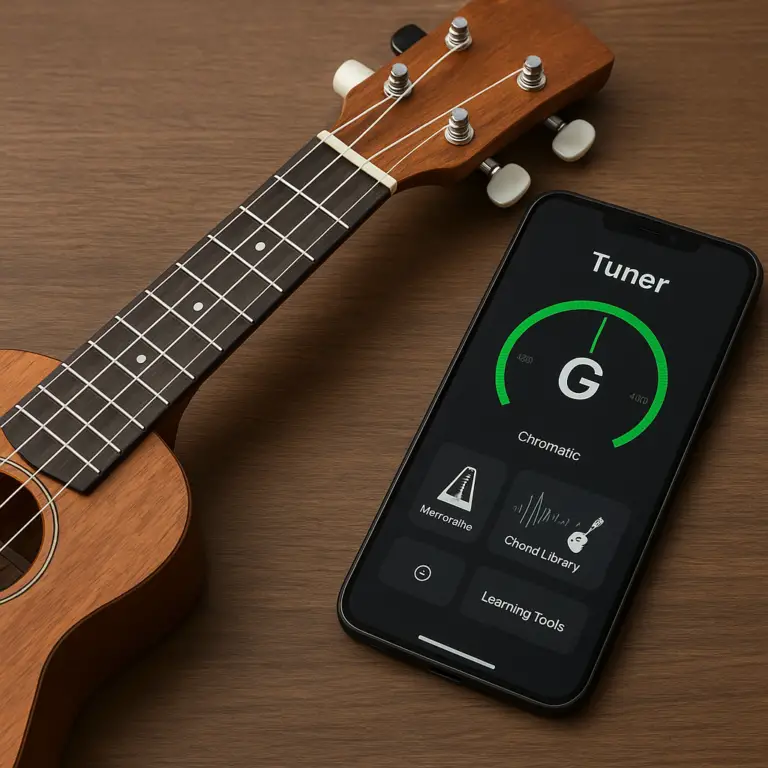
- Get a Tuner: A clip-on electronic tuner (like a Snark or D’Addario) is the easiest method. You can also use a tuning app on your smartphone.
- Clip On/Open App: Attach the tuner to your ukulele’s headstock or open the app.
- Pluck and Adjust: Pluck each string individually. The tuner will display the note. Turn the corresponding tuning peg until the tuner shows the correct note and indicates it’s in tune (usually a green light or a centered needle).
- Repeat: Go through all four strings a couple of times, as adjusting one string can slightly affect the others.
- Common Tunings:
- Standard (GCEA – C6 Tuning): This is the most common tuning for soprano, concert, and tenor ukuleles. From the string closest to your chin (the 4th string) to the one closest to the floor (the 1st string), it’s G-C-E-A. Often, the G string is “high G” (reentrant), meaning it’s tuned an octave higher than a “low G” tuning.
- Low G Tuning (GCEA): For tenor and sometimes concert ukuleles, the 4th G string is tuned an octave lower, giving a fuller, more guitar-like sound.
- D Tuning (ADF#B): Sometimes called “Canadian tuning,” this is a step higher than C tuning and was historically common for soprano ukuleles.
- Baritone Ukulele Tuning (DGBE): This matches the top four strings of a guitar, making it unique among ukuleles.
Read more about “How do you tune a ukulele and what are the common ukulele tunings?”
What are the different types of ukuleles (soprano, concert, tenor, baritone) and which is right for me?
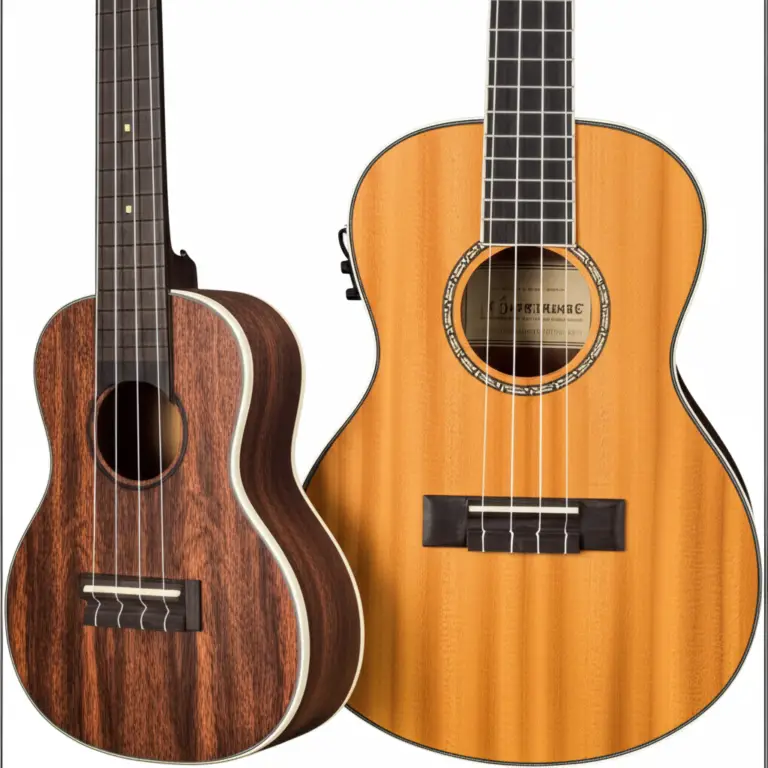
The “ukulele family tree” has four main branches, each with its own character:
Soprano Ukulele 🌸
- Typical Length: 21 inches (53 cm)
- Scale Length: 13 inches (33 cm)
- Frets: 12-15
- Sound: The classic, bright, plinky, and cheerful “ukulele sound.”
- Best For: Traditional ukulele sound, portability, children, those with smaller hands, and beginners looking for the most affordable entry point. It’s the original size!
Concert Ukulele 🎶
- Typical Length: 23 inches (58 cm)
- Scale Length: 15 inches (38 cm)
- Frets: 15-18
- Sound: A bit fuller and louder than the soprano, with more sustain, but still retaining that classic ukulele brightness.
- Best For: Players who want a slightly larger fretboard for easier fingering than a soprano, but still desire the traditional uke tone. A great all-rounder.
Tenor Ukulele 🎸
- Typical Length: 26 inches (66 cm)
- Scale Length: 17 inches (43 cm)
- Frets: 17-19
- Sound: Richer, louder, and with more bass response and sustain than soprano or concert. Often preferred for fingerpicking and soloing. Can be tuned “low G” for an even deeper sound.
- Best For: Guitarists (due to wider fret spacing), players with larger hands, performers who need more projection, and those who prefer a fuller, more versatile sound.
Baritone Ukulele 🎻
- Typical Length: 29 inches (74 cm)
- Scale Length: 19 inches (48 cm)
- Frets: 18-21
- Sound: The deepest and most guitar-like sound of the family, tuned DGBE (like the top four strings of a guitar).
- Best For: Guitarists making the transition, those who prefer a deeper, mellow tone, and players who want a familiar fretboard layout. It’s less “ukulele-like” in sound but incredibly versatile.
Which is right for you?
- Smallest, brightest, most portable: Soprano
- Good balance, slightly easier to play than soprano: Concert
- Fullest sound, great for guitarists/performers: Tenor
- Deepest, most guitar-like, easiest for guitarists: Baritone
Consider your hand size, desired tone, and whether you’re transitioning from guitar. Try playing a few different sizes if you can!
What is a ukulele and how does it differ from a guitar?
A ukulele is a small, four-stringed, plucked lute-family instrument, originating in Hawaii from Portuguese instruments. It’s known for its bright, cheerful sound and ease of play.
Here’s how it generally differs from a guitar:
| Feature | Ukulele | Guitar |
|---|---|---|
| Number of Strings | 4 (typically) | 6 (typically) |
| String Material | Nylon (or synthetic gut/fluorocarbon) | Steel (acoustic/electric) or Nylon (classical) |
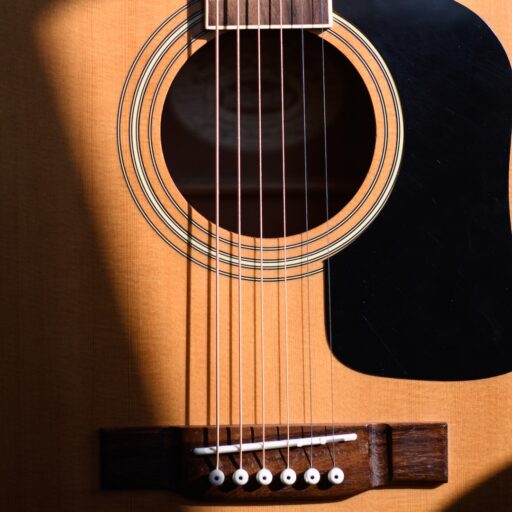
| Size | Much smaller and lighter | Larger and heavier |
| Tuning | GCEA (standard, often reentrant) or DGBE (baritone) | EADGBe (standard) |
| Sound | Bright, plinky, cheerful, less sustain | Fuller, wider range, more sustain, versatile |
| Learning Curve | Generally easier for beginners | Steeper initial learning curve |
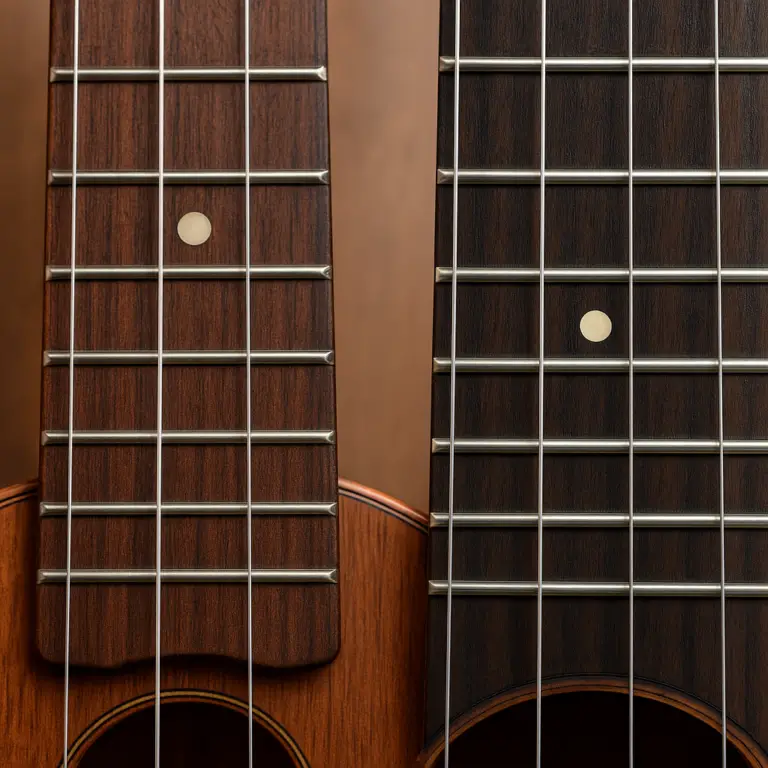
| Fretboard | Shorter, narrower, fewer frets | Longer, wider, more frets |
| Portability | Highly portable | Less portable (though travel guitars exist) |
While they share the same fundamental principle of fretted strings, their differences make them unique instruments, each with its own charm and musical applications.
Read more about “What is a ukulele and how does it differ from a guitar?”
Is ukulele a girly instrument?
Absolutely ❌ NOT! This is a common misconception, and it’s completely unfounded. Music has no gender, and instruments are for everyone. The ukulele is played and loved by people of all ages, genders, and backgrounds across the globe.
Think about it:
- Historical Context: It was popularized by Hawaiian kings and queens, men and women alike.
- Modern Artists: From the powerful performances of Jake Shimabukuro to the soulful tunes of Eddie Vedder, and the pop hits of Billie Eilish, male and female artists alike embrace the ukulele.
- Community: Ukulele clubs and festivals are filled with diverse individuals who simply share a love for the instrument.
The idea that an instrument is “girly” or “masculine” is an outdated and harmful stereotype. The ukulele is a joyful, accessible instrument for anyone who wants to play it. Don’t let such notions deter you from picking one up!
Read more about “Is ukulele a girly instrument?”
Can I learn ukulele by myself?
✅ Yes, absolutely! The ukulele is one of the most self-teachable instruments out there. With the abundance of free and affordable resources available today, learning on your own is not only possible but also a very common and rewarding path.
Here’s why and how:
- Online Resources: YouTube tutorials, free chord charts, and online lesson platforms provide a wealth of information.
- Simple Chords: As mentioned, many basic chords are very easy to form, allowing for quick progress.
- Supportive Community: Online forums and social media groups are full of fellow learners and experienced players willing to offer advice.
- Patience and Practice: Like any skill, consistent practice (even just 15-20 minutes a day) is key.
While a teacher can provide personalized feedback, many people successfully learn the ukulele to a proficient level entirely on their own.
Read more about “Can I learn ukulele by myself?”
How long does it take to learn ukulele?
This is a bit like asking “how long is a piece of string?” – it depends on your goals and dedication! However, here’s a realistic breakdown:
- To Play Your First Song (Basic Chords & Strum): You can often achieve this in a single hour or a few days of dedicated practice. Learning C, G, F, and Am allows you to play many simple songs.
- To Play Many Songs Comfortably (Basic to Intermediate Chords & Strums): With consistent practice (15-30 minutes daily), you could be playing dozens of songs and feeling quite comfortable within 1-3 months.
- To Become Proficient (Fingerpicking, Advanced Chords, Soloing): To truly master the instrument, develop your own style, and tackle more complex pieces, it’s an ongoing journey that can take years.
The beauty of the ukulele is that you get a lot of satisfaction very quickly, which keeps you motivated to continue learning. It’s a journey, not a race!
Read more about “How long does it take to learn ukulele?”
📚 Reference Links
Here are the sources and brands we referenced throughout this comprehensive guide to the ukulele. We believe in providing accurate, verifiable information and connecting you directly to the best resources.
- Wikipedia: Ukulele: https://en.wikipedia.org/wiki/Ukulele
- Guitar Center: Ukuleles Category: https://www.guitarcenter.com/Ukuleles.gc
- Ukulele Magazine: Why I Uke – Heidi Swedberg: https://ukulelemagazine.com/stories/why-i-uke-heidi-swedberg
- Guitar Brands™ Internal Article: 7 Advanced Ukulele Strumming Patterns Every Guitarist Must Master 🎸 (2026): https://www.guitarbrands.org/advanced-ukulele-strumming-patterns-for-guitarists/
- Kala Brand Music Co. Official Website: https://kalabrand.com/
- Luna Guitars Official Website: https://www.lunaguitars.com/
- C.F. Martin & Co. Official Website: https://www.martinguitar.com/
- Cordoba Guitars Official Website: https://www.cordobaguitars.com/
- Fender Official Website: https://www.fender.com/
- Flight Ukulele Official Website: https://flightmusic.com/
- Enya Music Official Website: https://www.enya-music.com/
- Kamaka Ukulele Official Website: https://kamakahawaii.com/
- Guitar Brands™ Category: Guitar Brands Showcase: https://www.guitarbrands.org/category/guitar-brands-showcase/
- Guitar Brands™ Category: Guitar Buying Guide: https://www.guitarbrands.org/category/guitar-buying-guide/
- Guitar Brands™ Category: Guitar Brand Guides: https://www.guitarbrands.org/category/guitar-brand-guides/
- Guitar Brands™ Category: Acoustic Guitars: https://www.guitarbrands.org/category/acoustic-guitars/
- Guitar Brands™ Category: Bass Guitars: https://www.guitarbrands.org/category/bass-guitars/