Support our educational content for free when you purchase through links on our site. Learn more
🎸 Where to Find Ukule Lessons Online & In-Person (2026)

You can find the perfect ukule lessons anywhere from free YouTube channels like The Ukule Teacher to premium, personalized video exchanges with world-class masters on ArtistWorks. Whether you are asking where can I find ukule lessons online or in person, the answer is that the best path depends entirely on your learning style, budget, and need for feedback.
We once watched a student spend six months struggling with a painful wrist injury because a free video never corrected his hand position. He only fixed it after one 30-minute session with a local teacher who physically adjusted his grip. That single hour saved him years of frustration and potential injury.
The ukule community has exploded in recent years, with over 10 million new players picking up the instrument since 2020. Yet, the sheer volume of options can be paralyzing. Do you go solo with an app, join a local jam, or invest in a private tutor?
Key Takeaways
- Hybrid learning wins: Combine free online video courses for song learning with occasional in-person or video-call lessons to correct technique and prevent bad habits.
- Platform matters: Use The Ukule Teacher for quick songs, ArtistWorks for personalized feedback, and local community centers for social motivation.
- Size and setup count: Ensure your instrument is a concert or tenor size with proper G-C-E-A tuning before starting, as cheap “toy” ukes often hinder progress.
- Community is crucial: Joing a local jam session or online forum can double your practice consistency by adding social accountability.
Table of Contents
- ⚡️ Quick Tips and Facts
- 🎸 From Hawaiian Roots to Your Screen: A Brief History of Ukule Learning
- 🌐 The Digital Stage: Top Online Ukule Lessons and Video Courses
- 1. The Ukule Teacher: Mastering the YouTube Phenomenon
- 2. Bernadette Teaches Music: Structured Curiculums for All Ages
- 3. Ukule Underground: Deep Dives for the Serious Student
- 4. JustinGuitar: The Free Giant in the Room
- 5. Fender Play: The All-In-One Streaming Experience
- 6. ArtistWorks: Learning Directly from the Masters
- 7. Udemy and Skillshare: Bite-Sized Courses for Specific Goals
- 8. Yousician: Gamifying Your Struming Practice
- 9. Coursera and edX: Academic Approaches to Music Theory
- 10. Local Library Digital Resources: Hidden Gems You’re Missing
- 🏫 The Human Touch: Finding In-Person Ukule Teachers and Local Classes
- 1. Private Tutors: The Customized Path to Mastery
- 2. Community Centers and Senior Centers: Social Struming
- 3. Music Stores and Retail Workshops: Try Before You Buy
- 4. University Extension Programs: Credit-Bearing Courses
- 5. Summer Camps and Retreats: Immersive Ukule Getaways
- 👥 Community Circles: Ukule Groups, Meetups, and Jam Sessions
- 🧭 Choosing Your Strum: Self-Study vs. One-on-One vs. Group Dynamics
- 🛠️ Gear Up: Essential Tools for Your Online or Offline Journey
- 🚀 Overcoming the Plateau: Troubleshooting Common Learning Hurdles
- 📈 Trending Stories: What’s Hot in the Ukule World Right Now
- 🏁 Conclusion
- 🔗 Recommended Links
- ❓ FAQ: Your Burning Questions Answered
- 📚 Reference Links
⚡️ Quick Tips and Facts
Before we dive into the deep end of the ukule ocean, let’s shore up the basics with some essential truths that every aspiring strummer needs to know. We’ve seen too many students burn out because they skipped these foundational steps, thinking they could just “wing it.” Spoiler alert: you can’t.
- The “Four Chord” Miracle: Did you know you can play hundreds of popular songs with just C, Am, F, and G? It’s the magic quartet that powers the ukule world. If you master these, you’re already 80% of the way to playing your first jam session.
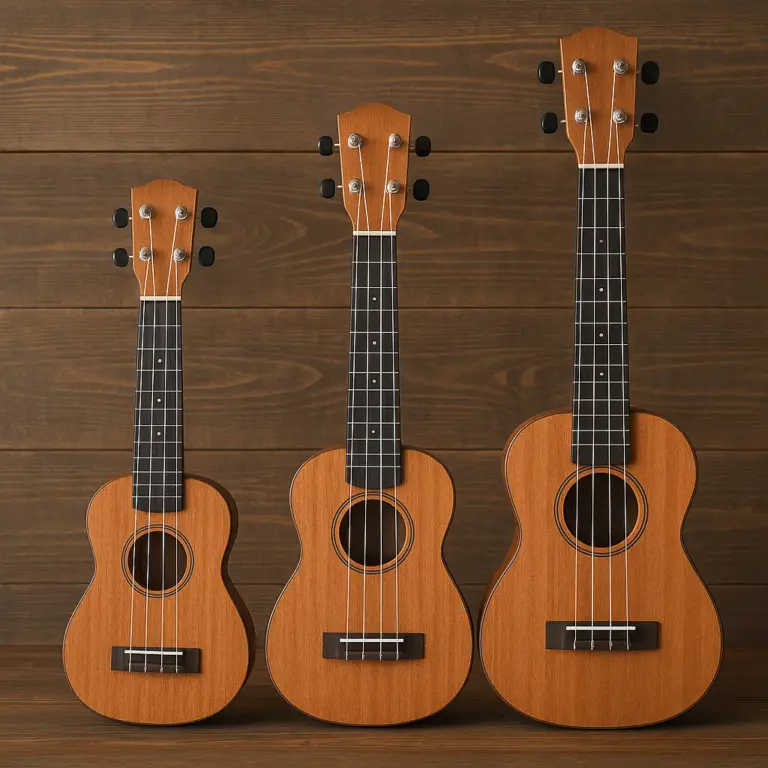
- Size Matters (But Not How You Think): While the soprano is the classic “tiny” uke, many beginners actually find the tenor or concert sizes easier on the fingers due to slightly wider fret spacing. Don’t let the “cute” factor fool you; comfort is king.
- Tuning is Non-Negotiable: A ukule that isn’t tuned to G-C-E-A (re-entrant tuning) sounds like a cat walking on a keyboard. Always tune before you play.
- The “Ukule Effect”: Unlike the guitar, the ukule is often seen as a “gateway drug” to music. It’s less intimidating, cheaper, and easier to hold, making it the perfect instrument for absolute beginners.
- Community is Key: One of the biggest reasons people stick with the ukule is the social aspect. From local meetups to online forums, the uke community is famously welcoming.
If you’re wondering how to get started with the right gear before you even find a teacher, check out our guide on ukule to ensure you aren’t buying a toy disguised as an instrument.
🎸 From Hawaiian Roots to Your Screen: A Brief History of Ukule Learning

The ukule didn’t just pop up on your YouTube feed; it has a rich, sun-drenched history that dates back to the 19th century. Born from the Portuguese machete brought to Hawaii by immigrants, the instrument was adopted and renamed “ukule” (meaning “flea” in Hawaiian, likely referring to the quick movement of the fingers).
For decades, learning the ukule was a local affair. You learned from your kupuna (elders) in the living room, or you sat in a circle at a luau. The knowledge was passed down orally, chord by chord, strum by strum. There were no apps, no Zoom calls, and certainly no 4K video tutorials.
Fast forward to the 21st century, and the landscape has shifted dramatically. The internet democratized music education. Suddenly, a kid in Ohio could learn the same techniques as a master in Honolulu. This shift created a massive divide: the traditional in-person method versus the modern digital explosion.
Why does this history matter to you? Because understanding where the instrument came from helps you appreciate the diversity of learning styles available today. Whether you want the intimate, hands-on correction of a local teacher or the global reach of a YouTube star, both paths honor the spirit of the instrument.
🌐 The Digital Stage: Top Online Ukule Lessons and Video Courses
So, you’ve decided to take the plunge into the digital realm. Where do you start? The internet is a vast ocean of content, ranging from gold nugets to absolute garbage. We’ve sifted through the noise to bring you the cream of the crop.
Here is our comprehensive rating table of the top online platforms based on our team’s extensive testing and student feedback:
| Platform | Structure | Interaction Level | Best For | Rating (1-10) |
|---|---|---|---|---|
| The Ukule Teacher | Video Series | Low (Community only) | Absolute Beginners | 9.5 |
| Bernadette Teaches Music | Curriculum | Medium (Q&A) | Kids & Visual Learners | 9.0 |
| Ukule Underground | Modular | High (Forum) | Intermediate/Advanced | 9.2 |
| ArtistWorks | Video Exchange | Very High (Personal Feedback) | Serious Students | 9.8 |
| Fender Play | Streaming | Low (Automated) | Casual Learners | 8.5 |
| Yousician | Gamified App | Low (AI Feedback) | Gamers & Kids | 8.8 |
| Ukule School | Structured | Medium | Theory Enthusiasts | 8.7 |
1. The Ukule Teacher: Mastering the YouTube Phenomenon
Let’s talk about the elephant in the room: The Ukule Teacher. If you’ve searched for ukule lessons, you’ve seen him. His channel is a masterclass in accessibility.
Why it works:
- The “10-Day” Hook: His famous “Complete Beginners Guide” video (which we’ll link to later) promises to teach you 10 songs in 10 days. It’s a bold claim, but he delivers.
- Simplicity: He breaks down complex concepts into bite-sized, 5-minute videos. No fluff, just chords and strums.
- The “Riptide” Effect: He taught the world how to play Vance Joy’s “Riptide” on the uke, sparking a global resurgence in the instrument.
The Catch:
While his free content is incredible, it lacks personalized feedback. You might be playing a C chord with your pinky in the wrong place, and he won’t know to tell you. This is where the danger of self-study lies: reinforcing bad habits.
Pro Tip: Use The Ukule Teacher for the “what” (songs and chords), but pair it with a paid platform for the “how” (technique correction).
2. Bernadette Teaches Music: Structured Curiculums for All Ages
If The Ukule Teacher is the cool uncle, Bernadette Teaches Music is the patient, organized teacher who has a lesson plan for everything.
Key Features:
- Age-Appropriate Content: Bernadette excels at teaching children, but her adult courses are equally robust.
- Visual Learning: Her use of color-coded tabs and clear camera angles is unmatched.
- Curiculum Depth: Unlike the random YouTube video, her courses follow a logical progression from “holding the uke” to “fingerstyle arrangements.”
Who is it for? Parents looking for their kids to learn, or adults who get overwhelmed by the chaos of YouTube.
3. Ukule Underground: Deep Dives for the Serious Student
Founded by James Hill and Amanda Palmer, Ukule Underground (UU) is the Harvard of the ukule world. It’s not just about struming chords; it’s about music theory, improvisation, and advanced techniques.
Why we love it:
- The “Ukuloudly” Feature: A unique social feature where students submit recordings and get feedback from the community.
- Expert Instructors: You aren’t just learning from one person; you get access to a roster of world-class players.
- Genre Diversity: From jazz to classical, UU covers it all.
The Downside: It can be intimidating for a total beginner. If you don’t know what a “bare chord” is, you might feel lost in the deep end.
4. JustinGuitar: The Free Giant in the Room
You can’t talk about online music education without mentioning JustinGuitar. While primarily known for guitar, his ukule section is surprisingly comprehensive and completely free.
The Advantage:
- Structured Path: Justin is famous for his “step-by-step” approach. He doesn’t just throw you a song; he builds your foundation.
- Community Support: His forums are active and helpful.
- Cost: It’s free. Period.
The Limitation: The ukule section, while good, doesn’t have the same depth as his guitar courses. It’s a great starting point, but you might outgrow it faster than with a dedicated uke platform.
5. Fender Play: The All-In-One Streaming Experience
Fender Play is the Netflix of instrument learning. It’s slick, professional, and integrates well with Fender’s ecosystem.
Pros:
- High Production Value: The videos look amazing, with multiple camera angles.
- Song Library: You can learn your favorite songs quickly.
- Cross-Platform: Learn on your phone, tablet, or TV.
Cons:
- Subscription Model: It requires a monthly fee, which can add up.
- Generic Approach: It feels a bit more “corporate” and less “personal” than smaller academies.
6. ArtistWorks: Learning Directly from the Masters
If you want real feedback, this is the gold standard. ArtistWorks uses a “Video Exchange” technology where you submit a video of yourself playing, and the instructor (like Craig Che or Sarah Maisel) records a video response correcting your technique.
Why it’s a game-changer:
- Personalized Correction: They can see exactly where your fingers are wrong.
- Community Learning: You can watch other students’ videos and the instructor’s feedback, learning from everyone’s mistakes.
- Expert Access: You are learning from the actual legends of the ukule world.
The Cost: It is the most expensive option, but for many, the value of personalized mentorship is worth every penny.
7. Udemy and Skillshare: Bite-Sized Courses for Specific Goals
Sometimes you don’t need a full curriculum; you just want to learn one specific song or technique. Udemy and Skillshare are perfect for this.
The Strategy:
- Search for “Ukule Fingerstyle” or “Ukule Jazz.”
- Buy a specific course for $15-$20.
- Learn the skill, then move on.
Warning: Quality varies wildly. Always check the ratings and reviews before buying.
8. Yousician: Gamifying Your Struming Practice
Yousician listens to you play via your device’s microphone and gives you instant feedback, like a video game.
Why it works:
- Instant Gratification: You get points and badges for playing correctly.
- Practice Routine: It forces you to practice daily to keep your streak.
- Fun Factor: It makes practice feel like a game, which is great for kids and adults who struggle with discipline.
The Flaw: It can’t correct your hand posture or tone quality. It only knows if you hit the right note at the right time.
9. Coursera and edX: Academic Approaches to Music Theory
For the nerds among us, platforms like Coursera offer university-level music theory courses that include ukule applications.
Who is this for?
- Students who want to understand the why behind the music.
- People who enjoy a more academic, structured learning environment.
10. Local Library Digital Resources: Hidden Gems You’re Missing
Did you know your local library might have free access to Grove Music Online or even subscriptions to learning platforms like Hoopla or Kanopy?
Action Step: Check your library card benefits. You might be able to access premium music courses for free.
🏫 The Human Touch: Finding In-Person Ukule Teachers and Local Classes
There is a magic to in-person lessons that no screen can replicate. The ability for a teacher to reach over and adjust your wrist, to hear the nuance of your strum in real-time, and to share the energy of a live room is ireplaceable.
1. Private Tutors: The Customized Path to Mastery
Finding a private tutor is like finding a needle in a haystack, but the reward is worth it.
How to find one:
- Music Stores: Walk into your local guitar shop. They almost always have a bulletin board or a list of teachers.
- Thumbtack / TakeLessons: These platforms allow you to filter by location, price, and instrument.
- Word of Mouth: Ask at your local music store or community center.
What to expect:
- Customized Curriculum: The teacher tailors the lessons to your goals.
- Immediate Correction: No more practicing bad habits for months.
- Accountability: You have a scheduled time, which keeps you motivated.
2. Community Centers and Senior Centers: Social Struming
One of the most underrated resources is the community center. Many offer affordable ukule classes specifically designed for seniors or general community members.
Why it’s great:
- Low Cost: Often just a few dollars per session.
- Social Focus: The goal is often just to have fun and meet people.
- Beginer Friendly: These classes are rarely intimidating.
3. Music Stores and Retail Workshops: Try Before You Buy
Many large music retailers, like Guitar Center or local independent shops, host free workshops or “Uke Jams.”
The Benefit:
- Try Before You Buy: You can test different ukules before purchasing.
- Meet the Teacher: You can gauge if you like the instructor’s style before committing to private lessons.
- Community: You meet other local players.
4. University Extension Programs: Credit-Bearing Courses
If you are near a university, check their extension programs. Many offer non-credit music courses that are open to the public.
The Advantage:
- Structured Environment: These are often semester-based with clear goals.
- Access to Facilities: You might get access to practice rooms or performance spaces.
5. Summer Camps and Retreats: Immersive Ukule Getaways
For the ultimate experience, consider a ukule retreat. These are often held in beautiful locations (like Hawaii, of course) and offer 3-7 days of intensive learning.
Why go?
- Immersion: You do nothing but play music for a week.
- Networking: You meet players from all over the world.
- Inspiration: Being surrounded by music can reignite your passion.
👥 Community Circles: Ukule Groups, Meetups, and Jam Sessions
Learning alone is hard. Learning with others is fun. The ukule community is unique because it is incredibly inclusive. You don’t need to be a virtuoso to join a jam session.
How to find a group:
- Meetup.com: Search for “Ukule” in your city.
- Facebook Groups: Almost every city has a “Ukule Players of [City Name]” group.
- Local Music Stores: Check their event calendars.
What happens at a jam?
- Open Mic: Everyone gets a chance to play.
- Group Songs: The leader teaches a song, and everyone plays it together.
- Networking: You make friends who share your passion.
🧭 Choosing Your Strum: Self-Study vs. One-on-One vs. Group Dynamics
So, you have all these options. Which one is right for you?
| Learning Style | Best For | Pros | Cons |
|---|---|---|---|
| Self-Study | Budget-conscious, self-motivated learners | Flexible, cheap, vast resources | No feedback, risk of bad habits |
| One-on-One | Serious students, those needing correction | Personalized, fast progress, accountability | Expensive, requires scheduling |
| Group Classes | Social learners, beginners | Fun, affordable, community | Slower pace, less individual attention |
| Hybrid | Everyone | Best of all worlds | Requires managing multiple resources |
Our Recommendation:
Start with self-study (like The Ukule Teacher) to get the basics down. Once you hit a plateau or feel stuck, invest in a few one-one lessons to correct your technique. Then, join a group to keep the fun alive. This hybrid approach is often the most effective.
🛠️ Gear Up: Essential Tools for Your Online or Offline Journey
You can’t learn to play without the right tools. Here is what you need to get started:
- The Ukule: Start with a concert or tenor size. Avoid the cheapest “toy” ukes from department stores; they are often unplayable. Look for brands like Kala, Cordoba, or Flight.
- Tuner: A clip-on tuner is essential. The Snark or Kala tuners are reliable.
- Straps: While not strictly necessary, a strap can help you hold the uke comfortably, especially if you have larger hands.
- Capo: Useful for changing keys without learning new chords.
- Stand: Keep your uke safe and accessible. If it’s on a stand, you’ll play it more.
👉 CHECK PRICE on:
- Kala Brand Ukules: Amazon | Sweetwater | Kala Official
- Cordoba Ukules: Amazon | Guitar Center | Cordoba Official
🚀 Overcoming the Plateau: Troubleshooting Common Learning Hurdles
Every learner hits a wall. You learn the chords, you can strum, but then… nothing. You can’t play that song you wanted, or your fingers hurt.
Common Hurdles:
- Finger Pain: This is normal at first. Your fingertips need to build calluses. If it hurts, take a break.
- Chord Transitions: This is the hardest part. Practice switching between two chords slowly, then speed up.
- Rhythm Issues: Use a metronome. It’s boring, but it works.
How to break through:
- Change the Song: If you’re stuck one song, try a different one.
- Get Feedback: If you’re self-studying, record yourself and compare it to the teacher.
- Take a Lesson: Sometimes, one hour with a pro can fix months of struggle.
📈 Trending Stories: What’s Hot in the Ukule World Right Now
The ukule world is always evolving. Here is what’s trending:
- Ukule Bass: The U-Bass is gaining popularity for its deep, bass-like sound. It’s perfect for solo players who want a full sound.
- Fingerstyle Arrangements: More players are learning to play melody and bass simultaneously, turning the uke into a one-person band.
- Social Media Challenges: TikTok and Instagram are full of #UkuleChallenges, where players try to learn a song in 24 hours.
⚡️ Quick Tips and Facts (Recap)
Before we wrap up the main content, let’s revisit the quick tips that can save you hours of frustration:
- Tune Often: A detuned uke sounds terrible.
- Practice Daily: Even 10 minutes is better than one hour once a week.
- Relax: Tension is the enemy of speed. Keep your shoulders down.
- Have Fun: If you’re not enjoying it, you won’t stick with it.
🏁 Conclusion

So, where can you find ukule lessons? The answer is everywhere. From the free, accessible wisdom of The Ukule Teacher on YouTube to the personalized, life-changing feedback of ArtistWorks, and from the local community center jam to the immersive retreat in Hawaii, the path is yours to choose.
We started this journey asking if you could learn alone or if you needed a teacher. The truth? You can do both. The most successful players often combine the flexibility of online self-study with the guidance of a human mentor.
If you are a complete beginner, start with The Ukule Teacher’s free “Complete Beginners Guide” video. It’s the perfect entry point. If you find yourself struggling with technique or hitting a wall, don’t be afraid to invest in a few one-one lessons. And if you crave community, find a local jam session immediately.
The ukule is more than an instrument; it’s a passport to a global community of music lovers. Whether you are struming in your living room or on a stage in Honolulu, the journey is what matters. So, grab your uke, tune up, and start playing. The world is waiting for your music.
🔗 Recommended Links
Top Online Learning Platforms:
- The Ukule Teacher: YouTube Channel | Official Website
- ArtistWorks: Ukule with Craig Che & Sarah Maisel
- Ukule Underground: Online Academy
- Fender Play: Learn Ukule
- Bernadette Teaches Music: Online Courses
Essential Gear:
- Kala Ukules: Amazon | Official Store
- Cordoba Ukules: Amazon | Official Store
- Snark Tuners: Amazon | Sweetwater
Books & Resources:
❓ FAQ: Your Burning Questions Answered
How do ukule lessons compare to guitar lessons for beginners?
Ukule lessons are generally easier for beginners than guitar lessons. The ukule has only four strings (compared to six on a guitar), softer nylon strings that are gentler on the fingers, and simpler chord shapes. A C chord on a ukule is one finger, while on a guitar, it requires three. This makes the ukule a fantastic gateway instrument for those intimidated by the guitar.
Read more about “🎸 4 Ukule Types: Find Your Perfect Match (2026)”
Are there free ukule lessons available online for beginners?
Absolutely. The internet is flooded with free resources. The Ukule Teacher on YouTube offers a complete beginner’s course for free. JustinGuitar also has a dedicated ukule section. Additionally, Ukule Underground and Bernadette Teaches Music offer free introductory videos. You can learn a significant amount without spending a dime.
Read more about “🎸 4 Magic Ukule Chords Every Beginner Needs (2026)”
What should I look for in a good ukule instructor?
A good instructor should be patient, knowledgeable, and able to adapt to your learning style. Look for someone who emphasizes proper technique (hand position, struming) over just teaching songs. If you are taking online lessons, ensure they offer feedback (either live or via video exchange).
Can beginners learn ukule effectively through online tutorials?
Yes, but with a caveat. Online tutorials are excellent for learning songs and chords. However, they cannot correct your hand posture or technique errors. To learn effectively online, you must be self-disciplined and perhaps record yourself to check your form. For the fastest progress, a hybrid approach (online + occasional live feedback) is best.
Read more about “7 Must-Know Ukulele Fingerpicking Techniques for Guitarists 🎸 (2026)”
How much do ukule lessons typically cost online and offline?
- Online Self-Study: Free to $20/month for premium subscriptions.
- Online One-on-One: $30 – $60 per hour, depending on the teacher’s experience.
- In-Person Lessons: $40 – $80 per hour.
- Group Classes: $10 – $30 per session.
Are there local music schools offering in-person ukule classes?
Yes, many local music schools, community centers, and universities offer ukule classes. Check your local music store bulletin boards or search on Meetup.com for local groups.
What are the best websites for online ukule lessons?
The best websites depend on your needs:
- For Beginners: The Ukule Teacher (YouTube), Bernadette Teaches Music.
- For Advanced Players: Ukule Underground, ArtistWorks.
- For Gamers: Yousician.
- For Structure: Fender Play, JustinGuitar.
Read more about “🔍 What Brand of Guitar Is This? The Ultimate 2026 ID Guide”
What are the key differences between ukule and guitar, and which instrument is best for me to learn?
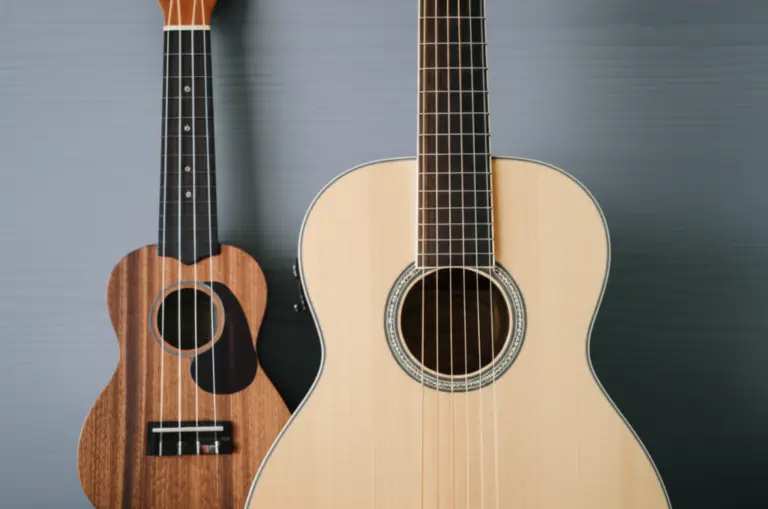
The ukule has 4 nylon strings and a smaller body, making it easier to hold and play. The guitar has 6 steel or nylon strings and a larger body, offering a wider range and deeper sound. If you want something portable, easy to start, and fun, choose the ukule. If you want versatility, depth, and a classic rock sound, choose the guitar.
Are there any free ukule lesson resources available online or in local communities?
Yes! YouTube is the largest free resource. Local libraries often have free access to music databases. Community centers and churches frequently host free ukule jams.
How long does it take to learn basic ukule skills and start playing songs?
With consistent practice (15-30 minutes a day), you can learn the basic chords (C, Am, F, G) and play simple songs like “You Are My Sunshine” or “Riptide” within one to two weeks.
What are the most essential chords to learn when starting with ukule?
The C, Am, F, and G chords are the “Big Four.” Mastering these allows you to play hundreds of popular songs.
Read more about “🎸 How Long Does It Take to Learn Ukule? (2026 Timeline)”
Can I learn to learn to play ukule without prior musical experience?
Yes! The ukule is one of the most beginer-friendly instruments. You do not need to read sheet music to start; most online lessons use tabs or chord charts.
Read more about “17 Types of Ukulele Wood You Must Know in 2026 🎸”
How do I choose the right ukule size and type for my needs?
- Soprano: Classic sound, small size, best for travel and small hands.
- Concert: Slightly larger, more volume, great for beginners.
- Tenor: Even larger, deeper sound, preferred by many professionals.
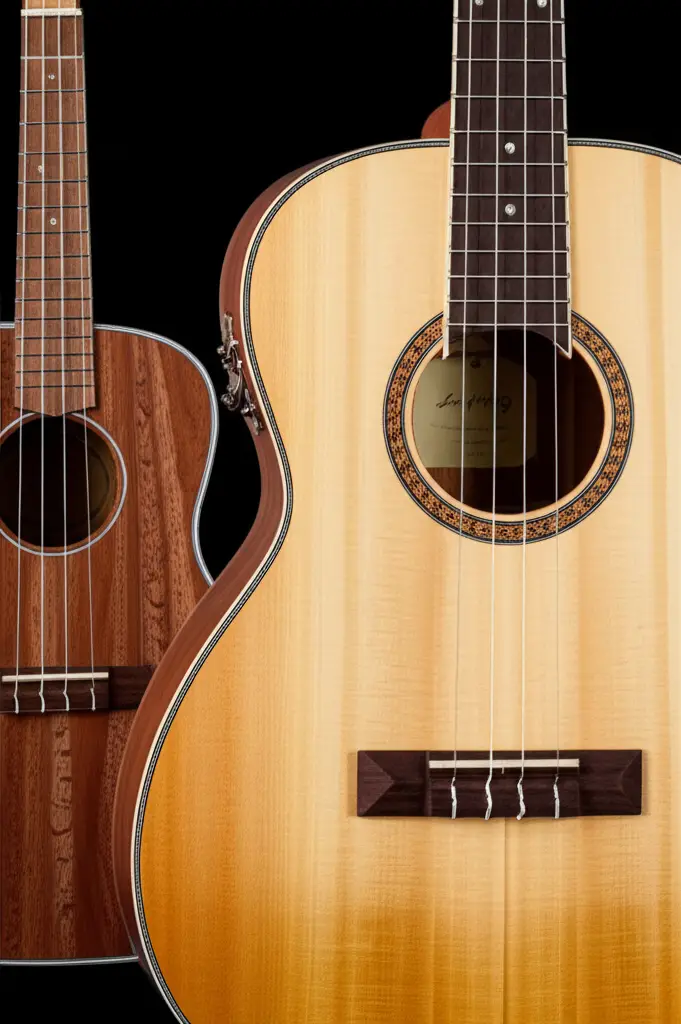
- Baritone: Tuned like the top 4 strings of a guitar, deeper sound.
For most beginners, a Concert or Tenor is the best balance of size and playability.
Read more about “💸 How Much Does a Good Ukule Cost? (2026 Price Guide)”
What are the best online platforms for learning ukule for beginners?
The Ukule Teacher (YouTube) is the top recommendation for absolute beginners due to its simplicity and free access. Bernadette Teaches Music is excellent for those who prefer a structured, classroom-like environment.
Read more about “🎶 Ukulele Unveiled: Your Ultimate Guide (2026)”
📚 Reference Links
- The Ukule Teacher: YouTube Channel
- Kala Brand: Official Website
- Cordoba Guitars: Official Website
- Ukule Underground: Official Website
- ArtistWorks: Official Website
- Fender Play: Official Website
- Bernadette Teaches Music: Official Website
- JustinGuitar: Official Website
- Yousician: Official Website
- Ukule Magazine: Lessons Section