Support our educational content for free when you purchase through links on our site. Learn more
Which Ukulele Is Best for Beginners? 10 Picks 🎸

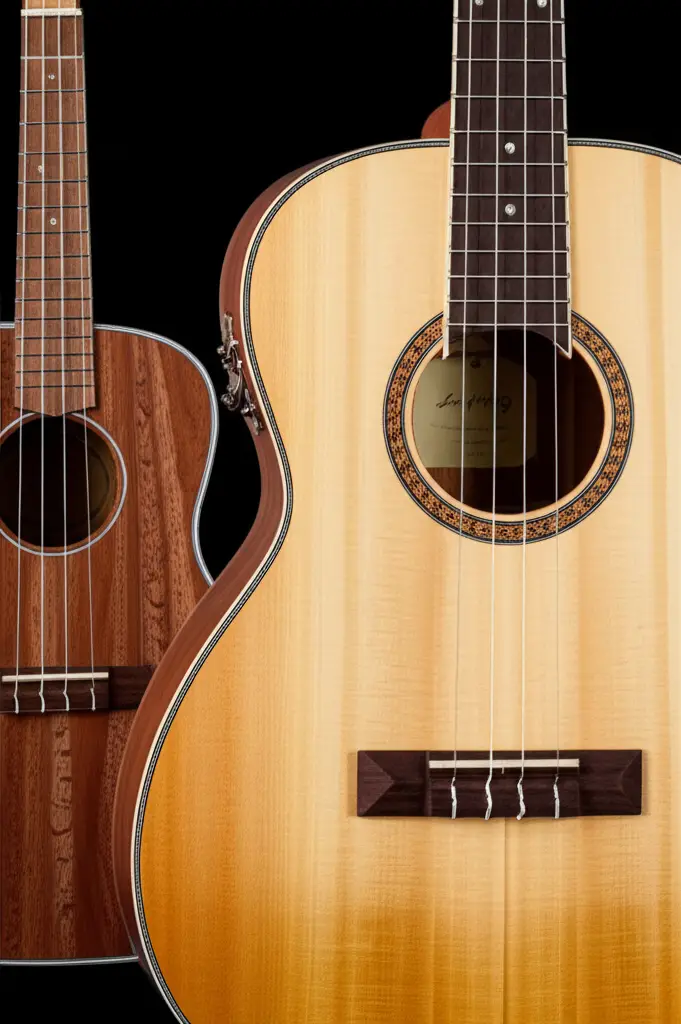
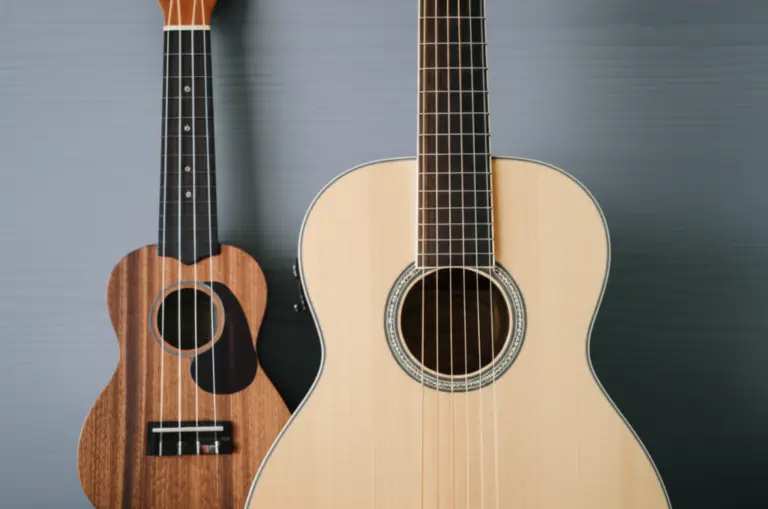
Which ukulele is best for beginners? For many adults, a well-set-up concert ukulele is the best place to start: it keeps the familiar ukulele sound and tuning while offering a little more room for your fingers than a soprano. If you prefer a smaller instrument, have smaller hands, or want classic portability, a soprano may suit you better.
The right size is only part of the story. A comfortable neck, stable tuning, and clean setup can make the difference between happily learning your first chords and wondering why every string seems to have its own agenda.
We’ve picked 10 beginner-friendly options, from the dependable Kala KA-15S and KA-C to durable travel models and a guitalele alternative. We’ll also help you choose a size, check playability, and avoid buying a bundle with more accessories than useful advice.
Key Takeaways
- A concert ukulele is a strong first choice for many adults, but the easiest size depends on your hands, comfort, and playing goals.
- Soprano, concert, tenor, and baritone ukules differ in size, tone, and tuning. Baritone is typically tuned D–G–B–E; the other common sizes usually use G–C–E–A.
- Prioritize a comfortable setup and tuning stability over flashy extras. A clip-on tuner and a return policy are practical beginner essentials.
- Try before you buy if possible: Hold a few sizes and test basic C and G chords to see what feels natural.
- Our 10 beginner picks include options from Kala, Cordoba, Enya, Flight, Luna, Fender, and Yamaha.
👉 Shop our featured beginner options:
- Kala ukules | Kala Official
- Cordoba ukules | Cordoba Official
- Enya Nova U | Enya Official
- Flight ukules | Flight Official
- Luna ukules | Luna Official
- Fender ukules | Fender Official
- Yamaha GL1 guitalele | Yamaha Official
Table of Contents
- ⚡️ Quick Tips and Facts
- 🎸 What Makes a Ukulele Beginner-Friendly?
- 🌺 Ukulele Origins: A Brief History of the Instrument
- 📏 Ukulele Sizes Explained: Soprano, Concert, Tenor, and Baritone
- Ukulele Size Comparison at a Glance
- Which Ukulele Size Is Easiest for Beginners?
- 🏆 10 Best Ukules for Beginners
- 1. Kala KA-15S: Best Soprano Ukulele for Beginners
- 2. Kala KA-C: Best Concert Ukulele for Beginners
- 3. Kala KA-T: Best Tenor Ukulele for Beginners
- 4. Cordoba 15CM: Best All-Around Beginner Concert Ukulele
- 5. Cordoba 15SM: Best Beginner Soprano Ukulele
- 6. Enya Nova U: Best Durable Travel Ukulele for Beginners
- 7. Flight TUS-35: Best Budget-Friendly Ukulele for Beginners
- 8. Luna Tattoo Concert: Best Beginner Ukulele with Standout Style
- 9. Fender Venice Soprano: Best Beginner Ukulele from a Familiar Guitar Brand
- 10. Yamaha GL1: Best Beginner Guitalele Alternative
- 🛒 How to Choose Your First Ukulele
- Comfort, Hand Size, and Fretboard Feel
- Tonewoods and Ukulele Body Materials
- Build Quality, Intonation, and Tuning Stability
- Acoustic or Electric Ukulele?
- Left-Handed Ukulele Options
- 🎼 Ukulele Tuning and Strings for Beginners
- Standard G-C-E-A Tuning and Low-G Tuning
- Choosing Beginner Ukulele Strings
- 🎒 What Comes in a Beginner Ukulele Starter Kit?
- 💰 How Much Should You Spend on a First Ukulele?
- ✅ Essential Ukulele Accessories for New Players
- 🎵 Your First Week: Basic Ukulele Chords and Practice Tips
- 🧰 Ukulele Care, Setup, and Common Beginner Problems
- How Often to Tune a New Ukulele
- How to Store and Clean Your Ukulele
- Fixing Buzzing, Sore Fingers, and Tuning Issues
- 🎁 Buying a Ukulele as a Gift
- 🎤 Conclusion
- 🔗 Recommended Links
- ❓ FAQ
- Which ukulele is best for beginners?
- Is a soprano or concert ukulele better for a beginner?
- Are ukules easier to learn than guitars?
- How much should a beginner spend on a ukulele?
- Do beginner ukules need to be tuned often?
- Can adults learn on a soprano ukulele?
- Should beginners buy an acoustic or electric ukulele?
- What ukulele chords should beginners learn first?
- 📚 Reference Links
⚡️ Quick Tips and Facts
Quick answer: For most beginners, a concert ukulele from a reputable maker is a sensible first choice: it gives your fretting hand a little more room than a soprano without losing the familiar ukulele sound. But there’s no universal winner. The best beginner ukulele is the one that feels comfortable, stays in tune reasonably well, and makes you want to pick it up again tomorrow.
If you’re comparing models or looking for a starter package, our ukulele buying guide and Amazon options are a handy next stop.
| If you want… | Start by considering… | Why |
|---|---|---|
| A classic, bright ukulele sound in a compact body | Soprano | Lightweight and portable; a popular choice for children and players with smaller hands |
| More room for chords without a much larger instrument | Concert | A comfortable all-rounder for many adults and first-time players |
| A fuller voice and more fretboard space | Tenor | Often suits larger hands, fingerstyle playing, and guitarists |
| A deeper sound and guitar-like tuning | Baritone | Tuned D–G–B–E rather than the usual G–C–E–A |
| A ukulele for travel or messy adventures | Durable plastic/composite model | Less fuss about bumps and changes in conditions; check the sound and setup before buying |
| The least frustrating first week | A properly set-up instrument plus a clip-on tuner | A badly adjusted uke can make simple chords feel like advanced acrobatics |
A few useful facts:
- The four familiar ukulele sizes are soprano, concert, tenor, and baritone. Exact body and scale measurements vary by maker, so treat size charts as useful comparisons—not laws of physics.
- Soprano, concert, and tenor are commonly tuned G–C–E–A. Baritone is commonly tuned D–G–B–E, like the highest four strings of a guitar.
- A bigger ukulele is not automatically easier. More fret spacing can help some hands, while the larger body may feel less comfortable to others.
- New nylon-string ukules often need frequent tuning at first as their strings settle. That doesn’t necessarily mean the instrument is defective.
- Buying the cheapest possible instrument can be a false economy if poor tuning stability, high string action, or rough fret ends make it difficult to play.
For a second perspective on ukulele sizes and beginner choices, compare advice from Terry Carter Music Store and Ukulele Go’s beginner roundup. Their recommendations differ in emphasis; we’ll get to why comfort and setup matter more than a one-size-fits-all verdict.
🎸 What Makes a Ukulele Beginner-Friendly?
A beginner-friendly ukulele makes the basics feel approachable. That means comfortable string height, dependable tuning, clean frets, and a size that suits your hands and playing goals. A fancy finish is nice. A uke that refuses to stay in tune is less charming.
The essentials to check
- Playability: Strings should not sit so high above the fretboard that pressing them down feels like squeezing a stress ball.
- Tuning stability: Tuners should turn smoothly and hold their position. Strings may still stretch during the first days or weeks.
- Intonation: Notes should stay reasonably in tune as you play higher up the neck. A shop can help check this.
- Comfort: The neck should fit your hand, and the body should sit comfortably against you.
- Useful support: A clip-on tuner, a reliable chord chart, and a return policy can be more valuable than a bundle packed with novelty accessories.
What beginners often overlook
A low-quality setup can disguise itself as “I’m bad at this.” If a basic C chord buzzes, or your fingers must press unusually hard, ask someone experienced to inspect the instrument before blaming your hands. Our guitar buying guide covers a similar principle: setup and fit affect how enjoyable an instrument is to learn on.
One of our players once brought a cheerful-looking bargain uke to a rehearsal. It was tuned perfectly open, then wandered off pitch as soon as a chord appeared. The player wasn’t doing anything wrong; the instrument’s tuning hardware and setup were. A better uke didn’t magically teach the chords—but it stopped making practice harder than it needed to be.
🌺 Ukulele Origins: A Brief History of the Instrument

The ukulele is closely associated with Hawai‘i, where the instrument developed in the late 19th century after Portuguese immigrants brought small stringed instruments, including the machete de braga, to the islands. Hawaiian musicians adapted those influences into the instrument now known around the world as the ukulele.
The name is commonly translated as “jumping flea,” though accounts of the origin vary. The instrument’s bright sound, compact size, and approachable chord shapes helped it travel well beyond Hawai‘i. For a credible historical overview, see the Smithsonian National Museum of American History’s ukulele collection and the Hawaian Encyclopedia’s ukulele entry.
Why the history matters when you’re choosing one
Different modern ukules preserve different parts of that character:
- Soprano: The compact size and bright voice many people picture when they hear “ukulele.”
- Concert and tenor: Larger bodies and longer scales, offering more space and often more volume.
- Baritone: A distinct, deeper-sounding member of the ukulele family, with a different standard tuning.
There’s no need to buy the smallest model just to be “authentic.” The best instrument for learning is the one you can play comfortably. And yes, the name is commonly pronounced “oo-koo-leh-leh.” The instrument is friendly; its spelling occasionally plays hard to get.
📏 Ukulele Sizes Explained: Soprano, Concert, Tenor, and Baritone
The familiar size labels describe a general progression: each step up usually brings a longer scale, more fret spacing, and a larger body. But manufacturers vary, and body size alone doesn’t tell you whether a particular instrument will feel right.
| Size | Typical overall length* | Typical character | Common tuning | Often suits |
|---|---|---|---|---|
| Soprano | Around 21 in / 53 cm | Bright, compact, classic | G–C–E–A | Children, smaller hands, portability |
| Concert | Around 23 in / 58 cm | Balanced, a little fuller | G–C–E–A | Many adult beginners and all-round players |
| Tenor | Around 26 in / 66 cm | Fuller, often more sustain | G–C–E–A | Larger hands, fingerstyle, guitarists |
| Baritone | Around 30 in / 76 cm | Deep, mellow, guitar-like | D–G–B–E | Guitar players or anyone seeking a lower voice |
*Approximate figures only. Measurements and scale lengths differ among models. For example, the Kala KA-15S soprano and Kala KA-C concert are useful examples of how the same brand offers familiar size choices.
Ukulele Size Comparison at a Glance
| Your priority | Size to try first | Trade-off |
|---|---|---|
| Maximum portability | Soprano | Close fret spacing may feel cramped for some players |
| A balanced first instrument | Concert | Larger body than a soprano; still not spacious enough for every hand |
| More space for fretting and fingerpicking | Tenor | Less compact, and its fuller tone may be less “classic” to some ears |
| Guitar-like tuning and deeper tone | Baritone | Chord shapes and many beginner tutorials may differ from standard uke lessons |
Which Ukulele Size Is Easiest for Beginners?
For many adults, a concert is the safest first instrument to try, because it often balances fret spacing, portability, and familiar G–C–E–A tuning. Terry Carter Music Store calls the concert “the perfect balance between comfort and sound projection” in its size guide.
That doesn’t make soprano a wrong choice. Ukulele Go warns against assuming that larger automatically means easier, saying there is “no hard and fast rule” about the right size in its beginer guide. Both perspectives can be true: a longer scale may give your fingers room, but the right fit depends on hand size, reach, posture, and the model’s setup.
Our practical test: Hold a soprano, concert, and tenor if you can. Play a C chord, then a G chord. Notice whether your fingers can reach cleanly without twisting your wrist or muting neighboring strings. That quick test tells you more than a measurement chart.
🏆 10 Best Ukules for Beginners
These picks cover common starting points: a simple soprano, comfortable concert models, a tenor option, a durable travel uke, and an alternative for players who want a guitar-like feel. Product specs can change by model year and region, so check the manufacturer’s current listing before ordering.
1. Kala KA-15S: Best Soprano Ukulele for Beginners
The Kala KA-15S is a sensible soprano to shortlist if you want a traditional wooden ukulele from a widely recognized maker. Kala lists the model in its official product catalog; its compact body makes it easy to carry, and soprano scale is familiar to players following standard G–C–E–A lessons.
Why beginners may like it:
- Compact, straightforward soprano format.
- A conventional choice for learning basic chords and strumming.
- The established Kala range makes accessories and learning resources easy to find.
Potential drawbacks:
- The smaller fretboard may feel tight for larger fingers.
- Like any instrument in this category, it benefits from checking tuning, action, and fretwork on arrival.
Ukulele Go calls the KA-15S “tough to beat” as an entry-level option in its beginer recommendations. That’s a useful endorsement, but it doesn’t mean every player should choose a soprano; try the size before committing if possible.
- Kala KA-15S: Amazon | Guitar Center | Kala Official
2. Kala KA-C: Best Concert Ukulele for Beginners
The Kala KA-C is a good starting point if the soprano’s close fret spacing worries you. Its concert format keeps the familiar G–C–E–A tuning while offering a longer scale than the soprano KA-15S. See the official Kala KA-C page for current specifications.
Why it stands out:
- A balanced size for many adult beginners.
- A little more fretboard space than a soprano.
- A useful all-round format for strumming and simple fingerpicking.
Trade-offs: It’s less pocketable than a soprano, and a larger body doesn’t guarantee a better fit. If you have small hands or prefer a bright, compact sound, the KA-15S may feel more natural.
- Kala KA-C: Amazon | Guitar Center | Kala Official
3. Kala KA-T: Best Tenor Ukulele for Beginners
The Kala KA-T makes sense for players who want a fuller voice and more room along the neck. Tenors are popular with guitarists and fingerstyle players, though beginner chord shapes in standard G–C–E–A tuning are generally the same as on soprano and concert models.
See the Kala KA-T product page for the brand’s current details.
Good fit for:
- Larger hands or players who find soprano and concert frets crowded.
- Fingerpicking and more extended playing.
- Anyone who prefers a slightly fuller tone.
Consider before buying: A tenor is bigger to carry and may feel awkward against a smaller frame. As the first video’s perspective suggests, guitarists may appreciate its extra room; that’s one reason to consider a tenor, not a guarantee that every guitarist will prefer it.
- Kala KA-T: Amazon | Guitar Center | Kala Official
4. Cordoba 15CM: Best All-Around Beginner Concert Ukulele
The Cordoba 15CM is a concert-size option for beginners who want a familiar acoustic format from a brand known for nylon-string instruments. Check Cordoba’s current ukulele lineup for the latest model information and availability.
What we like: The concert size is versatile, and Cordoba’s ukulele range includes approachable instruments for players starting out. It’s worth comparing directly with the Kala KA-C rather than deciding from brand reputation alone.
Possible downside: Model specifications can vary, and the best instrument depends on the actual setup of the individual uke. Check string height and tuning before keeping it.
- Cordoba 15CM: Amazon | Guitar Center | Cordoba Official
5. Cordoba 15SM: Best Beginner Soprano Ukulele
The Cordoba 15SM is another compact soprano to compare with the Kala KA-15S. Ukulele Go highlights the 15SM as a step-up option, noting its satin finish and traditional details in its beginer roundup. Confirm exact materials and included accessories with the seller, because listings and production details can change.
Advantages:
- A traditional soprano footprint.
- A good option for players who like a compact uke and classic look.
- Part of Cordoba’s broad nylon-string instrument family.
Drawbacks: Players with larger hands may prefer concert or tenor. Also, a pleasant finish cannot compensate for a poor setup—check how it plays across the first few frets.
- Cordoba 15SM: Amazon | Guitar Center | Cordoba Official
6. Enya Nova U: Best Durable Travel Ukulele for Beginners
The Enya Nova U is a lightweight composite ukulele aimed at travel and everyday portability. Enya describes its instrument range on its official website; verify the exact size and included components for the version you’re considering.
Why it may suit a beginner:
- Composite construction is appealing for travel and outdoor use.
- A practical alternative if you don’t want to worry as much about a wooden body.
- Often sold in packages with helpful starter accessories, depending on the listing.
Potential drawbacks:
-
Some players prefer the response and look of wood.
-
A bundled tuner or case may vary by seller.
-
Durable doesn’t mean indestructible; protect the instrument from extreme heat and rough handling.
-
Enya Nova U: Amazon | Enya Official
7. Flight TUS-35: Best Budget-Friendly Ukulele for Beginners
The Flight TUS-35 is a plastic soprano ukulele designed for a simple, durable entry point. Flight’s official product site is the best place to confirm current models and specifications.
Why consider it: A lightweight, easy-care body can be handy for school, travel, or a first instrument that may see enthusiastic handling.
What to weigh: A plastic body may not deliver the same feel or tone as a wooden model, and individual expectations vary. If you’re choosing between this and a wooden uke, listen to both rather than assuming one material is automatically superior.
- Flight TUS-35: Amazon | Flight Official
8. Luna Tattoo Concert: Best Beginner Ukulele with Standout Style
The Luna Tattoo Concert pairs a larger-than-soprano format with Luna’s distinctive tattoo-inspired design. See the Luna official ukulele range for current versions; the exact top, fret count, and finish can differ by model.
Ukulele Go’s article praises the concert model’s visual design and describes its sound as “pretty good” in its beginer ukulele roundup. That’s a fair reminder: appearance can make you excited to practice, but playability and tuning should still win the final vote.
Best for: Players who want a concert-size uke with a memorable look.
Possible drawback: The decorative design may not matter if the neck or setup doesn’t suit you. Try it alongside a less ornate concert model, such as the Kala KA-C.
- Luna Tattoo Concert: Amazon | Guitar Center | Luna Official
9. Fender Venice Soprano: Best Beginner Ukulele from a Familiar Guitar Brand
The Fender Venice Soprano is a compact option from a familiar guitar maker. Browse Fender’s official ukulele collection for current finishes and specifications.
Why it’s worth a look:
- Familiar Fender name and styling.
- Soprano size is easy to carry.
- A straightforward option for basic strumming and chords.
Trade-off: Don’t buy it solely because you recognize the headstock. Compare its feel, tuning stability, and setup with Kala, Cordoba, or Flight alternatives.
- Fender Venice Soprano: Amazon | Guitar Center | Fender Official
10. Yamaha GL1: Best Beginner Guitalele Alternative
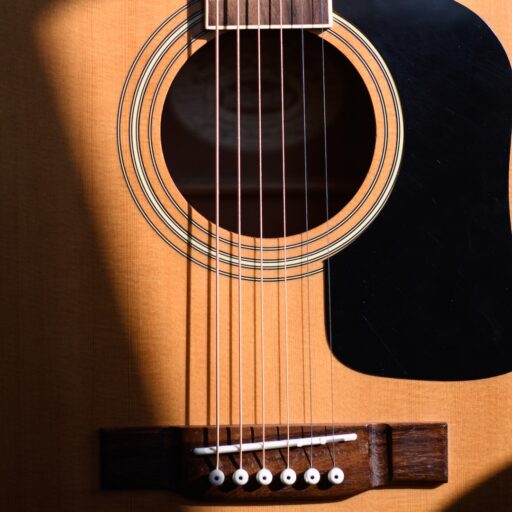
The Yamaha GL1 is a guitalele, not a standard ukulele. It has six strings and a guitar-like layout in a compact body, making it an interesting alternative for guitarists or anyone who wants familiar string relationships in a smaller instrument. Check the Yamaha GL1 official page for specifications.
Choose it if: You already play guitar and want a travel-sized instrument with a guitar-style approach.
Skip it if: You’re following standard four-string ukulele chord charts or want the classic uke sound. A guitalele is a different instrument, even if it looks like a ukulele and fits in a ukulele-shaped bag.
- Yamaha GL1: Amazon | Guitar Center | Yamaha Official
🛒 How to Choose Your First Ukulele
Start with fit and playability, then compare sound, materials, and features. A long specification list is less useful than a few minutes of actually holding the instrument.
Comfort, Hand Size, and Fretboard Feel
Try these checks in a shop, or use them as soon as your instrument arrives:
- Sit or stand naturally and rest the uke against your body. Can you hold it without gripping hard?
- Play a C chord using one finger. Can you press the string cleanly without muting the others?
- Try a G chord. Does your hand reach comfortably?
- Move to a nearby chord and back. Does the neck feel manageable?
- Play several frets up the neck. Check for sharp fret edges or notes that buzz.
A soprano may be perfectly comfortable for a player with larger hands; a tenor may feel unwieldy to someone else. If you’re used to guitars, a tenor can feel familiar, but don’t let that settle the question before you’ve held a concert.
Tonewoods and Ukulele Body Materials
Wood and composite bodies each have fans. Mahogany is commonly associated with a warm, balanced sound; spruce often has a clear, articulate character; composite bodies can offer convenience and durability. These are broad tendencies, not guarantees—the instrument’s design, strings, build quality, and setup all affect its voice.
| Material or style | Potential strengths | Things to consider |
|---|---|---|
| Mahogany | Familiar warm tone; common on beginner models | Sound varies by construction and grade |
| Spruce top | Clear attack and projection are common descriptions | A “solid top” claim alone doesn’t guarantee better sound |
| Composite/plastic | Convenient, travel-friendly, often easy to clean | Some players prefer the feel and resonance of wood |
| Laminate wood | Can be practical and consistent | Don’t assume it will sound like a solid-wood instrument |
Build Quality, Intonation, and Tuning Stability
Before buying, inspect the basics:
- Tuners: Do they turn smoothly, without slipping?
- Nut and saddle: Are the strings seated neatly?
- Fret ends: Do they feel smooth rather than sharp?
- Action: Are the strings reasonably close to the fretboard without buzzing?
- Intonation: Do fretted notes stay reasonably in tune as you move up the neck?
- Body and neck: Look for visible cracks, loose joints, or uneven finishes.
If ordering online, favor a seller with a clear return policy. Consumer reviews can help identify recurring problems, but read the details: one review about a damaged shipment says little about tone, while repeated reports of tuning trouble deserve attention.
Acoustic or Electric Ukulele?
Most first-time players do well with an acoustic ukulele. It’s simple, portable, and requires no amplifier. An acoustic-electric model adds a pickup so you can plug into a sound system, which is useful for performing or recording—but it also adds controls and electronics you may not need on day one.
| Type | Best for | Trade-off |
|---|---|---|
| Acoustic | Home practice, casual playing, simplicity | Must be miked or amplified for larger spaces |
| Acoustic-electric | Performing, recording, or plugging into an amp | More components and potential setup needs |
| Solid-body electric uke | Amplified playing and effects | Requires an amp or audio setup |
For an instrument that works unpluged and amplified, compare the specific pickup system rather than relying on the “electric” label alone.
Left-Handed Ukulele Options
Left-handed players can use a standard ukulele in its usual orientation, learn a left-handed chord approach, or restring a suitable instrument. Don’t simply flip a right-handed uke and restring it without checking the nut and saddle: their slots may be shaped for the original string order.
Ask a music shop whether a model is genuinely set up for left-handed playing. If you’re considering a standard instrument with a flipped orientation, a teacher can help you choose a consistent approach before muscle memory takes over.
🎼 Ukulele Tuning and Strings for Beginners
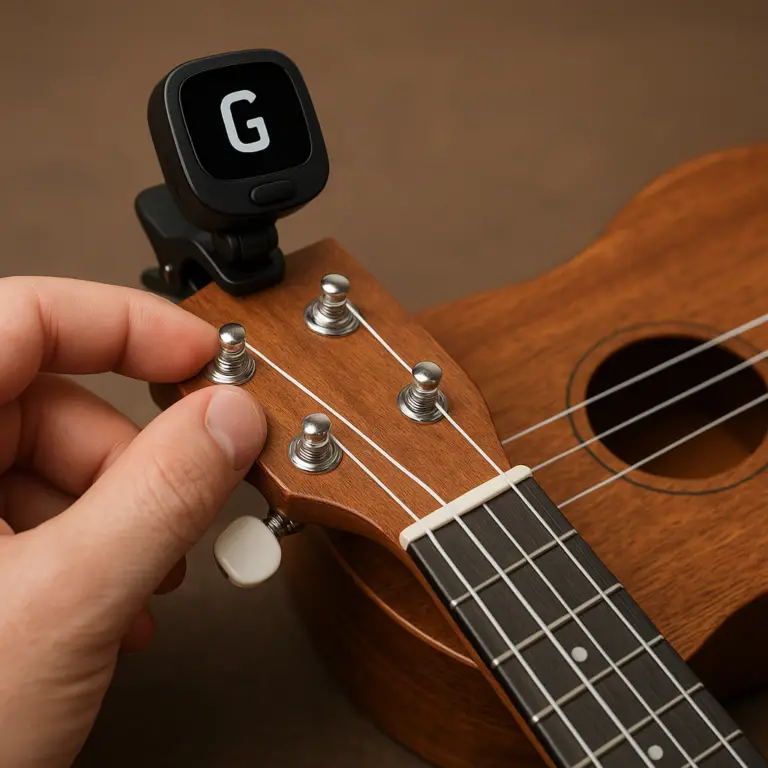
A ukulele can be charmingly cheerful while being slightly out of tune. The easiest fix is a clip-on chromatic tuner and a habit of checking your tuning before practice.
Standard G–C–E–A Tuning and Low-G Tuning
Most soprano, concert, and tenor ukules use G–C–E–A, from the string closest to your chin to the string closest to the floor when holding the instrument. The G string is commonly high, creating the familiar re-entrant sound; a low-G setup uses a lower-pitched G string for a wider range.
Baritone ukules are commonly tuned D–G–B–E, like the highest four strings of a guitar. That makes the instrument attractive to some guitarists, but standard ukulele chord charts won’t always transfer directly.
The Ukulele Orchestra of Great Britain and established teaching resources can help you hear how different tunings affect the instrument. For a new player, stick with standard tuning unless you have a clear reason to change.
Choosing Beginner Ukulele Strings
Many ukules ship with nylon-family strings, including fluorocarbon or proprietary synthetic materials. They feel softer than steel guitar strings, but they still need a little time to settle.
- Wait for strings to stabilize: Retune as needed during the early period.
- Replace strings in a full set: Use a set intended for your ukulele’s size and tuning.
- Don’t overtighten: A tuner reading “too low” is not an invitation to crank without checking that you’re turning the correct peg.
- Ask before changing tuning: A low-G string, for instance, is a different setup from standard high-G.
Aquila is a widely known ukulele-string maker; see its official product information. The included strings may be perfectly usable. You don’t need to replace them just because an online comment insists that a different set is “the secret.”
🎒 What Comes in a Beginner Ukulele Starter Kit?
A useful starter kit should make practice easier, not pad the box with trinkets.
| Item | Useful? | What to look for |
|---|---|---|
| Clip-on tuner | ✅ Essential for most beginners | Chromatic mode and a clear display |
| Padded gig bag | ✅ Helpful | Fits the instrument size and protects it from bumps |
| Spare strings | ✅ Sensible | Correct size and tuning |
| Chord chart or lesson access | ✅ Helpful | Clear diagrams and reliable instruction |
| Strap | Maybe | Check whether the uke has strap buttons |
| Picks | Usually optional | Most players strum with fingers |
| Novelty accessories | Optional | Nice fun, not a substitute for a playable uke |
A clip-on tuner is especially useful because beginners may not yet recognize when a note is off. If a bundled accessory is poor quality, you can replace it later; the instrument itself should be the priority.
💰 How Much Should You Spend on a First Ukulele?
We won’t give you a magic number, because prices and availability change. Instead, prioritize playability, a dependable seller, and a usable return policy. Ukulele Go advises avoiding the absolute cheapest instrument if poor construction makes it hard to play, while its recommendations focus on accessible entry-level models in its beginer guide.
Before you buy, ask:
- Does the model have a clear manufacturer page?
- Are there repeated buyer complaints about tuning, sharp frets, or poor setup?
- Is a tuner included, or will you need one?
- Does the seller accept returns if the instrument arrives damaged or unplayable?
- Would you rather spend more on a better setup than on decorative extras?
A modest, well-adjusted instrument often serves a beginner better than a feature-packed bundle built around a frustrating uke. If you’re unsure, ask a music-store technician to inspect it. The small inconvenience of checking is better than spending your first practice session negotiating with a tuning peg.
✅ Essential Ukulele Accessories for New Players
You don’t need an accessory warehouse to play four chords and sing a song. Start with the useful basics:
- Clip-on tuner: Makes tuning quick and repeatable.
- Gig bag: Helps protect against knocks and dust.
- Spare string set: Handy if a string breaks or you decide to experiment later.
- Music stand: Keeps chord charts at eye level instead of on the floor.
- Cleaning cloth: Wipe off fingerprints and sweat after playing.
- Strap, if appropriate: Useful for standing performances, but confirm that the uke has strap buttons or a safe strap solution.
If you’re building a broader instrument setup, browse Guitar Brands™’ Guitar Brands Showcase and Guitar Brand Guides. The advice overlaps with guitars: buy accessories that solve an actual problem, not every shiny item in the display case.
🎵 Your First Week: Basic Ukulele Chords and Practice Tips
Start with short, regular practice. Ten focused minutes can be more useful than an hour of frustrated strumming.
A simple first-week plan
Day 1: Tune and get comfortable
- Use a clip-on tuner to tune each string.
- Hold the instrument without squeezing the neck.
- Strum open strings gently and listen to the sound.
Day 2: Learn C and Am
- Place one finger for C and one for Am.
- Press close behind the fret—not directly on top of it.
- Strum each chord slowly and check that every string rings.
Day 3: Add F
- Move between C, Am, and F.
- Keep your fingers close to the fretboard instead of lifting them high between changes.
Day 4: Practice a steady down-strum
- Count “1, 2, 3, 4” at a relaxed pace.
- Strum lightly over the sound hole or the area where the body’s voice is clear.
Day 5: Add G
- Form G carefully; it’s a common early stumbling block.
- Play one string at a time to find muted or buzzing notes.
Day 6: Change chords in time
- Choose two chords and switch every four beats.
- Slow down if the change gets messy. Speed is a result of accuracy, not a substitute for it.
Day 7: Play a song you enjoy
- Pick a song using chords you already know.
- Keep going through small mistakes. The audience—often a patient houseplant—will survive.
A few technique reminders
- Use the fingertips, not the flat pads, when fretting.
- Keep your wrist relaxed.
- Strum gently; the uke doesn’t need to be wrestled.
- If your fingers hurt sharply rather than feeling mildly tired, take a break and check your technique.
For comparison, learning ukulele can feel more approachable than beginning on steel-string guitar because it has four strings and commonly uses softer synthetic strings. But the instrument still asks for timing, coordination, and practice. Explore our acoustic guitar category if you’re weighing the two instruments.
🧰 Ukulele Care, Setup, and Common Beginner Problems
A few simple habits help keep your ukulele playing well. Store it away from direct heat, extreme cold, and damp conditions; a hard temperature swing can affect wood and tuning. The National Association of Music Merchants’ instrument-care resources offer broader advice about looking after musical instruments.
How Often to Tune a New Ukulele
Tune before every practice session. New strings commonly stretch, and even settled strings can shift with temperature, playing, and handling. Tune slowly and make small adjustments. If a string keeps slipping after it has settled, check the tuning peg, the way the string is wound, and the instrument’s general setup.
How to Store and Clean Your Ukulele
- Wipe the body and strings with a clean, soft cloth after playing.
- Put the instrument in a properly sized case or gig bag when you’re not using it.
- Keep it away from heaters, sunny windowsills, and a car’s hot trunk.
- Don’t use household cleaners unless the manufacturer confirms they are safe for the finish.
- If the neck appears warped or the body shows damage, ask a qualified repair technician to inspect it.
Composite instruments may tolerate everyday handling differently from wood, but no instrument appreciates being baked in a car. Not even the cheerful plastic ones.
Fixing Buzzing, Sore Fingers, and Tuning Issues
| Symptom | Possible cause | First step |
|---|---|---|
| Buzzing note | Finger too far from fret, loose part, or setup issue | Move your finger just behind the fret; if buzzing continues, inspect the instrument |
| Muted string | Finger touching a neighboring string | Adjust finger angle and use the fingertip |
| Sore fingertips | New-player adaptation or excess pressure | Practice briefly, relax your grip, and stop if pain is sharp |
| Frequent tuning drift | New strings stretching, peg slip, or temperature changes | Retune gently and monitor whether it improves |
| Chords sound wrong | Incorrect fingering, tuning, or fret/intensity issue | Check tuning first, then test each string separately |
If several notes buzz even when played cleanly, don’t try to fix the instrument with guesswork. A shop technician can check the nut, saddle, frets, and action. Setup problems are common enough to be worth checking, and fixing them may be simpler than replacing the whole uke.
🎁 Buying a Ukulele as a Gift
If the player hasn’t tried ukules before, a concert-size acoustic from a reputable brand is a thoughtful starting point for many adults. For a child or someone who values portability above all, a soprano may be a better fit. A tenor can suit guitarists or players with larger hands.
Gift-buying checklist:
- Ask discreetly about preferred size, color, or playing style.
- Include a tuner and a properly sized bag.
- Choose a seller with a sensible return policy.
- Avoid choosing a baritone unless the recipient wants its deeper tone and D–G–B–E tuning.
- If the player already owns a guitar, consider whether they want a classic four-string ukulele or a guitalele-style alternative.
The safest gift isn’t necessarily the smallest or most decorative instrument. It’s the one the recipient will actually pick up—and now you know how to help them find it.