Support our educational content for free when you purchase through links on our site. Learn more
15 Best Ukulele Brands for Guitar Players 🎸

What are the best ukulele brands for guitar players? For most guitarists, Kala, Cordoba, Lanikai, Flight, and Ohana are the smartest starting points, with a high-G tenor ukulele offering the best balance of familiar comfort, roomier frets, and authentic ukulele character.
If you want your existing guitar chord shapes to transfer almost immediately, choose a baritone ukulele from Kala, Cordoba, or Lanikai. Its usual D–G–B–E tuning matches the highest four guitar strings, making the first session pleasantly familiar. The trade-off? It may feel more like a compact four-string guitar than a traditional ukulele.
We’ve found that a tenor ukulele usually wins the longer game. A soprano may be smaller, but guitarists with larger hands often find its compact fretboard cramped; a tenor gives fingerstyle patterns, low-G tuning, and expressive playing more breathing room.
One guitarist we watched tried three beautiful sopranos before declaring them “tiny hand traps.” A tenor finally clicked, and within minutes he was strumming familiar progressions with a grin. The lesson was simple: the best ukulele brand matters, but size, tuning, and setup decide whether you keep playing it.
Key Takeaways
- Best overall brand: Kala offers the broadest range of reliable soprano, concert, tenor, travel, and baritone ukules.
- Best for classical guitarists: Cordoba brings a refined, guitar-informed feel and strong fingerstyle options.
- Best premium Hawaiian brands: Kanile’a, Kamaka, and KoAloha excel in craftsmanship, projection, and tonal character.
- Best size for most guitar players: A tenor ukulele provides extra fretboard room and a fuller sound.
- Best instant guitar transition: A baritone ukulele in D–G–B–E tuning uses familiar chord shapes.
- Best travel choices: Enya carbon-fiber and Flight travel ukules handle outdoor playing with less fuss.
- High-G vs. low-G: High-G sounds more traditionally “ukulele”; low-G feels more linear and guitar-like.
- Look beyond appearance: Check intonation, fretwork, string spacing, tuning stability, and setup before buying.
- Our confident recommendation: Start with a high-G tenor from Kala, Cordoba, Lanikai, Flight, or Ohana.
👉 CHECK PRICE on:
- Kala Tenor Ukules: Amazon | Kala Official Website
- Cordoba Tenor Ukules: Amazon | Cordoba Official Website
- Lanikai Tenor Ukules: Amazon | Lanikai Official Website
- Flight Travel Ukules: Amazon | Flight Official Website
- Ohana Tenor Ukules: Amazon | Ohana Official Website
Table of Contents
-
⚡️ Quick Tips and Facts: Choosing a Ukulele as a Guitar Player
-
🌺 Hawaiian Ukulele History and Its Influence on Modern Brands
-
How the Ukulele Evolved from Portuguese Stringed Instruments
-
3. Martin: Premium Ukules with Familiar Guitar-Building Quality
-
5. Lanikai: Comfortable Ukules for Fast Guitar-Style Chord Changes
-
6. Enya: Innovative Carbon Fiber and Beginner-Friendly Ukules
-
7. Flight: Stylish, Affordable Ukules with Reliable Intonation
-
8. Ohana: Traditional Tone and Strong Fingerstyle Performance
-
10. KoAloha: Bright, Responsive Ukules for Experienced Musicians
-
11. Kanile’a: High-End Hawaiian Ukules for Serious Guitarists
-
12. Pono: Solid-Wood Ukules with Guitar-Inspired Construction
-
13. Taylor: Refined Design for Guitarists Who Want Familiar Comfort
-
14. Gretsch: Vintage-Inspired Ukules for Rock and Country Players
-
15. Risa: Electric Ukules for Guitarists Who Want Maximum Familiarity
-
Tenor Ukulele: The Best Choice for Larger Hands and Fingerstyle
-
🎯 Final Verdict: What Are the Best Ukulele Brands for Guitar Players?
-
Can guitar players use their existing chord knowledge on ukulele?
Quick Tips and Facts: Choosing a Ukulele as a Guitar Player
If you already play guitar, choosing a ukulele is less about starting from zero and more about deciding how much familiarity versus fresh challenge you want. Our first recommendation is to read our ukulele guide alongside this article, then try to answer one question: do you want a tiny guitar, or do you want the full ukulele experience? 🎸🌺
| Decision factor | Our recommendation | Why it suits guitar players | Watch out for |
|---|---|---|---|
| Best overall size | Tenor | More room for larger hands, fingerstyle, and expressive playing | Less compact than a soprano |
| Easiest guitar transition | Baritone | Standard D–G–B–E tuning matches the highest four guitar strings | It can feel more like a four-string guitar than a traditional ukulele |
| Best shared family tuning | High-G tenor | Uses G–C–E–A like soprano and concert ukules | Chord shapes are new, especially with rentrant tuning |
| Best value construction | Solid-top, laminate back and sides | Improves tonal response without requiring a fully solid instrument | Solid wood needs more careful humidity control |
| Reliable first brand | Kala | Broad range, accessible designs, and generally straightforward playability | Quality varies considerably between series |
| Wider guitar-like neck | Islander or selected tenor models | Some tenors offer a nut width around 38 mm | Check the exact model specification |
| Best premium Hawaiian experience | Kamaka, Kanile’a, or KoAloha | Excellent craftsmanship, response, and tonal character | Premium construction costs more |
| Best travel option | Enya or Flight | Durable designs and compact travel models | Some players prefer the warmth of wood |
| Best electric option | Risa, Ohana, or Fender | Familiar connection to amplifiers and effects | Acoustic unpluged tone may be less traditional |
The short answer
For most guitar players, we recommend:
- A tenor ukulele
- Standard high-G G–C–E–A tuning
- A solid-top or well-made laminate instrument
- A comfortable nut width of roughly 35–38 mm
- A brand with dependable setup support, such as Kala, Cordoba, Lanikai, Flight, Ohana, or a reputable Hawaiian maker
The Ukulele Underground forum discussion about a guitarist buying a first ukulele reaches a similar conclusion, describing a high-G tenor as a “completely different experience” while still allowing guitar knowledge to transfer.
That distinction matters. A baritone may make your first afternoon feel wonderfully familiar. A tenor may make your first week slightly more humbling, then reward you with a better understanding of what makes the ukulele unique. We’ll return to that tug-of-war later.
Three buying rules we use at Guitar Brands™
1. Choose playability before decoration
A cutaway, flashy binding, or onboard pickup looks tempting. Yet for a first quality instrument, we would usually prioritize:
- Accurate intonation
- Smooth fret ends
- Comfortable action
- Stable tuners
- Even string spacing
- A responsive top
As forum contributors put it, a solid top is often a smarter upgrade than a cutaway or electronics if you do not plan to play amplified or venture high up the neck.
2. Match the tuning to your goal
| Your priority | Best tuning and size |
|---|---|
| Learn traditional ukulele technique | High-G G–C–E–A tenor |
| Play with a child using a soprano | High-G G–C–E–A concert or tenor |
| Transfer guitar chord shapes immediately | D–G–B–E baritone |
| Create a warmer, more guitar-like fingerstyle sound | Low-G tenor |
| Experiment with guitar effects | Electric tenor or baritone ukulele |
3. Try before committing if possible
There is no universal “correct” size. The forum advice is refreshingly practical: the right ukulele is the one that makes you want to keep playing after you pick it up.
We once watched a guitarist reject three visually beautiful sopranos in under five minutes. The necks felt cramped, the tiny body sounded too bright, and his picking hand kept colliding with the bridge. A tenor finally clicked. His reaction was immediate: “Ah. That feels like an instrument, not a novelty.”
That is the test you want.
Quick facts guitar players often misunderstand
- A standard ukulele is usually tuned G–C–E–A, not like the four highest strings of a guitar.
- A baritone ukulele is commonly tuned D–G–B–E, matching the top four guitar strings.
- High-G ukulele tuning is rentrant, meaning the G string may sit higher in pitch than the C and E strings.
- A low-G setup places the G string below the C string, creating a more linear, guitar-like scale.
- A concert ukulele is larger than a soprano but smaller than a tenor.
- A tenor generally offers more room for guitar-style fingerpicking.
- A solid top may improve resonance, but construction quality and setup still matter more than a single specification.
- A pickup does not automatically mean a better instrument.
- Nylon and fluorocarbon ukulele strings behave differently from steel guitar strings; fitting random guitar strings is a bad shortcut.
- Ukulele chord names may match guitar chord names while using completely different shapes.
Our fast recommendation by player profile
- Steel-string acoustic guitarist: Kala, Cordoba, Lanikai, or Flight tenor
- Classical guitarist: Cordoba, Ohana, Pono, or a well-set-up low-G tenor
- Electric guitarist: Fender, Risa, Ohana electric, or a pickup-equipped Kala
- Fingerstyle guitarist: Kanile’a, KoAloha, Pono, Martin, or a solid-top Ohana
- Singer-songwriter: Kala, Cordoba, Lanikai, or Taylor-style compact instruments
- Guitarist with large hands: Wider-neck Islander tenor, selected Kala tenor, or baritone
- Traveler: Enya carbon fiber, Flight Travel, Kala Travel, or Cordoba Protege
- Traditional Hawaiian sound seeker: Kamaka, Kanile’a, KoAloha, or Martin
- Guitarist wanting instant familiarity: Baritone from Kala, Cordoba, Lanikai, or Gold Tone
✅ Our initial verdict: Start by trying a high-G tenor, then compare it directly with a baritone. The baritone may win your hand; the tenor may win your ears.
Ukulele vs. Guitar: The Key Differences
A ukulele looks like a guitar’s cheerful younger cousin, but the playing experience is not simply “guitar with two strings removed.” The scale, tuning, string tension, body response, chord vocabulary, and rhythmic role all change.
The Smithsonian National Museum of American History documents the ukulele’s place in musical history, while the University of Hawaii’s music resources provide broader cultural context for the instrument’s Hawaiian development.
Core differences at a glance
| Feature | Guitar | Ukulele |
|---|---|---|
| Typical strings | 6 | 4 |
| Common tuning | E–A–D–G–B–E | G–C–E–A |
| Common baritone tuning | Not applicable | D–G–B–E |
| Typical scale length | Roughly 24–26.5 inches for many guitars | Roughly 13–17 inches depending on size |
| Strings | Steel or nylon | Nylon, fluorocarbon, or specialty synthetic strings |
| Body response | Broad bass and treble range | Compact, focused midrange and high end |
| Common role | Rhythm, bass movement, melody, accompaniment | Rhythm, melody, vocal accompaniment, percussive groove |
| Rentrant tuning | Rare | Common with high-G setup |
| Fretting feel | Wider spacing and higher tension | Shorter scale and lower overall tension |
Why your guitar chord knowledge helps
Guitar players already understand:
- Fretting behind the fret
- Muting unwanted strings
- Chord construction
- Major, minor, seventh, and suspended harmony
- Rhythm-grid awareness
- Fingerstyle independence
- The relationship between chord shapes and transposition
Those skills transfer beautifully. Your right hand already knows how to create a groove, and your left hand understands that a chord is a practical shape rather than a mysterious cluster of dots.
The catch? The same chord name usually requires a different shape.
For instance:
| Chord | Common guitar shape | Common high-G ukulele shape |
|---|---|---|
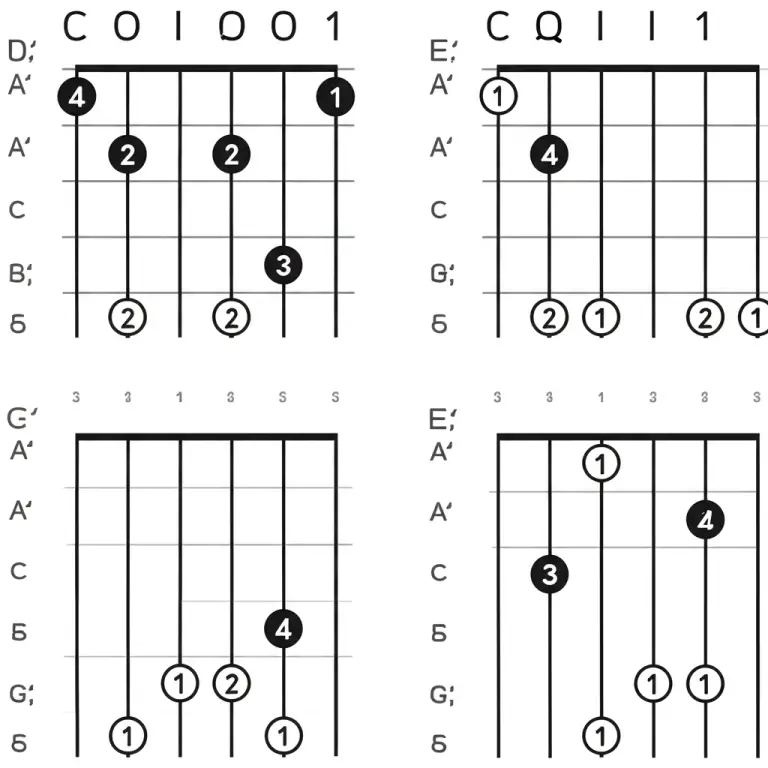
| C major | x32010 | 0003 |
| F major | 133211 or xx321 | 2010 |
| G major | 32003 | 0232 |
| Am | x02210 | 200 |
| D major | xx0232 | 2220 |
The ukulele versions are not “wrong guitar chords.” They are compact voicings adapted to the instrument’s tuning and range.
Why the ukulele sounds so different
A high-G ukulele often places the G string above the C string in pitch. That rentrant arrangement creates the instrument’s recognizable bright, buoyant, almost bell-like character.
Strum a C chord and the notes do not descend neatly from low to high like a guitar chord. Instead, the high G adds a sparkling upper note. This is one reason a basic three-chord progression can sound unexpectedly lively.
Switch to low-G strings, and the sound becomes:
- Fuller in the low register
- More linear
- More compatible with alternating-bass patterns
- Closer to a miniature guitar
- Less stereotypically “ukulele”
Neither setup is superior. High-G is often more traditional; low-G may feel more natural to a guitarist who plays Travis picking or melodic bass lines.
Scale length changes your left hand
A soprano may have a scale length around 13–13.5 inches, while a tenor may approach 17 inches. That difference is substantial when your fingers are accustomed to a guitar neck.
Shorter scale lengths mean:
- Less distance between frets
- Lower string tension
- Easier stretches for some chords
- More cramped spacing for large hands
- A quicker response under the fingers
Longer tenor scales offer:
- More room for fingerstyle
- Cleaner separation between notes
- Better comfort for large hands
- A slightly fuller voice
- More space for expressive bends and vibrato
This is why a guitarist who assumes “smaller equals easier” may be surprised. A soprano is physically compact, but compact does not always mean comfortable.
Guitar habits that need adjustment
Your strumming motion is probably too large
On guitar, a broad forearm movement can produce a balanced sound across six strings. On a ukulele, that same motion may sound aggressive and imprecise.
Start with:
- A relaxed wrist
- Small downstrokes
- Light contact with the index fingernail
- A steady pulse before adding syncopation
- Gradual dynamic expansion
Your fretting pressure is probably too heavy
Ukulele strings generally need less pressure than guitar strings. Pressing too hard can pull notes sharp, especially on a short-scale instrument.
Try this exercise:
- Fret a single note.
- Pick it clearly.
- Slowly release pressure until it buzzes.
- Add just enough pressure to make the note clean.
- Repeat across the neck.
Your fingers will eventually stop treating every chord like a steel-string wrestling match. 🥊
Your thumb position may need to move
Many guitarists wrap the thumb over the neck for blues or rock chords. That can still work on ukulele, but the narrow neck and compact fretboard often reward a more centered thumb position.
Use the thumb behind the neck when you need:
- Reach
- Clean fingerstyle notes
- Larger chord stretches
- Better control during vibrato
Use a wrapped thumb when the chord and style genuinely benefit from it. Ukulele is not a courtroom; there is no judge waiting to penalize your thumb.
✅ What Guitar Skills Transfer Directly to Ukulele?
The transition becomes much easier when you separate transferable skills from instrument-specific habits.
Skills that transfer almost immediately
| Guitar skill | Ukulele benefit |
|---|---|
| Rhythm counting | Helps establish clean strumming patterns |
| Chord theory | Makes unfamiliar shapes easier to understand |
| Ear training | Helps identify tuning and intonation problems |
| Fingerstyle control | Supports arpeggios and melody playing |
| Muting | Prevents unwanted string noise |
| Barre-chord technique | Useful on tenor and baritone ukules |
| Capo knowledge | Helps with transposition |
| Performance experience | Improves timing, confidence, and dynamics |
| Basic setup awareness | Helps you spot high action and poor fretwork |
Chord theory is your secret advantage
Suppose you know that a major chord contains:
- Root
- Major third
- Perfect fifth
You do not need to memorize every ukulele chord shape as an isolated diagram. You can understand what each shape is doing and move it around the fretboard.
For example, on a high-G ukulele:
- Open C is 0–0–0–3
- Moving that shape is not always a simple transposition because the open strings remain fixed
- A movable barre shape gives you more control
- A capo can simplify unfamiliar keys
The Musicians’ Union and educational resources from Berklee Online both emphasize practical musicianship, rhythm, and harmonic understanding as foundations that apply across instruments.
Fingerstyle guitarists have a head start
Ukulele fingerstyle often involves:
- Thumb handling the G and C strings
- Index or middle fingers handling E and A
- Alternating patterns
- Pinched chord tones
- Melody notes placed above sustained harmony
A guitar fingerpicker may initially find the ukulele’s limited range restrictive, but that limitation encourages arrangement creativity. You learn to imply a bass line rather than automatically play one.
Try this simple pattern on a C chord:
- Thumb: G string
- Index: E string
- Middle: A string
- Index: E string
- Repeat slowly
Then move to Am, F, and G. The pattern sounds musical before your brain has finished complaining about the missing low E string.
Barre chords transfer, but the geometry changes
A guitar player already understands that a barre chord is a movable template. On ukulele, barre shapes can be compact and surprisingly powerful.
Common examples include:
- One-finger partial bares
- Full bares across all four strings
- Movable major shapes
- Movable minor shapes
- Seventh-chord variations
The difficulty is not usually the concept. It is learning where the chord tones land under G–C–E–A tuning.
Rhythm guitar experience is invaluable
Ukulele often occupies a rhythmic role. A seasoned guitarist already knows how to:
- Leave space
- Accentuate beats 2 and 4
- Use muted scratches
- Change dynamics between verses and choruses
- Support a singer without overpowering them
That makes you immediately useful in an ensemble. The tiny body may look polite, but a well-controlled ukulele can drive a song with remarkable authority.
❌ Common Guitar-Player Mistakes on Ukulele
We have seen these mistakes repeatedly, including in our own first weeks with compact instruments. The good news: each one is easy to correct.
Mistake 1: Buying the smallest ukulele automatically
A soprano is traditional and portable, but its short scale and compact string spacing may feel crowded.
✅ Better approach:
- Try soprano, concert, and tenor
- Compare first-position chord comfort
- Play a familiar guitar progression
- Check whether your picking hand clears the body comfortably
Mistake 2: Choosing baritone without understanding the trade-off
A baritone in D–G–B–E tuning feels wonderfully familiar. You can reuse many guitar chord shapes, and your muscle memory may celebrate.
But a baritone may not teach you:
- Standard G–C–E–A chord shapes
- Rentrant high-G technique
- Traditional soprano/concert/tenor voicings
- The brighter, more percussive ukulele sound
The forum discussion describes this tension clearly: baritone is “the easiest transition from guitar,” but it may feel “more like a 4 string guitar than it is like an ukulele.”
Mistake 3: Assuming every ukulele stays in tune immediately
New synthetic strings stretch. Tuners settle. Temperature changes affect tension. A new instrument may need several tuning cycles before it stabilizes.
Do this:
- Tune with a chromatic tuner.
- Stretch each string gently along its length.
- Retune.
- Play for five minutes.
- Retune again.
- Repeat over several sessions.
Never yank the strings aggressively. Your ukulele is small, not indestructible.
Mistake 4: Overlooking intonation
An open string may be perfectly tuned while fretted notes sound sharp or flat. Check the 12th-fret harmonic against the fretted 12th-fret note.
A basic inspection:
- Tune the open string.
- Play the 12th-fret harmonic.
- Play the fretted 12th-fret note.
- Compare pitch.
- Repeat on every string.
If the difference is obvious, the bridge position, saddle, string choice, or setup may need attention.
Mistake 5: Treating the ukulele like a miniature steel-string guitar
The body is smaller, the strings are different, and the instrument responds touch. Heavy attack can create:
- Harsh treble
- Tuning instability
- Premature string wear
- Unwanted buzzing
- A compressed, choked tone
Use lighter contact and let the instrument speak.
Mistake 6: Buying electronics before improving the acoustic instrument
If you mostly play unpluged, prioritize:
- Solid or responsive top
- Fretwork
- Nut and saddle quality
- Tuning stability
- Comfortable neck
- Electronics
A pickup is useful for stage work, but it cannot repair poor intonation. That would be like putting racing tires on a shopping cart and expecting a Formula One result. 🏎️
Mistake 7: Ignoring the strings
String choice changes:
- Tension
- Brightness
- Sustain
- Intonation
- Finger comfort
- High-G versus low-G behavior
Reliable manufacturers include Aquila, D’Addario, and Worth Strings. Always verify the string set matches your ukulele size and tuning.
🌺 Hawaiian Ukulele History and Its Influence on Modern Brands

The ukulele’s history helps explain why brands differ so sharply in tone, design, and philosophy. Some makers emphasize Hawaiian tradition; others focus on travel durability, modern electronics, or guitar-like ergonomics.
How the Ukulele Evolved from Portuguese Stringed Instruments
The ukulele is widely associated with Hawaii, but its direct ancestors arrived with Portuguese immigrants in the late nineteenth century. Instruments such as the machete, braguinha, and rajão influenced the small four-string instrument that developed in Hawaii.
The Hawaian Historical Society and Smithsonian Institution provide historical resources documenting Hawaii’s musical and cultural development.
Hawaian makers refined the instrument’s:
- Body proportions
- String
- Tuning conventions
- Decorative traditions
- Construction methods
- Musical identity
The instrument became more than a portable chord machine. It became a cultural voice.
Why Traditional Hawaiian Craftsmanship Still Matters
Traditional Hawaiian ukulele makers often focus on:
- Carefully voiced tops
- Koa wood
- Hand-finished edges
- Accurate fretwork
- Responsive bracing
- Balanced projection
- Long-term structural stability
Koa has a distinctive visual appeal, but the best instruments are not valuable simply because the wood looks dramatic. Good voicing and construction determine whether the instrument responds quickly, sustains evenly, and records beautifully.
This is where brands such as Kamaka, Kanile’a, and KoAloha stand apart. They generally target players who care about detailed tone, craftsmanship, and the instrument’s cultural lineage.
Made in Hawaii vs. Overseas Ukulele Production
There is no simple “Hawaian good, overseas bad” rule. Excellent instruments are made across multiple regions, and quality varies by model and factory.
| Production approach | Strengths | Potential drawbacks |
|---|---|---|
| Hawaiian handmade | Exceptional craftsmanship, traditional expertise, distinctive voicing | Limited availability and higher investment |
| Chinese or Indonesian factory production | Broad selection, consistent access, strong value | Quality can vary between product tiers |
| Mexican or other specialist production | Interesting designs and regional expertise | Fewer models in some markets |
| Carbon-fiber composite production | Weather resistance, travel durability | Different acoustic character from wood |
A carefully inspected laminate ukulele from Kala or Flight may outperform a poorly set-up solid-wood instrument from an unknown brand. Brand reputation helps, but the individual instrument still needs a quality check.
A modern 2025 perspective from Southern Ukulele Store
The Southern Ukulele Store’s “Top 10 Ukes of 2025” video reflects how broad the modern ukulele market has become. Its list includes:
- Innovative double-top construction from L. Luthier
- Boutique pickup work in the Fanner Jazy
- Advanced contouring and top thinning in the Kanile’a KTR Pro
- All-solid koa in the UMA UK-30SSP
- Handmade collaborations by Pete Howlett and Dan Lipson
- High-end electric design from Ohana
- Lattice bracing in the ’Oli L2-TMG
- Limited-edition koa models from Kala
- The Flight Songbird as a standout contemporary design
The presenter’s joking dismissal of initial skepticism, “You won’t, that’s such a lie,” captures the broader point: modern ukulele design is not standing still. A guitarist who expects only painted beginner instruments may be surprised by lattice bracing, double tops, boutique electronics, and sophisticated neck shaping.
🏆 The 15 Best Ukulele Brands for Guitar Players
The following ratings are comparative, not laboratory measurements. We assess each brand by how well its instruments serve guitar players across comfort, tuning options, build quality, tone, range, and practical availability.
Ratings explained
| Score | Meaning |
|---|---|
| 9–10 | Exceptional strength or category leader |
| 7–8 | Strong recommendation with manageable compromises |
| 5–6 | Useful, but model selection matters greatly |
| 3–4 | Specialized appeal or notable limitations |
| 1–2 | Rarely suitable for the intended use |
1. Kala: The Best All-Around Ukulele Brand for Guitarists
| Category | Rating |
|---|---|
| Design | 8/10 |
| Functionality | 9/10 |
| Playability | 8/10 |
| Tone variety | 8/10 |
| Beginner suitability | 9/10 |
| Guitar-player suitability | 9/10 |
| Model range | 10/10 |
| Premium potential | 8/10 |
| Travel options | 9/10 |
| Overall | 9/10 |
Shop Kala ukules on Amazon or browse the official Kala website.
Kala is often our safest broad recommendation because the range includes:
- Soprano, concert, tenor, and baritone sizes
- Laminated beginner instruments
- Solid-top upgrades
- Travel models
- Acoustic-electric instruments
- Bass ukules
- Specialty and limited-edition instruments
The forum discussion praises Kala instruments for staying in tune, playing well without fuss, and sounding “A-OK.” That is not glamorous language, but it describes exactly what most first-time buyers need: predictable playability.
Best Kala Ukulele Series for Guitar Players
- Kala KA-15 series: Accessible, straightforward, and suitable for learning core technique
- Kala Travel series: Lightweight, compact, and practical for portability
- Kala Solid Top series: Better tonal development for players ready to move beyond entry level
- Kala Elite or higher-tier models: More refined construction and materials
- Kala baritone models: Useful for guitarists wanting D–G–B–E familiarity
The key caveat is that “Kala” does not describe one uniform quality level. A basic all-laminate model and a solid koa tenor may share a logo while serving entirely different players.
Kala Concert, Tenor, and Baritone Models Compared
| Kala format | Best for | Strengths | Limitations |
|---|---|---|---|
| Soprano | Compact traditional playing | Portable, bright, classic feel | Can feel cramped |
| Concert | General-purpose first instrument | Balanced comfort and portability | Less room than tenor |
| Tenor | Guitarists and fingerstylists | Roomy neck, fuller tone | Larger case and body |
| Baritone | Direct guitar transition | D–G–B–E chord familiarity | Less traditional ukulele experience |
✅ Our pick: A Kala tenor in high-G tuning is the most versatile starting point in the range.
👉 CHECK PRICE on:
- Kala KA-15T Tenor Ukulele: Amazon | Kala Official Website
- Kala Travel Tenor Ukulele: Amazon | Kala Official Website
- Kala Baritone Ukulele: Amazon | Kala Official Website
2. Cordoba: The Best Ukulele Brand for Classical Guitarists
| Category | Rating |
|---|---|
| Design | 8/10 |
| Functionality | 8/10 |
| Playability | 9/10 |
| Tone variety | 8/10 |
| Beginner suitability | 8/10 |
| Guitar-player suitability | 9/10 |
| Model range | 8/10 |
| Premium potential | 8/10 |
| Travel options | 7/10 |
| Overall | 8.5/10 |
Explore Cordoba ukules on Amazon or the Cordoba official ukulele range.
Cordoba’s guitar heritage gives its ukules an especially natural appeal to classical and nylon-string players. The brand tends to emphasize:
- Clean acoustic response
- Comfortable neck shaping
- Traditional tonewoods
- Tasteful appointments
- Reliable acoustic-electric options
Cordoba Ukulele Construction, Tonewoods, and Playability
Cordoba models commonly appeal to players who prefer:
- Warm mahogany tones
- Clear spruce articulation
- Traditional body styling
- A refined, guitar-informed aesthetic
- Fingerstyle-friendly response
They are particularly attractive to a guitarist who wants the ukulele to feel like a serious acoustic instrument rather than a novelty accessory.
Top Cordoba Ukules for Fingerstyle Players
Look at:
- Cordoba 15CM concert ukulele
- Cordoba 20TM-CE tenor ukulele
- Cordoba 24T-CE tenor ukulele
- Cordoba 25T-CE solid-top tenor models
The exact specification varies by production year, so check the manufacturer page and retailer listing carefully.
👉 CHECK PRICE on:
- Cordoba 15CM Concert Ukulele: Amazon | Cordoba Official Website
- Cordoba 20TM-CE Tenor Ukulele: Amazon | Cordoba Official Website
- Cordoba 25T-CE Tenor Ukulele: Amazon | Cordoba Official Website
3. Martin: Premium Ukules with Familiar Guitar-Building Quality
| Category | Rating |
|---|---|
| Design | 9/10 |
| Functionality | 8/10 |
| Playability | 9/10 |
| Tone variety | 9/10 |
| Beginner suitability | 6/10 |
| Guitar-player suitability | 9/10 |
| Model range | 7/10 |
| Premium potential | 10/10 |
| Travel options | 7/10 |
| Overall | 8.5/10 |
Visit Martin ukules or search Martin ukules on Amazon.
Martin’s reputation in acoustic guitars naturally attracts guitarists who want careful construction and mature tone. Its ukulele history is equally meaningful, particularly among players who appreciate vintage Martin instruments.
Why Martin Ukules Appeal to Experienced Guitarists
Martin ukules tend to offer:
- Refined acoustic balance
- Strong brand heritage
- High-quality wood selection
- A polished, traditional feel
- Instruments suitable for recording and collection
A vintage Martin Style 0 soprano was specifically recommended in the forum discussion as a quality instrument worth owning while learning. That is an unusual recommendation for a first uke, but it makes sense for a guitarist who already understands how a well-voiced acoustic instrument should respond.
Martin Soprano, Concert, and Tenor Ukulele Options
Martin’s range may suit you if you value:
- Traditional soprano character
- Historic design details
- Koa or mahogany warmth
- A collectible instrument
- A recognizable acoustic voice
The drawback is simple: Martin’s premium orientation may be excessive for someone who is merely curious and unsure whether ukulele will stick.
👉 CHECK PRICE on:
- Martin S1 Soprano Ukulele: Amazon | Martin Official Website
- Martin C1K Concert Ukulele: Amazon | Martin Official Website
- Martin T1K Tenor Ukulele: Amazon | Martin Official Website
4. Fender: The Best Ukulele Brand for Electric Guitar Fans
| Category | Rating |
|---|---|
| Design | 8/10 |
| Functionality | 8/10 |
| Playability | 8/10 |
| Tone variety | 7/10 |
| Beginner suitability | 8/10 |
| Guitar-player suitability | 9/10 |
| Model range | 7/10 |
| Premium potential | 6/10 |
| Travel options | 8/10 |
| Overall | 8/10 |
Browse Fender ukules on Amazon or visit Fender’s ukulele collection.
Fender understands the emotional pull of familiar shapes and recognizable finishes. Its ukules often appeal to electric guitarists who like:
- Bold colors
- Offset-inspired styling
- Familiar Fender branding
- Stage-friendly design
- Easy entry into amplified performance
Fender Ukulele Neck Shapes, Finishes, and Electronics
Fender ukules are especially appealing if you want:
- A comfortable neck
- A modern finish
- A pickup-equipped option
- A recognizable stage aesthetic
- A ukulele that visually connects to your Stratocaster or Telecaster
They may not offer the same traditional Hawaiian depth as Kamaka or Kanile’a, but they can make the transition feel inviting.
Best Fender Ukules for Pop, Rock, and Strumming
Look at Fender concert and tenor models, particularly versions with:
- Cutaways
- Built-in tuners
- Pickup systems
- Low-profile necks
- Bright, projecting voices
👉 CHECK PRICE on:
- Fender Venice Soprano Ukulele: Amazon | Fender Official Website
- Fender Rincon Tenor Ukulele: Amazon | Fender Official Website
- Fender Zuma Concert Ukulele: Amazon | Fender Official Website
5. Lanikai: Comfortable Ukules for Fast Guitar-Style Chord Changes
| Category | Rating |
|---|---|
| Design | 8/10 |
| Functionality | 8/10 |
| Playability | 8/10 |
| Tone variety | 8/10 |
| Beginner suitability | 9/10 |
| Guitar-player suitability | 8/10 |
| Model range | 9/10 |
| Premium potential | 7/10 |
| Travel options | 8/10 |
| Overall | 8/10 |
See Lanikai ukules on Amazon and the Lanikai official website.
Lanikai offers a broad range with a strong focus on accessible playability. Guitar players often appreciate:
- Comfortable neck profiles
- Many tenor and baritone options
- Acoustic-electric models
- Solid-top upgrades
- Consistent availability
Lanikai Ukulele Tonewoods and Pickup Systems
Lanikai’s range may include:
- Mahogany
- Acacia
- Koa-style finishes
- Solid-top options
- Pickup-equipped instruments
As always, confirm the exact construction. A glossy koa appearance does not necessarily mean solid koa.
Which Lanikai Ukulele Size Suits Guitar Players?
- Choose concert for a balanced adjustment period.
- Choose tenor for more room and fingerstyle.
- Choose baritone for guitar-like D–G–B–E tuning.
- Choose soprano only if compactness and traditional brightness are priorities.
👉 CHECK PRICE on:
- Lanikai Mahogany Tenor Ukulele: Amazon | Lanikai Official Website
- Lanikai Baritone Ukulele: Amazon | Lanikai Official Website
- Lanikai Acoustic-Electric Tenor Ukulele: Amazon | Lanikai Official Website
6. Enya: Innovative Carbon Fiber and Beginner-Friendly Ukules
| Category | Rating |
|---|---|
| Design | 9/10 |
| Functionality | 9/10 |
| Playability | 8/10 |
| Tone variety | 7/10 |
| Beginner suitability | 9/10 |
| Guitar-player suitability | 8/10 |
| Model range | 8/10 |
| Premium potential | 7/10 |
| Travel options | 10/10 |
| Overall | 8.5/10 |
Browse Enya ukules on Amazon or visit Enya Music.
Enya’s carbon-fiber instruments appeal to guitarists who travel, camp, perform outdoors, or simply dislike fussing over humidity.
Enya Carbon Fiber vs. Wood Ukules
| Feature | Carbon fiber/composite | Wood |
|---|---|---|
| Weather resistance | Excellent | Requires more care |
| Consistency | Highly consistent | Individual instruments vary |
| Acoustic character | Clear, focused, modern | Often warmer and more complex |
| Travel practicality | Excellent | Moderate |
| Traditional appearance | Less conventional | Strong |
| Maintenance | Low | Higher |
Enya instruments may include modern conveniences such as:
- Built-in pickups
- USB or wireless features on selected products
- Integrated tuners
- Durable bodies
- Compact travel designs
Best Enya Ukulele Features for Travel and Outdoor Playing
Choose Enya if your use case includes:
- Beach or campfire sessions
- Frequent airline travel
- Humid or dry climates
- Outdoor songwriting
- A low-maintenance instrument
The trade-off is tonal personality. Some guitarists adore the immediate clarity; others prefer the organic complexity of solid wood.
👉 CHECK PRICE on:
- Enya Nova U Concert Ukulele: Amazon | Enya Official Website
- Enya Nova U Tenor Ukulele: Amazon | Enya Official Website
- Enya Carbon Fiber Ukulele: Amazon | Enya Official Website
7. Flight: Stylish, Affordable Ukules with Reliable Intonation
| Category | Rating |
|---|---|
| Design | 9/10 |
| Functionality | 8/10 |
| Playability | 8/10 |
| Tone variety | 8/10 |
| Beginner suitability | 9/10 |
| Guitar-player suitability | 8/10 |
| Model range | 8/10 |
| Premium potential | 7/10 |
| Travel options | 10/10 |
| Overall | 8.5/10 |
Shop Flight ukules on Amazon or visit Flight’s official website.
Flight’s modern styling and travel-friendly construction make it a strong fit for guitarists who want something durable but not visually boring.
Flight Ukulele Models for New and Returning Players
Flight commonly attracts players with:
- Lightweight bodies
- Bold finishes
- Travel models
- Comfortable necks
- Reliable factory setup
- Good visual variety
The Southern Ukulele Store’s 2025 list placed the Flight Songbird at number one, praising its quilted maple appearance, comfortable design, and distinctive inlay. That recognition does not mean every Flight model suits every guitarist, but it demonstrates the brand’s ability to combine approachable design with serious musical ambition.
Flight Travel Ukules and Compact Designs
A Flight travel instrument is especially useful when:
- You already own a full-size guitar
- You want a songwriting companion
- You need a robust instrument for travel
- You want to avoid worrying over delicate wood
- You prefer modern styling
👉 CHECK PRICE on:
- Flight Travel Series Ukulele: Amazon | Flight Official Website
- Flight DUC Series Concert Ukulele: Amazon | Flight Official Website
- Flight Songbird Ukulele: Amazon | Flight Official Website
8. Ohana: Traditional Tone and Strong Fingerstyle Performance
| Category | Rating |
|---|---|
| Design | 8/10 |
| Functionality | 8/10 |
| Playability | 9/10 |
| Tone variety | 9/10 |
| Beginner suitability | 8/10 |
| Guitar-player suitability | 9/10 |
| Model range | 8/10 |
| Premium potential | 9/10 |
| Travel options | 7/10 |
| Overall | 8.5/10 |
Explore Ohana ukules on Amazon or visit Ohana Music.
Ohana is respected for instruments that often deliver more traditional styling and tonal character than their category suggests.
Ohana Ukulele Body Shapes and Vintage-Inspired Designs
Ohana offers a wide selection of:
- Soprano ukules
- Concert ukules
- Tenor ukules
- Baritone ukules
- Pineapple bodies
- Solid-top models
- Acoustic-electric instruments
- Vintage-inspired finishes
The Southern Ukulele Store highlighted the Ohana USA Electric as a high-end electric model with hand-wound pickups and a quilted maple top. The presenter called it a major step forward for electric ukules, though that appeal is clearly aimed at serious amplified players rather than someone seeking a simple couch instrument.
Best Ohana Ukules for Guitar-Style Fingerpicking
Look for:
- Tenor scale lengths
- Solid-top construction
- Low-G compatibility
- Wider nut specifications
- Balanced acoustic response
- Cutaways only if you genuinely play above the 12th fret
👉 CHECK PRICE on:
- Ohana Solid-Top Tenor Ukulele: Amazon | Ohana Official Website
- Ohana Pineapple Soprano Ukulele: Amazon | Ohana Official Website
- Ohana Electric Ukulele: Amazon | Ohana Official Website
9. Kamaka: Authentic Hawaiian Ukulele Craftsmanship
| Category | Rating |
|---|---|
| Design | 10/10 |
| Functionality | 9/10 |
| Playability | 9/10 |
| Tone variety | 9/10 |
| Beginner suitability | 6/10 |
| Guitar-player suitability | 9/10 |
| Model range | 7/10 |
| Premium potential | 10/10 |
| Travel options | 6/10 |
| Overall | 9/10 |
Visit Kamaka’s official website or search Kamaka ukules on Amazon.
Kamaka represents one of the most historically significant names in ukulele manufacturing. Its instruments appeal to guitarists who want:
- Authentic Hawaiian craftsmanship
- Mature acoustic tone
- Traditional design
- Reliable construction
- Long-term ownership value
What Makes Kamaka Ukules Special?
Kamaka’s appeal comes from the combination of:
- Historical continuity
- Careful materials selection
- Consistent workmanship
- Traditional voicing
- Recognizable visual identity
A Kamaka is rarely the “cheap experiment” purchase. It is more often the instrument you buy when you already know that ukulele has a permanent place in your musical life.
Kamaka Tone, Build Quality, and Long-Term Value
Kamaka instruments commonly deliver:
- Smooth treble
- Focused mids
- Responsive dynamics
- Strong acoustic projection
- A refined traditional character
For a guitarist, this can be a welcome antidote to overly bright entry-level instruments. The tone tends to reward nuanced touch rather than brute-force strumming.
👉 CHECK PRICE on:
- Kamaka Soprano Ukulele: Amazon | Kamaka Official Website
- Kamaka Concert Ukulele: Amazon | Kamaka Official Website
- Kamaka Tenor Ukulele: Amazon | Kamaka Official Website
10. KoAloha: Bright, Responsive Ukules for Experienced Musicians
| Category | Rating |
|---|---|
| Design | 9/10 |
| Functionality | 9/10 |
| Playability | 9/10 |
| Tone variety | 9/10 |
| Beginner suitability | 6/10 |
| Guitar-player suitability | 9/10 |
| Model range | 7/10 |
| Premium potential | 10/10 |
| Travel options | 6/10 |
| Overall | 9/10 |
Browse KoAloha’s official website or search KoAloha ukules on Amazon.
KoAloha instruments are known for lively response, visual personality, and strong projection.
KoAloha Ukulele Sound and Signature Design Details
Players often seek KoAloha for:
- Immediate attack
- Bright, articulate treble
- Strong volume
- Distinctive bridge and rosette details
- High-end Hawaiian construction
A guitarist who likes an instrument that responds instantly may find KoAloha thrilling. A player who prefers darker, softer warmth may prefer mahogany or a low-G setup.
Who Should Buy a KoAloha Ukulele?
KoAloha is best suited to:
- Experienced players
- Performers
- Collectors
- Players who value Hawaiian craftsmanship
- Guitarists who want strong projection without excessive effort
👉 CHECK PRICE on:
- KoAloha Concert Ukulele: Amazon | KoAloha Official Website
- KoAloha Tenor Ukulele: Amazon | KoAloha Official Website
11. Kanile’a: High-End Hawaiian Ukules for Serious Guitarists
| Category | Rating |
|---|---|
| Design | 10/10 |
| Functionality | 10/10 |
| Playability | 10/10 |
| Tone variety | 10/10 |
| Beginner suitability | 6/10 |
| Guitar-player suitability | 10/10 |
| Model range | 8/10 |
| Premium potential | 10/10 |
| Travel options | 6/10 |
| Overall | 9.5/10 |
Visit Kanile’a’s official website or search Kanile’a ukules on Amazon.
Kanile’a is one of our strongest recommendations for guitarists who already understand premium acoustic instruments.
Kanile’a Tonewoods, Bracing, and Craftsmanship
Kanile’a emphasizes:
- Carefully selected koa
- Refined bracing
- High-quality fretwork
- Comfortable neck shaping
- Strong projection
- Elegant visual restraint
The Southern Ukulele Store’s 2025 list praised the Kanile’a KTR Pro, describing it as feeling like a custom-shop instrument and highlighting body contouring and laser-thinning of the top.
That description matters to guitarists because it points toward the same qualities prized in boutique acoustic guitars: responsive construction, thoughtful ergonomics, and an instrument that reacts touch.
Kanile’a Ukulele Sizes and Stage-Ready Electronics
A tenor is the obvious fit for many guitarists, particularly if you want:
- More room for fingerstyle
- A fuller lower register
- Live projection
- Low-G compatibility
- A premium recording instrument
👉 CHECK PRICE on:
- Kanile’a Tenor Ukulele: Amazon | Kanile’a Official Website
- Kanile’a KTR Pro: Amazon | Kanile’a Official Website
12. Pono: Solid-Wood Ukules with Guitar-Inspired Construction
| Category | Rating |
|---|---|
| Design | 9/10 |
| Functionality | 9/10 |
| Playability | 9/10 |
| Tone variety | 9/10 |
| Beginner suitability | 7/10 |
| Guitar-player suitability | 9/10 |
| Model range | 8/10 |
| Premium potential | 9/10 |
| Travel options | 7/10 |
| Overall | 9/10 |
Explore Pono ukules on Amazon or visit Pono’s official website.
Pono instruments are attractive to guitar players who value solid woods, tonal complexity, and a more developed acoustic voice.
Pono Ukulele Tone and Sustain
A good Pono may offer:
- Strong sustain
- Rich overtones
- Clear note separation
- A more complex response
- Excellent fingerstyle potential
Solid wood does not guarantee perfection, but it gives the instrument more opportunity to mature and respond dynamically.
Best Pono Models for Recording and Live Performance
Consider a Pono tenor if you want:
- A serious acoustic recording instrument
- More headroom for dynamic playing
- Low-G versatility
- A premium alternative to entry-level brands
- A warm, full tone without moving to baritone
👉 CHECK PRICE on:
- Pono Mahogany Tenor Ukulele: Amazon | Pono Official Website
- Pono Koa Tenor Ukulele: Amazon | Pono Official Website
13. Taylor: Refined Design for Guitarists Who Want Familiar Comfort
| Category | Rating |
|---|---|
| Design | 9/10 |
| Functionality | 8/10 |
| Playability | 9/10 |
| Tone variety | 8/10 |
| Beginner suitability | 7/10 |
| Guitar-player suitability | 9/10 |
| Model range | 6/10 |
| Premium potential | 8/10 |
| Travel options | 8/10 |
| Overall | 8/10 |
Browse Taylor instruments on Amazon and visit Taylor’s official website.
Taylor’s name naturally attracts guitarists, although its ukulele range is not as expansive as Kala’s or Lanikai’s.
Taylor Ukulele Build Quality and Neck Feel
Taylor’s design philosophy generally emphasizes:
- Smooth playability
- Clean construction
- Refined ergonomics
- Consistent manufacturing
- Strong acoustic presentation
If you are actually considering a Taylor GS Mini-e Koa, remember that it is a compact guitar, not a ukulele. It offers familiar guitar tuning and scale length, making it an alternative rather than a direct substitute.
Taylor GS Mini-e Koa vs. Ukulele Models
| Instrument | Best for | Tuning | Feel |
|---|---|---|---|
| Taylor GS Mini-e Koa | Guitar-like compact travel instrument | Standard guitar | Mini acoustic guitar |
| Tenor ukulele | Learning ukulele technique | G–C–E–A | True ukulele |
| Baritone ukulele | Guitar chord familiarity in a smaller body | D–G–B–E | Hybrid feel |
👉 CHECK PRICE on:
- Taylor GS Mini-e Koa: Amazon | Taylor Official Website
- Taylor K-2 Ukulele: Amazon | Taylor Official Website
14. Gretsch: Vintage-Inspired Ukules for Rock and Country Players
| Category | Rating |
|---|---|
| Design | 9/10 |
| Functionality | 8/10 |
| Playability | 8/10 |
| Tone variety | 8/10 |
| Beginner suitability | 8/10 |
| Guitar-player suitability | 8/10 |
| Model range | 7/10 |
| Premium potential | 7/10 |
| Travel options | 7/10 |
| Overall | 8/10 |
See Gretsch ukules on Amazon or visit Gretsch’s official website.
Gretsch brings a strong visual identity rooted in hollow-body guitars, rockabily, country, and vintage stage culture.
Gretsch Ukulele Styling, Projection, and Pickup Options
Gretsch models may appeal if you like:
- Vintage finishes
- Bold body shapes
- Retro branding
- Stage-friendly presentation
- A slightly more theatrical instrument
They can be especially fun for a guitarist who wants to explore ukulele without abandoning a rock-and-roll personality.
Best Gretsch Ukules for Stage Performance
Look for models with:
- Built-in pickup systems
- Stable tuning machines
- Comfortable tenor necks
- Low-feedback body designs
- Clear midrange projection
👉 CHECK PRICE on:
- Gretsch G9126 ACE Ukulele: Amazon | Gretsch Official Website
- Gretsch G910 Soprano Ukulele: Amazon | Gretsch Official Website
15. Risa: Electric Ukules for Guitarists Who Want Maximum Familiarity
| Category | Rating |
|---|---|
| Design | 9/10 |
| Functionality | 9/10 |
| Playability | 8/10 |
| Tone variety | 8/10 |
| Beginner suitability | 6/10 |
| Guitar-player suitability | 10/10 |
| Model range | 8/10 |
| Premium potential | 8/10 |
| Travel options | 9/10 |
| Overall | 8.5/10 |
Explore Risa ukules on Amazon or visit Risa’s official website.
Risa makes particular sense for an electric guitarist who wants to use:
- Amplifiers
- Pedals
- Headphone systems
- Recording interfaces
- Effects chains
- Stage monitoring
Risa Electric Ukulele Design and Amplification
Electric ukules can offer:
- Reduced acoustic feedback
- Solid-body durability
- Familiar amplifier connectivity
- Dramatic effects potential
- Consistent stage volume
You can run a Risa through delay, chorus, reverb, overdrive, or loopers. The result may sound less like a traditional Hawaiian instrument and more like a compact melodic machine.
Are Electric Ukules Worth It for Guitar Players?
✅ Yes, if you already enjoy amplification and effects.
❌ Probably not as your only first ukulele if you want to learn traditional acoustic technique.
Start with an acoustic or acoustic-electric instrument unless your entire musical identity lives next to a pedalboard.
👉 CHECK PRICE on:
- Risa Solid Electric Ukulele: Amazon | Risa Official Website
- Risa Tenor Electric Ukulele: Amazon | Risa Official Website
📊 Best Ukulele Brands Compared at a Glance
| Brand | Best for | Recommended size | Signature strength | Main caution |
|---|---|---|---|---|
| Kala | Most guitarists | Tenor | Broad range and dependable entry points | Series quality varies |
| Cordoba | Classical and nylon-string players | Concert or tenor | Refined acoustic feel | Fewer extreme specialty options |
| Martin | Premium traditional tone | Soprano or tenor | Heritage and craftsmanship | Often excessive for casual beginners |
| Fender | Electric guitar fans | Concert or tenor | Familiar styling and stage appeal | Less traditional Hawaiian focus |
| Lanikai | Flexible first purchase | Concert, tenor, or baritone | Broad selection | Verify exact construction |
| Enya | Outdoor and travel players | Concert or tenor | Weather resistance | Composite tone differs from wood |
| Flight | Modern travel playing | Concert or tenor | Durable design and visual personality | Some players prefer warmer wood |
| Ohana | Traditional tone and fingerstyle | Tenor | Strong tonal range | Model selection can be confusing |
| Kamaka | Authentic Hawaiian craftsmanship | Soprano or tenor | History and refined voicing | Premium positioning |
| KoAloha | Bright projection | Concert or tenor | Immediate response | Brightness may not suit everyone |
| Kanile’a | High-end performance | Tenor | Boutique-level construction | Investment-oriented |
| Pono | Solid wood and recording | Tenor | Sustain and tonal complexity | Needs sensible care |
| Taylor | Guitar-brand familiarity | Compact guitar or tenor | Refined design | Limited ukulele range |
| Gretsch | Vintage style and stage use | Concert or tenor | Retro personality | Acoustic range is narrower |
| Risa | Electric players | Tenor | Effects and amplification | Not ideal as a traditional first uke |
Best Ukulele Brands by Player Type
- Best overall: Kala
- Best for classical guitarists: Cordoba
- Best premium Hawaiian brand: Kanile’a
- Best traditional heritage: Kamaka
- Best bright, powerful tone: KoAloha
- Best solid-wood value tier: Pono or Ohana
- Best travel instrument: Enya or Flight
- Best electric transition: Risa
- Best retro stage style: Gretsch
- Best familiar major guitar brand: Fender or Martin
Best Ukulele Brands by Budget Category
We will not list specific prices, because retail pricing changes by region, promotions, and production year. Instead, think in tiers:
| Category | Brands to investigate | What to expect |
|---|---|---|
| Entry-level | Kala, Flight, Enya, Fender, Lanikai | Basic but usable playability |
| Step-up | Cordoba, Ohana, Lanikai, Kala solid-top | Better response and materials |
| Premium | Martin, Pono, Taylor, selected Ohana | More refined tone and finishing |
| Hawaiian high-end | Kamaka, KoAloha, Kanile’a | Boutique craftsmanship and strong identity |
| Electric specialty | Risa, Ohana, Fender, selected Kala | Amplification and stage flexibility |
Best Ukulele Brands by Musical Style
| Musical style | Best brands |
|---|---|
| Traditional Hawaiian | Kamaka, Kanile’a, KoAloha |
| Folk and singer-songwriter | Kala, Cordoba, Martin |
| Classical and fingerstyle | Cordoba, Pono, Ohana, Kanile’a |
| Pop strumming | Kala, Fender, Flight, Lanikai |
| Rock and country | Fender, Gretsch, Risa |
| Experimental and electronic | Risa, Ohana USA Electric, Enya |
| Travel songwriting | Enya, Flight, Kala Travel |
🎵 Which Ukulele Size Is Best for a Guitar Player?
The answer depends on your hands, music, tuning goals, and patience. The size chart below gives a useful starting point, but measurements vary by brand.
| Ukulele size | Approximate scale length | Typical tuning | Guitar-player experience |
|---|---|---|---|
| Soprano | 13–13.5 in | G–C–E–A | Compact but potentially cramped |
| Concert | 14–15 in | G–C–E–A | Comfortable middle ground |
| Tenor | 16–17 in | G–C–E–A | Roomiest standard ukulele |
| Baritone | 18–20 in | D–G–B–E | Closest chord-shape transition |
| Bass uke | Varies | E–A–D–G or similar | Specialized, deep, amplified role |
Soprano Ukulele: Compact, Bright, and Traditional
Choose soprano if you want:
- Maximum portability
- Traditional Hawaiian character
- A bright, percussive tone
- Easy storage
- A child-friendly instrument
Potential drawbacks for guitarists:
- Narrower string spacing
- Shorter frets
- Less room for complex fingerstyle
- Less low-end body resonance
- Greater chance of cramped chord shapes
The Southern Ukulele Store’s 2025 list noted that sopranos were “having a moment,” with the UMA UK-30SSP pineapple soprano selling strongly in its store. That reinforces an important point: small does not mean obsolete. A well-made soprano can be musically serious.
Concert Ukulele: The Easiest Transition from Guitar?
The concert is often the safest compromise.
It offers:
- More room than soprano
- A traditional G–C–E–A setup
- Comfortable portability
- Balanced projection
- Good first-position chord access
A guitarist who finds soprano cramped but does not want the larger body of a tenor may love concert size.
✅ Our view: Concert is the most sensible “middle-ground” recommendation.
Tenor Ukulele: The Best Choice for Larger Hands and Fingerstyle
The tenor is our default recommendation for most guitar players because it provides:
- More fret spacing
- A fuller acoustic voice
- Better fingerstyle room
- Easier low-G conversion
- More space for melodic playing
- Strong compatibility with performance use
A tenor also gives your guitar instincts somewhere to go without turning the instrument into a baritone in disguise.
Look at:
- Kala tenor models
- Cordoba tenor models
- Lanikai tenors
- Ohana solid-top tenors
- Pono tenors
- Kanile’a and KoAloha tenors
- Wider-neck Islander models
Baritone Ukulele: The Most Familiar Tuning for Guitarists
Baritone tuning is usually D–G–B–E, matching the highest four strings of a guitar. That means many familiar guitar chord shapes transfer directly.
| Guitar chord shape | Baritone result |
|---|---|
| C major guitar shape | C major |
| G major guitar shape | G major |
| D major guitar shape | D major |
| E minor guitar shape | E minor |
| A major guitar shape | A major |
This is wonderfully convenient. But the baritone’s comfort can become a trap if your goal is to learn standard ukulele technique.
Choose baritone if:
- You want immediate chord familiarity
- You already play guitar regularly
- You prefer a lower, warmer sound
- You write songs with guitar-like voicings
- You do not need to match a soprano or concert ukulele
Avoid baritone as your only choice if:
- You want to play standard ukulele arrangements
- You plan to play with friends using G–C–E–A
- You want the iconic bright ukulele sound
- You are teaching a child on a soprano
- You want to learn traditional high-G technique
Bass Ukulele and Guitarlele Alternatives
A bass ukulele is not a normal first ukulele for most guitarists. It serves a specialized role with thick strings, amplified output, and a deep register.
A guitarlele, such as the Yamaha GL1, may be a better choice if you want:
- Six strings
- A guitar-like fingering system
- A compact body
- A higher-pitched guitar voice
- Familiar chord shapes
But a guitarlele is not a substitute for learning ukulele. It answers a different question.
🎼 Ukulele Tuning for Guitar Players
Tuning determines how much of your guitar knowledge transfers. It also determines whether you learn the ukulele’s distinctive character or simply play a smaller D–G–B–E instrument.
Standard G–C–E–A Ukulele Tuning Explained
Standard ukulele tuning is:
- G string
- C string
- E string
- A string
In high-G tuning, the G string is often tuned above the C string. This is called rentrant tuning.
The open strings form a C6-related sound, which helps explain the ukulele’s bright harmonic character.
High-G vs. Low-G Ukulele Strings
| Setup | Sound | Best for | Guitar-player adjustment |
|---|---|---|---|
| High-G | Bright, percussive, traditional | Strumming and classic ukulele sound | Requires adapting to rentrant tuning |
| Low-G | Fuller, linear, guitar-like | Fingerstyle and melodic bass lines | Easier for some guitar techniques |
| DGBE baritone | Warm and familiar | Direct guitar chord transfer | Less standard ukulele vocabulary |
The D’Addario string guide and Aquila tuning resources explain why string gauge and material must match the intended tuning.
Baritone D–G–B–E Tuning and Guitar Chord Shapes
Baritone is usually tuned like the top four guitar strings. That makes it ideal for:
- Familiar open chords
- Guitar songbooks
- Immediate accompaniment
- Songwriting without relearning every shape
However, guitarists should remember that the baritone’s physical scale and body response still differ from a guitar. A familiar chord shape does not make it acoustically identical.
Rentrant Tuning vs. Linear Tuning
The terms are sometimes misspeled as “rentrant” or “re-entrant.” The correct term is rentrant.
- Rentrant: Strings do not ascend continuously from lowest to highest pitch.
- Linear: Strings ascend consistently in pitch.
High-G G–C–E–A is rentrant. Low-G G–C–E–A is linear.
A guitar player often finds low-G easier for:
- Alternating bass
- Walking lines
- Classical-style arrangements
- Arpeggiated patterns
- Single-note melodies
A high-G setup often sounds more recognizably ukulele.
Can You Use Guitar Chords on a Ukulele?
Yes, but not usually with the same fingering shapes.
You can transfer:
- Chord names
- Harmonic functions
- Barre concepts
- Transposition skills
- Rhythm patterns
- Capo logic
You generally cannot transfer:
- Six-string chord diagrams unchanged
- Low-string bass patterns
- Guitar-scale fingerings without adaptation
- Standard guitar tabs without checking tuning
The best approach is to learn a small set of ukulele shapes, then use your guitar theory to understand them.
🪵 Ukulele Tonewoods, Construction, and Hardware
A brand name helps narrow the field, but construction determines whether a specific instrument sounds and feels good.
Mahogany, Koa, Spruce, Maple, and Acacia Tonewoods
| Tonewood | General tonal tendency | Best for |
|---|---|---|
| Mahogany | Warm, focused, balanced | Strumming and vocal accompaniment |
| Koa | Clear, complex, visually distinctive | Premium traditional sound |
| Spruce | Articulate, dynamic, projecting | Fingerstyle and recording |
| Maple | Bright, clear, controlled | Stage use and note separation |
| Acacia | Koa-like warmth and visual character | Players seeking a rich alternative |
| Cedar | Warm attack and quick response | Fingerstyle and softer touch |
These are broad tendencies, not guarantees. Bracing, thickness, body size, finish, strings, and setup can outweigh the wood species.
Solid Wood vs. Laminate Ukules
| Construction | Benefits | Drawbacks |
|---|---|---|
| All laminate | Durable, stable, accessible | Less complex tonal development |
| Solid top with laminate back/sides | Strong value, improved response | Top needs more care |
| All solid wood | Rich tone, dynamic response, long-term potential | More sensitive to humidity and impact |
| Carbon fiber/composite | Weather resistance and consistency | Less traditional acoustic character |
The forum discussion strongly favors a solid top with laminate back and sides as a sensible step up from entry-level construction.
We agree. For many guitarists, that is the sweet spot.
Neck Profile, Nut Width, and Scale Length
A guitarist should pay close attention to:
- Nut width
- String spacing
- Neck depth
- Scale length
- Fret size
- Neck finish
A wider tenor nut around 38 mm may feel more familiar to a guitarist with larger hands. Islander is specifically discussed in the forum for wider-neck tenor options.
Bridge, Saddle, Frets, and Intonation Quality
Inspect:
- Even fret ends
- No sharp fret edges
- A cleanly seated saddle
- A firmly attached bridge
- Correct bridge placement
- No lifted top or bridge
- Consistent string height
A beautiful top cannot compensate for poor intonation. The notes should remain musically useful up the neck.
Ukulele Tuners, Pickups, and Onboard Electronics
Good tuners should:
- Turn smoothly
- Hold pitch
- Avoid excessive backlash
- Fit securely
- Match the instrument’s scale and tension
Pickup systems vary widely. A good onboard preamp can help on stage, but it may add weight, require a battery, and introduce feedback risks.
Gloss, Satin, and Matte Finishes
| Finish | Advantages | Potential issue |
|---|---|---|
| Gloss | Protective, visually striking | Can feel sticky in heat |
| Satin | Natural feel, often quieter visually | May show wear differently |
| Matte | Modern appearance, low visual glare | Can polish unevenly with use |
Choose the finish your hands enjoy. You will touch the neck far more often than you admire the back.
🧭 How to Choose the Right Ukulele Brand
Brand selection becomes easy once you define the job.
Set Your Playing Goals and Musical Priorities
Ask:
- Will I play alone or with other ukulele players?
- Do I want traditional G–C–E–A tuning?
- Will I use high-G or low-G?
- Do I need amplification?
- Do I travel frequently?
- Is fingerstyle important?
- Do I want a compact instrument or a roomy neck?
- Am I buying a first instrument or a long-term keeper?
- Do I need a baritone to reuse guitar chord shapes?
- Will I teach a child or play in a group?
Your answers will usually narrow the field to two or three brands.
Match the Ukulele to Your Hand Size
Use this practical test:
- Fret a C chord.
- Move to F.
- Play G7.
- Try a partial barre.
- Play a simple arpeggio.
- Check whether your thumb and wrist remain relaxed.
If your fingers collide or your wrist bends sharply, try a larger size or wider neck.
Choose Between Strumming, Fingerpicking, and Flatpicking
Strumming
Prioritize:
- Balanced projection
- Comfortable body
- High-G response
- Smooth fretboard
- Stable tuning
Fingerpicking
Prioritize:
- Tenor scale
- Solid top
- Clear note separation
- Low-G compatibility
- Wider string spacing
Flatpicking
Prioritize:
- Strong attack
- Accurate intonation
- Durable finish
- Clear treble
- Good pickup if performing
Inspect Ukulele Build Quality Before Buying
Follow this sequence:
- Look along the neck for warping.
- Check whether the bridge is firmly attached.
- Inspect fret ends.
- Tune every string.
- Test open notes and 12th-fret notes.
- Play chords across the first five frets.
- Listen for buzzing.
- Check tuner stability.
- Examine the nut slots.
- Confirm the return policy.
Questions to Ask a Ukulele Retailer
Ask:
- Is the top solid or laminate?
- What strings are installed?
- Is it set up before shipping?
- What is the nut width?
- Is the action within the manufacturer’s specification?
- Can it be fitted with low-G strings?
- Does the pickup require a battery?
- Is the case included?
- What warranty applies?
- Can the instrument be returned if intonation is poor?
Buying Online vs. Buying from a Local Music Store
| Buying method | Advantages | Drawbacks |
|---|---|---|
| Online marketplace | Broad selection and reviews | Individual setup may vary |
| Brand website | Accurate specifications | May not offer the lowest retail selection |
| Specialist ukulele store | Expert advice and setup | Smaller local availability |
| General music store | Convenient try-before-buying | Staff expertise varies |
| Used market | Access to premium instruments | Requires careful inspection |
The forum recommends specialist UK retailers such as Southern Ukulele Store and World of Ukes, along with independent reviews from Got A Ukulele.
🎒 Essential Ukulele Accessories for Guitarists
You do not need a suitcase full of accessories. You do need the right few items.
Ukulele Gig Bags, Cases, and Humidifiers
Choose a bag with:
- Adequate padding
- Neck support
- Strong zippers
- Accessory storage
- Correct size fit
A tenor will not fit safely in a soprano bag. It sounds obvious, but compact instruments encourage optimistic packing decisions.
For solid wood, consider humidity control. The D’Addario Humidipak system provides a recognized option, though the correct approach depends on your climate and storage environment.
Tuners, Capos, Straps, and Picks
Useful additions include:
- Clip-on chromatic tuner
- Ukulele capo
- Felt or leather strap
- Soft pick
- Spare string set
- String winder
- Cleaning cloth
- Padded case
A guitar capo may not fit correctly on a soprano or concert ukulele. Buy one designed for the instrument.
Recommended Ukulele Strings and String Gauges
Popular string brands include:
- Aquila
- D’Addario
- Worth
- Fremont
- Martin
- fluorocarbon specialty makers
Match the set to:
- Soprano, concert, tenor, or baritone
- High-G or low-G
- Desired tension
- Bridge and nut compatibility
- Your preferred tone
Ukulele Stands, Microphones, and Recording Gear
A small instrument stand can prevent accidental damage. For recording:
- Use a small-diaphragm condenser microphone for detail.
- Start 12–18 inches away.
- Aim near the 12th fret rather than directly at the soundhole.
- Adjust for brightness and room reflections.
- Use headphones to detect fret noise and handling sounds.
A ukulele records louder than its size suggests. Give it space.
🔧 Ukulele Setup, Maintenance, and Troubleshooting
How to Tune a New Ukulele Correctly
- Identify the tuning: G–C–E–A or D–G–B–E.
- Use a chromatic tuner.
- Tune slowly from below the target pitch.
- Pluck gently near the soundhole.
- Check each string twice.
- Play a chord.
- Retune after a few minutes.
Avoid tuning upward aggressively past the target. If you overshoot, lower the string below pitch and bring it back up.
String Stretching and Settling-In Periods
New strings may need:
- Several tuning cycles
- Gentle manual stretching
- A few playing sessions
- More frequent checks in the first week
If tuning remains unstable after the strings settle, inspect:
- Tuner screws
- Nut slots
- Bridge
- String knots
- Temperature changes
Humidity, Temperature, and Safe Storage
Solid wood reacts to environmental changes. Store the instrument:
- Away from heaters
- Away from direct sunlight
- Inside its case when not in use
- At a stable room temperature
- With suitable humidity monitoring
Composite instruments such as Enya carbon-fiber models are more forgiving, but no instrument enjoys extreme heat inside a car.
Fixing Fret Buzz, High Action, and Tuning Problems
| Symptom | Possible cause | First action |
|---|---|---|
| Fret buzz | Low action, uneven fret, loose string | Check setup and string seating |
| Sharp fretted notes | Poor intonation or excessive pressure | Test 12th fret and reduce pressure |
| High action | Neck relief or saddle issue | Have a technician inspect it |
| Tuning slips | New strings, tuner movement, nut friction | Stretch strings and check hardware |
| Dead note | Uneven fret or poor contact | Test neighboring frets |
| Muffled tone | Excessive damping or poor string condition | Replace strings and inspect bridge |
When to Visit a Ukulele Technician or Luthier
Seek professional help if:
- The bridge is lifting
- The top is bulging unexpectedly
- The neck is visibly warped
- Frets are sharp or loose
- Intonation is significantly wrong
- The saddle needs reshaping
- You want a low-G conversion
- Pickup installation is required
📚 Learning Ukulele After Guitar
Your first week should be structured enough to build confidence but not so rigid that it feels like musical tax paperwork.
The First Chords Guitar Players Should Learn
Start with:
- C
- Am
- F
- G
- G7
- Dm
- Em
Practice this progression:
C – Am – F – G7
It appears in countless songs and teaches:
- Shape changes
- Timing
- Open-string resonance
- Basic harmonic movement
- Strumming control
Easy Ukulele Songs That Build Useful Skills
Choose songs with:
- Three or four chords
- Moderate tempo
- Repeating patterns
- Clear vocal phrasing
- Space for rhythm
Useful song categories include folk, pop, country, and traditional Hawaiian repertoire. Check licensing and use legitimate teaching resources such as Ukulele Underground and Hawaian Music Archives.
Strumming Patterns for Guitarists
Begin with:
- Down, down, down, down
- Down-up, down-up
- Down, down-up, up-down-up
- Muted downstrokes between accents
- Syncopated island-style patterns
Keep your arm relaxed. The groove should feel like a pendulum, not a lawn mower.
Fingerstyle Ukulele Exercises
Practice:
- Thumb-index alternation
- Four-note arpeggios
- Pinched chord tones
- Melody over sustained chords
- Hammer-ons and pull-offs
- Slides on the tenor neck
Use a metronome and begin slowly. Clean notes at 60 BPM beat chaotic virtuosity at 140 BPM every time.
How Long Does It Take to Adjust to Ukulele?
Many guitar players can strum basic ukulele chords immediately. A realistic progression is:
| Period | Likely milestone |
|---|---|
| First session | Basic tuning and three chords |
| First week | Simple chord progressions and steady strumming |
| First month | Several songs and cleaner transitions |
| Three months | Fingerstyle patterns and movable chords |
| Six months | Confident accompaniment and arranging |
The forum quote “Day 1 might not be as easy, but give it a week” is excellent advice. Your first session measures unfamiliarity, not potential.
Ukulele Chord Charts, Tabs, and Online Lessons
Use resources that identify:
- Tuning
- String order
- High-G or low-G setup
- Chord diagrams
- Right-hand patterns
- Song key
- Capo requirements
A guitar tab transcribed without tuning information can create unnecessary confusion. Always confirm the instrument and tuning before assuming the chart is wrong.
🎤 Ukulele Performance and Recording Tips
How to Amplify an Acoustic Ukulele
Options include:
- Onboard piezo pickup
- Soundhole pickup
- Internal microphone
- External condenser microphone
- Contact transducer
- Clip-on microphone
For live performance, an onboard pickup is convenient. For recording, a microphone often captures a more natural sound.
Microphone Placement for Ukulele Recording
Start here:
- Place the microphone 12–18 inches from the 12th fret.
- Aim slightly toward the bridge for more body.
- Aim toward the neck for more clarity.
- Avoid pointing directly into the soundhole.
- Record a short test.
- Move the microphone before reaching for EQ.
Small movements make a large difference.
Avoiding Feedback on Stage
Use:
- A soundhole cover
- Careful monitor positioning
- Notch filtering
- Lower stage volume
- A pickup with feedback control
- A microphone placed away from speakers
Solid-body electric ukules such as Risa models dramatically reduce acoustic feedback but change the instrument’s unpluged personality.
Ukulele Effects for Guitar Players
Try:
- Reverb
- Delay
- Chorus
- Compression
- Octave effects
- Gentle overdrive
- Loopers
Use effects to support the instrument rather than bury its natural rhythm. A ukulele through a wall of distortion can be exciting for thirty seconds and confusing for the next three minutes.
Choosing a Ukulele for Live Performance
Prioritize:
- Stable tuning
- Feedback resistance
- Reliable pickup
- Clear stage projection
- Comfortable strap attachment
- Durable finish
- Easy battery access
- Consistent intonation
Good candidates include selected models from Fender, Kala, Lanikai, Ohana, Risa, Kanile’a, and Flight.
🚫 Ukulele Buying Mistakes Guitar Players Should Avoid
Choosing a Soprano Solely Because It Is Smaller
Small body does not equal small learning curve. If your hands feel cramped, choose concert or tenor.
Assuming Every Ukulele Has the Same Tuning
Always check:
- G–C–E–A or D–G–B–E
- High-G or low-G
- String material
- Intended scale length
Prioritizing Appearance over Intonation
A gorgeous koa pattern cannot fix notes that go sharp at the 12th fret. Tonewood aesthetics belong after structural accuracy.
Ignoring Neck Width and String Spacing
A guitar player with broad fingers may need a wider tenor. Test string-to-string clarity before buying.
Buying Cheap Accessories That Hurt Playability
Poor capos can pull notes sharp. Weak tuners can slip. Thin gig bags can fail during travel. Accessories are part of the playing system.
🛒 Recommended Ukulele Models for Different Guitar Players
Best First Ukulele for Acoustic Guitar Players
Choose:
- Kala tenor
- Cordoba concert or tenor
- Lanikai tenor
- Flight tenor
Look for high-G tuning and a comfortable neck.
Best Ukulele for Electric Guitar Players
Choose:
- Fender Rincon
- Risa electric tenor
- Ohana USA Electric
- Pickup-equipped Kala or Lanikai
Best Ukulele for Classical and Fingerstyle Guitarists
Choose:
- Cordoba 25T-CE
- Pono tenor
- Ohana solid-top tenor
- Kanile’a tenor
- KoAloha tenor with low-G potential
Best Ukulele for Singer-Songwriters
Choose:
- Kala Travel tenor
- Cordoba tenor
- Martin tenor
- Flight Travel
- Enya Nova U
Best Ukulele for Experienced Players and Collectors
Choose:
- Kamaka
- Kanile’a
- KoAloha
- Martin
- Pono
- Limited-edition Kala koa models
👀 Ukulele Brand Red Flags and Quality-Control Checks
Signs of Poor Craftsmanship
❌ Sharp fret ends
❌ Loose bridge
❌ Uneven finish near the neck joint
❌ Excessive glue squeeze-out
❌ Tuners that woble
❌ Strings sitting unevenly in the nut
❌ Obvious cracks
❌ Severe fret buzz
❌ Bridge visibly misaligned
❌ Missing or vague specifications
How to Check Intonation and Fretwork
Play:
- Open strings
- 5th-fret notes
- 7th-fret notes
- 12th-fret harmonics
- 12th-fret fretted notes
- Chords above the 7th fret
If the instrument sounds acceptable only in the first position, it may be poorly set up or incorrectly built.
Warranty, Returns, and Manufacturer Support
Before buying, confirm:
- Return window
- Warranty length
- Coverage for structural issues
- Setup policy
- International service
- Replacement parts availability
- Retailer inspection standards
A strong brand should make it reasonably clear where support comes from.
Ethical Tonewood and Sustainable Ukulele Manufacturing
Ask about:
- Legal sourcing
- Certified wood
- Reclaimed timber
- Plantation-grown alternatives
- Factory labor standards
- Packaging materials
The Forest Stewardship Council offers information about responsible forest management. Tonewood should sound good without leaving a poor environmental aftertaste.
✅ Our Top Recommendations for Guitar Players
Best Overall Ukulele Brand
Kala earns the broadest recommendation because it offers the most useful combination of:
- Model variety
- Available sizes
- Beginner-friendly options
- Tenor and baritone choices
- Travel instruments
- Acoustic-electric designs
- Upgrade paths
Best Premium Ukulele Brand
Kanile’a is our premium recommendation for guitarists who already value boutique acoustic construction. Its attention to response, comfort, and detail makes the transition feel musically rewarding rather than merely convenient.
Best Value Ukulele Brand
Flight offers excellent practical value for players who want modern design, travel durability, and an approachable setup. Kala remains a close second because its range is so broad.
Best Hawaiian Ukulele Brand
For history and heritage, choose Kamaka. For high-end performance and modern refinement, compare Kanile’a and KoAloha.
Best Ukulele Brand for Baritone Conversion
Look at Kala, Cordoba, and Lanikai baritone models. They provide the most direct path from guitar chord shapes to ukulele-sized accompaniment.
Best Ukulele Brand for Traveling Guitarists
Choose Enya for weather resistance or Flight for lightweight portability and contemporary styling. Kala Travel models are also excellent if you prefer a more conventional appearance.
🎯 Final Verdict: What Are the Best Ukulele Brands for Guitar Players?
For most guitar players, the best starting point is a high-G tenor from Kala, Cordoba, Lanikai, Flight, or Ohana. Choose a solid top if tone and long-term development matter more than rugged simplicity. Choose a baritone from Kala, Cordoba, or Lanikai if your first priority is reusing guitar chord shapes.
Our final ranking by use case:
| Use case | Best recommendation |
|---|---|
| Best overall | Kala tenor |
| Easiest guitar transition | Baritone from Kala or Cordoba |
| Best true ukulele experience | High-G tenor from Kala, Ohana, or Flight |
| Best classical crossover | Cordoba tenor |
| Best premium Hawaiian instrument | Kanile’a tenor |
| Best traditional heritage | Kamaka soprano or tenor |
| Best bright projection | KoAloha |
| Best travel instrument | Enya or Flight |
| Best electric setup | Risa or Ohana USA Electric |
| Best guitar-like fingerstyle | Pono or a low-G tenor |
The incomplete story from the beginning now has answer. The baritone wins the first afternoon because it feels familiar. The tenor often wins the longer journey because it teaches you what the ukulele actually is.
That is why our confident recommendation is:
✅ Buy a tenor.
✅ Start in high-G G–C–E–A tuning.
✅ Choose a solid top or excellent laminate construction.
✅ Prioritize setup and intonation over decoration.
✅ Choose baritone only when guitar-like D–G–B–E familiarity is your central goal.
The best brand is the one that makes you reach for the instrument tomorrow. That usually means comfortable hands, stable tuning, and a tone that makes a simple C–Am–F–G progression sound far more exciting than it has any right to.