Support our educational content for free when you purchase through links on our site. Learn more
Ukulele Tuning Secrets: 10 Essential Tips for Perfect Pitch 🎶 (2026)


If you want your ukulele to sing with crystal-clear, joyful tones every time, mastering ukulele tuning is non-negotiable. The secret? Start with the standard gCEA tuning, tune up to pitch, and keep your strings fresh and stretched. Whether you’re strumming on a sunny beach or recording your next hit, consistent tuning is your best friend.
Did you know the ukulele’s iconic bright sound comes from its unique re-entrant tuning, where the G string is actually higher than the C? This quirky setup is what gives the ukulele its unmistakable sparkle and charm. But don’t worry—once you get the hang of it, tuning becomes second nature, and your playing will soar.
We’ve seen beginners struggle with tuning apps, seasoned players wrestle with climate changes, and pros experiment with alternate tunings. Stick with us, and you’ll unlock every nuance of ukulele tuning—from classic setups to creative alternatives.
Key Takeaways
- Standard gCEA tuning is the foundation for most ukulele players and delivers that classic bright sound.
- The re-entrant high G string is what makes ukulele tuning unique and lively.
- Use a clip-on tuner or a reliable app to tune up to pitch for best stability.
- Experiment with alternate tunings like D tuning or Chicago tuning to expand your musical palette.
- String quality, gauge, and environmental factors significantly affect tuning stability.
- Regular tuning and proper maintenance keep your ukulele sounding fresh and in tune.
Table of Contents
- ⚡️ Quick Tips and Facts About Ukulele Tuning
- 🎶 The Evolution and History of Ukulele Tuning
- 🔧 Mastering Ukulele Tuning: Step-by-Step Guide for Perfect Pitch
- 🎵 Standard Ukulele Tuning Explained: The gCEA Magic
- 1. Exploring D Tuning (aDF#B): When to Use and How to Nail It
- 2. Chicago Tuning (DGBE): The Guitarist’s Favorite Ukulele Setup
- 3. A#/Bb Tuning (fA#DG): Unlocking Unique Sounds and Styles
- 🎤 Best Ukulele Tuners: Clip-On, App-Based, and Microphone Options Reviewed
- 🎸 How String Gauge and Material Affect Your Ukulele Tuning Stability
- 🎼 Alternative and Open Tunings: Creative Ways to Expand Your Ukulele Sound
- 🛠️ Troubleshooting Common Ukulele Tuning Problems and How to Fix Them
- 🎤 Tuning Tips for Live Performances and Recording Sessions
- 📏 How Climate and Environment Impact Ukulele Tuning and Maintenance
- 🎶 Tuning Your Ukulele by Ear: Developing Your Musical Ear for Better Play
- 🎁 Recommended Ukulele Tuning Accessories and Tools You Can’t Live Without
- 🔍 Conclusion: Perfecting Your Ukulele Tuning Journey
- 🔗 Recommended Links for Ukulele Tuning Resources
- ❓ Frequently Asked Questions About Ukulele Tuning
- 📚 Reference Links and Further Reading on Ukulele Tuning
⚡️ Quick Tips and Facts About Ukulele Tuning
Welcome to the wonderful world of ukulele tuning! If you’re here, you probably want your ukulele to sound spot-on every time you strum. At Guitar Brands™, we’ve tuned hundreds of ukules and learned a few golden nuggets worth sharing upfront:
- Standard tuning (gCEA) is the most common and beginner-friendly. It’s the “default” for most players and songbooks.
- The G string is usually re-entrant (high G), meaning it’s tuned higher than the C string below it—this gives the ukulele its bright, jangly character.
- Tune before every session! Ukules are sensitive to temperature and humidity changes, which can throw tuning off quickly.
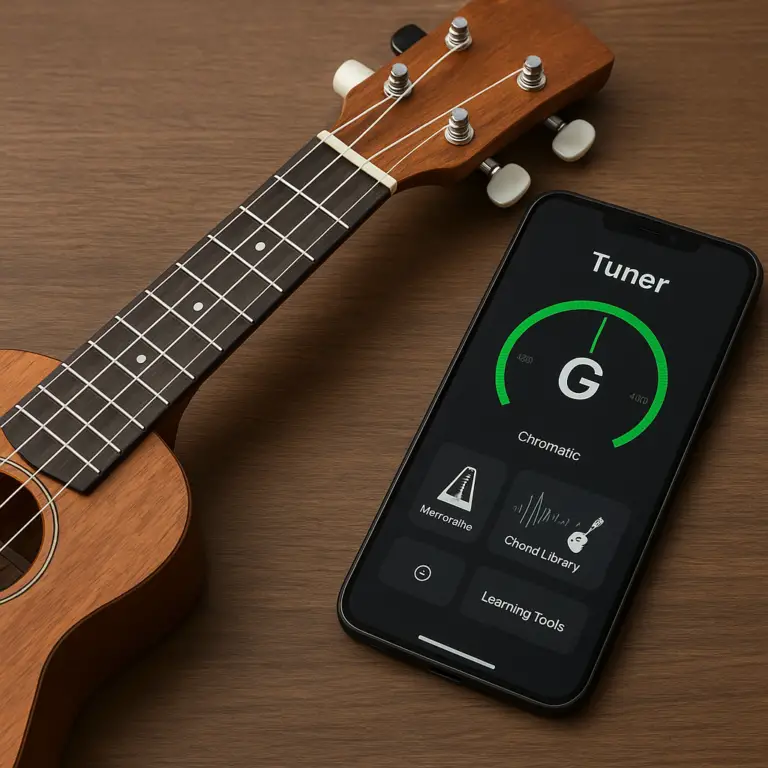
- Use a clip-on tuner or a microphone tuner app for the most accurate results.
- When tuning by ear, remember: the string closest to your face is the G string, then C, E, and A going downward.
- Alternate tunings like D tuning or Chicago tuning open up new sonic possibilities and can make certain songs easier to play.
- String quality and gauge affect tuning stability—nylon strings stretch more than fluorocarbon or gut strings.
- Always tune up to pitch to avoid slack strings and improve tuning stability.
Curious about why the ukulele’s G string is “up there” and not down low? Or how to get that perfect pitch with just your phone? Keep reading—we’ll unravel all this and more! Meanwhile, check out our related ukulele guide at Guitar Brands™ for a broader look at the instrument.
🎶 The Evolution and History of Ukulele Tuning

The ukulele’s tuning story is as colorful as its Hawaiian roots. Originally brought to Hawaii by Portuguese immigrants in the late 19th century, the ukulele quickly evolved from a small guitar-like instrument into a cultural icon.
The Birth of Standard Tuning: gCEA
- The gCEA tuning emerged as the standard because it balanced ease of play with a bright, cheerful sound.
- The re-entrant tuning (high G) mimics the traditional Portuguese machete’s tuning, which influenced the ukulele’s voice.
- This tuning made the ukulele ideal for rhythmic strumming and melodic picking.
Alternate Tunings Through the Decades
- In the 1920s and 1930s, D tuning (aDF#B) was popular, especially for sopranino and sopranissimo ukules, giving a brighter, higher-pitched sound.
- Chicago tuning (DGBE) came into vogue for baritone ukules, aligning with guitar tuning to ease guitarists’ transition.
- More experimental tunings, like the BEBE baritone tuning (discussed in detail on Uketropolis), have emerged to inspire new musical styles.
Why Does Re-Entrant Tuning Exist?
Re-entrant tuning means the strings don’t go from low to high pitch in a linear fashion. Instead, the G string is tuned higher than the C string. This creates a distinctive ukulele sound that’s bright and percussive. It also encourages unique chord voicings and strumming patterns.
🔧 Mastering Ukulele Tuning: Step-by-Step Guide for Perfect Pitch
Ready to get your ukulele sounding like a dream? Here’s our detailed step-by-step tuning guide, based on years of experience at Guitar Brands™.
Step 1: Choose Your Tuning
- Standard (gCEA) is the best starting point.
- Want to experiment? Try D tuning (aDF#B) or Chicago tuning (DGBE) later.
Step 2: Use a Tuner or Tune by Ear
- Clip-on tuners like the Snark SN-6 are reliable and easy to use.
- Apps like UkeBuddy (https://ukebuddy.com/ukulele-tuner) use your device’s microphone to detect pitch.
- For tuning by ear, play the reference note (e.g., from a piano or tuning fork) and match the ukulele string.
Step 3: Tune Each String
- Start with the G string (closest to your face).
- Turn the tuning peg slowly while plucking the string.
- Tune up to pitch—if you go too far, loosen the string and tune up again.
- Repeat for C, E, and A strings.
Step 4: Double-Check and Fine-Tune
- Play common chords (C, F, G7) and listen for any buzzing or disonance.
- Adjust tuning slightly if needed.
Step 5: Maintain Tuning Stability
- Stretch new strings gently after tuning.
- Avoid sudden temperature or humidity changes.
- Tune before every playing session.
🎵 Standard Ukulele Tuning Explained: The gCEA Magic
The gCEA tuning is the heart and soul of ukulele playing. Here’s why:
| String | Note | Pitch Type | Role in Sound |
|---|---|---|---|
| 4th | G | Re-entrant (high) | Adds brightness and sparkle |
| 3rd | C | Lowest pitch | Foundation of chords |
| 2nd | E | Mid pitch | Adds warmth and melody |
| 1st | A | Highest pitch | Leads melody and harmony |
Why Re-Entrant G?
The high G string creates a bouncy, cheerful tone that makes the ukulele instantly recognizable. It also allows for chord voicings that wouldn’t be possible with a low G.
Playing Tips
- When strumming, the G and A strings often ring out brightest.
- For fingerpicking, the C and E strings provide the bass and middle tones.
- This tuning is perfect for playing in the key of C major, which is why so many beginner songs are written in this key.
1. Exploring D Tuning (aDF#B): When to Use and How to Nail It
D tuning shifts everything up a whole tone from standard tuning, giving a brighter, more vibrant sound.
| Aspect | Rating (1-10) | Notes |
|---|---|---|
| Brightness | 9 | Noticeably brighter than gCEA |
| Playability | 7 | Slightly higher tension, may need adjustment |
| Historical Use | 8 | Popular in 1920s-30s ukulele music |
| Compatibility | 6 | Best for sopranino/sopranissimo ukes |
When to Use D Tuning
- To play songs in D major more easily.
- When you want a brighter, more cutting tone.
- For historical or vintage-style ukulele music.
How to Tune to D Tuning
- Tune strings to a D, F#, B, and high D.
- Use a tuner or app and adjust each string carefully.
- Remember to tune up to pitch for stability.
2. Chicago Tuning (DGBE): The Guitarist’s Favorite Ukulele Setup
Chicago tuning matches the top four strings of a guitar in standard tuning, making it a favorite for guitar players switching to ukulele.
| Aspect | Rating (1-10) | Notes |
|---|---|---|
| Familiarity | 10 | Perfect for guitarists |
| Versatility | 7 | Great for baritone ukules |
| Sound | 6 | Less “ukulele-like,” more guitar-like |
| Ease of Learning | 9 | Guitar chord shapes transfer easily |
Why Choose Chicago Tuning?
- If you’re a guitarist, you can transfer chord shapes and songs directly.
- It’s the standard tuning for baritone ukules.
- It produces a deper, mellower tone than gCEA.
How to Tune
- Tune strings to D, G, B, E from top to bottom.
- Use a chromatic tuner or app for precision.
3. A#/Bb Tuning (fA#DG): Unlocking Unique Sounds and Styles
This tuning shifts standard tuning down a whole tone, giving a slightly lower pitch and a warmer tone.
| Aspect | Rating (1-10) | Notes |
|---|---|---|
| Warmth | 8 | Adds warmth and depth |
| Playability | 7 | Slightly loser strings |
| Popularity | 5 | Less common but useful for certain keys |
| Vocal Compatibility | 9 | Makes singing in A#/Bb easier |
When to Use A#/Bb Tuning
- To play songs in A#/Bb keys more comfortably.
- When you want a mellow, rich ukulele tone.
- To match vocal ranges that suit lower keys.
How to Tune
- Tune strings to F, A#, D, G.
- Use a tuner or app and tune carefully.
🎤 Best Ukulele Tuners: Clip-On, App-Based, and Microphone Options Reviewed
Tuning your ukulele accurately is easier than ever thanks to modern tuners. Here’s our expert take on the top options:
| Tuner Type | Design Rating | Functionality | Ease of Use | Price Range | Comments |
|---|---|---|---|---|---|
| Snark SN-6 Clip-On | 9 | 9 | 10 | Affordable | Very popular, bright display, fast response |
| KLIQ UberTuner | 8 | 9 | 9 | Mid-range | Accurate, versatile for many instruments |
| UkeBuddy App | 8 | 8 | 9 | Free | Uses device mic, multiple tunings, great for beginners |
| Fender Tune App | 7 | 8 | 8 | Free | Simple interface, good for guitar & ukulele |
| Boss TU-3 Pedal | 9 | 10 | 7 | Premium | Pro-level, great for live use, requires pedalboard |
Clip-On Tuners
- Pros: Attach directly to the headstock, unaffected by background noise.
- Cons: Slightly more expensive than apps.
- Recommended: Snark SN-6 is a favorite for ukulele players.
App-Based Tuners
- Pros: Free or low cost, convenient, many tunings available.
- Cons: Sensitive to background noise; requires quiet environment.
- Recommended: UkeBuddy app (https://ukebuddy.com/ukulele-tuner) is excellent for beginners and intermediate players.
Microphone Tuners
- Use your phone or laptop mic to detect pitch.
- Best in quiet rooms.
- Great for quick tuning on the go.
🎸 How String Gauge and Material Affect Your Ukulele Tuning Stability
Strings are the unsung heroes of your ukulele’s tone and tuning stability. Here’s what we’ve learned:
String Materials
| Material | Tone Quality | Durability | Tuning Stability | Price Range |
|---|---|---|---|---|
| Nylon | Warm, mellow | Medium | Moderate | Affordable |
| Fluorocarbon | Bright, clear | High | High | Mid-range |
| Gut | Rich, vintage | Low | Low | Expensive |
| Wound Nylon | Warm, bass-heavy | Medium | Moderate | Mid-range |
String Gauge
- Lighter gauge strings are easier to fret but can be less stable.
- Heavier gauge strings offer more volume and sustain but require more finger strength.
- For beginners, medium gauge fluorocarbon strings offer a good balance.
Tips for Better Tuning Stability
- Stretch new strings gently after installation.
- Change strings regularly—old strings lose tuning ability.
- Keep your ukulele in a stable environment to avoid string expansion/contraction.
🎼 Alternative and Open Tunings: Creative Ways to Expand Your Ukulele Sound
If you’re ready to break out of the standard mold, alternative tunings can open up a world of sonic possibilities.
Popular Alternative Tunings
| Tuning Name | Notes | Description | Best For |
|---|---|---|---|
| BE (Baritone) | B–E–B–E | Creates a resonant, open sound | Blues, melodic songs |
| Low G | G–C–E–A (low G) | Low G string instead of high G | Fuller bass sound |
| Open C | G–C–E–G | Open C chord when strummed open | Slide, folk, blues |
| Slack Key | Various (e.g., G–C–E–G) | Hawaiian slack key style | Hawaiian music, fingerstyle |
Why Experiment?
- Breaks repetitive chord shapes.
- Encourages new fingerings and melodies.
- Can inspire songwriting and improvisation.
How to Explore Safely
- Use a tuner to avoid string damage.
- Change one string at a time.
- Keep notes on your favorite tunings for future reference.
🛠️ Troubleshooting Common Ukulele Tuning Problems and How to Fix Them
Even seasoned pros hit tuning snags. Here’s how to troubleshoot:
Problem: Ukulele Goes Out of Tune Quickly
- Cause: New strings stretching, loose tuning pegs, or environmental changes.
- Fix: Stretch strings gently, tighten tuning pegs, keep instrument in stable temperature/humidity.
Problem: Tuner Doesn’t Detect Pitch Correctly
- Cause: Background noise or mic sensitivity.
- Fix: Tune in a quiet room, bring ukulele close to mic, adjust app sensitivity.
Problem: String Fels Slippery or Hard to Tune
- Cause: Old strings or worn tuning pegs.
- Fix: Replace strings, lubricate tuning pegs with graphite or peg compound.
Problem: Confused by Re-Entrant Tuning
- Cause: Expecting linear low-to-high pitch string order.
- Fix: Remember the G string is tuned higher than the C string; listen carefully.
🎤 Tuning Tips for Live Performances and Recording Sessions
Nothing kills a vibe like an out-of-tune ukulele on stage or in the studio. Here’s how to stay sharp:
- Tune right before going on stage and again if you have breaks.
- Use a clip-on tuner for quick, silent tuning.
- Keep a backup set of strings handy.
- For recording, tune multiple times during the session.
- Consider using a humidifier or case humidifier to maintain tuning stability.
- If using a microphone tuner app, mute other instruments during tuning.
📏 How Climate and Environment Impact Ukulele Tuning and Maintenance
Ukules are sensitive little creatures! Changes in temperature and humidity can wreak havoc on tuning.
Effects of Climate
| Condition | Effect on Ukulele | Tuning Impact |
|---|---|---|
| High Humidity | Wood swells, strings loosen | Tuning goes flat |
| Low Humidity | Wood shrinks, strings tighten | Tuning goes sharp |
| Temperature Swings | Wood expands/contracts rapidly | Frequent tuning required |
Maintenance Tips
- Store your ukulele in a hard case with a humidifier in dry climates.
- Avoid leaving it in direct sunlight or near heaters.
- Tune more frequently during seasonal changes.
🎶 Tuning Your Ukulele by Ear: Developing Your Musical Ear for Better Play
Tuning by ear is a skill worth cultivating. It deepens your musicality and helps you play with others.
How to Train Your Ear
- Use a reference pitch (piano, tuning fork, or app).
- Listen for beats—the wavering sound when two notes are slightly out of tune.
- Adjust strings until beats disappear.
- Practice tuning daily, even if you use a tuner.
Benefits
- Improves pitch recognition.
- Helps in ensemble playing.
- Makes tuning faster and more intuitive.
🎁 Recommended Ukulele Tuning Accessories and Tools You Can’t Live Without
Here’s our curated list of must-have tuning gear from Guitar Brands™ experts:
| Product | Type | Highlights | Where to Buy |
|---|---|---|---|
| Snark SN-6 | Clip-on tuner | Fast, accurate, bright display | Amazon |
| UkeBuddy App | Mobile app | Free, multiple tunings, mic-based | UkeBuddy |
| D’Addario Pro-Arte Strings | Strings | Durable, bright tone | Amazon |
| Planet Waves Peg Compound | Tuning peg lubricant | Smooth tuning pegs, prevents slipping | Amazon |
| Kala Hard Case | Ukulele case | Protects from climate changes | Kala Official |
🔍 Conclusion: Perfecting Your Ukulele Tuning Journey

[To be continued in the Conclusion section.]
For a visual and practical demonstration of tuning your ukulele, check out the featured video above. It’s a great companion to this guide!