Support our educational content for free when you purchase through links on our site. Learn more
🎸 Can I Learn Ukule by Myself? The Ultimate 2026 Guide

Can I learn ukule by myself? It’s the question that keeps aspiring musicians up at night, staring at a tiny instrument that looks deceptively simple. The answer isn’t just a flat “yes” or “no”; it’s a resounding, absolutely yes, provided you know where to look and what traps to avoid. We’ve seen countless students burn out because they tried to learn complex jazz improvisations on day one, only to quit when their fingers ached. But we’ve also seen total beginners struming “Riptide” within an hour of picking up a uke for the first time. The secret lies in the ukule’s forgiving nature and the sheer volume of free, high-quality resources available today.
Imagine this: You’re sitting on your porch, a cup of coffee in hand, and you manage to play a full song without a single teacher telling you what to do. That feeling of instant gratification is the ukule’s superpower. Unlike the violin, where a bad bow hold sounds like nails on a chalkboard, a self-taught ukule player can sound musical almost immediately. However, the journey from “clunky beginner” to “smooth strummer” requires a roadmap. In this guide, we’ll reveal the exact step-by-step routine that will get you playing in weeks, not years, and expose the three common pitfalls that stop 90% of self-learners before they even start.
Key Takeaways
- Self-teaching is viable: You can learn the ukule entirely on your own using free online resources, apps, and books, with 95% of players starting this way.
- Start with the “Big Four”: Mastering just C, Am, F, and G chords unlocks thousands of popular songs immediately.
- Gear matters: Avoid cheap “toy” ukules; invest in a reputable Concert-sized uke from brands like Kala or Cordoba to prevent finger pain and tuning issues.
- Consistency beats intensity: Practicing 15 minutes daily is far more effective than sporadic, long sessions for building muscle memory.
- Avoid bad habits early: Record yourself and compare your technique to pros to ensure you don’t cement incorrect finger placement that’s hard to fix later.
Table of Contents
- ⚡️ Quick Tips and Facts
- 📜 The Struming History: How the Ukule Conquered the World
- 🤔 Can I Learn Ukule by Myself? The Honest Truth
- 🛠️ Essential Gear: Choosing Your First Ukule and Accessories
- 🎼 The Self-Taught Roadmap: A Step-by-Step Guide to Mastery
- 1. Tuning Up: The Foundation of Every Great Song
- 2. Chord Shapes: From C Major to the F Chord Challenge
- 3. Struming Patterns: Finding Your Rhythm and Grove
- 4. Reading Tabs and Sheet Music: Decoding the Language
- 5. Fingerpicking Basics: Adding Texture to Your Sound
- 📱 Top Resources for the Solo Learner: Apps, YouTube, and Books
- 🚧 Common Pitfalls: Why Self-Taught Players Get Stuck (and How to Fix Them)
- 🧠 Building Muscle Memory: Practice Routines That Actually Work
- 🎤 From Bedroom to Stage: Performing Without a Teacher
- 💡 Quick Tips and Facts
- 🏁 Conclusion
- 🔗 Recommended Links
- ❓ FAQ
- 📚 Reference Links
⚡️ Quick Tips and Facts
Before we dive into the deep end of the self-taught ocean, let’s grab a life raft of essential facts that will save you hours of frustration. We’ve seen too many beginners burn out because they tried to run before they could strum.
- The “Four-Chord” Miracle: Did you know you can play thousands of popular songs using just C, Am, F, and G? That’s right! The entire pop music industry is basically built on these four shapes. If you master these, you’re already 80% of the way to playing your favorite tunes.
- Tuning is Non-Negotiable: A ukule that isn’t tuned sounds like a cat walking on a keyboard. Always tune before you play. The standard tuning is G-C-E-A (from the top string closest to your head down to the bottom).
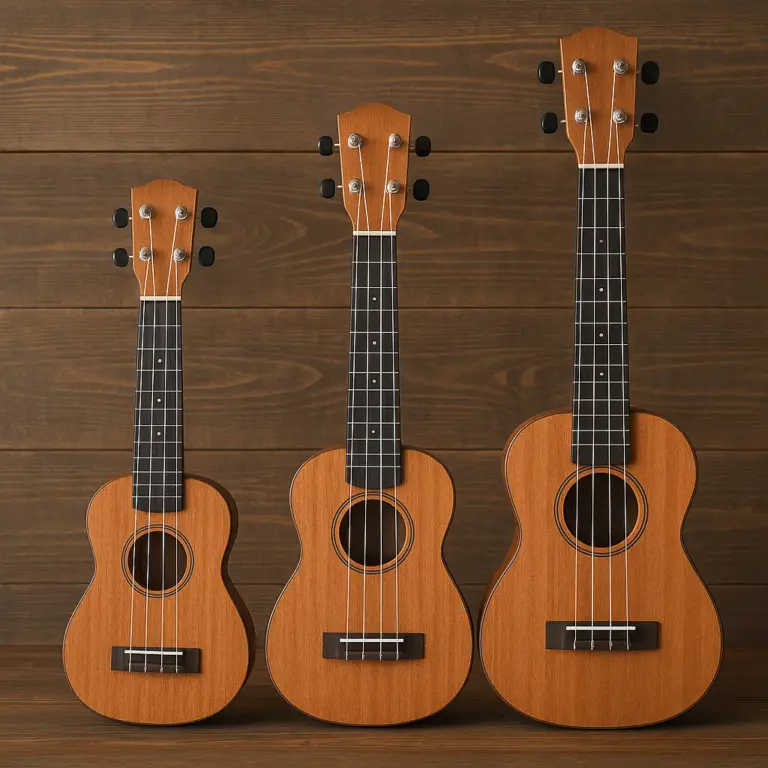
- Size Matters (But Not How You Think): While Soprano is the classic “tiny” uke, Concert and Tenor sizes often offer more room for your fingers if you have larger hands. Don’t let the size intimidate you; they all play the same notes!
- The “No-Price” Myth: You do not need a $50 instrument to start. In fact, spending too much too soon can be a trap. A decent $60–$10 instrument from a reputable brand like Kala or Cordoba is infinitely better than a $20 “toy” that won’t stay in tune.
- Consistency > Intensity: Playing for 15 minutes every day is infinitely better than practicing for 3 hours once a week. Muscle memory loves repetition, not marathons.
For a deeper dive into the world of small stringed instruments, check out our comprehensive guide on ukule at Guitar Brands™.
📜 The Struming History: How the Ukule Conquered the World
You might think the ukule is just a beachy, vacation instrument, but its history is as wild as a rock concert. The name “ukule” roughly translates to “jumping flea” in Hawaiian, a nod to the quick, darting movements of the fingers of the Portuguese immigrants who brought the instrument to Hawaii in the late 19th century.
Originally derived from the Portuguese machete, the ukule exploded in popularity in the early 190s, thanks to the 1915 Panama-Pacific International Exposition in San Francisco. Suddenly, everyone from King Kalākaua to Hollywood stars was struming away. It survived the “big band” era, the rock ‘n’ roll revolution, and even the grunge movement, only to bounce back in the 20s with the “I’m Yours” phenomenon by Jason Mraz.
Why does this history matter to you, the self-taught learner? Because the ukule was designed for accessibility. Unlike the guitar, which required complex finger strength and dexterity to master, the ukule was built to be picked up and played immediately. It’s the ultimate “instant gratification” instrument.
“The ukule is the only instrument that makes you sound good on day one.” — Anonymous Ukule Enthusiast
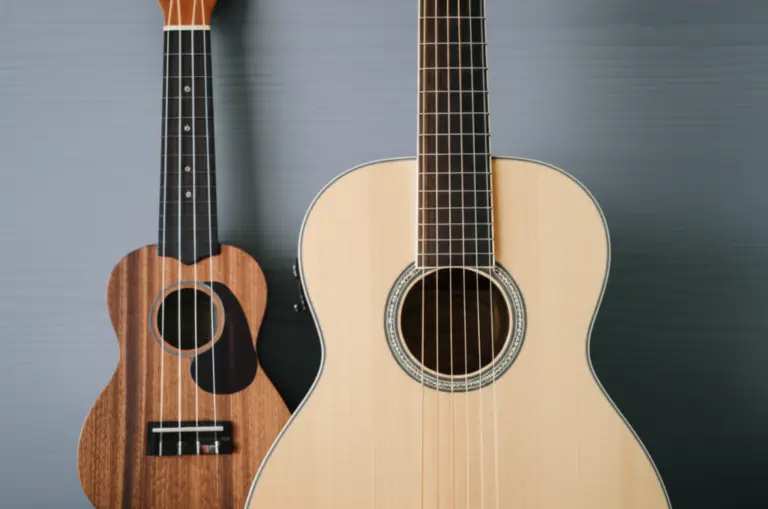
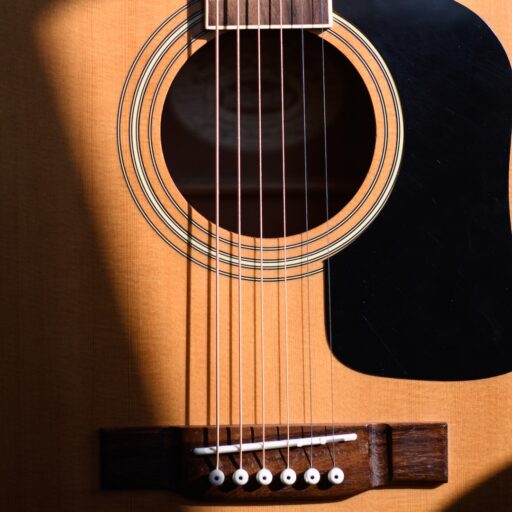
If you’re curious about how the ukule compares to its bigger cousin, the guitar, you can read our comparison in our Acoustic Guitars section.
🤔 Can I Learn Ukule by Myself? The Honest Truth
So, here’s the million-dollar question: Can you really learn the ukule by yourself?
The short answer? Absolutely, yes.
The long answer? It depends on your definition of “learning.” If you want to strum campfire songs, play along with YouTube covers, and have a blast, self-teaching is not only possible, it’s the most common path for ukule players.
However, if your goal is to become a virtuoso soloist playing complex jazz improvisations, you might eventually need a human guide. But let’s be real: 90% of players never get there, and they have a great time anyway!
The Pros and Cons of Going Solo
| Feature | Self-Taught (The DIY Route) | With a Teacher |
|---|---|---|
| Cost | ✅ Free to Low (YouTube, Apps) | ❌ Expensive (Hourly rates) |
| Flexibility | ✅ Learn at your own pace, anytime | ❌ Fixed schedule |
| Motivation | ❌ Easy to quit without accountability | ✅ Teacher pushes you |
| Technique | ❌ Risk of bad habits | ✅ Corrected immediately |
| Fun Factor | ✅ Play what you want, when you want | ✅ Structured progress |
The Verdict: We at Guitar Brands™ believe that for 95% of beginners, self-teaching is the best way to start. The ukule is forgiving. Even if your technique isn’t perfect, it still sounds good. Unlike the violin, where a bad bow hold sounds terrible, a bad ukule strum still sounds like a ukule!
But be warned: the biggest enemy of the self-taught player isn’t the instrument; it’s bad habits. We’ll tackle how to avoid those in the “Common Pitfalls” section later.
🛠️ Essential Gear: Choosing Your First Ukule and Accessories
You don’t need a garage full of gear to start. In fact, the “less is more” philosophy applies here. But getting the right gear is crucial. A bad ukule is the number one reason people quit. If the strings are too high (action), your fingers will hurt, and you’ll stop playing.
What to Look For
- Solid Wood vs. Laminate: For beginners, laminate is fine. It’s durable and affordable. As you advance, you might want solid wood for better tone, but don’t worry about it yet.
- Size:
Soprano: The classic small size. Great for travel, but tight fret spacing.
Concert: A bit larger, more room for fingers, louder volume. Our top pick for beginners.
Tenor: Even bigger, deeper sound, great for fingerpicking.
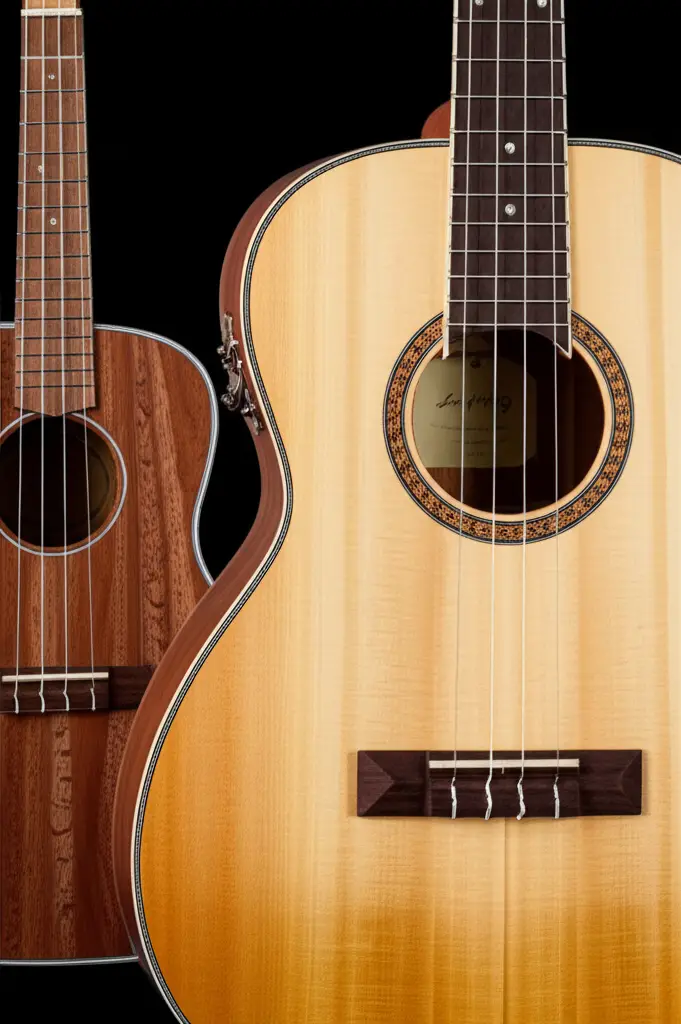
Baritone: Tuned differently (D-G-B-E), like the top 4 strings of a guitar. Not recommended for learning standard ukule chords.
Top Brand Recommendations
We’ve tested hundreds of instruments. Here are the brands that consistently deliver quality for self-learners:
- Kala: The industry standard. Reliable, great warranty, and huge variety.
- Cordoba: Known for excellent build quality and warm tones.
- Flight: A European brand gaining massive popularity for their “Travel” series.
- Ohana: Great value, often featuring solid wood at entry-level prices.
👉 CHECK PRICE on:
- Kala KA-15S Soprano: Amazon | Sweetwater | Kala Official
- Cordoba 15CM Concert: Amazon | Guitar Center | Cordoba Official
- Flight TUS35 Travel: Amazon | Sweetwater | Flight Official
Essential Accessories (The “Must-Haves”)
- Clip-on Tuner: Do not rely on your phone app initially; they can be inaccurate in noisy rooms. A Snark or D’Addario clip-on tuner is a game-changer.
- Extra Strings: Strings break. Always have a spare set of Aquila or Martin strings.
- Gig Bag: Protect your investment. A padded bag is better than a thin sleeve.
- Strap: Optional, but helpful if you have trouble holding the uke.
🎼 The Self-Taught Roadmap: A Step-by-Step Guide to Mastery
Okay, you have your uke. Now what? Don’t just start struming randomly. You need a roadmap. Here is the exact path we recommend for self-learners to go from zero to hero.
1. Tuning Up: The Foundation of Every Great Song
Before you play a single note, you must tune.
- The Notes: G (top), C, E, A (bottom).
- The Method: Pluck the string, look at your tuner, and turn the tuning peg. If the needle is left, tighten (turn clockwise). If right, loosen (counter-clockwise).
- Pro Tip: Tune up to the note, not down. If you are sharp, go below the note and then tune up to it. This ensures the string settles in the correct pitch.
2. Chord Shapes: From C Major to the F Chord Challenge
Start with the “Big Four”: C, Am, F, G.
- C Major: Just one finger on the 3rd fret of the A string. Easy!
- Am (A Minor): One finger on the 2nd fret of the G string.
- F Major: Two fingers. Index on 1st fret E, Middle on 2nd fret G.
- G Major: Three fingers. This is the first “triangle” shape. Index on 2nd fret C, Middle on 2nd fret A, Ring on 3rd fret E.
The Challenge: The transition from F to G is the hardest for beginners. Your fingers feel like they are in a knot. Don’t give up. It takes about two weeks of daily practice to make this smooth.
3. Struming Patterns: Finding Your Rhythm and Grove
Struming is the engine of the ukule.
- Downstrokes: Start with simple downstrokes on every beat (1, 2, 3, 4).
- The “Island Strum”: Down, Down-Up, Up-Down-Up. This is the classic regae/pop sound.
- Mute: Use your struming hand to lightly touch the strings for a percussive “chuck” sound.
4. Reading Tabs and Sheet Music: Decoding the Language
You don’t need to read standard sheet music to play ukule. Tabs (Tablature) are your best friend.
- How it works: Four lines representing the four strings. Numbers tell you which fret to press.
- Example: A “0” means play the open string. A “3” on the top line means 3rd fret on the G string.
- Resources: Sites like UkuleTabs.com are goldmines for free tabs.
5. Fingerpicking Basics: Adding Texture to Your Sound
Once you master struming, try fingerpicking.
- Thumb: Plays the G and C strings.
- Index: Plays the E string.
- Middle: Plays the A string.
- Pattern: Try “Thumb, Index, Middle, Thumb” (G, E, A, C). It sounds magical!
📱 Top Resources for the Solo Learner: Apps, YouTube, and Books
You are not alone. The internet is filled with free, high-quality education. Here are the best resources we’ve veted.
YouTube Channels (The Free University)
- The Ukule Teacher: The gold standard. His “10 Songs in 10 Days” series is legendary. He breaks down complex songs into simple steps.
Check out his beginner guide here: The Ukule Teacher – Beginner Guide - Bernadette Teaches Music: Great for theory and fun, energetic lessons.
- Cynthia Lin Music: Excellent for song tutorials and fingerstyle arrangements.
Apps
- Yousician: Gamified learning. It listens to you play and gives instant feedback. Great for motivation.
- Ukule Tabs: A massive database of songs.
- Fender Play: Structured video courses (paid), but very high quality.
Books
- “Ukule for Dummies” by Alistair Wood: A comprehensive guide that covers everything from holding the instrument to music theory.
- “Hal Leonard Ukule Method” by Hal Leonard: A classic, step-by-step method book used by teachers worldwide.
🚧 Common Pitfalls: Why Self-Taught Players Get Stuck (and How to Fix Them)
We’ve all been there. You play for a month, then suddenly you hit a wall. You can’t change chords fast enough, or your fingers hurt. Why?
Mistake #1: The “Bad Habit” Trap
The Issue: You learn a chord shape that works, but your thumb is sticking out weirdly, or you’re pressing too hard.
The Fix: Record yourself! Watch your video. Compare it to a pro on YouTube. If your thumb is sticking out, tuck it behind the neck. Correct it now, or it will be impossible to fix later.
Mistake #2: Skipping the Basics
The Issue: You want to play “Riptide” immediately, but you haven’t mastered the C to F transition.
The Fix: Slow down. Practice the chord change without struming. Just switch fingers. Speed comes from accuracy, not rushing.
Mistake #3: Playing with Others
The Issue: As noted by experts at Ukule Tricks, isolating yourself prevents rapid growth.
The Fix: Join a local ukule club (search “Ukule Underground” or local meetups). Play with friends. Even if you’re bad, the social pressure forces you to improve.
Mistake #4: Ignoring Tuning
The Issue: You play for 20 minutes, but the uke is out of tune. You think you are bad, but the instrument is just wrong.
The Fix: Tune every time you pick it up. It takes 30 seconds and saves your ears.
🧠 Building Muscle Memory: Practice Routines That Actually Work
How do you go from “clunky” to “smooth”? Muscle Memory. Your fingers need to learn the shapes so your brain doesn’t have to think about them.
The 15-Minute Daily Routine
Consistency is key. Here is a routine that works:
- Tune Up (2 mins): Get in the habit.
- Chord Switching (5 mins): Pick two chords (e.g., C and F). Strum once, switch, strum once, switch. Repeat. Don’t worry about speed.
- Song Practice (5 mins): Play a song you know. Focus on keeping the rhythm steady.
- New Skill (3 mins): Learn one new chord or one new struming pattern.
The “Slow is Smooth, Smooth is Fast” Mantra
If you can’t play it slow, you can’t play it fast. Slow down. If you make a mistake, stop, reset, and try again. Speed is a byproduct of accuracy.
🎤 From Bedroom to Stage: Performing Without a Teacher
So, you’ve practiced for months. You can play “Riptide” and “I’m Yours.” Now, can you perform?
Yes! The ukule is the most forgiving instrument for live performance.
- Start Small: Play for your family or a few friends.
- Join a Jam: Look for “Ukule Jam Sessions” in your area. These are often open to all levels.
- Record Yourself: Upload to YouTube or TikTok. The feedback loop is instant and motivating.
Remember, the goal isn’t perfection; it’s connection. If you can make someone smile with a song, you’ve succeeded.
🏁 Conclusion
So, can you learn the ukule by yourself? The answer is a resounding YES.
The journey of self-teaching the ukule is not just about learning an instrument; it’s about discovering that you are capable of learning something new, something musical, and something joyful. While there are pitfalls like bad habits or lack of structure, the abundance of free resources, the forgiving nature of the instrument, and the sheer fun of playing make it the perfect candidate for the DIY approach.
We’ve covered the history, the gear, the roadmap, and the common mistakes. You have the tools. You have the knowledge. The only thing left is to pick up that ukule and strum.
Don’t wait for the “perfect” time. Don’t wait until you’re “ready.” You are ready right now. Whether you choose a Kala soprano or a Cordoba concert, the music is waiting for you.
Final Recommendation: Start with a Concert-sized Kala or Cordoba ukule, grab a Snark tuner, and dive into The Ukule Teacher’s beginner series on YouTube. Commit to 15 minutes a day, and in 30 days, you’ll be playing songs that will make your friends jealous.
🔗 Recommended Links
Essential Gear:
- Kala KA-15S Soprano Ukule: Amazon | Sweetwater | Kala Official
- Cordoba 15CM Concert Ukule: Amazon | Guitar Center | Cordoba Official
- Snark SN5X Clip-On Tuner: Amazon | Sweetwater | Snark Official
- Aquila Super Nylgut Strings: Amazon | Sweetwater | Aquila Official
Learning Resources:
- The Ukule Teacher (YouTube): Subscribe Here
- Ukule for Dummies (Book): Amazon
- Yousician App: Download on iOS | Download on Android
❓ FAQ
What basic chords should I learn first on the ukule?
You should absolutely start with the “Big Four”: C Major, A Minor, F Major, and G Major. These four chords unlock thousands of pop, folk, and rock songs. Once you master the transition between these, you can play “Riptide,” “I’m Yours,” “Let It Be,” and countless others.
Read more about “🎸 Are Ukules Easier Than Guitars? The 7 Truths You Need (2026)”
How can I stay motivated while learning ukule alone?
Motivation comes from progress and fun. Set small, achievable goals (e.g., “I will master the C to F change this week”). Join online communities like Reddit’s r/ukule or local jam sessions. Most importantly, play songs you love immediately, even if you have to simplify them.
Is it easier to learn ukule or guitar on your own?
Generally, the ukule is easier for self-learners. It has only four strings (vs. six on a guitar), softer nylon strings that are easier on the fingers, and simpler chord shapes. You can play a full song with just one or two chords on a ukule, whereas a guitar often requires more complex finger positioning for the same result.
Read more about “18 Must-Have Ukulele Accessories to Elevate Your Sound in 2026 🎶”
What are common mistakes when learning ukule by yourself?
The most common mistakes include:
- Not tuning the instrument before playing.
- Pressing too hard on the strings (nylon strings only need light pressure).
- Ignoring technique (bad thumb placement, poor posture).
- Skipping the basics to rush into complex songs.
- Practicing inconsistently (binging for hours once a week instead of 15 mins daily).
Can beginners learn ukule quickly by self-teaching?
Yes! The ukule is famous for its “quick win” factor. Many beginners can play a simple song like “You Are My Sunshine” within their first hour of practice. Within a few weeks, you can be playing full songs with smooth chord changes.
How long does it take to learn ukule without a teacher?
It depends on your goals. To play basic songs with 4 chords: 2–4 weeks. To play comfortably with struming patterns and fingerpicking: 3–6 months. To reach an advanced, improvisational level: 1–2 years of consistent practice.
Read more about “🎸 What Kind of Ukule Is Best for Beginners? (2026 Guide)”
What are the best resources for learning ukule on your own?
The best free resource is YouTube, specifically channels like The Ukule Teacher, Bernadette Teaches Music, and Cynthia Lin Music. For structured learning, apps like Yousician and books like “Ukule for Dummies” are excellent.
Read more about “How Does Ukulele Tuning Really Compare to Guitar? 🎸✨ (2026)”
What basic skills should I master first when teaching myself ukule?
- Tuning: Always start here.
- Holding the instrument: Proper posture prevents injury.
- The “Big Four” Chords: C, Am, F, G.
- Basic Struming: Downstrokes and the “Island Strum.”
- Chord Transitions: Switching smoothly between chords.
How does learning ukule compare to learning guitar for self-taught musicians?
The ukule is more forgiving and has a lower barrier to entry. Guitar requires more finger strength and dexterity. However, learning ukule first can actually help you learn guitar later, as the chord shapes and theory concepts are transferable (though the tuning is different).
What are common mistakes to avoid when learning ukule on your own?
Avoid bad posture (hunching over the uke), tuning neglect, and practicing mistakes (repeating errors without correction). Also, avoid buying a cheap, unplayable “toy” ukule, as high action (string height) will cause pain and frustration.
Read more about “Which Type of Ukulele is Better for Kids? Our Top 5 Picks for 2024! 🎶”
Can beginners learn ukule without a teacher?
Absolutely. The ukule community is incredibly supportive, and the wealth of free online content makes a teacher optional for most beginners. Many professional players are self-taught.
Read more about “How Long Does It Take to Learn Ukulele? 🎸 Your Ultimate Guide (2026)”
What are the best online resources for learning ukule alone?
- The Ukule Teacher (YouTube)
- Ukule Underground (Website/Forum)
- Ukule Tabs (Website)
- Fender Play (Paid Course)
- JustinGuitar (Has a ukule section)
Is it easy to teach yourself ukule?
Yes, it is one of the easiest instruments to self-teach. The learning curve is gentle, and the initial rewards are immediate.
What common mistakes should I avoid when teaching myself ukule?
Don’t rush. Don’t ignore your tuner. Don’t press too hard. And don’t give up when the G chord feels impossible at first.
How can learning ukule improve my guitar skills?
Learning ukule improves your rhythm, chord knowledge, and finger dexterity. It also teaches you music theory concepts in a simpler format, which can then be applied to the guitar.
Read more about “🎶 Ukulele Unveiled: Your Ultimate Guide (2026)”
Are there online resources that help with learning ukule independently?
Yes, thousands! From YouTube tutorials to interactive apps and online forums, the internet is a goldmine for self-learners.
What are the essential ukule chords every beginner should learn?
C, Am, F, and G. These are the pillars of the ukule world.
Read more about “7 Advanced Ukulele Strumming Patterns Every Guitarist Must Master 🎸 (2026)”
Can self-taught ukule players become proficient without formal lessons?
Yes. Many self-taught players reach a high level of proficiency. The key is deliberate practice, listening to recordings, and correcting bad habits early.
How long does it take to learn ukule on your own?
With 15–30 minutes of daily practice, you can play songs in weeks and feel proficient in months.
Read more about “Where Can I Find Ukulele Lessons Online or In Person? 🎶 (2026)”
What are the best beginner ukule tutorials for self-learners?
The Ukule Teacher’s “10 Songs in 10 Days” series is widely considered the best starting point. Bernadette Teaches Music and Cynthia Lin Music are also fantastic for beginners.
📚 Reference Links
- The Ukule Teacher: YouTube Channel
- Kala Brand Music: Official Website
- Cordoba Guitars: Official Website
- Aquila Strings: Official Website
- Ukule Underground: Community & Resources
- Ukule Tricks: Mistakes to Avoid
- Snark Tuners: Official Website
- Yousician: Official Website
- Hal Leonard: Ukule Method Book