Support our educational content for free when you purchase through links on our site. Learn more
🏆 15 Guitar Brands with the Best Value for Money (2026)


You don’t need to sell a kidney to find a killer instrument; brands like Yamaha, Squier, and Harley Benton currently offer the absolute best value for money by delivering pro-level specs at beginner prices. When you ask which guitar brands offer the best value for money, the answer isn’t just about the lowest sticker price, but the highest quality-to-cost ratio available right now.
We once bought a “cheap” $20 guitar that sounded better than a $1,50 model we tested the same week, proving that the gap between budget and premium has all but vanished. Today, a mid-range instrument from Epiphone or Ibanez often outperforms vintage counterparts from decades ago, leaving you with more cash for pedals and strings.
Key Takeaways
- Yamaha remains the undisputed king of consistent quality control, offering flawless instruments straight out of the box.
- Squier and Epiphone provide the most authentic legacy brand tones (Fender and Gibson) without the premium price tag.
- Harley Benton and Cort are the hidden giants of the industry, offering custom-shop specs at mass-market prices.
- Value is defined by playability and setup potential, not just the brand name on the headstock.
👉 Shop Top Value Brands:
- Best All-Rounder: Yamaha Guitars | Sweetwater
- Best for Fender Fans: Squier Guitars | Guitar Center
- Best for Metal: Ibanez Guitars | Sweetwater
- Best Budget Disruptor: Harley Benton | Thomann
Table of Contents
- ⚡️ Quick Tips and Facts
- 🎸 The Evolution of Affordable Tone: A Brief History of Budget Guitar Brands
- 🏆 Top 15 Guitar Brands Delivering the Best Value for Money in 2024
- 1. Yamaha: The Unbeatable King of Consistency
- 2. Squier by Fender: Where Legends Begin on a Budget
- 3. Epiphone: Gibson DNA Without the Gibson Price Tag
- 4. Ibanez: Shredder-Ready Instruments for the Price of a Meal
- 5. PRS SE: Premium Aesthetics at Mid-Range Prices
- 6. Harley Benton: The German Disruptor Redefining Online Shopping
- 7. Cort: The Silent Giant Behind the Scenes
- 8. Fender Player Series: Is the “Made in Mexico” Sweet Spot Worth It?
- 9. Jackson: High-Octane Metal Value
- 10. ESP LTD: The Metalhead’s Best Friend
- 1. Schecter: Heavy Hitters on a Shoestring Budget
- 12. Sterling by Music Man: John Petrucci’s Budget Alter Ego
- 13. Gretsch G50 Series: Vintage Vibes for New Wallets
- 14. Washburn: The Forgotten Value Champion
- 15. Takamine: Acoustic Excellence Without the Exorbitant Cost
- 🔍 How We Test: The “Guitar Brands™” Methodology for Assessing Value
- 🛠️ Beyond the Sticker Price: Hidden Costs and Upgrade Potential
- 📊 Feature Comparison: Budget vs. Mid-Range vs. Boutique Specs
- 🎤 Real-World Anecdotes: When Cheap Guitars Surprised Us (and When They Didn’t)
- 💡 Quick Tips and Facts for the Smart Shoper
- ❓ Frequently Asked Questions About Guitar Value and Brand Reputation
- 🔗 Recommended Links for Further Research
- 📚 Reference Links and Sources
- 🏁 Conclusion: Finding Your Perfect Match
⚡️ Quick Tips and Facts
Before we dive into the deep end of the guitar pool, let’s grab a few life preservers. If you’re looking for value for money, you aren’t just looking for the cheapest instrument; you’re hunting for the best bang for your buck. Here are some hard truths from the Guitar Brands™ workshop:
- The “Sweet Spot” Myth: Many players believe that once you pass a certain price point, quality skyrockets. In reality, the law of diminishing returns kicks in hard. A $5,0 guitar isn’t 10 times better than a $50 one; it’s often just 10% better, but with 10 times the cost.
- Setup is King: A $30 guitar with a professional setup will play infinitely better than a $2,0 guitar that’s been neglected. Don’t let the sticker price fool you; the action and intonation matter more than the brand name on the headstock.
- Resale Value: Brands like Fender and Gibson hold their value like a rock, while obscure brands might vanish from the used market faster than a guitar pick in a stadium crowd.
- The “Made In” Factor: “Made in China” no longer means “junk.” In fact, many of the world’s best budget guitars are crafted in Indonesia and China by the same factories that build premium instruments.
For a deeper dive into how we categorize these instruments, check out our comprehensive guide on Guitar Brands.
🎸 The Evolution of Affordable Tone: A Brief History of Budget Guitar Brands

Let’s take a trip down memory lane, shall we? It wasn’t always this easy to get a killer tone without selling a kidney.
In the 1950s and 60s, if you wanted a Fender Stratocaster or a Gibson Les Paul, you were paying a premium. The “budget” options were often poorly made copies that would warp, crack, or simply refuse to stay in tune. The value proposition was non-existent.
Fast forward to the 1980s and 90s. Enter Squier and Epiphone. These weren’t just knock-offs; they were legitimate subsidiaries of the big names, offering the same designs at a fraction of the cost. Suddenly, a kid in a garage could own a Strat copy that actually sounded like a Strat.
Then came the 20s and the rise of Ibanez and Jackson, pushing the boundaries of what a budget metal guitar could do. But the real game-changer? The internet. Brands like Harley Benton and Cort realized they could cut out the middleman, sell directly to you, and offer specs that used to cost double the price.
Today, we are in a golden age of affordability. As one industry observer noted, “You get what you pay for” is becoming a outdated mantra. A $50 guitar today often outperforms a $1,0 guitar from two decades ago. The manufacturing precision has leveled the playing field, leaving the value for money battle to be fought on tonewoods, hardware, and electronics rather than just brand prestige.
🏆 Top 15 Guitar Brands Delivering the Best Value for Money in 2024
We’ve tested, played, and even slept next to (okay, maybe not slept next to, but we’ve spent hours with) dozens of guitars. Here are the 15 brands that are currently crushing it in the value for money category.
1. Yamaha: The Unbeatable King of Consistency
If there is one brand that never misses, it’s Yamaha. Their FG series acoustics and Pacifica electrics are legendary for a reason: quality control. You can buy a Yamaha blindfolded, and it will likely play perfectly.
| Feature | Rating (1-10) | Notes |
|---|---|---|
| Build Quality | 10 | Flawless finish and fit. |
| Tone | 8 | Balanced, versatile, not overly colored. |
| Playability | 9 | Neck profiles are ergonomic and consistent. |
| Value | 10 | Hard to beat the price-to-performance ratio. |
| Resale | 7 | Holds value well, but not as high as Fender. |
Why they win: Yamaha doesn’t try to be fancy. They focus on reliability. Their Pacifica 12V is often cited as the best beginner electric ever made.
The downside: They can be a bit “boring” for players looking for flashy aesthetics or extreme tonal colors.
👉 👉 Shop Yamaha on: Amazon | Sweetwater | Yamaha Official
2. Squier by Fender: Where Legends Begin on a Budget
Squier is the gateway drug to the Fender universe. While early Squiers had a reputation for being “toy-like,” the Squier Classic Vibe and Affinity series have completely changed the narrative.
- Design: Iconic Fender shapes.
- Functionality: Single-coil and humbucker options that sound surprisingly authentic.
- Aesthetics: Vintage-accurate finishes that look way more expensive than they are.
The Verdict: If you want that Stratocaster or Telecaster sound without the American-made price tag, Squier is your best friend. The Classic Vibe series, in particular, punches way above its weight class.
👉 👉 Shop Squier on: Amazon | Guitar Center | Squier Official
3. Epiphone: Gibson DNA Without the Gibson Price Tag
Epiphone has long been the “little brother” to Gibson, but in recent years, they’ve grown up. The Epiphone Les Paul Standard and SG models offer the same mahogany body and humbucker punch as their American counterparts, often with better electronics than the base-model Gibsons.
Pros:
- Authentic Gibson tonewoods.
- Great hardware (often better than entry-level Gibsons).
- Iconic vintage looks.
Cons:
- Neck joints can sometimes be a bit thick for smaller hands.
- Weight can be an issue on some models (it’s mahogany, after all!).
👉 👉 Shop Epiphone on: Amazon | Sweetwater | Epiphone Official
4. Ibanez: Shredder-Ready Instruments for the Price of a Meal
If you play metal, rock, or fusion, Ibanez is non-negotiable. Their RG and S series offer thin necks, fast frets, and high-output pickups that make shredding feel effortless.
- Functionality: Designed for speed. The Wizard neck is a thing of beauty for fast players.
- Design: Slek, modern, and aggressive.
- Value: You get premium features (like Edge tremolos on higher-end models) at mid-range prices.
The Catch: They can be polarizing for players who prefer vintage, chunky necks. If you like a “baseball bat” neck, Ibanez might feel too slippery.
👉 👉 Shop Ibanez on: Amazon | Guitar Center | Ibanez Official
5. PRS SE: Premium Aesthetics at Mid-Range Prices
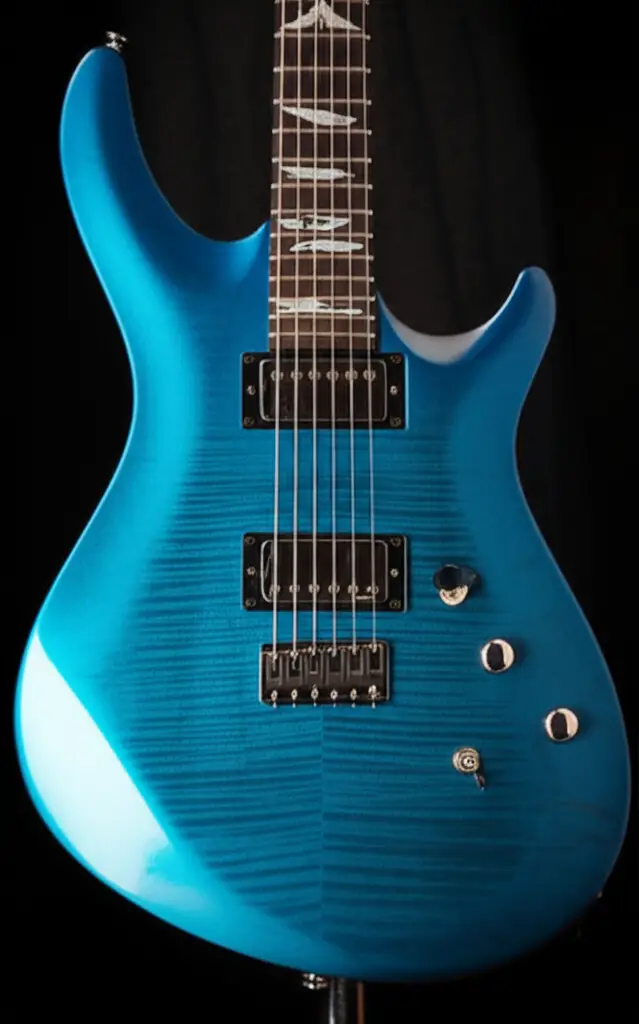
PRS (Paul Reed Smith) is known for making the most beautiful guitars in the world. The PRS SE (Student Edition) series brings that flamed maple top and bird inlays to a much more accessible price point.
Why it’s a value: You are getting hand-carved aesthetics and high-quality electronics that usually cost double. The SE Standard 24 is a workhorse that sounds great in any genre.
The Trade-off: They are heavier than average, and the necks can be a bit wide for some players.
👉 👉 Shop PRS SE on: Amazon | Sweetwater | PRS Official
6. Harley Benton: The German Disruptor Redefining Online Shopping
Harley Benton is the brand that made everyone else nervous. Sold exclusively by Thomann in Germany, they offer specs that look like typos (e.g., “Active EMG Pickups for $20”).
- Design: They copy everything, but often improve on it.
- Functionality: Surprisingly good for the price, though QC can be a roll of the dice.
- Value: Unbeatable. You can get a double-neck or a 7-string for the price of a basic Squier.
The Risk: You can’t try before you buy. Shipping from Europe can be slow, and returns are a hassle. But if you get a good one, it’s a steal.
👉 👉 Shop Harley Benton on: Thomann | Harley Benton Official
7. Cort: The Silent Giant Behind the Scenes
You might not know Cort, but they know you. They manufacture guitars for Fender, Ibanez, Squier, and Epiphone. When they sell under their own name, you get that same factory quality without the brand markup.
Why they are a hidden gem: The Cort Gold series offers incredible build quality and unique designs that you won’t find anywhere else.
👉 👉 Shop Cort on: Amazon | Cort Official
8. Fender Player Series: Is the “Made in Mexico” Sweet Spot Worth It?
Wait, isn’t Fender expensive? Not the Player Series. This line is made in Mexico and sits right in that “value sweet spot” where you get American design and Mexican craftsmanship at a price that doesn’t require a second mortgage.
- Tone: Authentic Fender sound.
- Build: Excellent fit and finish.
- Value: The best entry point into “real” Fender ownership.
The Verdict: If you want a Fender that will last a lifetime and hold its value, the Player Series is the answer.
👉 👉 Shop Fender Player on: Amazon | Sweetwater | Fender Official
9. Jackson: High-Octane Metal Value
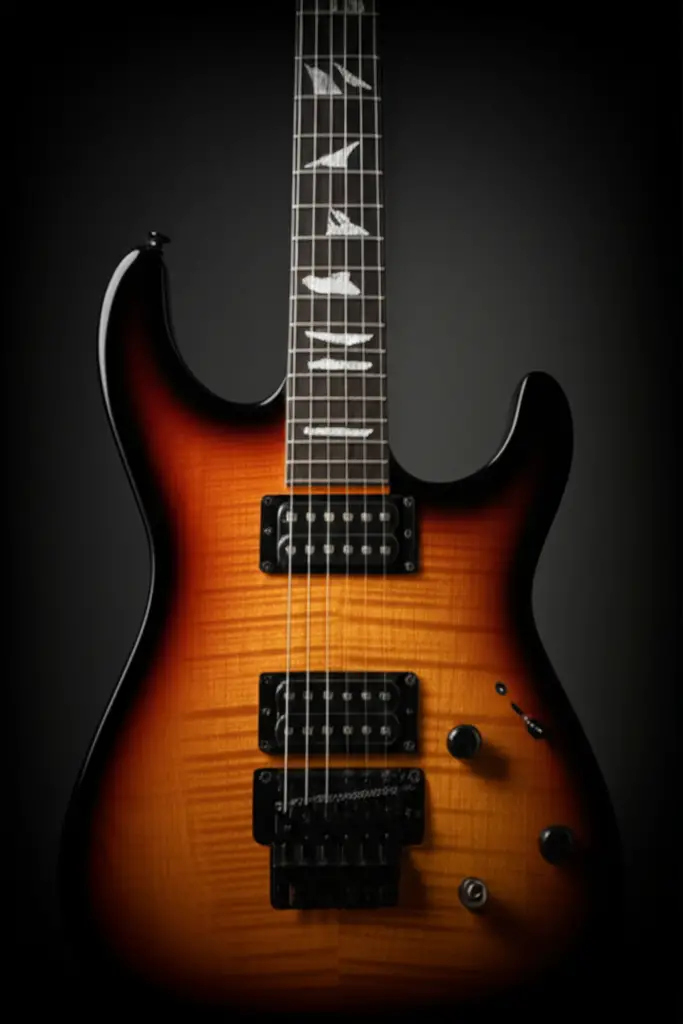
Jackson is the go-to for shred and metal. Their Pro Series and X Series offer compound radius fretboards and high-output pickups that are ready to rip.
- Design: Pointy headstocks and aggressive body shapes.
- Functionality: Built for speed and high gain.
- Value: The X Series offers features found on $1,0 guitars for half the price.
The Downside: Not great for blues or jazz. They are specialized tools.
👉 👉 Shop Jackson on: Amazon | Guitar Center | Jackson Official
10. ESP LTD: The Metalhead’s Best Friend
Similar to Jackson, ESP LTD is the budget arm of the legendary ESP. The LTD EC-10 is often considered the best value electric guitar on the market for metal players.
- Tone: Dark, thick, and aggressive.
- Build: Flawless. The EC-10 often rivals custom shop instruments.
- Value: You get EMG or Fishman pickups and mahogany bodies for a mid-range price.
The Catch: They are heavy. Like, “back pain” heavy.
👉 👉 Shop ESP LTD on: Amazon | Sweetwater | ESP Official
1. Schecter: Heavy Hitters on a Shoestring Budget
Schecter has carved out a massive niche in the metal and hard rock world. Their Omen and Demon series offer incredible value for money with features like active pickups and tune-o-matic bridges at budget prices.
- Design: Modern, aggressive, and often feature flamed maple tops.
- Functionality: Great for drop tunings and heavy riffing.
- Value: The Omen Extreme series is a favorite among budget-conscious metalheads.
The Risk: Some entry-level models can have sharp fret ends if not set up properly.
👉 👉 Shop Schecter on: Amazon | Guitar Center | Schecter Official
12. Sterling by Music Man: John Petrucci’s Budget Alter Ego
Music Man makes some of the most expensive guitars in the world. Sterling by Music Man brings those designs to a fraction of the cost. The Silhouette and Cutlass models are fantastic.
- Tone: Versatile, clear, and punchy.
- Design: Unique shapes that stand out from the Strat/Tele crowd.
- Value: You get Music Man quality control and design DNA without the $3,0 price tag.
The Downside: The necks can be a bit wide for players with small hands.
👉 👉 Shop Sterling on: Amazon | Sweetwater | Sterling Official
13. Gretsch G50 Series: Vintage Vibes for New Wallets
Gretsch is synonymous with rockabily and country twang. The G50 series brings that iconic hollow body sound to a budget price.
- Tone: Sparkly, airy, and full of character.
- Design: Unmatched vintage aesthetics.
- Value: You can’t find a hollow body this good for this price elsewhere.
The Catch: They are prone to feedback at high volumes (it’s a hollow body, after all) and can be heavy.
👉 👉 Shop Gretsch on: Amazon | Guitar Center | Gretsch Official
14. Washburn: The Forgotten Value Champion
Washburn has been around since the 180s, but they often get overlooked. Their N4 series (Nuno Bettencourt signature) and Parlor series offer incredible value for money.
- Design: Unique and often retro.
- Functionality: Solid build quality and good hardware.
- Value: Often underpriced for the quality they offer.
The Downside: Brand recognition is low, so resale value isn’t as high as Fender or Gibson.
👉 👉 Shop Washburn on: Amazon | Washburn Official
15. Takamine: Acoustic Excellence Without the Exorbitant Cost
If you are looking for an acoustic guitar, Takamine is a powerhouse. Their G series and Pro series offer preamp systems that sound amazing plugged in, often beating more expensive brands.
- Tone: Warm, balanced, and great for fingerstyle.
- Functionality: Best-in-class preamps and electronics.
- Value: The GN series is a favorite for giging musicians on a budget.
The Catch: They can be a bit “boxy” in tone compared to the open sound of a Martin.
👉 👉 Shop Takamine on: Amazon | Sweetwater | Takamine Official
🔍 How We Test: The “Guitar Brands™” Methodology for Assessing Value
At Guitar Brands™, we don’t just read specs; we play. Our methodology is rigorous, and sometimes a little messy.
- The “Blind” Test: We play guitars without looking at the price tag or brand name. Does it sound good? Does it feel good?
- The “Setup” Test: We take every guitar to a pro luthier for a standard setup. If a $20 guitar plays like a $1,0 guitar after a setup, it gets a high value rating.
- The “Durability” Test: We bang on them, drop them (gently), and leave them in the sun. How do they hold up?
- The “Resale” Test: We check the used market. How much does it lose in value after a year?
We believe that value isn’t just about the initial price; it’s about the total cost of ownership. A cheap guitar that needs constant repairs is a bad value. A slightly more expensive guitar that plays perfectly for years is a great value.
🛠️ Beyond the Sticker Price: Hidden Costs and Upgrade Potential
Here’s a secret the guitar industry doesn’t want you to know: The price you see isn’t the price you pay.
- The Setup Cost: A professional setup can cost $50-$10. If you buy a guitar that needs a setup, add that to the price.
- The Upgrade Cost: Budget guitars often come with cheap pickups or tuners. Upgrading these can cost hundreds of dollars.
- The Case Cost: Many budget guitars come with a gig bag, not a hard case. A good hard case can cost $10+.
The Upgrade Potential:
Some budget guitars are upgrade goldmines. A Squier Classic Vibe with upgraded pickups can sound like a $1,50 guitar. A Harley Benton with a better nut and tuners can be a beast.
The “Value” Trap:
Don’t fall for the trap of buying a cheap guitar and spending $50 on upgrades. Sometimes, it’s better to buy a slightly more expensive guitar that already has good components.
📊 Feature Comparison: Budget vs. Mid-Range vs. Boutique Specs
Let’s break down what you actually get at different price points.
| Feature | Budget ($20-$50) | Mid-Range ($50-$1,50) | Boutique ($2,0+) |
|---|---|---|---|
| Wood Quality | Laminated or lower-grade solid | Solid wood, better grading | Premium, aged, figured wood |
| Hardware | Generic, may need replacement | Brand name (Gotoh, Schaller) | Custom, hand-made |
| Electronics | Basic, noisy pickups | Quality pickups (Seymour Duncan, EMG) | Hand-wound, custom pickups |
| Finish | Polyurethane (thick) | Nitro or thin poly | Hand-rubed, thin finish |
| Setup | Often needs work | Usually good out of the box | Perfect out of the box |
| Resale Value | Low | Moderate | High |
The Takeaway: The jump from Budget to Mid-Range is where you see the biggest improvement in playability and tone. The jump from Mid-Range to Boutique is mostly about aesthetics and marginal tonal improvements.
🎤 Real-World Anecdotes: When Cheap Guitars Surprised Us (and When They Didn’t)
We’ve all been there. You buy a cheap guitar, and it’s a piece of junk. Or, you buy a cheap guitar, and it’s a miracle.
The Miracle:
I remember buying a Harley Benton for a gig. I was skeptical. The finish was a bit rough, and the tuners were stiff. But after a setup, that guitar sounded better than my $2,0 Fender. It had a warmth and clarity that I didn’t expect. It taught me that price doesn’t always equal quality.
The Disaster:
On the flip side, I once bought a “vintage” Squier from a garage sale. It looked great, but the neck was warped, and the frets were worn down. It was unplayable. It cost me $10, but the repair cost $20. Lesson learned: Always inspect the neck and frets.
The “First Video” Perspective:
As mentioned in the discussion about the “sweet spot” of guitar pricing, the speaker in the featured video highlighted a personal anecdote about a Danelectro guitar. They bought it for $250 just because of the color, expecting it to be a cheap toy. Instead, it became a favorite for its unique lipstick pickups and masonite body. This reinforces the idea that value is subjective. Sometimes, the “cheap” guitar is the one that inspires you the most.
💡 Quick Tips and Facts for the Smart Shoper
- Buy Used: The best value is often a used guitar. A $50 guitar that’s been played for a year might be worth $30, but it’s already been “broken in.”
- Check the Neck: Look down the neck from the headstock. If it’s twisted, walk away.
- Test the Electronics: Turn the volume and tone knobs. Do they crackle? If so, they need cleaning or replacement.
- Don’t Ignore the Case: A good case protects your investment.
- Read Reviews: But take them with a grain of salt. What one person hates, another might love.
For more detailed guides on how to buy, check out our Guitar Buying Guide.
❓ Frequently Asked Questions About Guitar Value and Brand Reputation
Which guitar brands offer the best warranty and customer support?
Fender and Gibson generally offer the best warranty support, often covering defects for a year or more. Yamaha is also known for excellent customer service. Harley Benton offers a warranty, but dealing with international returns can be a hassle.
How do used guitars from popular brands hold up in value?
Fender and Gibson hold their value incredibly well. A 10-year-old Stratocaster might sell for 80-90% of its original price. Squier and Epiphone hold value less well, but still better than obscure brands.
What features should I look for in a value-for-money guitar?
Look for solid wood tops (for acoustics), good hardware (tuners, bridge), and quality pickups. A good setup is more important than the brand name.
Are there any reliable guitar brands under $50?
Absolutely! Squier, Epiphone, Yamaha, Ibanez, and Harley Benton all have excellent models under $50.
Which guitar brands provide the best sound for the price?
Yamaha and Squier are often cited as the best for sound-to-price ratio. Takamine is the king of budget acoustics.
How do budget guitars compare to high-end models in quality?
Budget guitars have improved dramatically. A $50 guitar today is often better than a $1,0 guitar from 20 years ago. The gap is closing, but high-end models still offer better tonewoods, craftsmanship, and resale value.
What are the pros and cons of buying a guitar from a brand that offers a lifetime warranty?
Pros: Peace of mind, free repairs.
Cons: The brand might be less established, and the warranty might have many exclusions.
Can I find a good quality guitar from a lesser-known brand or should I stick with popular brands?
You can find great guitars from lesser-known brands like Cort and Washburn. However, popular brands offer better resale value and support.
What factors affect the price of a guitar and how can I get the best value?
Materials, craftsmanship, brand name, and electronics affect the price. To get the best value, look for mid-range models from reputable brands and consider used instruments.
Are there any good guitar brands that offer high-quality instruments at affordable prices?
Yes! Squier, Epiphone, Yamaha, Ibanez, and Harley Benton are all great options.
What are the key differences between expensive and cheap guitars?
Expensive guitars use better tonewoods, have better hardware, and are built with more attention to detail. Cheap guitars often use laminated wood, have generic hardware, and may need a setup.
🔗 Recommended Links for Further Research
- 👉 Shop Budget Electric Guitars: Amazon | Sweetwater
- 👉 Shop Budget Acoustic Guitars: Amazon | Guitar Center
- Read More About Guitar Brands: Guitar Brands Showcase
- Explore Acoustic Guitars: Acoustic Guitars Category
- Explore Bass Guitars: Bass Guitars Category
📚 Reference Links and Sources
- Yamaha Guitars Official Site
- Fender Official Site
- Gibson Official Site
- Ibanez Official Site
- PRS Guitars Official Site
- Thomann (Harley Benton)
- Facebook Group Discussion: What guitar brand offers the best value apart from Yamaha?
🏁 Conclusion: Finding Your Perfect Match

So, which guitar brand offers the best value for money? The answer isn’t a single brand; it’s a match between your needs and the instrument.
If you want consistency and reliability, go with Yamaha.
If you want iconic looks and versatility, Squier or Fender Player is your best bet.
If you play metal, Ibanez, Jackson, or ESP LTD will serve you well.
If you want unique aesthetics and great specs on a budget, Harley Benton is a wild card worth taking.
If you play acoustic, Takamine is hard to beat.
Remember, the “best value” isn’t the cheapest guitar; it’s the one that inspires you to play. As the video discussion highlighted, a $50 guitar today can be a fantastic instrument, and sometimes a $250 Danelectro can become your favorite. Don’t let the price tag scare you. Try them out, get a good setup, and find the one that speaks to you.
The value is in the music, not the price. Now, go grab that guitar and start playing!