Support our educational content for free when you purchase through links on our site. Learn more
🎸 Guitar Brands Uncovered: Top 12 Picks for Every Player (2026)

Choosing the perfect guitar brand can feel like navigating a labyrinth of tonewoods, neck profiles, and legendary names. Whether you’re a beginner hunting for your first acoustic, a shredder craving lightning-fast necks, or a seasoned pro chasing that elusive vintage vibe, the guitar brand you pick shapes your entire musical journey. Did you know Fender sells more Stratocasters annually than all flutes and tubas combined? That’s just the tip of the iceberg in the fascinating world of guitar brands.
In this comprehensive guide, we at Guitar Brands™ pull back the curtain on the top 12 guitar brands dominating the market in 2026. From the iconic craftsmanship of Martin and Gibson to the budget-friendly reliability of Yamaha and Squier, we break down what makes each brand unique, their standout models, and insider tips to help you find your perfect match. Plus, we’ll reveal some boutique gems and emerging innovators that might just redefine your sound. Ready to find your dream guitar? Let’s dive in!
Key Takeaways
- Fender and Gibson remain the gold standards for electric guitars, offering iconic designs and legendary tones.
- Martin and Taylor dominate the acoustic realm with rich heritage and innovative playability.
- Ibanez and Yamaha provide excellent value and versatility, ideal for beginners and metal players alike.
- Boutique brands like PRS and Guild offer premium craftsmanship for discerning musicians.
- Try before you buy: neck profile, weight, and setup can make or break your relationship with a guitar.
- Budget-friendly options like Squier and Harley Benton deliver surprising quality for new players.
Ready to explore detailed reviews, expert insights, and where to buy? Scroll down and let your next guitar brand find you!
Table of Contents
- ⚡️ Quick Tips and Facts About Guitar Brands
- 🎸 The Evolution of Guitar Brands: A Strum Through History
- 1. Top Electric Guitar Brands: Shredders’ Paradise
- 2. Best Acoustic Guitar Brands: From Campfire to Concert Hall Martin Guitars: The Acoustic Gold Standard Taylor Guitars: Innovation and Playability
- Yamaha: Quality and Affordability Combined
- Guild and Takamine: Hidden Gems for Acoustic Lovers
⚡️ Quick Tips and Facts About Guitar Brands
Before we dive head-first into the tone-woods and trem-springs, here are the need-to-know nuggets we wish someone had whispered in our ears when we were still figuring out which end of the strap goes where:
- Play before you pay – even the most hyped guitar brands can ship a Friday-afternoon lemon.
- Tonewoods ≠ tone alone – pickups, hardware and your fingers shape 70 % of the final sound.
- Weight matters – a 9-lb Les Paul will murder your shoulder on a three-set gig; a 6-lb Yamaha Pacifica won’t.
- Neck profiles are personal – slim “C”, chunky “U”, asymmetrical “boat”… if it cramps your hand, you’ll never bond with the axe.
- Budget for a set-up – even Gibson and PRS benefit from a £60 pro tweak.
- Check the truss-rod access – nothing screams “cheap” like removing the neck just to tweak relief.
- Keep the box – resale value on big-name guitar brands drops ≈15 % without original case & candy.
Did-you-know? Fender sells more Stratocasters per year than all flutes, tubas and oboes combined (NAMM 2023 stats).
Need a deeper starter guide? Cruise over to our Top 12 Best Guitar Brands for Beginners (2026) and come back when you’re ready for the heavy riff-raff.
🎸 The Evolution of Guitar Brands: A Strum Through History

Long before Instagram demos and flame-maple tops, guitar brands were born in workshops that smelled of sawdust and ambition. Here’s the 30-second sprint:
- 1833 – C.F. Martin starts hand-building gut-string acoustics in NYC.
- 1950 – Leo Fender launches the Broadcaster (soon renamed Telecaster) and accidentally invents the working musician’s workhorse.
- 1952 – Gibson teams up with Les Paul, giving birth to the single-cut that would define rock.
- 1957 – Rickenbacker adds the 325; enter John Lennon and a torrent of jangly British Invasion.
- 1970s – Japan steps in with Ibanez, Yamaha and Greco shaking the “budget” stigma.
- 1980s – Shred demands pointy headstocks: Jackson, Charvel, Kramer, ESP.
- 1990s – Boutique boom: PRS, Suhr, Anderson prove mass production isn’t the only way.
- 2000s–Today – CNC machining, roasted necks, PLEK levelling, carbon fibre, headless designs, smart modelling guitars.
Bottom line? The guitar-brand universe keeps expanding like the outer cosmos—only with more distortion.
1. Top Electric Guitar Brands: Shredders’ Paradise
We’ve gigged, recorded, modded and (occasionally) drop-kicked these axes. Below are the electric guitar brands that consistently land on our tech bench—and why you should (or shouldn’t) care.
Fender: The Iconic Stratocaster and Telecaster
Rating Snapshot (out of 10)
| Aspect | Score | Notes |
|---|---|---|
| Design | 9.5 | Timeless, modular, 11-scratch-plate swaps anyone? |
| Factory Fretwork | 8 | Varies by plant—USA = stellar, Player = good, Squier = luck of the draw. |
| Hardware Quality | 8.5 | Vintage-style bridges can be cranked for modern stability. |
| Tonal Versatility | 9 | 5-way + coil-split = Stratocaster does it all. |
| Resale Value | 9.5 | Only Gibson and select PRS rival the Fender logo. |
Personal Anecdote
Our bassist’s dad still owns a ’57 Strat he bought for £90 in a Woolworths. Today it funds his retirement—talk about guitar-brand ROI!
Why Fender Wins
- Bolt-on necks = airport-gate tweaks or swaps in 5 min.
- Parts ecosystem is massive: Callaham, Fender, Warmoth, etc.
- Comfort contours—your ribs will thank you after a 3-hr set.
Watch-outs
- 6-point trem can go out of tune if you do “Dave Gilmour” dives without proper setup.
- Single coils hum—either embrace the 60-cycle or drop in Fender Noiseless pickups.
👉 CHECK PRICE on:
Gibson: Home of the Legendary Les Paul
Rating Snapshot
| Aspect | Score | Notes |
|---|---|---|
| Design | 9 | Single-cut heft = sustain for days. |
| Neck Feel | 7.5 | 50s chunky vs 60s slim—know thy hand. |
| Stock Pickups | 9 | Burstbuckers nail that “woman tone”. |
| Weight Relief | 7 | Modern LPs are better; still back-breaking. |
| Resale Value | 9 | 1959 bursts fetch $500k+—crazy, but true. |
Personal Anecdote
We A/B’d a Gibson Les Paul Standard 50s against a boutique copy. The copy looked sexier, but the Gibson had that midrange push that sits perfectly in a mix—no EQ needed.
Why Gibson Wins
- Set-neck construction = piano-like resonance.
- Alnico magnet magic in PAF-style pickups.
- Heritage—Jimmy Page, Slash, Duane Allman can’t all be wrong.
Watch-outs
- Price hikes—Gibson’s MSRP can make you weep.
- Headstock angle = prone to breaks if you sneeze near a gig bag.
👉 CHECK PRICE on:
Ibanez: The Metal and Shredder’s Favorite
Rating Snapshot
| Aspect | Score | Notes |
|---|---|---|
| Neck Speed | 10 | Wizard III = flatter than Kansas. |
| Floyd Stability | 9 | Edge Zero trems stay in tune after whammy yoga. |
| Pickups (Stock) | 7.5 | Acceptable, but most swap to DiMarzio or Fishman. |
| Aesthetics | 9 ) – Burnt-chrome finishes and reverse headstocks scream “shred”. | |
| Price-to-Feature | 9 – RG450DX costs less than a boutique pedalboard. |
Personal Anecdote
Our session guy tracked a Ibanez RG652AHM through a £300 interface. The engineer asked what Axe-FX model we used—true story.
Why Ibanez Wins
- Ultra-flat radii (400 mm-430 mm) make 19-fret stretches feel like 12.
- Japanese Prestige line rivals custom shops for half the price.
- Multi-scale options for djent-obsessed cousins.
Watch-outs
- Basswood bodies can sound “neutral” – some players want more mid-scoop.
- Thin necks aren’t for vintage-blues purists.
👉 CHECK PRICE on:
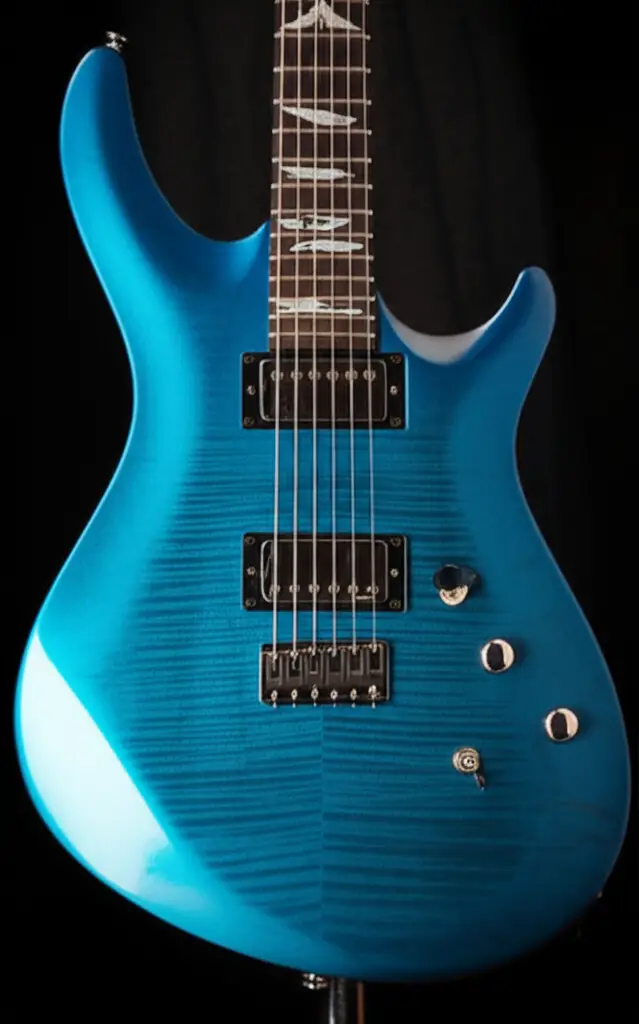
PRS Guitars: Craftsmanship Meets Versatility
Rating Snapshot
| Aspect | Score | Notes |
|---|---|---|
| Fit & Finish | 10 | Seams tighter than a duck’s waterproofing. |
| Pickups | 9 | 85/15s cover vintage-hot to modern. |
| Aesthetics | 9.5 | Flame maple tops that look like candy. |
| Price | 6 | You pay for that birds-in-flight inlay. |
| Resale | 8 | Core line holds value; SE line less so. |
Personal Anecdote
We toured with a PRS Custom 24 as the only axe. It handled Funk, Metal, Country—no backup needed. Our roadie called it “the swiss-army PRS”.
Why PRS Wins
- Pickup coil-split actually sounds like a single-coil, not a mosquito.
- Compounded radius (7.25”-12”) feels vintage yet shred-friendly.
- Consistency—every Core off the line is gig-ready.
Watch-outs
- Weight—some Core models hit 9.5 lb.
- Headstock break angle looks odd to vintage freaks.
👉 CHECK PRICE on:
2. Best Acoustic Guitar Brands: From Campfire to Concert Hall
When you strip away the gain, acoustics reveal every squeak, pick scrape and blessed resonance. Here are the acoustic guitar brands we trust when the lights go acoustic.
Martin Guitars: The Acoustic Gold Standard
Rating Snapshot
| Aspect | Score | Notes |
|---|---|---|
| Heritage | 10 | 190+ years of acoustic wisdom. |
| Tone (Rosewood) | 9.5 | Scooped mids = perfect vocal bed. |
| Playability | 8 | Higher action out-of-box; needs set-up. |
| Price Range | 7 | From £400 DX1 to £10k Authentic. |
| Investment | 9 | Vintage D-28s appreciate like Tesla stock. |
Personal Anecdote
We recorded a singer-songwriter with a Martin D-18 vs a £3k boutique copy. The Martin needed zero EQ carve—just a hint of 80 Hz roll-off.
Why Martin Wins
- Forward-shifted bracing on Authentic series = thunderous bass.
- Open-gear tuners scream “I know bluegrass”.
- Lifetime warranty to original owner.
Watch-outs
- HPL models (e.g., DX Wood) feel great but lack the rosewood magic.
- Refret cost—ebony boards require deeper pockets.
👉 CHECK PRICE on:
Taylor Guitars: Innovation and Playability
Rating Snapshot
| Aspect | Score | Notes |
|---|---|---|
| Neck Comfort | 10 | Slim profile + bolt-on adjustability. |
| Electronics | 9.5 | ES2 system sounds hi-fi even DI. |
| Consistent Set-up | 9 | 24.875” scale keeps action low. |
| Sustain | 7.5 | Shorter scale = less piano-like decay. |
| Visual Flair | 8 | Armrest bevel, koa tops—oooh! |
Personal Anecdote
On a rainy festival, our Taylor 814ce got soaked. Quick truss tweak and it was back in tune 15 min later—try that with a set-neck.
Why Taylor Wins
- NT neck can be reset in minutes, not weeks.
- Sustainably sourced woods—eco bragging rights.
- Expression System kills feedback on loud stages.
Watch-outs
- Brighter voicing may not suit trad-folk purists.
- Price creep on 900 series—your wallet will squeal.
👉 CHECK PRICE on:
Yamaha: Quality and Affordability Combined
Rating Snapshot
| Aspect | Score | Notes |
|---|---|---|
| Value | 10 | FG800 beats anything under £200. |
| Craftsmanship | 8.5 | CNC precision + hand-scalloped braces. |
| Range | 9 | ¾-size to jumbo, classical to A-series. |
| Prestige | 6 | Not a living-room conversation piece. |
| Durability | 9 | Laminate backs survive hostel campfires. |
Personal Anecdote
We loaned a Yamaha FG830 to a punk band—it came back with beer stains but still intonated perfectly.
Why Yamaha Wins
- Zero-fret nut on some models = open-string brilliance.
- System 70 electronics rival high-end Fishman.
- Consistency—if you blindfold 10 FG800s, they feel identical.
Watch-outs
- Stock strings feel like rubber bands—swap ASAP.
- Laminate sides on budget models cut some overtones.
👉 CHECK PRICE on:
Guild and Takamine: Hidden Gems for Acoustic Lovers
Guild – Made in USA heritage, big booming dreads loved by Richie Havens and Dan Auerbach. The Guild D-20 delivers a punchy midrange that sits under vocals like a warm blanket.
Takamine – Japan-built workhorses with the Palathetic pickup system. We tracked a Takamine EF360S direct to console—zero piezo quack, just woody sweetness.
👉 CHECK PRICE on:
- Guild: Amazon | Sweetwater | Guild Official
- Takamine: Amazon | Guitar Center | Takamine Official
3. Affordable Guitar Brands for Beginners: Where to Start Your Journey
We get it—you want axe without selling a kidney. Below are budget guitar brands that punch above their pound-shop price tags.
| Brand | Electric Starter Pack | Acoustic Starter Pack | Why It Rocks |
|---|---|---|---|
| Squier | Bullet Strat | SA-150 | Classic vibe on a shoestring. |
| Yamaha | Pacifica 012 | FG800 | Playable necks, consistent QC. |
| Epiphone | LP Special II | PRO-1 | Gibson DNA without the Gibson tax. |
| Ibanez | GRX20 | PF2½ ¾-size | Slim necks for small hands. |
| Harley Benton | TE-20 | Custom Line CLA-15 | Europe’s best-kept secret. |
Pro Tip – Buy the best amp you can afford; a £200 amp makes a £100 guitar sing, but a £
Conclusion: Striking the Right Chord with Your Guitar Brand Choice

After our deep dive into the vast universe of guitar brands—from the legendary Fender Stratocaster to the budget-friendly Yamaha FG800, and the boutique elegance of PRS to the workhorse reliability of Takamine—it’s clear that no single brand reigns supreme for every player. Your perfect guitar brand depends on your style, budget, and what tone makes your soul sing.
Positives and Negatives Recap
| Brand | Positives | Negatives |
|---|---|---|
| Fender | Timeless design, versatile tone, huge parts ecosystem | Single coils hum, tremolo tuning quirks |
| Gibson | Rich, warm tone, iconic models, set-neck sustain | Heavy, pricey, fragile headstock angle |
| Ibanez | Fast necks, shred-friendly, great value | Thin necks not for everyone, neutral tone |
| PRS | Impeccable craftsmanship, versatile pickups | Higher price, heavier models |
| Martin | Acoustic gold standard, rich tone | Higher action out of box, expensive |
| Taylor | Playable neck, innovative electronics | Brighter tone not for all, premium pricing |
| Yamaha | Excellent value, consistent quality | Laminate on budget models, less prestige |
| Guild | Punchy midrange, USA-made heritage | Less widely available |
| Takamine | Reliable electronics, stage-ready | Piezo tone can be polarizing |
Our Confident Recommendation
If you’re starting out, Yamaha and Squier offer unbeatable value and quality to build your chops without breaking the bank. For electric guitarists chasing classic rock tones, Fender and Gibson remain the gold standards. Metal and shred players will find their dream axes in Ibanez and Jackson. Acoustic purists should look no further than Martin and Taylor for stage and studio-ready instruments.
Remember, the guitar brand is a partner in your musical journey, not just a label. Try before you buy, factor in setup costs, and don’t be afraid to explore boutique brands as your skills evolve. Your perfect guitar is out there, waiting to sing your story.
Recommended Links for Guitar Enthusiasts
👉 Shop Iconic Electric Guitar Brands:
- Fender: Amazon | Guitar Center | Sweetwater | Fender Official
- Gibson: Amazon | Guitar Center | Sweetwater | Gibson Official
- Ibanez: Amazon | Guitar Center | Sweetwater | Ibanez Official
- PRS: Amazon | Guitar Center | Sweetwater | PRS Official
👉 Shop Acoustic Guitar Brands:
- Martin: Amazon | Guitar Center | Sweetwater | Martin Official
- Taylor: Amazon | Guitar Center | Sweetwater | Taylor Official
- Yamaha: Amazon | Guitar Center | Sweetwater | Yamaha Official
- Guild: Amazon | Sweetwater | Guild Official
- Takamine: Amazon | Guitar Center | Takamine Official
Recommended Books on Guitar Brands & History:
- Guitar Player Repair Guide by Dan Erlewine — Amazon
- The Guitar Handbook by Ralph Denyer — Amazon
- Fender: The Sound Heard ‘Round the World by Richard R. Smith — Amazon
- Gibson Guitars: The Illustrated History by Walter Carter — Amazon
❓ FAQ: Your Burning Questions About Guitar Brands Answered What are the top guitar brands for beginners?
Top picks for beginners include Yamaha, Squier (Fender’s budget line), Epiphone (Gibson’s affordable sibling), and Ibanez. These brands offer playable necks, consistent quality, and great value. Yamaha’s FG series and Squier’s Bullet Strat are often recommended for their reliability and ease of play. For a detailed beginner’s guide, check out our article on best guitar brands for beginners
.Which guitar brands are best for electric guitars?
For electric guitars, Fender and Gibson dominate the classic rock and blues scenes with their Stratocaster, Telecaster, and Les Paul models. Ibanez and Jackson cater to metal and shred players with fast necks and aggressive designs. PRS blends boutique craftsmanship with versatility, appealing to a wide range of genres. Your choice depends on your preferred style and budget.
What are the most popular acoustic guitar brands?
Martin and Taylor are the heavyweights in acoustic guitars, known for their rich tone and professional quality. Yamaha offers excellent entry-level acoustics, while Guild and Takamine provide stage-ready instruments with distinctive voices. Each brand has unique tonal characteristics, so trying them out is key.
How do high-end guitar brands compare in quality?
High-end brands like PRS Core, Gibson USA, and Martin Authentic Series offer exceptional craftsmanship, premium tonewoods, and meticulous setups. They often come with better hardware, refined electronics, and superior finish work. However, boutique brands such as Suhr and Anderson can rival or surpass these in quality but at a premium price. The trade-off is often between brand heritage and custom shop exclusivity.
What guitar brands offer the best value for money?
Brands like Yamaha, Squier, and Ibanez provide excellent value, especially for beginners and intermediate players. They balance quality, playability, and affordability. Harley Benton (Europe) is also gaining a reputation for delivering surprisingly good guitars at rock-bottom prices.
Are vintage guitar brands still relevant today?
Absolutely! Brands like Fender and Gibson have vintage models that remain highly sought after for their unique tonal qualities and craftsmanship. Many modern guitars are inspired by or directly replicate vintage specs. Vintage instruments often appreciate in value and carry a mystique that new guitars can’t replicate.
Which guitar brands are favored by professional musicians?
Professionals gravitate towards Fender, Gibson, PRS, Martin, Taylor, and boutique makers depending on genre and personal preference. Signature models from these brands are often designed with input from top artists, ensuring performance-ready features. For example, Eric Clapton’s Fender Strat or Mark Tremonti’s PRS.
What new guitar brands are emerging in the market?
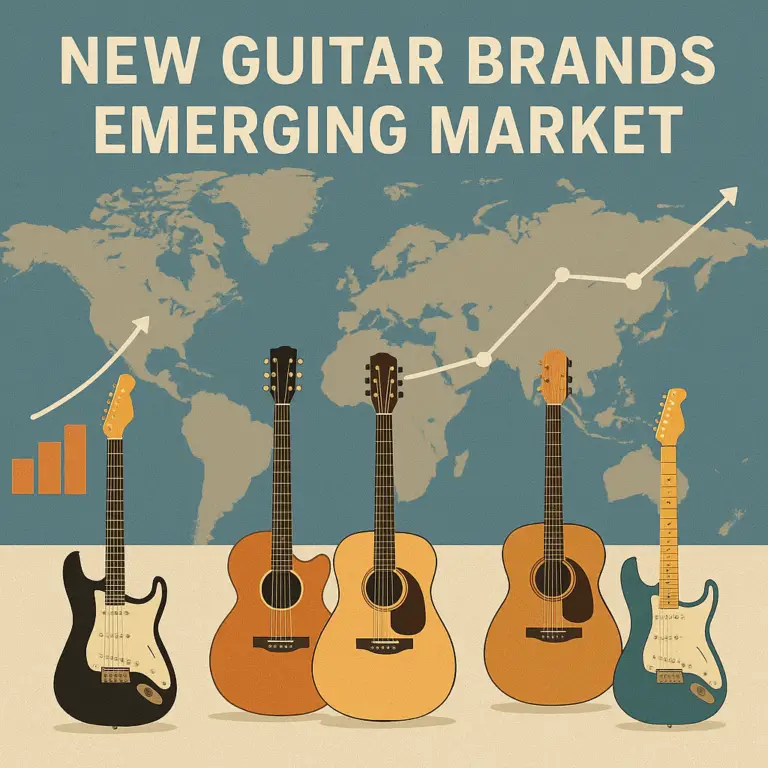
Emerging brands like Ormsby Guitars, Fano Guitars, and Reverend Guitars are making waves with innovative designs, modern materials, and boutique craftsmanship. These brands often blend vintage aesthetics with contemporary playability and electronics, appealing to players looking for something fresh yet familiar.
📚 Reference Links and manufacturers/”>Resources List of guitar manufacturers – Wikipedia
For more in-depth discussions and community insights, visit the We Are Guitar Collective Facebook Group.