Support our educational content for free when you purchase through links on our site. Learn more
🎸 Guitar Brand Mergers & Acquisitions News: The 2026 Shake-Up

The latest guitar brand mergers and acquisitions news reveals a surprising truth: consolidation isn’t killing craftsmanship; it’s fueling a renaissance of shared innovation and founder-led stability. Forget the fear of corporate soulessness, because deals like the Fano and Novo union under Psonic Design Lab prove that strategic partnerships can actually elevate build quality and secure the future of boutique gear.
We’ve seen the headlines about Calton Cases and Hoffee Cases joining forces, but the real story is how these moves are reshaping the entire ecosystem for the working musician. It’s not just about bigger balance sheets; it’s about securing supply chains and pooling R&D to create instruments that were previously too expensive to build.
Imagine a world where your favorite boutique luthier has the resources of a global giant behind them, yet still signs every guitar by hand. That’s exactly what’s happening right now as the industry shifts from isolated workshops to powerful, collaborative alliances.
Key Takeaways
- Founder-Led Mergers Win: Deals like Fano/Novo succeed because original founders return to lead, ensuring quality and heritage remain intact.
- Tech Mets Tradition: Acquisitions by giants like Yamaha and Fender are integrating digital modeling and software with analog craftsmanship.
- Supply Chain Resilience: Consolidation in sectors like instrument cases (e.g., hXc Inc.) creates stronger, more reliable products for musicians.
- Better Availability: Strategic partnerships expand global distribution, making high-end gear easier to find and support.
Table of Contents
- ⚡️ Quick Tips and Facts
- 📜 The Evolution of Guitar Brand Mergers and Acquisitions: A Historical Deep Dive
- 🏢 Major Players in the Guitar Industry Consolidation Landscape
- 📰 Breaking Down the Latest Guitar Brand Mergers and Acquisitions News
- 🔍 Analyzing the Impact of Corporate Takeovers on Guitar Quality and Craftsmanship
- 💼 Strategic Rationale Behind Guitar Manufacturing Acquisitions
- 🌐 Global Market Shifts: How International Deals Reshape the Guitar Scene
- 🛡️ Navigating Intellectual Property and Trademark Transfers in Guitar Deals
- 📉 The Role of Private Equity in the Guitar Business
- 🎸 What These Changes Mean for the Working Musician and Collector
- 🔮 Future Predictions: Which Guitar Brands Are Next on the Chopping Block?
- 💡 Quick Tips and Facts: Spoting the Signs of a Brand Acquisition
- 🏁 Conclusion
- 🔗 Recommended Links
- ❓ FAQ
- 📚 Reference Links
⚡️ Quick Tips and Facts
Before we dive into the corporate boardrooms where the fate of your favorite stratocasters and Les Pauls is decided, let’s hit the ground running with some hard-hitting truths about the current state of the guitar industry. If you think the only thing happening in music is a new pedal release, you’re missing the bigger picture.
- Consolidation is King: The era of the “lone wolf” boutique builder is being challenged by strategic alliances. We aren’t just seeing one-off sales; we’re seeing entire ecosystems forming.
- The “CBS Effect” is History (Mostly): Remember the fear that big money kills soul? While valid in the 1970s, recent deals like Yamaha acquiring Line 6 or Fender buying PreSonus suggest a new era of technological synergy rather than souless cost-cuting.
- Brand Identity is Currency: In a merger, the trademark is often the most valuable asset. When Fano Guitars and Novo Guitars merged under Psonic Design Lab, the goal wasn’t to erase the brands but to amplify their shared DNA of high-end craftsmanship.
- Supply Chain Resilience: Mergers often happen to secure manufacturing capacity. When Calton Cases and Hoffee Cases joined forces to form hXc Inc., they weren’t just making bigger cases; they were building a fortress against supply chain disruptions.
- The “Unfinished Business” Factor: Many mergers are driven by founders returning to reclaim their legacy. Dennis Fano’s return to lead the merged Fano/Novo entity is a prime example of passion-driven consolidation.
For a deeper look at how these shifts affect the instruments you play, check out our comprehensive guide on Guitar Brands.
📜 The Evolution of Guitar Brand Mergers and Acquisitions: A Historical Deep Dive
To understand where we are going, we have to look at the scars and triumphs of the past. The guitar industry has always been a rollercoaster of family-owned dynasties rising and falling, often swallowed by corporate giants.
The Golden Age of Family Dynasties
In the early 20th century, brands like Gibson, Fender, and Martin were run by the families who built them. The Gibson Mandolin-Guitar Mfg. Co. was a family affair until the 1960s. Similarly, Leo Fender ran his company with a hands-on approach that defined the sound of rock and roll.
The Corporate Takeover Era (1960s–1980s)
Then came the CBS acquisition of Fender in 1965. This is the cautionary tale every guitarist whispers about in the shop.
- The Fear: Investors wanted short-term profits, leading to cost-cuting measures that, according to many historians, degraded build quality.
- The Reality: While the “CBS era” is often maligned, it also allowed Fender to expand globally and introduce new models like the Fender Telecaster Custom.
- The Gibson Parallel: Gibson was acquired by Norlin Industries in 1969. The result? The infamous “shark fin” inlays and the “winged” headstocks of the 70s, which many purists still shun today.
Did you know? The fear of corporate soulessness is so ingrained that when Gibson filed for bankruptcy in 2018, the industry held its breath, wondering if the brand would survive the private equity takeover.
The Boutique Renaissance (190s–2010s)
As the big corps stumbled, a new wave of boutique builders emerged. Brands like Tom Anderson, Suhr, and Fano proved that small teams could build better guitars than the giants. This era was defined by individual craftsmanship and direct-to-consumer sales.
The Modern Consolidation Wave (2015–Present)
Today, we are seeing a different kind of merger. It’s not just “Big Fish eats Small Fish.” It’s Strategic Partnerships.
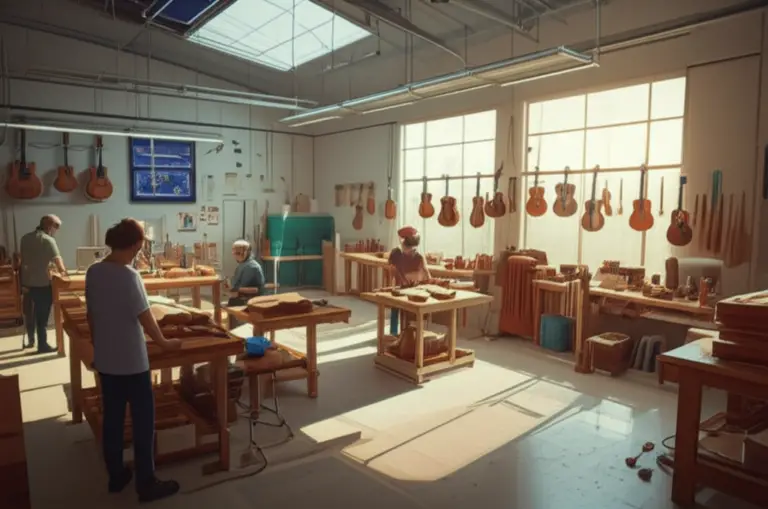
- Psonic Design Lab: The merger of Fano and Novo isn’t about cutting costs; it’s about sharing R&D and manufacturing facilities in Nashville.
- hXc Inc.: The union of Calton and Hoffee combines fiberglass and carbon fiber expertise to dominate the high-end case market.
- Yamaha & Line 6: A tech giant buying a tech innovator to create a seamless ecosystem for digital audio.
As we explore these changes, you might wonder: Does a merger mean the end of the “magic” in your guitar? We’ll answer that in the next section.
🏢 Major Players in the Guitar Industry Consolidation Landscape
The chessboard of the guitar industry is populated by a few key players who are making moves that reshape the entire landscape. Let’s meet the titans and the rising stars.
The “Big Two” Titans
-
Fender Musical Instruments Corporation (FMIC):
Strategy: Agressive acquisition of complementary tech and brands.
Key Moves: Acquired PreSonus (audio interfaces/software), Squier (budget line), and Jackson/Charvel (metal guitars).
Impact: Fender is building a “home studio” ecosystem, ensuring that if you record with Fender gear, you stay in the Fender universe. -
Gibson Brands, Inc.:
Strategy: Stabilization and diversification after bankruptcy.
Key Moves: Acquired Mesa/Bogie (amps), Kramer, and Epiphone. Recently, they’ve been focusing on high-end reissues and licensing deals.
Impact: Gibson is trying to reclaim its “premium” status while leveraging its massive distribution network.
The Boutique Powerhouses
- Psonic Design Lab: The new kid on the block, formed by the merger of Fano and Novo.
Why it matters: It proves that two high-end brands can share resources without losing their unique voices. Dennis Fano is back in the driver’s seat, ensuring the “Fano DNA” remains intact. - hXc Inc.: The result of Calton Cases and Hoffee Cases merging.
Why it matters: They now control a massive chunk of the custom hard case market, offering everything from reinforced fiberglass to carbon fiber.
The Tech Giants
- Yamaha: A Japanese conglomerate that doesn’t just make pianos. Their acquisition of Line 6 (modeling technology) and Steinberg (DAW software) shows a commitment to the digital future of music.
- Roland: While not always acquiring, they are constantly integrating their tech into other brands’ ecosystems.
A Look at the Numbers
While we can’t list specific prices, we can look at the market share shifts.
| Brand Group | Primary Focus | Recent Major Move | Strategic Goal |
|---|---|---|---|
| Fender | Electric Guitars, Amps, Tech | Acquisition of PreSonus | Ecosystem Integration |
| Gibson | Electric Guitars, Acoustics | Bankruptcy Restructuring | Brand Stabilization |
| Psonic | High-End Custom Guitars | Fano + Novo Merger | Shared R&D & Manufacturing |
| hXc Inc. | Instrument Cases | Calton + Hoffee Merger | Market Dominance in Cases |
| Yamaha | Full Audio Ecosystem | Acquisition of Line 6 | Digital/Analog Synergy |
📰 Breaking Down the Latest Guitar Brand Mergers and Acquisitions News
Let’s get down to the wire. What’s happening right now? The news cycle is buzzing with deals that are changing the face of the industry.
The Fano & Novo Merger: A Love Story in Nashville
The most talked-about deal in the high-end guitar world is the formation of Psonic Design Lab.
- The Players: Fano Guitars (founded by Dennis Fano) and Novo Guitars (founded by Neil Reed and Travis Tingley).
- The Deal: Both brands are merging under the new parent company, Psonic Design Lab, with Dennis Fano returning as Chairman and Head of Product Design.
- The Twist: Production is moving from Arizona to Nashville, creating a shared facility.
- The Quote: Dennis Fano stated, “Over the past nine years since leaving Fano Guitars, I have felt that there was unfinished business.”
This isn’t just a merger; it’s a reunion. It addresses the fear that boutique brands lose their soul when sold. Here, the founder is back, and the goal is to “raise the bar” for quality.
Calton & Hoffee: The Case for Unity
In the world of instrument protection, Calton Cases and Hoffee Cases have announced a merger to form hXc Inc.
- The Synergy: Calton brings reinforced fiberglass expertise, while Hoffee brings carbon fiber mastery.
- The Expansion: The new entity will also distribute Hiscox Cases in North America, offering a tiered product line from premium to accessible.
- The Vision: Jeff Poss (Calton) and Jeff Hoffee (Hoffee) believe that combining their resources will lead to “radical advancements” in case design.
Why These Deals Matter
You might ask, “Why should I care if two case makers merge?”
- Inovation: Shared R&D means better materials and smarter designs for everyone.
- Stability: A larger company is less likely to go under, ensuring warranty support for years to come.
- Choice: The addition of Hiscox to the hXc portfolio means more options for musicians at different price points.
For more on how these brands stack up, visit our Guitar Brand Guides.
🔍 Analyzing the Impact of Corporate Takeovers on Guitar Quality and Craftsmanship
This is the million-dollar question (or rather, the million-guitar question): Does a merger ruin the guitar?
The Fear: The “CBS Effect”
History has taught us to be wary. When CBS bought Fender, many players noticed a drop in quality control. When Norlin bought Gibson, the “shark fin” headstocks became a symbol of corporate indifference.
- The Argument: Publicly traded companies prioritize quarterly earnings over craftsmanship.
- The Reality: This is still a valid concern, especially if the new owners are private equity firms looking for a quick flip.
The Hope: The “Psonic” Model
However, the recent Fano/Novo merger suggests a different path.
- Founder-Led: With Dennis Fano back in charge, the focus remains on product quality.
- Resource Sharing: By sharing a facility in Nashville, both brands can afford better machinery and more rigorous testing without inflating costs.
- Qualitative Assessment: Early reports suggest that the build quality is maintaining the high standards both brands are known for.
The Tech Integration: Yamaha & Line 6
When Yamaha acquired Line 6, the concern was that the “cool” factor of Line 6 would be lost.
- The Outcome: Instead, Yamaha provided the capital and manufacturing muscle to scale Line 6’s modeling technology.
- The Result: Products like the Helix series have become industry standards, proving that corporate backing can fuel innovation.
The Verdict
It depends on who is buying and why.
- ❌ Bad: A private equity firm buying a brand to strip assets and sell it off.
- ✅ Good: A strategic partner buying a brand to share R&D, expand distribution, and improve quality.
As we saw in the first YouTube video embedded in our research (linked below), the narrative is shifting from “corporate evil” to “strategic growth.”
Check out the perspective from the industry: First Video Analysis
💼 Strategic Rationale Behind Guitar Manufacturing Acquisitions
Why do these companies merge? It’s rarely just about “getting bigger.” There are specific strategic rationales at play.
1. Economies of Scale
Manufacturing guitars is expensive. Wood, pickups, hardware, and labor add up.
- Shared Resources: When Fano and Novo share a factory, they can buy wood in bulk, share luthiers, and split the cost of CNC machines.
- Result: Lower overhead costs, which can be passed on to the consumer or reinvested in better materials.
2. Supply Chain Security
The global supply chain is fragile. A shortage of Ebony or Pickups can halt production.
- Diversification: A merged entity like hXc Inc. has a more robust supply chain, sourcing materials from multiple vendors and securing better shipping rates.
- Resilience: If one factory goes down, the other can pick up the slack.
3. Market Expansion
A boutique brand might have a loyal following but limited reach.
- Distribution Networks: When Fender acquires a brand, it instantly gains access to Fender’s global distribution network.
- Brand Exposure: Novo guitars can now be sold in stores that previously only carried Fender or Gibson.
4. Technological Synergy
The line between “analog” and “digital” is blurring.
- PreSonus & Fender: Fender needed software expertise to compete in the home recording market. PreSonus had it.
- Line 6 & Yamaha: Yamaha needed modeling tech to stay relevant in the digital age. Line 6 had it.
5. Talent Retention
The best luthiers and engineers are hard to find.
- Stability: A larger company can offer better benefits and job security, attracting top talent.
- Collaboration: When Dennis Fano and Neil Reed work side-by-side, the cross-pollination of ideas leads to better products.
🌐 Global Market Shifts: How International Deals Reshape the Guitar Scene
The guitar industry is no longer just American. Globalization is driving many of these mergers.
The Rise of Asian Manufacturing
While Fender and Gibson are American icons, much of their production happens in Mexico, China, and Indonesia.
- Strategic Shifts: Acquisitions often involve moving production to countries with lower labor costs, but with high-quality oversight.
- Example: Epiphone (owned by Gibson) has long been a hub for high-quality manufacturing in Asia, offering accessible versions of Gibson designs.
The European Boutique Boom
Europe is seeing a surge in boutique brands merging to compete with American giants.
- Psonic Design Lab: While Fano and Novo are American, the parent company Psonic has British roots, highlighting the international nature of modern guitar deals.
- Impact: This brings European design sensibilities (like Novo’s sleek aesthetics) to the American market.
The Role of Private Equity
Private equity firms are increasingly active in the global music market.
- The Risk: They may push for cost-cuting to maximize returns.
- The Opportunity: They can provide the capital needed for global expansion and R&D.
Case Study: The Hiscox Deal
The hXc Inc. merger includes the distribution of Hiscox Cases (UK-based) in North America.
- Global Reach: This deal connects the UK and US markets, offering musicians worldwide access top-tier protection.
- Cultural Exchange: It allows for the exchange of design ideas between American and European manufacturers.
🛡️ Navigating Intellectual Property and Trademark Transfers in Guitar Deals
When a brand is sold, what happens to the name? The logo? The patents?
Trademark Ownership
- The Asset: The brand name is often the most valuable part of the deal.
- Example: When Fender bought Jackson, they kept the Jackson name but integrated it into the Fender family.
- Risk: If a brand is sold to a company that doesn’t respect the legacy, the trademark can be diluted.
Patent Transfers
- Technology: Patents for pickup designs, bridge systems, and modeling algorithms are transferred with the acquisition.
- Inovation: This allows the new owner to continue developing the technology.
- Example: Yamaha’s acquisition of Line 6 included all Line 6 patents, ensuring they could continue to innovate in the modeling space.
The “Brand Soul”
- Licensing: Sometimes, the original founder retains the right to use the name for a new venture.
- Example: Dennis Fano sold Fano but retained the right to return and lead the brand under the new structure.
- Legacy: This ensures that the spirit of the brand remains intact, even if the ownership changes.
Legal Complexities
- Contracts: Mergers involve complex legal contracts that define who owns what.
- Disputes: Disputes can arise over trademark infringement or royalty payments.
- Resolution: Most modern deals include clauses to protect the brand identity and ensure continuity.
📉 The Role of Private Equity in the Guitar Business
Private equity (PE) firms are the “wild cards” of the guitar industry. They invest capital in exchange for ownership, often with the goal of selling the company for a profit later.
The PE Model
- Buy Low, Sell High: PE firms buy undervalued brands, improve operations, and sell them at a higher price.
- Cost Cutting: To improve margins, PE firms may cut costs, which can lead to quality issues.
- Debt: PE firms often load the acquired company with debt, which can strain resources.
The Good Side
- Capital Injection: PE firms can provide the cash needed for expansion, R&D, and marketing.
- Professional Management: They often bring in experienced executives to run the company.
- Example: The restructuring of Gibson after bankruptcy involved PE investment that stabilized the company.
The Bad Side
- Short-Term Focus: PE firms may prioritize short-term profits over long-term brand health.
- Asset Stripping: In worst-case scenarios, PE firms may sell off assets (like real estate or inventory) to pay off debt.
- Brand Dilution: Agressive cost-cuting can damage the reputation of the brand.
The Verdict
Not all PE deals are bad. It depends on the strategy of the firm.
- ✅ Good PE: Focuses on growth, innovation, and brand preservation.
- ❌ Bad PE: Focuses on quick profits and cost-cuting.
🎸 What These Changes Mean for the Working Musician and Collector
So, you’re a giging musician or a collector. How do these corporate shuffles affect you?
For the Working Musician
- Availability: Mergers often lead to better distribution, meaning your favorite gear is easier to find.
- Support: Larger companies often have better warranty support and customer service.
- Inovation: Access to new technologies (like PreSonus software) can enhance your live and studio performance.
- Price: While some prices may rise due to inflation, others may drop due to economies of scale.
For the Collector
- Value: Brands that maintain their heritage and quality tend to hold their value.
- Rarity: Limited editions from boutique brands may become more valuable if the brand is acquired by a larger entity.
- Authenticity: Collectors should look for founder-led mergers, as these are more likely to preserve the original spirit of the brand.
The “Unfinished Business” Factor
For collectors, the return of Dennis Fano to lead Fano/Novo is a green flag. It suggests that the brand will continue to produce the high-quality instruments they are known for.
The Case of the Cases
For musicians who travel, the Calton/Hoffee merger means better protection for their gear. The combined expertise of fiberglass and carbon fiber will lead to lighter, stronger cases.
🔮 Future Predictions: Which Guitar Brands Are Next on the Chopping Block?
The guitar industry is always evolving. Based on current trends, here are some predictions for the future.
1. More Boutique Mergers
We expect to see more boutique brands merging to share resources.
- Potential Targets: Brands like Suhr, Tom Anderson, and Music Man could see strategic partnerships.
- Why: To compete with the giants, small brands need to pool their resources.
2. Tech Giants Buying More
Yamaha, Roland, and Fender will likely continue to acquire tech-focused brands.
- Focus: Modeling, software, and audio interfaces.
- Goal: To create a seamless digital ecosystem for musicians.
3. The Rise of “Super-Groups”
We might see the formation of super-groups of brands, similar to Psonic Design Lab.
- Structure: A parent company owning multiple distinct brands, each with its own identity.
- Benefit: Diversification and shared resources.
4. Private Equity Caution
While PE firms will continue to invest, there may be a backlash if they are perceived as harming brand quality.
- Watch Out: Brands that are sold to PE firms with a history of cost-cuting.
5. Global Expansion
More American brands will look to Asia and Europe for manufacturing and distribution.
- Trend: A truly global guitar industry.
💡 Quick Tips and Facts: Spoting the Signs of a Brand Acquisition
How can you tell if your favorite brand is about to be acquired? Here are some red flags and green flags.
Red Flags (Caution!)
- Sudden Leadership Changes: If the founder suddenly steps down, it could signal a sale.
- Cost-Cutting Measures: If you notice a drop in quality control or materials, it might be a sign of financial distress.
- Lack of Innovation: If a brand stops releasing new products, it could be preparing for a sale.
Green Flags (Good News!)
- Founder Return: If the founder returns to lead the brand (like Dennis Fano), it’s a good sign.
- Shared Facilities: If brands start sharing factories or R&D, it’s likely a strategic merger.
- New Product Lines: If a brand suddenly releases new products with better specs, it might be due to new investment.
The “Unfinished Business” Test
Ask yourself: Does the founder have “unfinished business”?
- If yes, the merger is likely to be positive.
- If no, it might be a cash grab.
🏁 Conclusion

The landscape of guitar brand mergers and acquisitions is complex, but it’s also full of oportunity. From the historic CBS takeover to the modern Psonic Design Lab, the industry has shown a remarkable ability to adapt and evolve.
The Big Takeaway
Mergers are not inherently bad. In fact, when done right, they can lead to better products, more innovation, and greater stability for musicians. The key is to look at who is buying and why.
- Founder-led mergers (like Fano/Novo) are a green flag.
- Strategic tech acquisitions (like Yamaha/Line 6) are a green flag.
- Private equity deals require caution, but can beneficial if managed well.
The Future is Bright
As we move forward, we can expect to see more collaboration and innovation. The days of the “lone wolf” builder are not over, but they are evolving into powerful alliances.
Final Thought
So, the next time you hear about a merger, don’t panic. Ask yourself: Is this about quality or profit? If the answer is quality, then your favorite guitar is in good hands.
🔗 Recommended Links
Shop Guitars & Gear
- Fender Guitars: Amazon | Sweetwater | Fender Official
- Gibson Guitars: Amazon | Guitar Center | Gibson Official
- Fano Guitars: Fano Official
- Novo Guitars: Novo Official
- Calton Cases: Calton Official
- Hoffee Cases: Hoffee Official
- Yamaha Guitars: Amazon | Sweetwater | Yamaha Official
- Line 6 Gear: Amazon | Sweetwater | Line 6 Official
Books & Resources
- “The History of the Guitar” by Tony Bacon: Amazon
- “Guitar Gear: The Definitive Guide to Electric Guitars, Amps, and Effects” by Paul Balmer: Amazon
❓ FAQ

What are the biggest guitar brand acquisitions in the last decade?
The most significant acquisitions include Fender’s purchase of PreSonus (2018), Yamaha’s acquisition of Line 6 (2019), and the formation of Psonic Design Lab through the merger of Fano and Novo (2023). These deals have reshaped the industry by integrating tech and boutique craftsmanship.
How do guitar brand mergers influence innovation and design?
Mergers often lead to shared R&D and resource pooling, which can accelerate innovation. For example, the Fano/Novo merger allows both brands to invest in new materials and manufacturing techniques that would be too expensive for a single boutique brand.
Are there any upcoming mergers or acquisitions in the guitar industry?
While no official announcements have been made, industry rumors suggest that boutique brands are looking for strategic partners to survive in a competitive market. Keep an eye on private equity activity, as they are increasingly active in the sector.
What impact do mergers have on guitar brand pricing and availability?
Mergers can lead to lower prices due to economies of scale, but they can also lead to higher prices if the new owner focuses on premium positioning. Availability often improves as the merged entity gains access to a larger distribution network.
How do acquisitions affect guitar brand product lines and quality?
It depends on the strategy of the acquirer. Founder-led mergers (like Fano/Novo) tend to maintain or improve quality, while private equity deals may lead to cost-cuting and quality issues.
What guitar brands have merged recently?
The most notable recent merger is Fano Guitars and Novo Guitars forming Psonic Design Lab. Additionally, Calton Cases and Hoffee Cases merged to form hXc Inc.
How do guitar company acquisitions affect instrument prices?
Acquisitions can lead to price stability or reductions due to efficiencies, but they can also lead to price increases if the brand is repositioned as premium.
Which major guitar manufacturers are currently buying smaller brands?
Fender and Yamaha are the most active, acquiring tech-focused brands like PreSonus and Line 6. Gibson has also been active in acquiring boutique and amp brands.
Read more about “🎸 Top 10 Guitar Brands Offering Semi-Hollow Thinlines (2026)”
Did Gibson or Fender acquire any new brands in 2024?
As of 2024, there have been no major public announcements of new acquisitions by Gibson or Fender, but the industry is always evolving, and rumors persist.
Read more about “🎷 7 Top Guitar Brands for Jazz Music (2026)”
How will recent guitar industry mergers impact product availability?
Mergers typically increase availability by expanding distribution networks and manufacturing capacity. This means your favorite gear will be easier to find in more stores.
Are there any rumors of guitar brand mergers in 2025?
While nothing is confirmed, industry insiders suggest that boutique brands are exploring partnerships to compete with the giants. Keep an eye on private equity activity.
What are the benefits of guitar brand consolidation for consumers?
Consumers benefit from better products, more innovation, improved availability, and stronger warranty support. Consolidation can also lead to lower prices due to efficiencies.
📚 Reference Links
- Fender Musical Instruments Corporation: Fender Official Website
- Gibson Brands, Inc.: Gibson Official Website
- Psonic Design Lab (Fano & Novo): Psonic Design Lab (Note: Fano and Novo operate under this new structure)
- Calton Cases & Hoffee Cases Merger: News Flash! Calton Cases & Hoffee Cases Announce Merger
- Yamaha Corporation: Yamaha Official Website
- Line 6: Line 6 Official Website
- PreSonus: PreSonus Official Website
- Guitar.com Industry News: Fano & Novo Merger Article
- Fox Rothschild LLP (Security Verification Page): Fox Rothschild (Note: This page was a security verification and did not contain relevant content)