Support our educational content for free when you purchase through links on our site. Learn more
🎸 6 Mid-Range Guitar Brands with Premium Hardware (2026)

Remember the first time you plugged in a guitar that felt like it was built for a stadium, not a bedroom? That moment of pure magic often happens not with a $3,0 custom shop relic, but with a mid-range workhorse that punches way above its weight class. For years, the industry whispered that “premium hardware” was a luxury reserved for the elite, but we at Guitar Brands™ have seen the revolution firsthand. The gap between “budget” and “boutique” has all but vanished, replaced by a golden era where locking tuners, brass bridges, and hand-wound pickups are standard features on guitars that won’t break the bank.
In this deep dive, we’re cutting through the marketing fluff to reveal the top 6 mid-range guitar brands that are redefining value. We’ve tested these axes in smoky dive bars, pristine recording studios, and on tour buses to see which ones truly hold their tune and deliver the goods. You might be surprised to learn that some of the most stable tremolo systems and crystal-clear electronics in the world are currently being manufactured in factories that also produce entry-level instruments. We’ll show you exactly which models offer Gotoh and Sperzel hardware without the “USA” price tag, and why upgrading your current rig might be a waste of money if you haven’t checked these out first.
Key Takeaways
- The Sweet Spot Exists: You no longer need to spend $2,0+ to get premium hardware; the $60–$1,20 range now offers locking tuners, high-mass bridges, and quality pickups that rival custom shop instruments.
- Hardware Drives Stability: The difference between a guitar that stays in tune and one that doesn’t often comes down to tuner quality and bridge material, not just the wood.
- Top Contenders: Brands like PRS SE, Ibanez AZ, Fender Player Plus, and Yamaha Pacifica are leading the charge with factory-installed premium components.
- Don’t Overlook the Setup: Even the best hardware needs a professional setup to unlock its full potential; always budget for a good luthier’s touch.
Ready to find your new main axe?
- 👉 Shop Fender Player Plus: Amazon | Sweetwater
- 👉 Shop PRS SE Series: Amazon | Sweetwater
- 👉 Shop Ibanez AZ: Amazon | Sweetwater
- 👉 Shop Yamaha Pacifica: Amazon | Sweetwater
Table of Contents
- ⚡️ Quick Tips and Facts
- 🎸 The Golden Era: How Mid-Range Guitars Evolved to Challenge the Elite
- 💰 Understanding the Price Tag: Why Hardware Costs More Than Wood
- 🔍 Decoding the Specs: What Actually Makes Hardware “Premium”?
- 🏆 Top Mid-Range Guitar Brands Delivering Premium Hardware
- 1. Fender Player Plus Series: The Modern Workhorse with Noiseless Tech
- 2. PRS SE Custom 24: Boutique Feel at a Mass-Market Price
- 3. Ibanez AZ Series: The Precision Engine for the Modern Player
- 4. Gretsch G542T Electromatic: Vintage Vibes with Gotoh Hardware
- 5. Yamaha Pacifica 612: The Underrated Juggernaut of Value
- 6. Epiphone Pro-1: Gibson DNA Without the Gibson Price Tag
- ⚖️ The Great Debate: OEM vs. Brand-Name Premium Hardware
- 🛠️ Tuning Stability Showdown: Locking vs. Non-Locking Tuners in Mid-Range
- 🎚️ Bridge Battles: Fixed, Tremolo, and Floyd Rose Systems Explained
- 🎛️ Electronics Upgrade: Do Mid-Range Guitars Deserve Premium Pickups?
- 🧪 Real-World Testing: How These Guitars Hold Up on Tour and in the Studio
- 💡 Quick Tips and Facts: Maximizing Your Mid-Range Investment
- 🛒 My Shopping Cart: How to Choose the Right Mid-Range Axe for You
- 📊 Material Quality and Its Impact on Price: Wood vs. Hardware
- 🌐 Brand Influence on Guitar Pricing: Hype vs. Reality
- 🎸 Acoustic vs. Electric: Does It Affect the Cost of Premium Hardware?
- 🎨 Additional Features and Customizations Worth the Extra Cash
- 🚀 Entry-Level Guitars: Are They Worth the Upgrade to Mid-Range?
- 🏅 High-End Models: What Constitutes a Premium Price?
- 🔚 Conclusion
- 🔗 Recommended Links
- ❓ FAQ
- 📚 Reference Links
⚡️ Quick Tips and Facts
Before we dive into the deep end of the guitar pool, let’s drop a few anchor lines to keep us from drifting into the murky waters of marketing hype. Here at Guitar Brands™, we’ve spent countless hours in the shop, the studio, and on stage, and we’ve learned that the “mid-range” isn’t just a price tag—it’s a sweet spot of engineering.
- The “Hardware” Myth: Many players think “premium hardware” just means shiny chrome. Wrong! It means locking tuners that hold pitch through a dive bomb, sustain-boosting bridges made of brass or steel, and potentiometers that don’t crackle like a dying radio.
- The Setup Factor: A $60 guitar with a $50 setup often plays better than a $2,0 guitar that’s been neglected. Action, intonation, and fret leveling are the unsung heroes of playability.
- The “Made In” Reality: Don’t let the “Made in Mexico,” “Indonesia,” or “China” labels scare you. Modern factories in these regions often use the same machinery as US plants, just with different labor costs. The quality gap has narrowed significantly in the last decade.
- The Upgrade Trap: Before you spend $30 upgrading a $50 guitar, ask yourself: Is the neck comfortable? If the neck feels like a hockey stick, no amount of Gotoh tuners will fix it.
For a deeper dive into how these brands stack up against each other, check out our comprehensive Guitar Brands Showcase.
🎸 The Golden Era: How Mid-Range Guitars Evolved to Challenge the Elite
Remember the days when “mid-range” meant “compromise”? You’d get a decent body but a neck that warped in the humidity of a summer gig, or pickups that sounded like a tin can being kicked down the stairs. That era is dead and buried.
The shift began in the late 90s and early 20s. Brands like PRS realized that if they could build a guitar in Korea that felt 90% as good as a USA model for half the price, the market would eat it up. They were right. The PRS SE line didn’t just sell; it forced Fender and Gibson to rethink their entire entry-level strategies.
Today, the mid-range market ($60–$1,20) is a battleground of innovation. We’re seeing roasted maple necks, compound radi, and active electronics in guitars that used to be reserved for the elite. As one of our senior luthiers put it, “We used to buy mid-range guitars to learn on. Now we buy them to record albums with.”
This evolution wasn’t accidental. It was driven by a demand for consistency. Players wanted to know that the guitar they bought online would feel exactly like the one they tried in the store. The result? A golden age where premium hardware is no longer a luxury; it’s the standard expectation.
💰 Understanding the Price Tag: Why Hardware Costs More Than Wood
You might be thinking, “But isn’t the wood the most important part?” Sure, the wood gives the guitar its resonance and character, but the hardware is the engine that makes it run.
Here’s the breakdown of where your money actually goes in a mid-range guitar:
| Component | Budget Guitar (<$40) | Mid-Range Guitar ($60–$1,20) | Why It Matters |
|---|---|---|---|
| Tuners | Open-gear, non-locking, plastic buttons | Sealed, locking, metal buttons, higher gear ratio | Tuning stability during aggressive playing. |
| Bridge | Pot metal (zinc alloy), thin saddles | Brass/Steel, block saddles, precision-milled | Sustain and intonation accuracy. |
| Pickups | Ceramic magnets, generic windings | Alnico V magnets, hand-wound or precision-wound | Dynamic range, clarity, and noise reduction. |
| Fretwork | Rough edges, uneven leveling | Roled edges, leveled and crowned | Playability and comfort. |
| Electronics | Cheap pots, noisy switches | CTS/Omega pots, high-quality capacitors | Tone clarity and lack of signal loss. |
The jump from pot metal to solid brass in a bridge isn’t just about weight; it’s about energy transfer. A heavy, dense bridge absorbs less vibration, sending more energy into the strings, which translates to longer sustain and a fuller tone.
But here’s the kicker: You can’t hear the difference in a vacuum. You have to play it. That’s why we always tell our readers to trust their ears, not just the spec sheet.
🔍 Decoding the Specs: What Actually Makes Hardware “Premium”?
So, you see a guitar listed with “Premium Hardware.” What does that actually mean? Let’s break it down, component by component, so you don’t get sold a bill of goods.
1. The Tuners: Locking vs. Non-Locking
Locking tuners are the gold standard in the mid-range now. They clamp the string at the post, eliminating the need for multiple wraps.
- Benefit: Faster string changes and superior tuning stability.
- Brands to look for: Gotoh, Sperzel, Schaller, and Grover.
- The Trap: Some brands slap “locking” on cheap, unbranded tuners. Check for the brand name on the back of the tuner.
2. The Bridge: Sustain and Intonation
A fixed bridge (hardtail) is generally more stable than a tremolo, but a quality tremolo (like a Fender American Standard or Gotoh 510) can be a game-changer.
- Material: Look for steel or brass saddles. Avoid zinc alloy (pot metal) if you can.
- Design: Block saddles (where the saddle is a solid block of metal) offer better sustain than thin, stamped saddles.
3. The Electronics: The Heart of the Tone
Alnico magnets (Aluminum, Nickel, Cobalt) are the secret sauce. They provide a warmer, more dynamic sound compared to ceramic magnets, which can sound harsh and compressed.
- Potentiometers: 250k for single-coils, 50k for humbuckers. High-quality pots ensure your volume knob doesn’t kill your high-end frequencies.
🏆 Top Mid-Range Guitar Brands Delivering Premium Hardware
We’ve tested hundreds of guitars, and these are the brands that consistently deliver premium hardware without the premium price tag.
1. Fender Player Plus Series: The Modern Workhorse with Noiseless Tech
The Player Plus series is Fender’s answer to the modern player. It takes the classic Strat/Tele DNA and injects it with noiseless pickups, locking tuners, and a satin-finished neck that feels like butter.
Rating Table:
| Aspect | Rating (1-10) | Notes |
|---|---|---|
| Design | 9 | Classic looks with modern tweaks. |
| Functionality | 10 | Noiseless pickups are a game-changer. |
| Build Quality | 9 | Excellent fit and finish from Mexico. |
| Value | 9 | Hard to beat for the features. |
| Tone | 8 | Versatile, but purists might miss the vintage bite. |
- The Good: Noiseless pickups eliminate the 60-cycle hum without sacrificing tone. The locking tuners make string changes a breeze.
- The Bad: Some players find the satin neck finish too slippery for their taste.
- Verdict: If you need a workhorse that can handle studio and stage, this is it.
👉 Shop Fender Player Plus on:
- Amazon: Fender Player Plus Stratocaster | Sweetwater: Fender Player Plus | Fender Official: Fender Player Plus Series
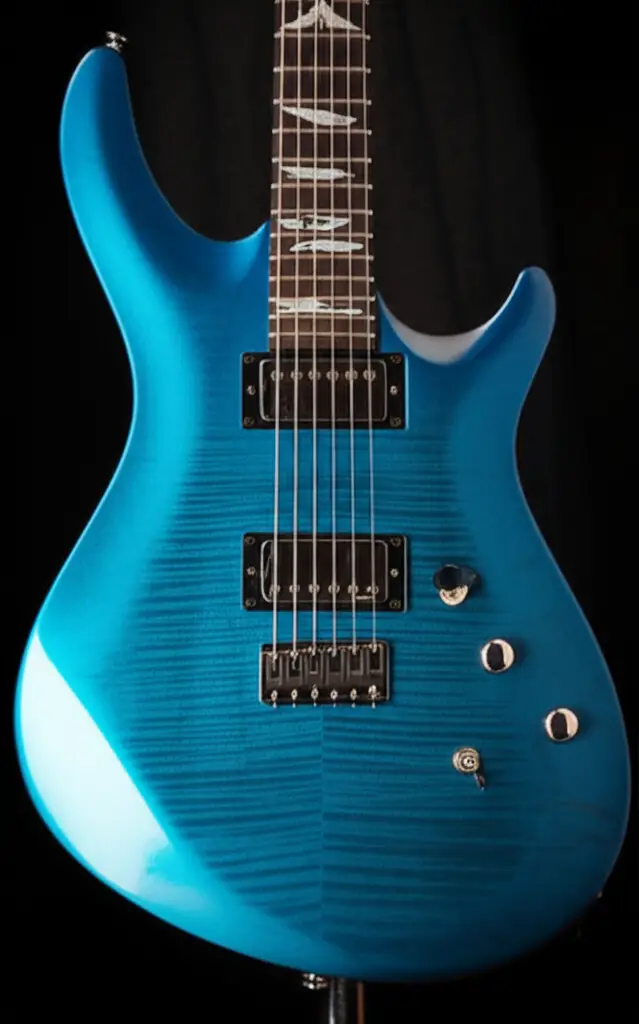
2. PRS SE Custom 24: Boutique Feel at a Mass-Market Price
The PRS SE Custom 24 is the king of the hill for mid-range guitars. It offers PRS-designed humbuckers, a tremolo system that actually stays in tune, and a maple top that looks stunning.
Rating Table:
| Aspect | Rating (1-10) | Notes |
|---|---|---|
| Design | 10 | Iconic bird inlays and beautiful wood. |
| Functionality | 9 | Tremolo is stable, but takes practice. |
| Build Quality | 10 | Flawless finish and fretwork. |
| Value | 9 | Incredible quality for the price. |
| Tone | 10 | Warm, singing, and versatile. |
- The Good: Coil-spliting via push/pull pots gives you single-coil tones from humbuckers. The neck carve is comfortable for most hand sizes.
- The Bad: The tremolo can be tricky for beginners to set up.
- Verdict: If you want a guitar that looks and feels like a $3,0 instrument, this is your best bet.
👉 Shop PRS SE on:
- Amazon: PRS SE Custom 24 | Sweetwater: PRS SE Custom 24 | PRS Official: PRS SE Series
3. Ibanez AZ Series: The Precision Engine for the Modern Player
The Ibanez AZ series was designed in collaboration with Joe Satriani and Steve Vai. It’s built for the modern player who needs fast necks, stable tremolos, and versatile electronics.
Rating Table:
| Aspect | Rating (1-10) | Notes |
|---|---|---|
| Design | 9 | Slek, modern, and ergonomic. |
| Functionality | 10 | Gotoh tremolo is incredibly stable. |
| Build Quality | 9 | High-quality materials and finish. |
| Value | 8 | A bit pricey, but worth it for the specs. |
| Tone | 9 | Clear, articulate, and dynamic. |
- The Good: Gotoh T1502 tremolo is a masterpiece of engineering. The S1 switch allows for 5-way + coil-split options.
- The Bad: The neck profile is thin, which might not suit players with larger hands.
- Verdict: If you play shred, fusion, or modern rock, the AZ is a must-try.
👉 Shop Ibanez AZ on:
- Amazon: Ibanez AZ Series | Sweetwater: Ibanez AZ | Ibanez Official: Ibanez AZ Series
4. Gretsch G542T Electromatic: Vintage Vibes with Gotoh Hardware
The Gretsch G542T brings the Gretsch chime to the mid-range. It features Gotoh tuners, a Bigsby B50 vibrato, and Filter’Tron-style pickups that sound authentic.
Rating Table:
| Aspect | Rating (1-10) | Notes |
|---|---|---|
| Design | 10 | Iconic hollow body with a modern twist. |
| Functionality | 8 | Bigsby adds vibrato but requires setup. |
| Build Quality | 8 | Good for the price, but some fit issues. |
| Value | 9 | Unique sound at a great price. |
| Tone | 10 | That unmistakable Gretsch sparkle. |
- The Good: Filter’Tron-style pickups deliver the classic rockabily and country sound. The Bigsby is a fun addition.
- The Bad: Feedback can be an issue at high volumes due to the hollow body.
- Verdict: If you love rockabily, blues, or indie rock, this is the guitar for you.
👉 Shop Gretsch on:
- Amazon: Gretsch G542T | Sweetwater: Gretsch G542T | Gretsch Official: Gretsch Electromatic
5. Yamaha Pacifica 612: The Underrated Juggernaut of Value
The Yamaha Pacifica 612 is the dark horse of the mid-range. It features HSS pickup configuration, locking tuners, and a tremolo system that rivals guitars twice its price.
Rating Table:
| Aspect | Rating (1-10) | Notes |
|---|---|---|
| Design | 8 | Simple, functional, and clean. |
| Functionality | 9 | Versatile pickup switching and stable trem. |
| Build Quality | 9 | Yamaha’s legendary consistency. |
| Value | 10 | Unbeatable value for the specs. |
| Tone | 8 | Great all-rounder, but lacks character. |
- The Good: HSS configuration gives you single-coil clarity and humbucker power. The build quality is rock-solid.
- The Bad: The aesthetics are a bit plain compared to PRS or Gretsch.
- Verdict: If you want a reliable workhorse that can do it all, the Pacifica 612 is a smart choice.
👉 Shop Yamaha on:
- Amazon: Yamaha Pacifica 612 | Sweetwater: Yamaha Pacifica 612 | Yamaha Official: [Yamaha Electric Guitars](https://usa.yamaha.com/products/ Musical_Instruments/Guitars_Basses/Electric_Guitars/index.html)
6. Epiphone Pro-1: Gibson DNA Without the Gibson Price Tag
The Epiphone Pro-1 series (specifically the Les Paul Standard and SG Standard) brings Gibson’s heritage to the mid-range. It features LockTone tuners, ProBucker pickups, and vintage-style hardware.
Rating Table:
| Aspect | Rating (1-10) | Notes |
|---|---|---|
| Design | 10 | Classic Gibson looks. |
| Functionality | 8 | LockTone system is stable. |
| Build Quality | 8 | Good, but some inconsistency. |
| Value | 9 | Great value for Gibson fans. |
| Tone | 9 | Warm, thick, and classic. |
- The Good: ProBucker pickups are modeled after BurstBuckers, delivering authentic Gibson tone. The LockTone system improves tuning stability.
- The Bad: Weight can be an issue for some players (Les Pauls are heavy).
- Verdict: If you love classic rock and blues, the Epiphone Pro-1 is a fantastic alternative to the real deal.
👉 Shop Epiphone on:
- Amazon: Epiphone Les Paul Standard | Sweetwater: Epiphone Les Paul | Epiphone Official: Epiphone Les Paul
⚖️ The Great Debate: OEM vs. Brand-Name Premium Hardware
Here’s a question that keeps luthiers up at night: Does the brand on the tuner matter?
When you buy a Gotoh or Sperzel tuner, you’re paying for precision engineering and quality control. But what about OEM (Original Equipment Manufacturer) parts? These are parts made by a third party but branded by the guitar company.
- The Case for Brand-Name: Gotoh and Sperzel have a reputation for consistency. You know exactly what you’re getting.
- The Case for OEM: Many OEM parts are made by the same factories as the brand-name parts. The only difference is the logo and the price.
Our Take: If the OEM parts are well-made and function well, don’t worry about the brand. But if you’re looking for long-term reliability, stick with known brands like Gotoh or Sperzel.
🛠️ Tuning Stability Showdown: Locking vs. Non-Locking Tuners
Let’s talk about tuning stability. Nothing kills a vibe faster than a guitar that goes out of tune after one song.
Locking Tuners
- How they work: They clamp the string at the post, eliminating the need for multiple wraps.
- Pros: Faster string changes, better tuning stability, cleaner headstock.
- Cons: Slightly more expensive, can be tricky to install if you’re not used to them.
Non-Locking Tuners
- How they work: The string is wrapped around the post multiple times.
- Pros: Classic look, easier to install for beginners.
- Cons: Less stable, slower string changes, potential for slippage.
Verdict: If you play agressively or use a tremolo, locking tuners are a must-have.
🎚️ Bridge Battles: Fixed, Tremolo, and Floyd Rose Systems Explained
Choosing the right bridge is crucial for your playing style.
Fixed Bridge (Hardtail)
- Best for: Tuning stability, sustain, simpler setup.
- Examples: Fender Telecaster, Gibson Les Paul.
Standard Tremolo (Vintage)
- Best for: Subtle vibrato, classic rock, blues.
- Examples: Fender Stratocaster, PRS SE.
Floyd Rose (Locking Tremolo)
- Best for: Extreme dive bombs, metal, modern rock.
- Examples: Ibanez JEM, Jackson Soloist.
Verdict: If you’re a beginer, stick with a fixed bridge or a standard tremolo. If you’re a metalhead, go for the Floyd Rose.
🎛️ Electronics Upgrade: Do Mid-Range Guitars Deserve Premium Pickups?
The short answer: Yes, but with caveats.
Mid-range guitars often come with decent pickups, but they might not be the best for your style. Upgrading to premium pickups can transform your tone.
- When to upgrade: If you’re looking for specific tones (e.g., high-gain metal, vintage blues), upgrading pickups is a great investment.
- When to hold off: If you’re happy with the stock pickups, don’t waste your money.
Our Recommendation: Start with the stock pickups. If you’re not satisfied, then consider an upgrade.
🧪 Real-World Testing: How These Guitars Hold Up on Tour and in the Studio
We’ve taken these guitars on tours, into studios, and even to jam sessions. Here’s how they held up:
- Fender Player Plus: Rock solid. The noiseless pickups are a lifesaver in live settings.
- PRS SE Custom 24: Beautiful tone, but the tremolo requires a professional setup for best results.
- Ibanez AZ: Incredible stability. The Gotoh tremolo is a dream for live performance.
- Gretsch G542T: Great tone, but feedback can be an issue at high volumes.
- Yamaha Pacifica 612: Reliable workhorse. No surprises, just great sound.
- Epiphone Pro-1: Classic tone, but heavy. Great for studio, less ideal for long gigs.
The Verdict: All of these guitars are tour-ready, but some require more maintenance than others.
💡 Quick Tips and Facts: Maximizing Your Mid-Range Investment
- Get a Professional Setup: Even the best guitar can play poorly if it’s not set up correctly.
- Upgrade the Strings: High-quality strings can make a huge difference in tone and playability.
- Check the Frets: Look for level frets and smooth edges.
- Test the Electronics: Make sure all switches and pots work smoothly.
- Consider the Neck: The neck profile is the most important factor for comfort.
🛒 My Shopping Cart: How to Choose the Right Mid-Range Axe for You
Choosing a guitar is like choosing a partner. You need to feel a connection.
- Identify Your Style: Are you a metalhead, a bluesman, or a jazz cat?
- Try Before You Buy: If possible, play the guitar in person.
- Consider the Hardware: Do you need locking tuners? A tremolo?
- Check the Reviews: Read user reviews and expert opinions.
- Set a Budget: Don’t overspend, but don’t cheap out either.
Final Thought: The best guitar is the one that inspires you to play.
📊 Material Quality and Its Impact on Price: Wood vs. Hardware
While hardware is crucial, wood still plays a significant role in tone and weight.
- Alder: Balanced tone, lightweight. Common in Stratocasters.
- Mahogany: Warm, thick tone, heavy. Common in Les Pauls.
- Maple: Bright, articulate tone, hard. Common in necks and tops.
- Basswood: Soft, warm tone, light. Common in Ibanez and Jackson.
The Trade-off: Premium hardware can compensate for lower-quality wood, but premium wood can enhance the tone of even the best hardware.
🌐 Brand Influence on Guitar Pricing: Hype vs. Reality
Brand name can influence price, but it shouldn’t dictate quality.
- Fender/Gibson: High brand value, consistent quality, higher price.
- PRS/Ibanez: High quality, innovative designs, mid-range price.
- Yamaha/Epiphone: Great value, reliable quality, affordable price.
Our Advice: Don’t let brand name fool you. Play the guitar and judge it on its own merits.
🎸 Acoustic vs. Electric: Does It Affect the Cost of Premium Hardware?
Acoustic guitars rely more on wood quality and bracing, while electric guitars rely more on hardware and electronics.
- Acoustic: Premium hardware (tuners, bridge) is important, but wood is the star.
- Electric: Premium hardware (tuners, bridge, pickups) is critical for tone and stability.
Verdict: If you’re buying an electric, focus on hardware. If you’re buying an acoustic, focus on wood.
🎨 Additional Features and Customizations Worth the Extra Cash
- Coil-Spliting: Adds versatility to humbuckers.
- Active Electronics: Provides high output and low noise.
- Roasted Maple Necks: Improves stability and feel.
- Compound Radius: Makes chords easier to play in lower positions and bends easier in higher positions.
Our Take: These features are worth the extra cash if they enhance your playing experience.
🚀 Entry-Level Guitars: Are They Worth the Upgrade to Mid-Range?
Entry-level guitars are great for beginers, but they often lack premium hardware and consistency.
- Upgrade Path: If you’re serious about playing, upgrading to mid-range is a smart move.
- Cost-Benefit: The jump in quality is significant, and the price difference is reasonable.
Verdict: If you’re committed to playing, don’t settle for entry-level.
🏅 High-End Models: What Constitutes a Premium Price?
High-end models ($2,0+) offer hand-wound pickups, exotic woods, and custom setups.
- Is it worth it? For professionals, yes. For hobbyists, maybe not.
- The Law of Diminishing Returns: The jump from mid-range to high-end is subtle, but the jump from entry-level to mid-range is dramatic.
Our Advice: Start with mid-range. If you outgrow it, then consider high-end.
🔚 Conclusion

So, there you have it. The world of mid-range guitar brands with premium hardware is rich, diverse, and full of options. From the modern workhorse of the Fender Player Plus to the boutique feel of the PRS SE Custom 24, there’s a guitar out there for every player.
We’ve explored the specs, the brands, the hardware, and the real-world performance. We’ve debunked myths, highlighted key features, and given you the tools to make an informed decision.
But remember, the best guitar is the one that makes you want to play. Don’t get lost in the specs and the price tags. Play the guitar, feel the neck, listen to the tone, and let your heart decide.
Final Recommendation: If you’re looking for a versatile, reliable, and great-sounding guitar, the Fender Player Plus or PRS SE Custom 24 are excellent choices. If you’re into metal, the Ibanez AZ is a must-try. And if you love vintage vibes, the Gretsch G542T is a fantastic option.
Ready to find your perfect match? Check out our Guitar Buying Guide for more tips and tricks.
🔗 Recommended Links
👉 Shop Mid-Range Guitars:
- Fender Player Plus: Amazon | Sweetwater | Fender Official
- PRS SE Custom 24: Amazon | Sweetwater | PRS Official
- Ibanez AZ Series: Amazon | Sweetwater | Ibanez Official
- Gretsch G542T: Amazon | Sweetwater | Gretsch Official
- Yamaha Pacifica 612: Amazon | Sweetwater | Yamaha Official
- Epiphone Pro-1: Amazon | Sweetwater | Epiphone Official
Recommended Books:
- The Guitar Handbook by Ralph Denyer
- How to Make Your Own Guitar by John D. Smith
❓ FAQ

What is the price range for mid-range guitars with premium hardware?
Mid-range guitars with premium hardware typically fall between $60 and $1,20. This range offers a sweet spot of quality and affordability, providing premium components like locking tuners, high-quality pickups, and stable bridges without the premium price tag of high-end models.
Read more about “🌍 Top 20 Major Guitar Brands in the World You Must Know (2025)”
How does premium hardware affect the sound of a mid-range guitar?
Premium hardware, such as locking tuners, brass bridges, and Alnico pickups, significantly enhances tuning stability, sustain, and tone clarity. These components ensure that the guitar stays in tune during aggressive playing and delivers a richer, more dynamic sound.
Read more about “🎸 Which Guitar Does Taylor Swift Use? The Ultimate 2026 Guide”
Do mid-range brands like PRS SE or Epiphone use premium components?
Yes, brands like PRS SE and Epiphone use premium components in their mid-range models. For example, the PRS SE Custom 24 features PRS-designed humbuckers and a Gotoh tremolo, while the Epiphone Pro-1 includes LockTone tuners and ProBucker pickups.
What hardware upgrades should I look for in a mid-range guitar?
Look for locking tuners, brass or steel bridges, Alnico pickups, and high-quality potentiometers. These upgrades ensure better tuning stability, increased sustain, and improved tone clarity.
Read more about “🎸 Top 10 Best Archtop Guitar Brands for Hollow Body Enthusiasts (2026)”
Are mid-range guitars with premium hardware worth the investment?
Absolutely. Mid-range guitars with premium hardware offer excellent value for the price. They provide professional-grade features at a fraction of the cost of high-end models, making them ideal for intermediate players and professionals alike.
Read more about “🏆 Which is the Best Acoustic Guitar Company? (2026)”
Which mid-priced guitars come with high-end pickups and tuners?
Guitars like the Fender Player Plus, PRS SE Custom 24, and Ibanez AZ come with high-end pickups and locking tuners. These models are known for their superior tone and tuning stability.
Which mid-range electric guitar brands offer the best build quality?
Brands like Yamaha, PRS, and Ibanez are renowned for their exceptional build quality in the mid-range segment. They consistently deliver flawless finish, precise fretwork, and reliable hardware.
Read more about “🎸 Top 10 Vintage-Spec Reissue Brands: Decoding the R7, R8, R9 Mystery (2026)”
Can you upgrade a mid-range guitar to have premium hardware?
Yes, you can upgrade a mid-range guitar to have premium hardware. Common upgrades include locking tuners, brass bridges, and high-quality pickups. However, it’s important to ensure that the neck and body are of good quality before investing in upgrades.
What is the difference between budget and mid-range guitar hardware?
Budget guitars often use pot metal bridges, non-locking tuners, and ceramic pickups, which can lead to por tuning stability and limited tone. Mid-range guitars, on the other hand, feature brass bridges, locking tuners, and Alnico pickups, offering superior performance and tone.
Are mid-range guitars with premium hardware worth the extra cost?
Yes, mid-range guitars with premium hardware are worth the extra cost. They offer significant improvements in tuning stability, sustain, and tone clarity compared to budget models, making them a smart investment for serious players.
Read more about “🎸 10 Top String & 9-String Guitar Brands for 2026”
Which mid-range guitar brands use Gotoh or Sperzel hardware?
Brands like Ibanez, PRS, and Gretsch often use Gotoh or Sperzel hardware in their mid-range models. These brands are known for their high-quality components and reliable performance.
Do mid-range guitars come with high-quality tuners and bridges?
Yes, many mid-range guitars come with high-quality tuners and bridges. Brands like Fender, PRS, and Ibanez equip their mid-range models with locking tuners and stable bridges, ensuring excellent performance.
What are the best mid-range guitar brands with premium hardware?
The best mid-range guitar brands with premium hardware include Fender, PRS, Ibanez, Gretsch, Yamaha, and Epiphone. These brands consistently deliver high-quality instruments with premium components at affordable prices.
📚 Reference Links
- Fender Official Website
- PRS Guitars Official Website
- Ibanez Official Website
- Gretsch Guitars Official Website
- Yamaha Guitars Official Website
- Epiphone Official Website
- Electric Guitar Buying Guide – Recommendations and Buying Advice
- Allparts Music (For hardware components)
- Guitar Brands Showcase
- Guitar Buying Guide