Support our educational content for free when you purchase through links on our site. Learn more
🎸 vs 🎵: Is It Easier to Learn Guitar or Ukule? (2026)

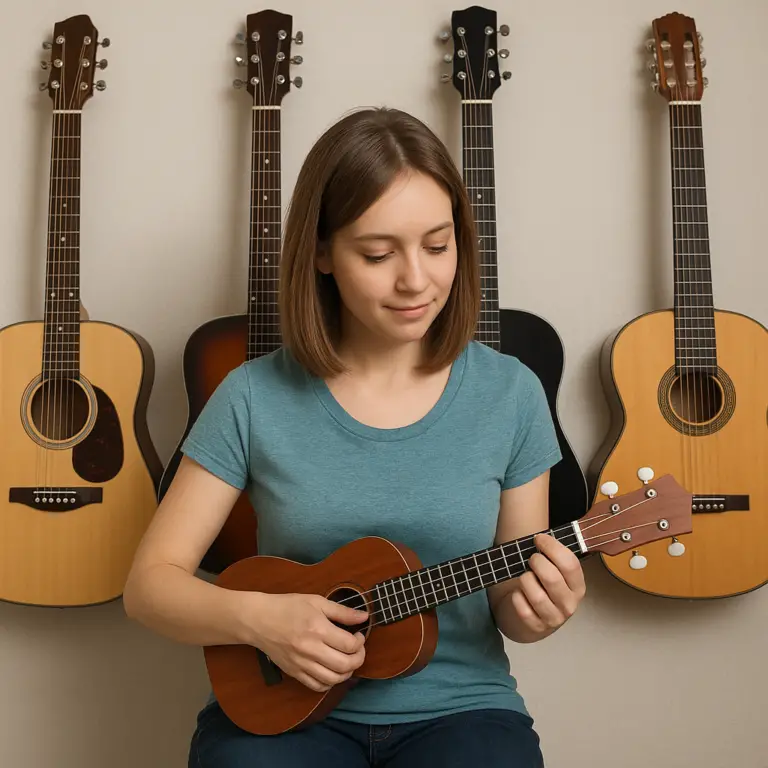
The short answer? The ukule is significantly easier to learn for absolute beginners due to its soft nylon strings and simple four-string chord shapes, while the guitar offers a steeper initial climb but unlocks a much wider musical universe. When you ask, “Is it easier to learn to play guitar or ukule?”, you are really asking whether you value instant gratification or long-term versatility.
Imagine this: You pick up a ukule, strum three chords, and within 15 minutes you’re singing along to a pop song. Now, imagine picking up a steel-string guitar, pressing down on the thick strings until your fingertips scream, and struggling to form a single clean C chord. That is the reality for most guitar beginners.
Did you know the ukule’s name translates to “jumping flea” because of the player’s nimble finger movements? It was designed for fun and accessibility, whereas the guitar evolved as a complex instrument capable of carrying entire orchestras of sound on its own.
The choice isn’t just about difficulty; it’s about your musical goals. If you want to play on the beach tomorrow, grab a ukule. If you want to shred solos or write complex jazz, the guitar is your only path.
Key Takeaways
- Ukule Wins on Speed: You can master basic songs in days thanks to soft nylon strings and simple chord shapes.
- Guitar Wins on Depth: While the learning curve is steeper due to finger pain and complex theory, the guitar offers unmatched versatility across all genres.
- Physical Comfort Matters: The ukule is ideal for small hands and those with joint pain, while the guitar requires building finger calluses and hand strength.
- Portability is King: The ukule fits in a backpack, making it the ultimate travel companion, whereas the guitar demands a case and more space.
- Transferable Skills: Learning the ukule first builds rhythm and confidence, but chord shapes do not directly translate to the guitar due to different tunings.
Table of Contents
- ⚡️ Quick Tips and Facts
- 📜 A Brief History of Strings: How the Guitar and Ukule Evolved
- 🎸 The Guitar Experience: Why Six Strings Might Be Your Best Friend
- 🎵 The Ukule Advantage: Four Strings and a Whole Lot of Fun
- 🤔 Is It Easier to Learn Guitar or Ukule? The Verdict on Difficulty
- 📊 Head-to-Head Comparison: Playability, Cost, and Learning Curve
- 🖐️ Finger Pain and Calluses: What to Expect When You Start
- 🎼 Chord Complexity: From Simple Triads to Complex Jazz Voicings
- 🎶 Music Theory Deep Dive: Which Instrument Teaches You More?
- 🎤 Sing Along: Which Instrument is Better for Vocalists?
- 🎒 Portability and Lifestyle: Taking Your Instrument on the Road
- 💰 Budget Breakdown: Entry-Level Costs for Guitars vs. Ukules
- 🛠️ Maintenance and Care: Keeping Your Strings in Top Shape
- 🚀 Transitioning Between Instruments: Can You Switch Easily?
- 🏆 Top Brands to Watch: Fender, Martin, Kala, and More
- 💡 7 Common Myths About Learning Guitar and Ukule Debunked
- 🎓 Learning Resources: Best Books, Apps, and Online Courses
- 👩 🎤 Ukule Lovers · Join the Community
- 🎸 Guitar Enthusiasts · Connect and Share
- 🏁 Conclusion: Which Path Should You Choose?
- 🔗 Recommended Links
- ❓ Frequently Asked Questions (FAQ)
- 📚 Reference Links
⚡️ Quick Tips and Facts
Before we dive into the deep end of the six-string vs. four-string debate, let’s hit the pause button and grab a few life rafts. If you’re in a hurry, here’s the TL;DR version of our years of struming, freting, and occasionally dropping instruments on our toes:
- The “Easy” Button: If you want to play a song in 15 minutes with minimal finger pain, the ukule wins hands down. Its nylon strings are gentle, and the chord shapes are forgiving.
- The “Depth” Button: If you want to play complex jazz, heavy metal, or accompany a full band without an amp, the guitar is your only real option. It has a steeper learning curve but a much wider sonic horizon.
- The “Hand Size” Factor: Small hands? The ukule is your best friend. Large hands? You might feel cramped on a soprano ukule, making a tenor ukule or a guitar more comfortable.
- The “Portability” Test: You can shove a ukule in a backpack. Trying to fit a dreadnought guitar in a carry-on is a recipe for disaster (and a very expensive repair bill).
- The “Transferable Skill” Myth: Yes, learning ukule helps with guitar, but they are not the same. The tuning is different (G-C-E-A vs. E-A-D-G-B-E), so chord shapes don’t always translate directly without rethinking theory.
For a deeper dive into the world of small strings, check out our comprehensive guide on ukule.
📜 A Brief History of Strings: How the Guitar and Ukule Evolved

To understand which instrument is easier to learn, we have to look at where they came from. It’s a tale of two very different musical journeys.
The Guitar: From Ancient Lutes to Rock Gods
The guitar’s lineage is ancient, tracing back to lute-like instruments in the Middle East and Europe. However, the modern six-string guitar as we know it really took shape in Spain during the 18th and 19th centuries. It was designed to be a versatile solo instrument capable of melody, harmony, and bass lines simultaneously.
- The Evolution: From the Baroque guitar (five courses of strings) to the modern classical and steel-string acoustic, the guitar became the backbone of folk, blues, rock, and jazz.
- The Challenge: This versatility came at a cost. To handle the tension of six steel strings and produce a rich, full sound, the neck had to be wider, and the body larger. This physical demand is part of why the learning curve feels steeper.
The Ukule: A Portuguese Surprise in Hawaii
The ukule is the underdog of the string world. It wasn’t born in Hawaii, but in Portugal in the 19th century. Immigrants from Madeira brought small, guitar-like instruments called machetes and cavaquinhos. When they arrived in Hawaii, the locals loved them.
- The Name: “Ukule” roughly translates to “jumping flea,” likely referring to the fast, nimble finger movements of the players.
- The Rise: King Kalākaua, a huge proponent of Hawaiian culture, helped popularize the instrument. It eventually made its way to the US mainland in the early 20th century, becoming a symbol of the “good life.”
- The Simplicity: The ukule was essentially a simplified, smaller version of the guitar, tuned differently to create a unique, bright sound. Its smaller size and nylon strings made it inherently more accessible to the masses.
Fun Fact: The ukule was so popular in the 1920s that it was often called the “Hawaian Guitar,” even though the playing techniques were quite different!
🎸 The Guitar Experience: Why Six Strings Might Be Your Best Friend
Let’s talk about the big boy. The guitar. Whether you’re eyeing a sleek Fender Stratocaster or a majestic Martin D-28, the guitar offers a sonic palette that is hard to match.
Why Six Strings?
The extra two strings (compared to the ukule) give you:
- Bass Range: You can play bass lines and chords simultaneously.
- Complex Chords: You can add extensions (7ths, 9ths, 1ths) without losing the root note.
- Versatility: From fingerstyle folk to heavy metal riffs, the guitar does it all.
The Learning Curve Reality Check
Is it harder? Yes. Here’s why:
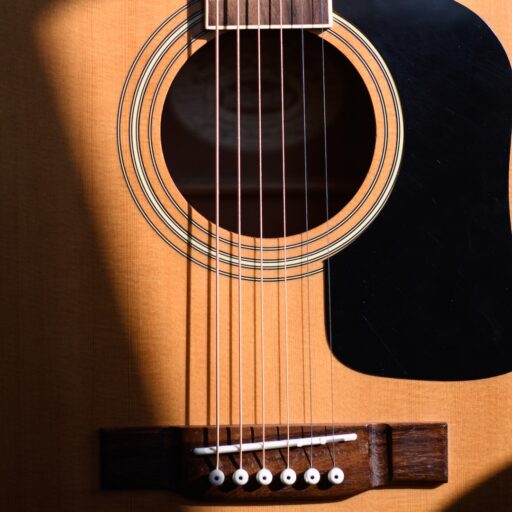
- Finger Strength: Steel strings (on most acoustics and electrics) require more pressure to fret. Your fingertips will hurt for the first few weeks until calluses form.
- Fret Spacing: The neck is wider. If you have small hands, reaching a C-major chord can feel like a yoga pose.
- Muting: With six strings, you have to be careful not to accidentally strum the low E or A string when playing a G chord. This requires precise muting techniques.
The Electric vs. Acoustic Dilemma
- Acoustic Guitars: Harder on fingers, louder, no extra gear needed. Great for campfires.
- Electric Guitars: Easier on fingers (thinner strings, lower action), but you need an amp, cable, and power. They are often considered easier to learn physically, but the gear adds complexity.
Pro Tip: If you want the guitar experience but have sensitive fingers, look into Nylon-string (Classical) Guitars. They bridge the gap between the ukule’s softness and the guitar’s range.
🎵 The Ukule Advantage: Four Strings and a Whole Lot of Fun
Now, let’s give credit where it’s due. The ukule is the gateway drug to the world of string instruments. It’s fun, portable, and surprisingly powerful.
Why Four Strings?
- Simplicity: Fewer strings mean fewer things to mess up.
- Chord Shapes: Many chords require only one or two fingers. A C-major chord is just one finger on the third fret of the bottom string.
- Re-entrant Tuning: The standard G-C-E-A tuning (where the G is higher than the C) creates that signature “plinky” sound and makes struming patterns very forgiving.
The “Instant Gratification” Factor
You can learn three chords (C, F, G7) and play hundreds of pop songs in an afternoon. This instant feedback loop is crucial for beginners. If you struggle to keep motivation, the ukule is your best friend.
The Size Matters
- Soprano: The classic size. Tiny, portable, but can feel cramped for adults with large hands.
- Concert: A bit larger, more volume, slightly easier fret spacing.
- Tenor: The sweet spot for many. More room for fingers, deeper tone, and often used for solo fingerstyle.
- Baritone: Tuned like the top four strings of a guitar (D-G-B-E). This is the easiest transition to guitar, but it loses the traditional ukule sound.
Myth Buster: “The ukule is just a toy.” Try playing a complex fingerstyle arrangement on a Kala KA-T or KoAloha tenor ukule, and you’ll change your mind.
🤔 Is It Easier to Learn Guitar or Ukule? The Verdict on Difficulty
So, we’ve laid out the facts. But the million-dollar question remains: Which is actually easier?
The answer isn’t a simple “yes” or “no.” It depends on what you define as “easy.”
Scenario A: “Easy” means “I want to play a song in 10 minutes.”
Winner: Ukule.
The barrier to entry is incredibly low. You can strum a C chord, an F chord, and a G7 chord and sound like you’re playing a real song. The physical demand is minimal.
Scenario B: “Easy” means “I want to master the instrument and play complex music.”
Winner: Guitar (eventually).
While the guitar is harder to start, it offers a more linear progression for advanced players. Once you get past the initial finger pain and fret width issues, the logic of the fretboard is consistent. The ukule, while easy to start, can hit a “ceiling” where complex chords and fingerstyle techniques become physically awkward due to the small fretboard.
The “Finger Pain” Factor
This is the biggest differentiator.
- Ukule: Nylon strings. No calluses needed for a long time. Great for kids, seniors, or anyone with arthritis.
- Guitar: Steel strings. Painful for the first 2-4 weeks. You must build calluses. If you quit during this phase, you never learn.
The “Hand Size” Factor
- Small Hands: Ukule is significantly easier.
- Large Hands: Guitar might actually be easier because the frets aren’t so crowded that your fingers touch each other.
📊 Head-to-Head Comparison: Playability, Cost, and Learning Curve
Let’s break it down with a table so you can see the differences at a glance.
| Feature | Ukule (Soprano/Concert) | Guitar (Steel-String Acoustic) | Guitar (Electric) |
|---|---|---|---|
| String Count | 4 | 6 | 6 |
| String Material | Nylon (Soft) | Steel (Hard) | Steel (Lighter gauge) |
| Fret Spacing | Narrow (Hard for large hands) | Wide (Good for large hands) | Medium/Wide |
| Initial Finger Pain | Low | High | Medium |
| Chord Complexity | Low (Simple shapes) | Medium/High (Bare chords) | Medium (Easier barre chords) |
| Portability | High (Backpack friendly) | Low (Gig bag/Case needed) | Medium (Amp needed) |
| Cost to Start | Low ($50-$10 for good one) | Medium ($150-$30 for good one) | Medium ($20+ for guitar + amp) |
| Learning Curve | Shallow (Fast start) | Step (Slow start, high ceiling) | Step (Slow start, high ceiling) |
| Versatility | Limited (Bright, plinky sound) | High (Folk, Rock, Jazz, Blues) | Very High (All genres) |
Key Takeaway: If you want speed, pick the ukule. If you want range, pick the guitar.
🖐️ Finger Pain and Calluses: What to Expect When You Start
Let’s address the elephant in the room: The Pain.
The Ukule Experience
When you pick up a ukule, you can strum for 30 minutes and your fingers will feel fine. Maybe a little sore, but nothing major.
- Timeline: You might not need calluses for months.
- The Good News: You can practice daily without fear of blisters. This encourages consistency.
The Guitar Experience
The first week of learning guitar is a rite of passage.
- The Pain: Your fingertips will feel like they are on fire. The steel strings dig into the soft skin.
- The Timeline: It takes about 2 to 4 weeks of daily practice to build calluses.
- The Breakthrough: Once the calluses form, the pain disappears, and you can play for hours.
- The Risk: Many beginners quit during this “pain phase” thinking they aren’t talented. You are not untalented; you just haven’t built your armor yet.
Expert Tip: If you have sensitive fingers, start with a nylon-string classical guitar. It’s a great middle ground that teaches you guitar technique without the steel-string torture.
🎼 Chord Complexity: From Simple Triads to Complex Jazz Voicings
How hard are the chords? Let’s compare.
Ukule Chords
- C Major: 1 finger.
- F Major: 2 fingers.
- G7: 3 fingers.
- The Catch: Some chords, like F#m or Bb, can be tricky because the fretboard is so small. You might find your fingers overlapping.
Guitar Chords
- E Major: 3 fingers (easy).
- A Major: 3 fingers (easy).
- C Major: 3 fingers (easy).
- The Catch: Bare Chords. To play an F Major or B Major, you have to press down all six strings with one finger. This requires significant hand strength and is a major hurdle for beginners.
The “One Finger” vs. “Full Hand” Dynamic
On the ukule, you often use one finger per chord. On the guitar, you use your whole hand to form shapes. This makes the guitar more physically demanding but also allows for richer harmonies.
🎶 Music Theory Deep Dive: Which Instrument Teaches You More?
Does one instrument teach you more music theory than the other?
The Guitar: Theory King
The guitar’s tuning (E-A-D-G-B-E) is logical in a way that aligns with standard music theory.
- Pattern Recognition: Once you learn a scale pattern, you can move it up and down the neck.
- Chord Construction: You can see the root, third, and fifth of a chord clearly across the strings.
- Jazz and Fusion: The guitar is the primary instrument for complex jazz harmony because of its six-string range.
The Ukule: Theory Simplifier
The ukule’s re-entrant tuning (G-C-E-A) is unique.
- The “C” System: Many ukule chords are just “C” shapes moved up the neck.
- The Limitation: Because of the re-entrant tuning, the logic of the fretboard is different. A “C” shape on a ukule doesn’t always translate directly to a “C” shape on a guitar.
- The Benefit: It forces you to think about intervals rather than just shapes, which can actually deepen your understanding of music theory if you approach it correctly.
Insight: If you want to understand music deeply, the guitar provides a more traditional framework. However, the ukule can teach you to be creative with limited resources.
🎤 Sing Along: Which Instrument is Better for Vocalists?
Most people learn an instrument to sing along. Which one is better for that?
The Ukule: The Perfect Companion
The ukule is naturally quiet and sits in a frequency range that doesn’t compete with the human voice.
- Struming: You can strum gently and still hear your voice clearly.
- Portability: You can take it to a bonfire, a park, or a friend’s house and sing instantly.
- The Vibe: It creates a relaxed, intimate atmosphere perfect for storytelling.
The Guitar: The Powerhouse
The guitar is louder and can overpower a voice if you aren’t careful.
- Dynamic Control: You need to learn to play softer when singing.
- Versatility: You can play bass lines and melody, making you a one-man band.
- The Challenge: If you play too loudly, you have to shout to be heard.
Verdict: For casual singing and songwriting, the ukule is often more forgiving. For performance and dynamic range, the guitar offers more tools.
🎒 Portability and Lifestyle: Taking Your Instrument on the Road
Let’s talk lifestyle. How does your instrument fit into your life?
The Ukule: The Travel Buddy
- Size: Fits in a backpack, under an airplane seat, or in a small case.
- Durability: Generally robust. A little bump won’t kill it.
- Spontaneity: You can grab it and play in 5 seconds. No setup required.
The Guitar: The Heavy Lifter
- Size: Requires a gig bag or hard case. Hard to fit in small cars or crowded public transport.
- Durability: Sensitive to humidity and temperature changes. Needs more care.
- Setup: You might need to tune it more often, and if it’s an electric, you need an amp.
Real Talk: If you travel a lot or live in a small apartment, the ukule is the clear winner. If you have a dedicated music room, the guitar’s size is less of an issue.
💰 Budget Breakdown: Entry-Level Costs for Guitars vs. Ukules
How much do you need to spend to get started?
Ukule: The Budget King
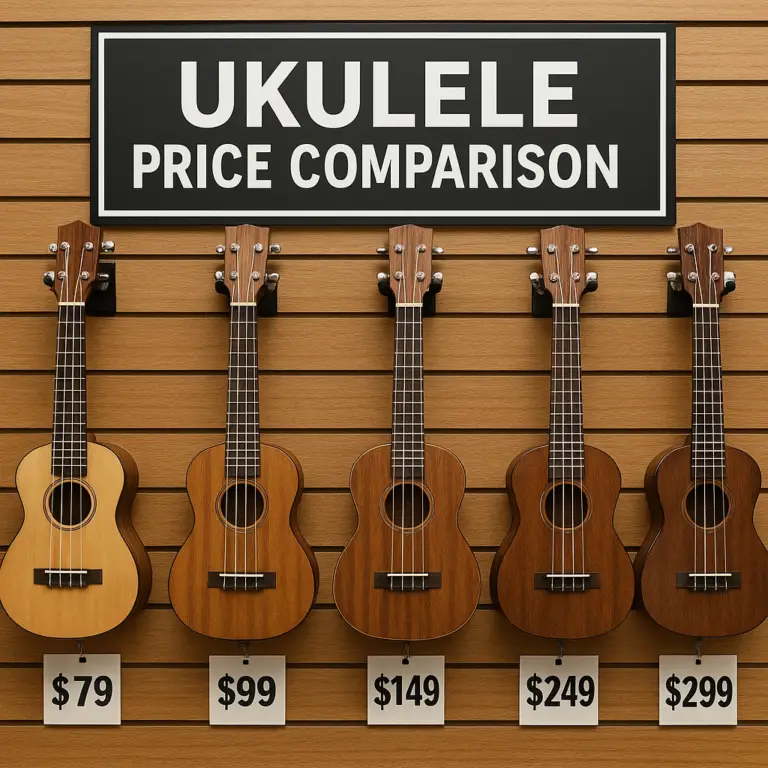
- Entry Level: You can find a decent Kala or Lanikai soprano ukule for under $60.
- Mid Range: $10-$20 gets you a solid wood instrument with great tone.
- The Trap: Avoid the $20 “toy” ukules from big-box stores. They are often unplayable and will discourage you.
Guitar: The Higher Barrier
- Entry Level: A playable acoustic guitar usually starts around $150-$20 (e.g., Yamaha F310 or Fender FA-15).
- Electric: You need the guitar ($20+) plus an amp ($10+) plus a cable.
- The Trap: Cheap guitars often have “high action” (strings too far from the fretboard), making them impossible to play.
Comparison:
- Ukule: $50-$10 for a great start.
- Guitar: $20-$40 for a great start (acoustic) or $30-$50 (electric with amp).
🛠️ Maintenance and Care: Keeping Your Strings in Top Shape
How much work do these instruments require?
Ukule Maintenance
- Strings: Nylon strings last a long time (years). They don’t rust.
- Tuning: They go out of tune less frequently than steel strings, but still need regular tuning.
- Cleaning: Wipe down with a cloth. No special polish needed.
Guitar Maintenance
- Strings: Steel strings rust and lose tone. Change every 1-3 months.
- Tuning: Go out of tune more often, especially new strings.
- Humidity: Acoustic guitars are sensitive to humidity. Too dry = cracks. Too humid = swelling.
- Setup: May need a professional setup (truss rod adjustment) if the action is too high.
Tip: If you hate maintenance, the ukule is the low-maintenance champion.
🚀 Transitioning Between Instruments: Can You Switch Easily?
Can you learn ukule first and then switch to guitar? Or vice versa?
Ukule to Guitar
- The Good: You learn chord shapes, struming patterns, and rhythm. You get used to freting.
- The Bad: The tuning is different. A C chord on ukule (03) is not a C chord on guitar. You have to relearn the shapes.
- The Verdict: It helps with musicality, but you still have to learn the guitar fretboard from scratch.
Guitar to Ukule
- The Good: You already know music theory, chord construction, and finger strength.
- The Bad: The ukule is smaller, so your fingers might feel clumsy. The re-entrant tuning is confusing at first.
- The Verdict: This is often easier than the other way around because the guitar skills are more advanced.
Quote from a Pro: “Learning ukule first is like learning to drive a go-kart before a Ferrari. You learn the basics, but the Ferrari has more gears and a bigger engine.”
🏆 Top Brands to Watch: Fender, Martin, Kala, and More
You don’t want to buy a lemon. Here are the brands we trust at Guitar Brands™.
Best Ukule Brands
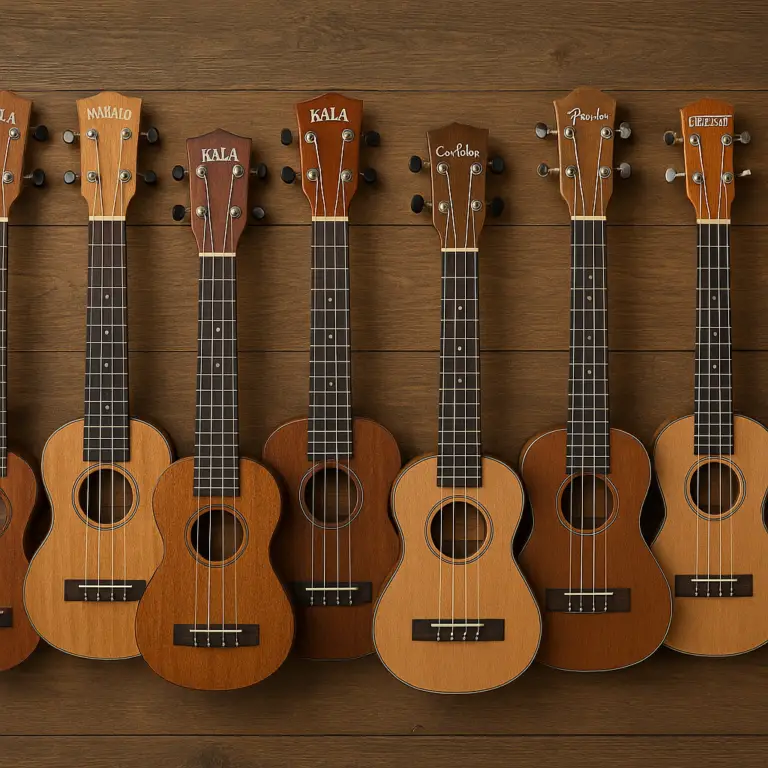
- Kala: The gold standard for beginners. Great value, consistent quality.
- Lanikai: Excellent tone for the price.
- Ohana: Solid wood options at mid-range prices.
- KoAloha: High-end, handcrafted Hawaiian ukules.
Best Guitar Brands
- Yamaha: The king of entry-level guitars. Unbeatable quality control.
- Fender: Iconic electrics and acoustics. Great for beginners and pros.
- Martin: The legend of acoustic guitars. Expensive but worth it.
- Taylor: Modern playability and great sound.
Check out our Guitar Brands Showcase for more details on these brands.
💡 7 Common Myths About Learning Guitar and Ukule Debunked
Let’s clear up some confusion.
- Myth: “Ukule is just a toy.”
Fact: It’s a serious instrument with a rich history and complex repertoire. - Myth: “You must learn guitar first to play ukule.”
Fact: Not true. They are different instruments. Start with the one you love. - Myth: “Ukule chords are the same as guitar chords.”
Fact: No. The tuning is different. A “C” shape on ukule is a “G” on guitar. - Myth: “Electric guitars are easier than acoustics.”
Fact: Physically, yes (lighter strings). But you need gear, which adds complexity. - Myth: “You need big hands to play guitar.”
Fact: You can use a short-scale guitar or a 3/4 size guitar if you have small hands. - Myth: “Ukule is only for Hawaiian music.”
Fact: It’s used in rock, pop, jazz, and classical music. - Myth: “You can’t learn music theory on a ukule.”
Fact: You can! It just requires a different approach.
🎓 Learning Resources: Best Books, Apps, and Online Courses
Where should you go to learn?
For Ukule
- Books: Ukule for Dummies by Alistair Wood.
- Apps: Yousician, Ukule Tricks.
- Websites: Caramel, The Ukule Site.
For Guitar
- Books: Hal Leonard Guitar Method.
- Apps: Fender Play, JustinGuitar.
- Websites: JustinGuitar (free and amazing), TrueFire.
Pro Tip: JustinGuitar is widely considered the best free resource for guitar beginners. It covers everything from chords to theory.
👩🎤 Ukule Lovers · Join the Community
If you’ve fallen in love with the ukule, you’re not alone. There are massive communities online.
- Reddit: r/ukule
- Facebook Groups: “Ukule Underground”
- Events: Ukule festivals around the world.
Ukule Community is a great place to start.
🎸 Guitar Enthusiasts · Connect and Share
Guitarists have a huge community too.
- Reddit: r/guitar
- Forums: The Gear Page, Acoustic Guitar Forum.
- Local: Check out local jam sessions.
Guitar Community has more resources.
🏁 Conclusion: Which Path Should You Choose?
So, we’ve reached the end of the road. Is it easier to learn guitar or ukule?
The Verdict:
- Choose the Ukule if: You want instant gratification, have small hands, are on a tight budget, or want a portable instrument. It is physically easier to start and requires less finger strength.
- Choose the Guitar if: You want versatility, plan to play complex genres (jazz, metal, blues), have large hands, or are willing to endure the initial finger pain for a lifetime of musical depth.
The Final Thought:
Don’t let the “difficulty” scare you. The best instrument is the one you actually play. If you dream of shredding solos, start with the guitar. If you dream of struming on a beach, start with the ukule.
And remember, you can always learn the other later. Many musicians play both!
Ready to start? Check out our Guitar Buying Guide or our Acoustic Guitars section for specific recommendations.
🔗 Recommended Links
- Best Ukule for Beginners: Kala KA-S Soprano Ukule | Kala Official Site
- Best Guitar for Beginners: Yamaha F310 Acoustic Guitar | Yamaha Official Site
- Best Electric Guitar for Beginners: Fender Player Stratocaster | Fender Official Site
- Best Learning App: Fender Play
- Best Free Guitar Course: JustinGuitar
- Book Recommendation: Ukule for Dummies on Amazon
- Book Recommendation: Hal Leonard Guitar Method on Amazon
❓ Frequently Asked Questions (FAQ)

Are there any specific guitar or ukule learning methods that are better for self-taught beginners?
Yes! For self-taught beginners, structured online courses like JustinGuitar (for guitar) or Caramel (for ukule) are highly recommended. They provide a clear path from basics to advanced techniques. Apps like Yousician are also great for gamified learning.
How does the size and tuning of a guitar compare to a ukule for beginners?
A guitar is significantly larger with a longer neck and six strings tuned E-A-D-G-B-E. A ukule is smaller with four strings tuned G-C-E-A (re-entrant). The ukule’s smaller size makes it easier to hold, but the different tuning means chord shapes don’t directly translate.
Read more about “🎵 50 Popular Ukule Songs to Master (2026)”
What are the most common ukule and guitar chords for beginners to start with?
- Ukule: C, F, G7, Am.
- Guitar: E, A, D, C, G, Em, Am.
These chords allow you to play thousands of songs.
Read more about “10 Must-Know Hybrid Ukulele-Guitar Instruments & Their Features (2026) 🎸✨”
Can learning to play the ukule help me learn to play the guitar faster?
Yes, but with a caveat. Learning ukule helps with rhythm, struming, and basic music theory. However, you still need to learn the guitar’s fretboard and chord shapes from scratch because the tuning is different.
Are ukule chords easier to learn than guitar chords for children?
Absolutely. The nylon strings are softer, and the chords often require only one or two fingers. This makes it much less intimidating for children.
Read more about “🎸 Top 10 Ukuleles for Kids in 2026: Find the Perfect Starter!”
How long does it take to learn basic chords on the guitar versus the ukule?
- Ukule: 1-2 weeks to play a few songs.
- Guitar: 1-3 months to play comfortably without pain (due to callus building).
Do guitar and ukule require different playing techniques and hand positions for beginners?
Yes. Guitar requires more hand strength and wider finger stretches. Ukule requires less strength but can be cramped for large hands. Struming techniques are similar, but the ukule often uses a “flick” motion.
How do the sizes and tunings of guitars and ukules affect playability for new players?
The guitar’s size can be a barrier for small hands, while the ukule’s small size can be a barrier for large hands. The tuning affects how chords are formed; guitar chords are more complex due to the extra strings.
Can learning to play the ukule help make learning to play the guitar easier later on?
Yes, it builds confidence and musicality. However, the transfer of skills is not direct. You will still need to relearn chord shapes and adapt to the guitar’s layout.
What is the best instrument to learn first, guitar or ukule, for a complete beginner?
It depends on your goals. If you want quick results, choose ukule. If you want long-term versatility, choose guitar.
Read more about “🎸 Which Type of Ukule Is Better? The 2026 Size & Sound Guide”
Are ukule chords easier to learn than guitar chords for children and adults?
Yes, for both. The physical demand is lower, and the chord shapes are simpler.
What are the main differences between a guitar and a ukule for beginners?
- Strings: 4 vs 6.
- Material: Nylon vs Steel.
- Size: Small vs Large.
- Sound: Bright/plinky vs Rich/full.
Read more about “💸 How Much Does a Good Ukule Cost? (2026 Price Guide)”
Are there any specific ukule or guitar learning methods that are better suited for adult beginners or children?
Adults often prefer structured courses and theory-based learning. Children often respond better to gamified apps and visual learning.
How does the size and portability of the ukule affect the learning process compared to the guitar?
The ukule’s portability encourages more frequent practice because it’s always accessible. The guitar’s size can be a barrier to spontaneous practice.
Can you learn to play the guitar without knowing music theory if you start with the ukule?
Yes. Many players learn by ear or using chord charts. However, knowing theory helps you understand why the chords work.
What are the easiest songs to learn on the guitar for a beginner?
“Knockin’ on Heaven’s Door” (Bob Dylan), “Horse with No Name” (America), and “Wonderwall” (Oasis) are classics.
Read more about “🎸 Can I Learn Ukule by Myself? The Ultimate 2026 Guide”
Is the ukule a good instrument to learn before playing the guitar?
Yes, it’s a great “stepping stone” to build confidence and rhythm.
Read more about “🎸 15 Best Affordable Guitar Brands That Sound Expensive (2026)”
How long does it take to learn basic chords on the ukule compared to the guitar?
Ukule: Days. Guitar: Weeks (due to callus building).
Read more about “🎸 Top 10 Best Guitar Brands for Beginners (2026)”
What are the main differences between guitar and ukule for beginners?
See the “Head-to-Head Comparison” table above.
Read more about “🪶 Top 10 Lightweight Guitar Brands for Giging Musicians (2026)”
Is guitar easier after learning ukule?
It’s easier to start because you have musical experience, but the physical and theoretical differences mean it’s still a new instrument.
Read more about “🎸 Are Ukules Easier Than Guitars? The 7 Truths You Need (2026)”
What should I learn first, guitar or ukule?
Follow your inspiration. If you love the sound of the ukule, start there. If you dream of rock solos, start with the guitar.
Read more about “🎵 The Ultimate Guide to Ukule Sound: Sizes, Woods & Secrets (2026)”
📚 Reference Links
- Ukule History: Britannica – Ukule
- Guitar History: Guitar World – History of the Guitar
- Music Theory: Musictheory.net
- Brand Official Sites:
- Kala
- Fender
- Martin
- Yamaha
- The Great Debate: I’m Tired of the Ukule Versus Guitar Debates – RANT
- Comparison Guide: Ukule Tricks – Ukule vs Guitar