Support our educational content for free when you purchase through links on our site. Learn more
15 Professional Ukules on Amazon Worth a Closer Look 🎸

For a professional ukulele on Amazon, prioritize comfortable playability, dependable tuning, and clear construction details over a listing that simply says “professional.” Our top practical advice: compare concert and tenor models first, then choose a reputable maker and confirm the exact model, seller, and return terms.
We’ve seen musicians get excited by a handsome wood finish, only to discover that the real deciding factor was whether the instrument stayed in tune and felt good in their hands. A quick check of the fretwork, setup, and reviews for the exact size and model can save you that disappointment—and help you find a ukulele you’ll actually want to pick up.
Key Takeaways
- “Professional” isn’t a standardized grade. Check construction, fretwork, intonation, tuning stability, and warranty details.
- Concert and tenor ukules are versatile choices for many adult players; soprano is compact, while baritone uses a different common tuning.
- Read reviews carefully. Amazon listings may group several sizes or versions together, so confirm feedback matches the model you’re considering.
- Solid wood can offer a responsive sound, while laminate or composite models may suit players who prioritize durability and travel.
- For amplified playing, verify the pickup system and test it through your amp or PA if possible.
👉 Shop ukulele brands and models:
- Kala: Amazon | Kala Official Website
- Cordoba: Amazon | Cordoba Official Website
- Enya: Amazon | Enya Official Website
- Luna: Amazon | Luna Official Website
- Ohana: Amazon | Ohana Official Website
Table of Contents
- ⚡️ Quick Tips and Facts: Shopping for a Professional Ukulele on Amazon
- 🎸 What “Professional Ukulele” Really Means
- 🌺 Ukulele Background: Sizes, Tuning, and Tonewoods
- 🏆 15 Professional Ukules to Consider on Amazon
- 1. Premium Soprano Ukules
- 2. Concert Ukules for Balanced Tone
- 3. Tenor Ukules for Stage and Studio
- 4. Baritone Ukules for Guitar-Like Range
- 5. Acoustic-Electric Ukules for Live Performance
- 🔍 How to Choose a Professional Ukulele on Amazon
- Solid Wood vs. Laminate Construction
- Soprano, Concert, Tenor, or Baritone Size
- Neck, Nut Width, Frets, and Playability
- Tonewoods, Strings, and Sound Profile
- Acoustic-Electric Pickups and Stage Readiness
- 🛒 Reading Amazon Ukulele Listings and Reviews
- Seller, Model, and Specification Checks
- How to Spot Useful Reviews and Red Flags
- Returns, Warranty, and Shipping Considerations
- 🎒 Essential Professional Ukulele Accessories
- Gig Bags, Hard Cases, and Humidity Protection
- Tuners, Straps, Capos, and Replacement Strings
- Amplifiers, Cables, and Recording Gear
- 🎼 Setup, Tuning, and Maintenance Tips
- Standard Ukulele Tunings by Size
- When to Get a Professional Setup
- Cleaning, Storage, and Seasonal Care
- 🎤 Using a Professional Ukulele on Stage and in the Studio
- ✅ Quick Buying Checklist
- Conclusion
- Recommended Links
- FAQ
- Reference Links
⚡️ Quick Tips and Facts: Shopping for a Professional Ukulele on Amazon
If you’re comparing a ukulele on Amazon, start with the instrument’s construction, setup, and return policy, not the word “professional” in the listing title. We’ve learned that a well-built ukulele with comfortable action is more useful than a flashy bundle that arrives needing a wrestling match with its strings.
| Quick check | What to look for | Why it matters |
|---|---|---|
| Size | Soprano, concert, tenor, or baritone | Affects scale length, feel, and tone |
| Top construction | Solid wood or laminate, clearly specified | Influences resonance and response |
| Playability | Nut width, fret finish, action, and neck comfort | Determines how comfortably you can play |
| Electronics | Pickup type and controls, if acoustic-electric | Matters for plugging into an amp or PA |
| Seller support | Clear warranty, returns, and seller identity | Helps if the instrument arrives with issues |
| Setup | Reviews mentioning tuning stability and fretwork | A ukulele can need adjustment after shipping |
Fast recommendation: A concert or tenor ukulele is a practical starting point for many adult players. Choose a solid-top model from a reputable maker if you want richer acoustic response, and consider an acoustic-electric version if you regularly play amplified.
A few useful facts before you shop:
- Standard soprano, concert, and tenor ukules are commonly tuned G–C–E–A; baritone ukules are commonly tuned D–G–B–E. Kala’s tuning guide explains the common tuning options.
- Solid wood is not automatically “better” for every player. It can offer a more responsive acoustic voice, but it generally needs more care around humidity changes than laminate construction. Taylor Guitars’ humidity guidance is useful for understanding wood-instrument care.
- Amazon customer reviews can flag recurring concerns, but check the specific model and size: reviews for multiple variations may appear together.
- A tuner, suitable case, and replacement strings are often more useful than a bundle padded with accessories you won’t use.
We’ll compare professional-grade options and buying checks below. One small but revealing clue from a video review of four Amazon ukules will help explain why a specialist-shop setup can still matter.
🎸 What “Professional Ukulele” Really Means
“Professional ukulele” is not a standardized instrument grade. It’s often a marketing phrase, so judge the instrument by its actual specifications and how it performs.
Features that matter more than the label
| Feature | Why it matters | What to verify |
|---|---|---|
| Construction | Influences resonance, durability, and price tier | Whether the top, back, and sides are solid or laminate |
| Fretwork | Poorly finished frets can feel sharp or buzz | Reviews mentioning fret edges, buzzing, or high frets |
| Nut and saddle | Affect intonation and string height | Whether the instrument plays comfortably across the neck |
| Tuners | Help the ukulele stay in tune | Gear ratio, smoothness, and user comments on tuning stability |
| Electronics | Allow amplified performance | Pickup system, onboard controls, and output jack |
| Quality control | Determines consistency from one instrument to another | Warranty terms and the seller’s return process |
A professional player may value reliable intonation, a comfortable neck, consistent volume, and dependable tuning over ornate inlays. A hobbyist recording at home may care more about a quiet pickup system. A touring musician might prioritize a sturdy case and easy access to replacement parts.
For broader instrument-shopping advice, our Guitar Buying Guide covers many of the same practical checks. Ukules are smaller, but the rule holds: specifications are promises; the setup is the handshake.
When a “beginer” model may still work for a pro
A modestly priced instrument can be perfectly useful as a travel ukulele, classroom instrument, or backup. But for regular stage or studio use, check that it has:
- Comfortable action from the first fret through the upper register
- Clean fretwork with no sharp edges
- Stable tuning machines
- Reliable intonation at higher frets
- A pickup system that suits your performance needs
- A case that protects the instrument in transit
Bottom line: Buy the instrument that meets your playing needs, not the one with the grandest adjective.
🌺 Ukulele Background: Sizes, Tuning, and Tonewoods
The ukulele is closely associated with Hawaiʻi, but its history includes Portuguese instrument-making traditions. The Smithsonian’s National Museum of American History provides historical context and examples from its collection.
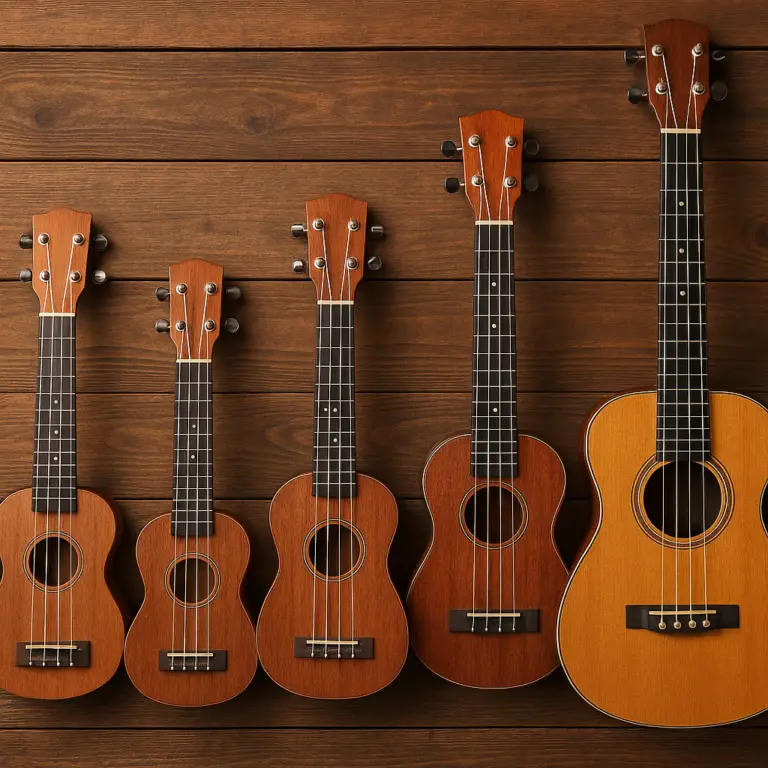
Ukulele sizes at a glance
Exact dimensions vary between makers, so treat these measurements as typical ranges, not strict standards.
| Size | Typical scale length | Common tuning | General character |
|---|---|---|---|
| Soprano | About 13–14 in | G–C–E–A | Compact, bright, traditional |
| Concert | About 15 in | G–C–E–A | A little more room and body |
| Tenor | About 17 in | G–C–E–A | Fuller sound, more fretboard space |
| Baritone | About 19 in | D–G–B–E | Deper, guitar-like register |
How size changes feel and sound
- Soprano: Easy to carry and familiar in traditional ensembles. Its small fret spacing can feel cramped if you have larger hands.
- Concert: A comfortable middle ground for many players. You get more room without giving up the bright ukulele character.
- Tenor: Often favored by fingerstyle players and performers who want a larger body and more fretboard space.
- Baritone: Uses different standard tuning from soprano, concert, and tenor ukules. If you already play guitar, its D–G–B–E tuning may feel familiar.
A shop’s string setup can alter feel, too. For a helpful size overview, see Kala’s ukulele size guide.
Tonewoods and construction
Common ukulele woods include mahogany, koa, acia, spruce, and maple. Their sound depends on the whole instrument, including body shape, bracing, strings, and setup.
| Construction or wood | Common appeal | Trade-off to consider |
|---|---|---|
| Solid mahogany | Warm, focused sound | Needs sensible humidity care |
| Solid koa | Traditional association and clear, lively response | Often positioned in premium ranges |
| Acacia | Related to koa and used across many instrument lines | Tone varies by model and build |
| Spruce top | Strong attack and clarity | Can sound brighter than some players prefer |
| Laminate | Often resilient and consistent | May sound less responsive than a comparable solid-top instrument |
A label is not a sound test. If tone matters, listen to a recording of the exact model or try it in person where possible.
🏆 15 Professional Ukules to Consider on Amazon
We’ve organized these options by size and playing use, rather than pretending one instrument is perfect for every musician. Listings and model availability can change, so verify the exact size, construction, and electronics before ordering.
Buying note: “Professional” here means worth considering for serious playing, not a guarantee of professional setup or quality control. Always check the current listing and seller details.
1. Premium Soprano Ukules
Soprano models are a strong fit for players who want a compact instrument and a classic, bright sound.
Kala KA-STU-T Solid Spruce Travel Ukulele
A travel-friendly soprano-style option from a well-known ukulele maker. Its compact construction makes it appealing for trips and casual sessions, though players seeking the fullest acoustic body may prefer a larger size.
- Best for: Travel, portability, and casual playing
- Consider: Smaller body and tighter fret spacing
- Kala KA-STU-T on Amazon | Kala Official Website
Kala KA-S Mahogany Soprano Ukulele
The KA-S is a familiar entry in Kala’s soprano range. It’s worth comparing when you want a straightforward, compact instrument from an established brand.
- Best for: Traditional soprano feel
- Consider: Confirm the exact model’s construction and included accessories
- Kala KA-S on Amazon | Kala Official Website
Luna Tattoo Soprano Ukulele
Luna’s Tattoo series is known for distinctive visual styling. Check the specific listing for body construction and any electronics, as features can differ across versions.
- Best for: Players who want eye-catching design
- Consider: Make sure appearance doesn’t outrank playability on your checklist
- Luna Tattoo Soprano on Amazon | Luna Official Website
2. Concert Ukules for Balanced Tone
Concert ukules offer more fretboard space than most sopranos while keeping the familiar G–C–E–A tuning.
Kala KA-C Mahogany Concert Ukulele
A sensible model to compare if you want a concert-size instrument from a recognized ukulele brand. Look closely at the exact listing for construction details and included case.
- Best for: General playing and a comfortable size
- Consider: Some listings bundle different accessories or model variations
- Kala KA-C on Amazon | Kala Official Website
Enya Nova U Concert Ukulele
The Nova U stands out for its modern composite construction. That makes it a notable alternative for musicians who want a travel instrument that is less sensitive to ordinary handling than a traditional all-wood model.
- Best for: Travel and lower-maintenance use
- Consider: Composite materials have a different feel and acoustic character from wood
- Enya Nova U Concert on Amazon | Enya Official Website
Cordoba 15CM Concert Ukulele
Cordoba’s 15CM is a widely recognized concert model to investigate for a traditional wood-body feel. Compare the current listing’s exact specifications and seller support before purchasing.
- Best for: Players who want a familiar wood-body concert
- Consider: Verify whether the listing includes a case
- Cordoba 15CM on Amazon | Cordoba Official Website
3. Tenor Ukules for Stage and Studio
Tenor ukules offer additional fretboard room and can produce a fuller acoustic voice. That’s why they’re popular among fingerstyle players and performers.
Kala KA-T Mahogany Tenor Ukulele
A good baseline when comparing tenor models: check the construction, neck feel, and how consistently the instrument intonates across the fretboard.
- Best for: Players moving up from concert size
- Consider: Larger body may feel less portable than a soprano
- Kala KA-T on Amazon | Kala Official Website
Cordoba 20TM-CE Tenor Cutaway Acoustic-Electric Ukulele
A stage-oriented option to investigate if you want a cutaway and onboard electronics. Confirm pickup specifications and controls for the particular model listing.
- Best for: Amplified playing and access to upper frets
- Consider: Electronics add another system that may need checking or adjustment
- Cordoba 20TM-CE on Amazon | Cordoba Official Website
Kala KA-SMHTE-C Solid Mahogany Tenor Ukulele
This solid-mahogany tenor is worth comparing if you’re specifically shopping for a solid-wood instrument. Solid construction can respond differently from laminate, but it also makes sensible storage and humidity care more important.
- Best for: Players seeking a solid-wood tenor
- Consider: Verify the exact solid-wood specifications and included electronics
- Kala KA-SMHTE-C on Amazon | Kala Official Website
Ohana TK-35G Tenor Ukulele
Ohana has a dedicated ukulele range and is worth checking alongside more widely listed brands. Confirm current model availability and construction before buying.
- Best for: Players comparing specialist ukulele makers
- Consider: Amazon availability may vary by seller
- Ohana TK-35G on Amazon | Ohana Official Website
4. Baritone Ukules for Guitar-Like Range
Baritone ukules sit in a lower register and are commonly tuned D–G–B–E. They’re a natural comparison for guitarists, but remember that familiar tuning does not mean identical chord shapes in every musical context.
Kala KA-B Baritone Ukulele
A standard model to consider when comparing baritones. Check the listing for the exact wood construction, string set, and whether a gig bag is included.
- Best for: Players wanting a deeper ukulele voice
- Consider: Requires baritone-specific tuning expectations and often different learning materials
- Kala KA-B on Amazon | Kala Official Website
Cordoba 20BM Baritone Ukulele
Cordoba’s baritone range is a useful comparison for players looking at a wood-body instrument from a known maker.
- Best for: Guitarists exploring the baritone format
- Consider: Confirm the model’s current specifications and seller
- Cordoba 20BM on Amazon | Cordoba Official Website
Ohana BK-35G Baritone Ukulele
A specialist-brand baritone to compare with Kala and Cordoba options. Read the listing carefully for wood details and check that the included strings suit standard baritone tuning.
- Best for: Players who want to compare specialist ukulele brands
- Consider: Availability and included accessories can vary
- Ohana BK-35G on Amazon | Ohana Official Website
5. Acoustic-Electric Ukules for Live Performance
An acoustic-electric ukulele can plug into an amplifier, acoustic combo, or PA system. Pickups are convenient, but a pickup alone doesn’t guarantee a natural amplified sound.
Kala KA-TE Mahogany Tenor Acoustic-Electric Ukulele
A model to compare if you want a tenor with onboard electronics. Verify the pickup type and onboard control layout on the exact version you’re considering.
- Best for: Players who need plug-in capability
- Consider: Test for feedback and handling noise in your performance setup
- Kala KA-TE on Amazon | Kala Official Website
Cordoba 20TM-CE Tenor Cutaway Acoustic-Electric Ukulele
This cutaway electro-acoustic model combines a tenor format with stage-friendly features. It may suit a performer who values amplified playing and access to upper frets.
- Best for: Live performance and upper-fret access
- Consider: Confirm whether a tuner or other controls are onboard
- Cordoba 20TM-CE on Amazon | Cordoba Official Website
Luna High Tide Tenor Acoustic-Electric Ukulele
Luna’s High Tide models are worth investigating for players who want a distinctive design alongside amplified capability. Review the specific listing for scale, pickup, and body details.
- Best for: Players seeking stage features with bold styling
- Consider: Compare pickup specifications with your amplifier or PA needs
- Luna High Tide Tenor on Amazon | Luna Official Website
Enya Nova U Pro Tenor Acoustic-Electric Ukulele
The Nova U Pro line combines composite construction with performance-focused features on selected models. Check the exact version carefully: Enya’s model names can cover different sizes and electronics packages.
- Best for: Travel-minded players who also want amplified use
- Consider: Composite construction feels and sounds different from traditional wood
- Enya Nova U Pro Tenor on Amazon | Enya Official Website
🔍 How to Choose a Professional Ukulele on Amazon
Think of this as the “avoid buying a beautiful headache” checklist. Compare exact model numbers, not just brand names, and decide what matters most before the listing photos start doing their charming little sales dance.
Solid Wood vs. Laminate Construction
Solid wood means a component is made from a single piece or matched solid wood layers, while laminate uses bonded layers. Listings can use these terms inconsistently, so check which body parts are solid.
| Construction | Potential advantages | Possible drawbacks |
|---|---|---|
| Solid top | Often more responsive than an otherwise similar laminate top | More sensitive to environmental changes |
| All-solid body | Can offer a resonant, responsive sound | Requires careful storage and often costs more |
| Laminate body | Usually more tolerant of handling and climate shifts | May have a less complex acoustic response |
Read the fine print: “Mahogany ukulele” might mean mahogany-pattern laminate, a solid top with laminate back and sides, or an all-solid instrument. Those are different specifications.
Soprano, Concert, Tenor, or Baritone Size
Choose size according to your hands, repertoire, and transport needs:
- Check your playing position. Can you fret a basic chord without straining?
- Try a similar size if possible. A music shop can help you compare neck feel.
- Consider your playing style. Fingerstyle and high-fret work may favor a tenor.
- Check tuning before choosing baritone. Its usual D–G–B–E tuning differs from the common G–C–E–A setup.
If you’re unsure, a concert ukulele is often the least dramatic compromise: not tiny, not bulky, and still unmistakably a ukulele.
Neck, Nut Width, Frets, and Playability
A good ukulele should feel inviting rather than fight back. Look for buyer comments about:
- String height (action): Excessively high strings make fretting tiring; very low action may cause buzzing.
- Fret edges: Sharp edges can irritate your hand and suggest poor finishing.
- Neck shape and width: Comfort is personal, especially for players with larger hands.
- Intonation: Notes should remain reasonably in tune as you play higher up the neck.
- Tuning machines: They should turn smoothly and hold pitch.
When buying online, inspect the instrument as soon as it arrives. If there’s persistent buzzing, uneven fretwork, or poor intonation, contact the seller before attempting repairs that could affect your return options.
Tonewoods, Strings, and Sound Profile
Sound comes from more than the wood. Body size, bracing, strings, construction, and setup all contribute.
Common string makers include Aquila, D’Addario, and Worth. Strings can noticeably change feel and tone, but don’t swap them immediately if you suspect a manufacturing defect. First document the issue and check the return policy.
For a useful first test, play:
- A single-note scale across several frets
- A few common open chords
- A soft strum and a firm strum
- Fingerpicked notes on each string
That quick check reveals buzzes, dead notes, tuning problems, and whether the sound suits you.
Acoustic-Electric Pickups and Stage Readiness
Before buying an amplified model, verify:
- Pickup type and whether it includes a microphone, piezo element, or both
- Onboard volume and tone controls
- Whether the instrument needs a battery
- Output-jack location and cable compatibility
- User feedback about hum, feedback, and unpluged sound
A pickup is a tool, not a magic sound wand. Test it through the kind of amp or PA you’ll actually use. For more instrument comparisons, browse our Acoustic Guitars coverage, which includes useful perspective on amplification and stage-ready acoustic instruments.
🛒 Reading Amazon Ukulele Listings and Reviews
Amazon makes comparison convenient, but ukulele listings can combine sizes, finishes, and accessories under one product page. Make sure the reviews match the model you intend to buy.
Seller, Model, and Specification Checks
Before adding anything to your cart:
- Match the model number on the listing with the brand’s official product information.
- Confirm the size and tuning—not just “ukulele” in the headline.
- Check the seller and whether the item is new, used, or refurbished.
- Verify construction claims for the top, back, and sides individually.
- Read the warranty and return terms for the specific listing.
- Check what’s included: case, tuner, strap, cable, and spare strings are not guaranteed.
- Look for consistent specifications across the listing text, photos, and manufacturer page.
For a broader view of instrument makers, explore our Guitar Brand Guides.
How to Spot Useful Reviews and Red Flags
Useful reviews describe a specific experience: how the ukulele stays in tune, whether the frets feel smooth, or what changed after a setup. Be cautious with reviews that only say “great gift” or rate a bundle without discussing the instrument itself.
Red flags include:
- Many reviews describing the same buzzing or tuning issue
- Reviewer comments about an entirely different size or model
- Stock photos that don’t match the listed product
- Vague claims such as “professional quality” with no construction details
- Complaints about poor packaging or difficult returns
- Accessories dominating the listing while instrument specs are missing
Returns, Warranty, and Shipping Considerations
A ukulele can shift during shipping or arrive with a setup that needs attention. Check the return window, warranty coverage, and who handles the return before ordering.
Keep the packaging until you’ve inspected the instrument. Photograph any damage promptly, and avoid making irreversible modifications while a return or warranty claim is possible.
The specialist-shop perspective: what an Amazon ukulele video reveals
In the first YouTube video featured in this article, the reviewer compares four instruments bought from Amazon: Kmise, Lekato, PickApick, and Vangoa. The video describes them as falling roughly in the £50–£70 range, with the PickApick at the higher end of that comparison.
The reviewer prefers the Kmise’s appearance and sound, points out the Vangoa’s attractive look, and notes the PickApick as a possible fit for younger players. The video also makes a useful point: “I do recommend buying from specialist shops rather than Amazon” for advice and setup, while acknowledging that Amazon has worthwhile options.
That’s a fair distinction. Amazon can offer convenience and broad selection; a specialist shop can often let you compare instruments and help assess setup. The reviewer’s line, “I wouldn’t still be playing it,” captures the real test: an instrument has to feel good enough that you keep reaching for it. The video’s brief Kmise demonstration is a reminder to listen for sound and playability—not just admire the product photo.
🎒 Essential Professional Ukulele Accessories
Accessories can improve protection, tuning, and stage readiness. They can also turn a simple instrument purchase into a bundle of things you never use. Buy what supports your routine.
Gig Bags, Hard Cases, and Humidity Protection
- Gig bag: Convenient for lessons and short trips; padding varies widely.
- Hard case: Better protection for frequent transport and valuable instruments.
- Humidity care: Particularly relevant for solid-wood instruments. Avoid leaving a ukulele in a hot car or beside a radiator.
Tuners, Straps, Capos, and Replacement Strings
| Accessory | Useful for | Buying tip |
|---|---|---|
| Clip-on tuner | Fast, quiet tuning | Confirm it works for ukulele and your preferred tuning |
| Strap | Standing performance | Check whether the instrument has strap buttons |
| Capo | Changing key and voicing | Choose one designed for ukulele neck width |
| Replacement strings | Repairs and tone experiments | Match string type and ukulele size |
| Stand | Keeping the instrument accessible | Avoid unstable stands that can tip easily |
A clip-on tuner is often the first accessory we recommend. It’s simple, dependable, and less distracting than trying to tune by ear in a room full of conversation.
Amplifiers, Cables, and Recording Gear
For an acoustic-electric ukulele, start with a clean acoustic amp or a PA channel with suitable EQ. Use a good-quality instrument cable, and test for feedback at rehearsal volume before the performance.
If you’re recording, a microphone can capture the instrument’s acoustic character; a pickup can provide a direct signal. Some players blend both. The best setup depends on the room, performance style, and noise around you.
🎼 Setup, Tuning, and Maintenance Tips
A new instrument may need time to settle, especially if its strings are fresh. Tune it, play it, and tune again. That little ritual is normal—not evidence that your ukulele has chosen a life of chaos.
Standard Ukulele Tunings by Size
| Size | Common tuning | Notes |
|---|---|---|
| Soprano | G–C–E–A | High-G is common; low-G is also used |
| Concert | G–C–E–A | High-G and low-G setups are both available |
| Tenor | G–C–E–A | Often used with either high-G or low-G |
| Baritone | D–G–B–E | Different register from standard soprano/concert/tenor tuning |
The high-G string is tuned an octave above the low-G string used in a linear low-G setup. That changes the instrument’s note range and voicing. If you’re unsure, follow the maker’s string recommendation and use a reliable tuner.
When to Get a Professional Setup
Consider a setup if the instrument has:
- Uncomfortable string height
- Persistent fret buzz
- Sharp fret edges
- Poor intonation after tuning
- Tuning machines that slip or bind
- A pickup that produces intermittent output
A qualified repair person can inspect the nut, saddle, frets, and neck. If the instrument is new and still returnable, contact the seller or manufacturer before paying for repairs.
Cleaning, Storage, and Seasonal Care
- Wipe fingerprints and sweat from the strings and body after playing.
- Store the ukulele in a case when it’s not in use.
- Keep it away from extreme heat, cold, and rapid humidity changes.
- Use a soft, instrument-safe cloth; avoid household cleaners unless the maker approves them.
- Check the manufacturer’s care guidance, especially for solid-wood instruments.
For additional maintenance guidance, see Taylor Guitars’ care and maintenance resources.
🎤 Using a Professional Ukulele on Stage and in the Studio
A stage-ready ukulele needs more than a pickup. It needs predictable tuning, low handling noise, comfortable access to controls, and a way to travel safely.
A simple live-performance check
- Tune the instrument carefully.
- Plug in and check the cable and output jack.
- Set the amp or PA EQ conservatively.
- Raise the volume gradually and listen for feedback.
- Check that chords sound balanced across the strings.
- Keep a spare cable, tuner, and string set nearby.
Acoustic, amplified, or both?
| Performance setup | Strength | Limitation |
|---|---|---|
| Unpluged acoustic | Natural sound and simple setup | May struggle in a loud room |
| Pickup into an amp or PA | Convenient and easy to mix | Can sound different from the unpluged instrument |
| Microphone | Captures more acoustic detail | Picks up room sound and stage noise |
| Pickup plus microphone | Flexible blend for recording or performance | Requires careful setup and sound checks |
A tenor can be a comfortable stage choice because it offers extra fretboard room, but a well-set-up concert ukulele can perform beautifully too. Playability and reliable amplification beat size stereotypes.
For instrument-related buying and brand coverage beyond ukules, see our Guitar Brands Showcase and Bass Guitars sections.
✅ Quick Buying Checklist
Before ordering, make sure you can answer “yes” to these:
- ✅ Do I know which size and tuning I want?
- ✅ Does the listing clearly state the model number and construction?
- ✅ Have I checked whether the top, back, and sides are solid or laminate?
- ✅ Do the reviews discuss this exact size and model?
- ✅ Is the seller identifiable, with clear return and warranty terms?
- ✅ Does the included case or gig bag suit how I’ll transport it?
- ✅ If it’s acoustic-electric, do I understand the pickup and power requirements?
- ✅ Have I considered trying a similar instrument at a specialist shop?
- ✅ Do I have a tuner and a plan for basic maintenance?
If you’re still torn, pick the instrument that best matches your hands, music, and performance needs—then confirm the setup and seller support. That’s how an online listing becomes an instrument you’ll actually play.