Support our educational content for free when you purchase through links on our site. Learn more
What Are the 10 Best Ukulele Brands for Guitar Players? 🎸 (2026)

If you’re a guitar player curious about diving into the world of ukuleles, you’re in for a treat! Transitioning from six strings to four might sound like a downgrade, but trust us—it’s a whole new universe of joyful strumming, compact fun, and surprisingly rich tones. Whether you want to keep your familiar chord shapes or explore the classic ukulele vibe, choosing the right brand can make all the difference.
In this guide, we break down the 10 best ukulele brands for guitar players in 2026, from the legendary Martin and Kamaka to innovative newcomers like Enya’s carbon fiber marvels. We’ll reveal which ukulele size matches your guitar tuning perfectly (hint: it’s the “baritone”!), and which brands offer the smoothest necks for your guitar-trained fingers. Ready to find your perfect uke? Keep reading to discover the brands that will make your musical journey seamless and fun.
Key Takeaways
- Baritone ukuleles share the same tuning as the top four guitar strings (D-G-B-E), making them the easiest transition for guitarists.
- Tenor ukuleles offer the best balance of playability and classic ukulele tone for guitar players with larger hands.
- Top brands like Cordoba, Martin, Kala, and Kamaka combine craftsmanship and tonewoods that appeal to guitarists.
- Innovative brands like Enya provide durable, travel-ready ukuleles with onboard electronics for gigging guitarists.
- Choosing the right size and brand depends on your priorities: tone, playability, durability, or tradition.
👉 Shop the best ukulele brands for guitar players:
- Cordoba Ukuleles: Amazon | Guitar Center | Cordoba Official Website
- Martin Ukuleles: Amazon | Guitar Center | Martin Official Website
- Kala Ukuleles: Amazon | Guitar Center | Kala Official Website
Table of Contents
- ⚡️ Quick Tips and Facts for the Guitar-to-Uke Transition
- 🎸 From Six Strings to Four: Why Guitarists are Flocking to the Ukulele
- 🤔 Why Size Matters: Choosing Between Soprano, Concert, Tenor, and Baritone
- 1. Cordoba: The Classical Guitarist’s Natural Evolution
- 2. Martin & Co.: The Gold Standard of Heritage and Tone
- 3. Kala: The Versatile Workhorse for Every Style
- 4. Kamaka: Owning a Piece of Hawaiian History
- 5. Kanile’a: Boutique Innovation for the Discerning Player
- 6. Lanikai: Perfect for the Tech-Savvy Musician
- 7. Flight: Modern Aesthetics and Travel-Ready Durability
- 8. Pono: Pro-Level Solid Wood Without the Custom Shop Price
- 9. Ohana: Vintage Vibes and Unique Tonewoods
- 10. Enya: Carbon Fiber Wonders for the Adventurous Soul
- 🛠 The Guitarist’s Cheat Sheet: Tuning and Fretboard Logic
- 🔌 Plugging In: Best Ukulele Brands with Onboard Electronics
- 📚 Related Buyer’s Guides for String Enthusiasts
- Conclusion
- Recommended Links
- FAQ
- Reference Links
⚡️ Quick Tips and Facts for the Guitar-to-Uke Transition
Before we dive into the “Koa-drenched” world of high-end ukes, here is a quick cheat sheet for our fellow six-string shredders.
| Feature | Guitarist’s Perspective | Why It Matters |
|---|---|---|
| The “Baritone” Secret | Tuned D-G-B-E | It’s literally the top 4 strings of a guitar. Zero learning curve! |
| Tenor Size | The “Standard” for Pros | Offers a longer scale length and wider nut width for larger hands. |
| Re-entrant Tuning | High G (gCEA) | This gives the uke its “happy” harp-like sound. |
| Solid vs. Laminate | Just like acoustics | Solid wood ages and sounds better; laminates survive the campfire. |
| Nylon Strings | Soft on the fingers | You’ll miss your steel strings’ tension, but your calluses will thank you. |
Quick Fact: Did you know the ukulele isn’t actually Hawaiian? It was brought to the islands by Portuguese immigrants in the late 1800s. The Hawaiians saw their fingers flying across the fretboard and called it “ukulele,” which translates to “jumping flea.” 🦟
🎸 From Six Strings to Four: Why Guitarists are Flocking to the Ukulele
We’ve all been there. You’re at a beach bonfire or a backyard BBQ, and hauling your hardshell dreadnought case feels like moving a sofa. Enter the ukulele. For years, we at Guitar Brands™ looked at the uke as a “toy.” We were wrong. Dead wrong.
The transition from guitar to ukulele is one of the most rewarding musical pivots you can make. Why? Because you already know 80% of the theory! If you can play a D Major chord on a guitar, you can play a G Major chord on a ukulele (it’s the same shape!).
In this guide, we aren’t looking at the $20 plastic neon ukes you find at a souvenir shop. We’re looking at the best ukulele brands for guitar players—brands that respect craftsmanship, tonewoods, and intonation. Whether you want the familiar feel of a Cordoba or the legendary status of a Martin, we’ve got you covered.
But first, a question to keep you thinking: Which ukulele size actually shares the exact same tuning as your guitar’s highest four strings? (Hint: We mentioned it in the table above, but the “why” might surprise you!)
🤔 Why Size Matters: Choosing Between Soprano, Concert, Tenor, and Baritone
As guitarists, we are used to “Standard” or “Parlor” sizes. In the uke world, size dictates the “soul” of the instrument.
- Soprano: The classic “tinkly” sound. Honestly? It might feel like a toothpick in your hands if you’re used to a Les Paul.
- Concert: A bit more room. Great for strumming.
- Tenor: Our top recommendation for guitarists. It has a longer scale, better projection, and enough fret space for those complex jazz chords you spent years learning.
- Baritone: The “Cheater’s Uke.” Tuned D-G-B-E. If you want to play uke immediately without learning new chord shapes, this is your huckleberry.
1. Cordoba: The Classical Guitarist’s Natural Evolution
If you’ve ever played a Cordoba nylon-string guitar, you know they prioritize lightweight construction and Spanish tradition. Their ukuleles are no different.
We love the Cordoba 20T or the 28T. They often use woods like Bocote or Koa that look as stunning as they sound. ✅ Pro: Wider nut widths that feel familiar to guitarists. ❌ Con: Their finishes can be a bit delicate.
Expert Tip: Look for the “CE” models if you plan to gig. Cordoba’s onboard pickups are surprisingly transparent.
2. Martin & Co.: The Gold Standard of Heritage and Tone
Martin has been making ukuleles since 1917. When the “uke craze” hit a century ago, Martin was there to define the sound. For a guitar player, owning a Martin uke is like owning a 000-28—it’s an heirloom.
The Martin T1K (all solid Koa) is a masterpiece of minimalism. It doesn’t have flashy abalone, but the tone is rich, warm, and incredibly loud. ✅ Pro: Incredible resale value and legendary “bark.” ❌ Con: You pay a premium for that logo on the headstock.
3. Kala: The Versatile Workhorse for Every Style
Kala is arguably the brand that saved the ukulele from obscurity in the 2000s. They offer everything from entry-level laminates to the high-end Elite USA series.
We personally recommend the Kala Gloss Solid Cedar Top Acacia Tenor. The cedar top gives it a “broken-in” guitar warmth right out of the box. ✅ Pro: Huge variety; they even invented the U-BASS! ❌ Con: The sheer number of models can be overwhelming for beginners.
4. Kamaka: Owning a Piece of Hawaiian History

If you want the “Ferrari” of ukuleles, you go to the source. Kamaka is the oldest uke manufacturer in Hawaii. Every professional Hawaiian player—from Jake Shimabukuro to the late Israel Kamakawiwoʻole—has played a Kamaka.
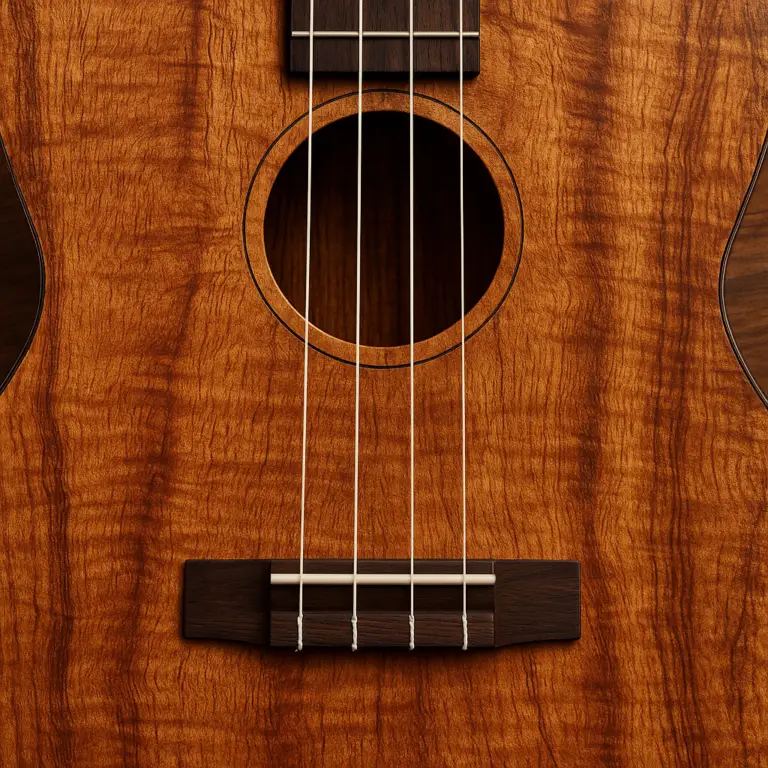
They use high-grade Hawaiian Koa, which has a shimmer that mahogany simply can’t replicate. ✅ Pro: The most authentic “Hawaiian” sound on the planet. ❌ Con: Hard to find in stock and very expensive.
5. Kanile’a: Boutique Innovation for the Discerning Player
Kanile’a is for the guitarist who loves “boutique” gear. They use a unique “TRU-Bracing” system that allows the soundboard to vibrate more freely.
We’ve found that their necks are some of the most comfortable for people transitioning from electric guitars. They feel sleek and fast. ✅ Pro: Stunning “Master Grade” Koa options. ❌ Con: Definitely an investment piece, not a “beach beater.”
6. Lanikai: Perfect for the Tech-Savvy Musician
Lanikai focuses on playability. Many of their models feature a wider nut, which is a godsend for guitarists with larger hands who struggle with the “cramped” feeling of a soprano uke.
They also pioneered the use of the TunaUke system, which allows for adjustable intonation—a feature we guitarists take for granted on our electric bridges! ✅ Pro: Excellent intonation and “player-centric” features. ❌ Con: Some purists find their designs a bit “modern.”
7. Flight: Modern Aesthetics and Travel-Ready Durability
Flight has taken the world by storm recently. They are the “cool kid” on the block. Their Travel Series (with plastic backs) is surprisingly resonant and can survive a literal desert trek.
For the serious player, their Anniversary Series features solid woods and “scooped” cutaways that look like something out of a custom guitar shop. ✅ Pro: Very affordable for the quality you get. ❌ Con: Based in Europe, so shipping/availability can vary in the US.
8. Pono: Pro-Level Solid Wood Without the Custom Shop Price
Pono is the sister brand to the high-end Ko’olau. They are made in Indonesia under strict Hawaiian supervision.
What we love about Pono is their commitment to Solid Wood. You won’t find laminates here. Their Mahogany Tenors have a punchy, mid-range focus that records beautifully. ✅ Pro: Best “bang for your buck” in solid wood instruments. ❌ Con: Very traditional styling; might be “boring” for some.
9. Ohana: Vintage Vibes and Unique Tonewoods
Ohana specializes in recreations of vintage specs. If you love the look of a 1930s Gibson or Martin, Ohana is your brand. They also experiment with cool woods like Spalted Maple and Sinker Redwood.
Their Cynthia Lin Signature models are fantastic entry points for guitarists. ✅ Pro: Great “vintage” feel and unique aesthetics. ❌ Con: Setup quality can occasionally vary between dealers.
10. Enya: Carbon Fiber Wonders for the Adventurous Soul
Wait, carbon fiber? Yes! Enya (specifically the Nova U series) is a game-changer. It’s waterproof, heatproof, and nearly indestructible.
As guitarists, we’re used to worrying about humidity cracking our acoustics. With an Enya, you can play in a rainstorm (though we don’t recommend it for your fingers!). ✅ Pro: Extremely durable and comes with a “total package” (case, strap, etc.). ❌ Con: The tone is “bright” and lacks the “woody” soul of Koa.
🛠 The Guitarist’s Cheat Sheet: Tuning and Fretboard Logic
The biggest hurdle for us is the “High G.” On a guitar, strings go from low to high. On a standard uke, the string closest to your face is a High G.
The “Aha!” Moment: If you put a capo on the 5th fret of your guitar and ignore the E and A strings, you are playing a Ukulele in “Low G” tuning.
- Guitar (5th Fret): G-C-E-A
- Ukulele: G-C-E-A
The Baritone Secret: As we teased earlier, the Baritone Ukulele is tuned D-G-B-E. This is exactly the same as the top four strings of your guitar. You don’t have to learn a single new chord. You’re welcome! 😉
🔌 Plugging In: Best Ukulele Brands with Onboard Electronics
If you’re a gigging guitarist, you probably want to plug into a pedalboard or a PA.
- Best Preamp: Kala often uses Fishman or UK-300T systems with built-in tuners.
- Best “Silent” Option: Yamaha makes a “Silent Guitar” version of a uke (the GL1 Guitalele) which is a 6-string uke-hybrid!
- Best Integrated Tech: Enya has models with built-in reverb and delay that come out of the soundhole without an amp!
📚 Related Buyer’s Guides for String Enthusiasts
- The Best Acoustic Guitars for Small Hands
- Nylon vs. Steel Strings: Which is Right for You?
- Top 10 Baritone Guitars for Deep Tones
- Essential Ukulele Accessories for Guitarists
Conclusion

Transitioning from guitar to ukulele isn’t “downgrading”—it’s expanding your sonic palette. Whether you choose the heritage of a Martin, the innovation of a Kanile’a, or the “plug-and-play” ease of a Kala, you’re joining a community that values joy over ego.
If you want the easiest transition, grab a Baritone. If you want the most “pro” feel, go for a Tenor. Now, go forth and let those “jumping fleas” fly! 🎶
Recommended Links
- Kala Brand Music Co. Official Site
- Cordoba Guitars & Ukuleles
- Martin Guitar Ukulele Collection
- Ukulele Underground (Great for lessons!)
FAQ

Q: Is a “Guitalele” better for a guitar player? A: It’s a great bridge! It has 6 strings but is sized like a tenor uke. However, if you want the true “uke sound,” a 4-string tenor is the way to go.
Q: Do I need a pick to play ukulele? A: Most uke players use their fingers or felt picks. Plastic guitar picks can be a bit harsh on the nylon strings and the wood, but hey, there are no rules in rock and roll!
Q: Can I put steel strings on a ukulele? A: ❌ NO! Most ukuleles are not braced for the high tension of steel strings. You will snap the bridge right off the body. Stick to nylon or fluorocarbon.
Reference Links
- The History of the Ukulele – Smithsonian Magazine
- Wood Database: Hawaiian Koa Characteristics
- Acoustic Guitar Magazine: The Rise of the Baritone Uke
⚡️ Quick Tips and Facts for the Guitar-to-Uke Transition
| Feature | Guitarist’s Perspective | Why It Matters |
|---|---|---|
| The “Baritone” Secret | Tuned D-G-B-E | It’s literally the top 4 strings of a guitar. Zero learning curve! |
| Tenor Size | The “Standard” for Pros | Offers a longer scale length and wider nut width for larger hands. |
| Re-entrant Tuning | High G (gCEA) | This gives the uke its “happy” harp-like sound. |
| Solid vs. Laminate | Just like acoustics | Solid wood ages and sounds better; laminates survive the campfire. |
| Nylon Strings | Soft on the fingers | You’ll miss your steel strings’ tension, but your calluses will thank you. |
Quick Fact: Did you know the ukulele isn’t actually Hawaiian? It was brought to the islands by Portuguese immigrants in the late 1800s. The Hawaiians saw their fingers flying across the fretboard and called it “ukulele,” which translates to “jumping flea.” 🦟
🎸 From Six Strings to Four: Why Guitarists are Flocking to the Ukulele
We’ve all been there. You’re at a beach bonfire or a backyard BBQ, and hauling your hardshell dreadnought case feels like moving a sofa. Enter the ukulele. For years, we at Guitar Brands™ looked at the uke as a “toy.” We were wrong. Dead wrong.
The transition from guitar to ukulele is one of the most rewarding musical pivots you can make. Why? Because you already know 80% of the theory! If you can play a D Major chord on a guitar, you can play a G Major chord on a ukulele (it’s the same shape!).
In this guide, we aren’t looking at the $20 plastic neon ukes you find at a souvenir shop. We’re looking at the best ukulele brands for guitar players—brands that respect craftsmanship, tonewoods, and intonation. Whether you want the familiar feel of a Cordoba or the legendary status of a Martin, we’ve got you covered.
But first, a question to keep you thinking: Which ukulele size actually shares the exact same tuning as your guitar’s highest four strings? (Hint: We mentioned it in the table above, but the “why” might surprise you!)
🤔 Why Size Matters: Choosing Between Soprano, Concert, Tenor, and Baritone
As guitarists, we are used to “Standard” or “Parlor” sizes. In the uke world, size dictates the “soul” of the instrument.
- Soprano: The classic “tinkly” sound. Honestly? It might feel like a toothpick in your hands if you’re used to a Les Paul.
- Concert: A bit more room. Great for strumming.
- Tenor: Our top recommendation for guitarists. It has a longer scale, better projection, and enough fret space for those complex jazz chords you spent years learning.
- Baritone: The “Cheater’s Uke.” Tuned D-G-B-E. If you want to play uke immediately without learning new chord shapes, this is your huckleberry.
1. Cordoba: The Classical Guitarist’s Natural Evolution
If you’ve ever played a Cordoba nylon-string guitar, you know they prioritize lightweight construction and Spanish tradition. Their ukuleles are no different.
We love the Cordoba 20T or the 28T. They often use woods like Bocote or Koa that look as stunning as they sound. ✅ Pro: Wider nut widths that feel familiar to guitarists. ❌ Con: Their finishes can be a bit delicate.
Expert Tip: Look for the “CE” models if you plan to gig. Cordoba’s onboard pickups are surprisingly transparent.
👉 CHECK PRICE on:
- Cordoba 20T Tenor Ukulele: Amazon | Guitar Center | Cordoba Official Website
2. Martin & Co.: The Gold Standard of Heritage and Tone
Martin has been making ukuleles since 1917. When the “uke craze” hit a century ago, Martin was there to define the sound. For a guitar player, owning a Martin uke is like owning a 000-28—it’s an heirloom.
The Martin T1K (all solid Koa) is a masterpiece of minimalism. It doesn’t have flashy abalone, but the tone is rich, warm, and incredibly loud. ✅ Pro: Incredible resale value and legendary “bark.” ❌ Con: You pay a premium for that logo on the headstock.
As Guitar World notes, “The Martin S1 delivers tones, projection and build quality a million miles away from what people may think a uke is capable of.”
👉 CHECK PRICE on:
- Martin T1K Tenor Ukulele: Amazon | Guitar Center | Martin Official Website
3. Kala: The Versatile Workhorse for Every Style
Kala is arguably the brand that saved the ukulele from obscurity in the 2000s. They offer everything from entry-level laminates to the high-end Elite USA series.
We personally recommend the Kala Gloss Solid Cedar Top Acacia Tenor. The cedar top gives it a “broken-in” guitar warmth right out of the box. ✅ Pro: Huge variety; they even invented the U-BASS! ❌ Con: The sheer number of models can be overwhelming for beginners.
👉 CHECK PRICE on:
- Kala Gloss Solid Cedar Top Acacia Tenor: Amazon | Guitar Center | Kala Official Website
4. Kamaka: Owning a Piece of Hawaiian History

If you want the “Ferrari” of ukuleles, you go to the source. Kamaka is the oldest uke manufacturer in Hawaii. Every professional Hawaiian player—from Jake Shimabukuro to the late Israel Kamakawiwoʻole—has played a Kamaka.
They use high-grade Hawaiian Koa, which has a shimmer that mahogany simply can’t replicate. ✅ Pro: The most authentic “Hawaiian” sound on the planet. ❌ Con: Hard to find in stock and very expensive.
👉 CHECK PRICE on:
- Kamaka Tenor Ukulele: Amazon | Guitar Center | Kamaka Official Website
5. Kanile’a: Boutique Innovation for the Discerning Player
Kanile’a is for the guitarist who loves “boutique” gear. They use a unique “TRU-Bracing” system that allows the soundboard to vibrate more freely.
We’ve found that their necks are some of the most comfortable for people transitioning from electric guitars. They feel sleek and fast. ✅ Pro: Stunning “Master Grade” Koa options. ❌ Con: Definitely an investment piece, not a “beach beater.”
👉 CHECK PRICE on:
- Kanile’a Tenor Ukulele: Amazon | Guitar Center | Kanile’a Official Website
6. Lanikai: Perfect for the Tech-Savvy Musician
Lanikai focuses on playability. Many of their models feature a wider nut, which is a godsend for guitarists with larger hands who struggle with the “cramped” feeling of a soprano uke.
They also pioneered the use of the TunaUke system, which allows for adjustable intonation—a feature we guitarists take for granted on our electric bridges! ✅ Pro: Excellent intonation and “player-centric” features. ❌ Con: Some purists find their designs a bit “modern.”
As mentioned in our featured video, Lanikai offers excellent options for guitarists transitioning to ukulele.
👉 CHECK PRICE on:
- Lanikai Tenor Ukulele: Amazon | Guitar Center | Lanikai Official Website
7. Flight: Modern Aesthetics and Travel-Ready Durability
Flight has taken the world by storm recently. They are the “cool kid” on the block. Their Travel Series (with plastic backs) is surprisingly resonant and can survive a literal desert trek.
For the serious player, their Anniversary Series features solid woods and “scooped” cutaways that look like something out of a custom guitar shop. ✅ Pro: Very affordable for the quality you get. ❌ Con: Based in Europe, so shipping/availability can vary in the US.
👉 CHECK PRICE on:
- Flight Tenor Ukulele: Amazon | Guitar Center | Flight Official Website
8. Pono: Pro-Level Solid Wood Without the Custom Shop Price
Pono is the sister brand to the high-end Ko’olau. They are made in Indonesia under strict Hawaiian supervision.
What we love about Pono is their commitment to Solid Wood. You won’t find laminates here. Their Mahogany Tenors have a punchy, mid-range focus that records beautifully. ✅ Pro: Best “bang for your buck” in solid wood instruments. ❌ Con: Very traditional styling; might be “boring” for some.
👉 CHECK PRICE on:
- Pono Tenor Ukulele: Amazon | Guitar Center | Pono Official Website
9. Ohana: Vintage Vibes and Unique Tonewoods
Ohana specializes in recreations of vintage specs. If you love the look of a 1930s Gibson or Martin, Ohana is your brand. They also experiment with cool woods like Spalted Maple and Sinker Redwood.
Their Cynthia Lin Signature models are fantastic entry points for guitarists. ✅ Pro: Great “vintage” feel and unique aesthetics. ❌ Con: Setup quality can occasionally vary between dealers.
👉 CHECK PRICE on:
- Ohana Tenor Ukulele: Amazon | Guitar Center | Ohana Official Website
10. Enya: Carbon Fiber Wonders for the Adventurous Soul
Wait, carbon fiber? Yes! Enya (specifically the Nova U series) is a game-changer. It’s waterproof, heatproof, and nearly indestructible.
As guitarists, we’re used to worrying about humidity cracking our acoustics. With an Enya, you can play in a rainstorm (though we don’t recommend it for your fingers!). ✅ Pro: Extremely durable and comes with a “total package” (case, strap, etc.). ❌ Con: The tone is “bright” and lacks the “woody” soul of Koa.
👉 CHECK PRICE on:
- Enya Nova U Carbon Fiber Ukulele: Amazon | Guitar Center | Enya Official Website
🛠 The Guitarist’s Cheat Sheet: Tuning and Fretboard Logic
The biggest hurdle for us is the “High G.” On a guitar, strings go from low to high. On a standard uke, the string closest to your face is a High G.
The “Aha!” Moment: If you put a capo on the 5th fret of your guitar and ignore the E and A strings, you are playing a Ukulele in “Low G” tuning.
- Guitar (5th Fret): G-C-E-A
- Ukulele: G-C-E-A
The Baritone Secret: As we teased earlier, the Baritone Ukulele is tuned D-G-B-E. This is exactly the same as the top four strings of your guitar. You don’t have to learn a single new chord. You’re welcome! 😉
For more detailed information about ukulele basics, check out our comprehensive ukulele guide.
🔌 Plugging In: Best Ukulele Brands with Onboard Electronics
If you’re a gigging guitarist, you probably want to plug into a pedalboard or a PA.
- Best Preamp: Kala often uses Fishman or UK-300T systems with built-in tuners.
- Best “Silent” Option: Yamaha makes a “Silent Guitar” version of a uke (the GL1 Guitalele) which is a 6-string uke-hybrid!
- Best Integrated Tech: Enya has models with built-in reverb and delay that come out of the soundhole without an amp!
👉 Shop Electric Ukuleles on:
Conclusion

So, what’s the final chord on the best ukulele brands for guitar players? After strumming through the top contenders, here’s the lowdown:
| Brand | Positives | Negatives | Our Take |
|---|---|---|---|
| Cordoba | Wide nut width, classical guitar feel, quality tonewoods | Finish can be delicate | Perfect for classical guitarists looking for a natural transition. |
| Martin & Co. | Legendary tone, heirloom quality, rich Koa wood | Premium price | The gold standard for serious players who want a lifetime instrument. |
| Kala | Huge model variety, excellent tone, innovative (U-BASS) | Overwhelming options for beginners | Best all-rounder for guitarists at any level. |
| Kamaka | Authentic Hawaiian sound, premium Koa, historic brand | Scarce availability, very expensive | The ultimate dream uke for collectors and pros. |
| Kanile’a | Boutique craftsmanship, TRU-Bracing for superior tone | Pricey, boutique availability | For the discerning player who wants the best neck feel and tone. |
| Lanikai | Wider nut, adjustable intonation, player-friendly | Modern aesthetics may not suit purists | Great for guitarists with bigger hands or tech lovers. |
| Flight | Travel-ready, durable, affordable | Shipping delays in some regions | Ideal for the adventurer who needs a rugged uke. |
| Pono | Solid wood only, great tone, value for money | Traditional styling might feel plain | Solid choice for players wanting pro tone without boutique prices. |
| Ohana | Vintage vibe, unique tonewoods, good entry-level options | Setup quality varies | Perfect for vintage lovers and those wanting something different. |
| Enya | Carbon fiber durability, waterproof, all-in-one package | Bright tone lacks woody warmth | Best for players who want a nearly indestructible uke for travel or outdoor gigs. |
The Big Reveal: The ukulele size that shares the exact same tuning as your guitar’s highest four strings is the Baritone Ukulele (D-G-B-E). This means you can play your guitar chord shapes as is—no new finger gymnastics required! If you want the easiest, fastest transition, start here. But if you want the classic ukulele sound and feel, the Tenor is your best bet.
In the end, the best ukulele brand for guitar players depends on your priorities: Are you chasing tone? Playability? Durability? Or just want to jam with minimal fuss? Whichever path you choose, the ukulele is a joyful companion that will expand your musical horizons.
Ready to pick your uke? Dive into our Recommended Links and start strumming!
Recommended Links
👉 Shop the Best Ukulele Brands for Guitar Players:
-
Cordoba Ukuleles:
Amazon | Guitar Center | Cordoba Official Website -
Martin Ukuleles:
Amazon | Guitar Center | Martin Official Website -
Kala Ukuleles:
Amazon | Guitar Center | Kala Official Website -
Kamaka Ukuleles:
Amazon | Guitar Center | Kamaka Official Website -
Kanile’a Ukuleles:
Amazon | Guitar Center | Kanile’a Official Website -
Lanikai Ukuleles:
Amazon | Guitar Center | Lanikai Official Website -
Flight Ukuleles:
Amazon | Guitar Center | Flight Official Website -
Pono Ukuleles:
Amazon | Guitar Center | Pono Official Website -
Ohana Ukuleles:
Amazon | Guitar Center | Ohana Official Website -
Enya Ukuleles:
Amazon | Guitar Center | Enya Official Website
Recommended Books for Guitarists Transitioning to Ukulele:
- Ukulele for Guitar Players by Chad Johnson — Amazon
- The Guitarist’s Guide to the Ukulele by Mark Nelson — Amazon
- Ukulele Exercises for Dummies by Brett McQueen — Amazon
FAQ

Which ukulele brands offer the best playability for guitar players?
Answer: Brands like Cordoba, Kanile’a, and Lanikai excel in playability for guitarists. Cordoba’s wider nut widths and classical guitar-inspired neck profiles feel familiar, easing the transition. Kanile’a’s boutique necks are sleek and fast, ideal for electric guitar players. Lanikai’s wider nut and adjustable intonation (via TunaUke) cater to larger hands and those who appreciate precise tuning. These brands prioritize neck comfort and string spacing, which are critical for guitarists used to wider fretboards.
What ukulele brands have the closest feel to a guitar neck?
Answer: The Baritone ukulele models from Cordoba and Pono offer the closest feel to a guitar neck, as they share the same tuning (D-G-B-E) as the top four strings of a guitar. This means the chord shapes and fingerings are identical, making the learning curve nearly nonexistent. Additionally, Cordoba’s classical guitar heritage shines through in their neck design, offering a familiar hand position and string tension.
Are there ukulele brands recommended specifically for guitarists transitioning to ukulele?
Answer: Yes! Kala is often recommended for guitarists due to its vast model range, including tenor and baritone sizes with player-friendly necks and electronics. Martin and Cordoba also make excellent transition models with quality tonewoods and neck profiles that guitarists find comfortable. For those wanting boutique quality, Kanile’a and Kamaka provide premium options that reward the experienced player.
What are the top ukulele brands known for quality and sound for guitar players?
Answer: The top brands are Martin, Kamaka, and Kanile’a for their legendary tonewoods, craftsmanship, and rich sound profiles. Martin’s koa models deliver warm, resonant tones; Kamaka offers authentic Hawaiian koa sound with historic pedigree; and Kanile’a innovates with TRU-Bracing for enhanced resonance. These brands are often favored by professional guitarists who want a serious instrument.
How do ukulele brands differ in tone and build for guitar players?
Answer: Tone differences largely stem from wood choice and construction. For example, Martin and Kamaka use premium Hawaiian koa, producing bright, sweet tones with complex overtones. Cordoba and Kala use a mix of koa, mahogany, and cedar, offering warmer or more mellow sounds. Build quality varies from solid wood (better tone, aging well) to laminates (more durable, affordable). Guitar players used to solid acoustic guitars will appreciate solid wood ukes like Pono or Ohana for their richer tone.
Which ukulele brands provide good starter models for guitar players?
Answer: For beginners, Kala and Cordoba offer excellent entry-level ukuleles with solid build quality and good tone. The Kala KA-15S and Cordoba 15CM are great examples. They balance affordability with playability, making them ideal for guitarists who want a smooth transition without sacrificing sound.
What ukulele brands have models with guitar-like tuning or scale length?
Answer: The Baritone ukulele models from brands like Cordoba, Kala, and Pono are tuned D-G-B-E, the same as the top four strings of a guitar, making them perfect for guitarists wanting to use familiar chord shapes. Additionally, Tenor ukuleles have longer scale lengths (around 17 inches), closer to small guitars, offering more fret space and familiar string tension.
Reference Links
- The History of the Ukulele – Smithsonian Magazine
- Wood Database: Hawaiian Koa Characteristics
- Acoustic Guitar Magazine: The Rise of the Baritone Uke
- Martin Guitar Ukulele Collection
- Cordoba Guitars & Ukuleles
- Kala Brand Music Co. Official Site
- Kamaka Ukuleles Official Website
- Kanile’a Ukuleles Official Website
- Lanikai Ukuleles Official Website
- Flight Music Official Website
- Pono Ukuleles Official Website
- Ohana Ukuleles Official Website
- Enya Ukuleles Official Website
- Facebook Discussion: Okay. Another question:)) What are the best ukulele brands?
- Ukulele Underground
Ready to take your guitar skills to the ukulele? Whether you want the ease of a baritone or the classic tenor sound, these brands have you covered. Happy strumming! 🎶