Support our educational content for free when you purchase through links on our site. Learn more
Which Ukulele Size Is Best for Beginners? 🎸

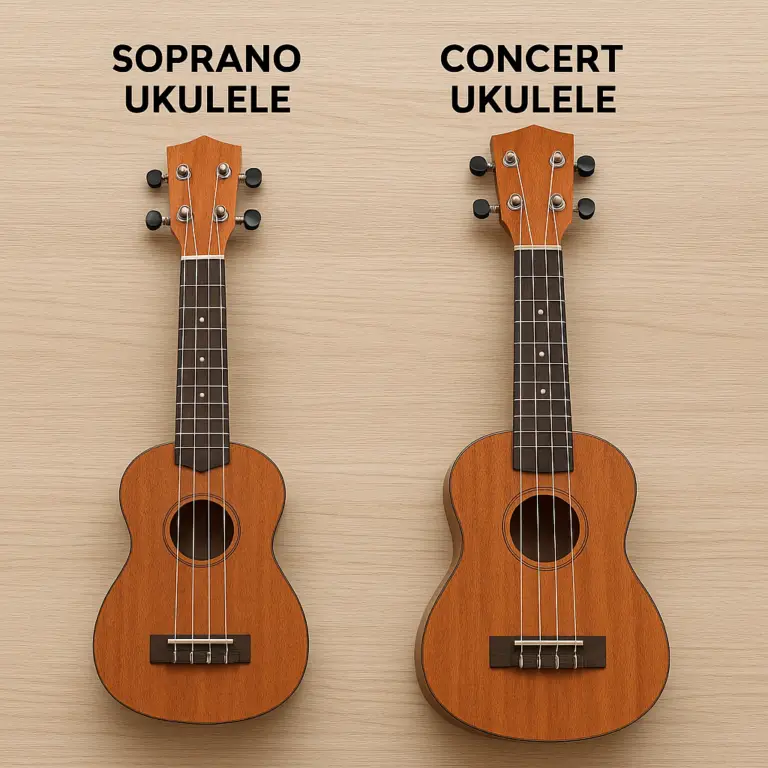
For most adult beginners, a concert ukulele is the best all-round starting point: it’s still compact, but its roomier fretboard can make chords more comfortable than on a soprano. If you have smaller hands or want the most portable instrument, try a soprano; if you want more fret space and a fuller sound, consider a tenor.
The best size is the one that feels good in your hands and makes you want to play. We’ve seen beginners reach for a soprano because it looks familiar, then switch to a concert after discovering that a little extra fretboard room makes chord changes less cramped.
The good news? Soprano, concert, and tenor ukules usually share standard G–C–E–A tuning, so the chord shapes you learn one generally transfer to the others. Baritone is the notable exception, with its lower, guitar-like D–G–B–E tuning.
Key Takeaways
- Concert is a reliable first choice for many adults because it balances comfort, portability, and sound.
- Soprano suits players who want a compact, bright-sounding ukulele—and can be an especially comfortable fit for children or smaller hands.
- Tenor offers more fretboard room and a fuller tone, making it worth trying if you have larger hands or want to fingerpick.
- Baritone has a different standard tuning from most beginner ukulele lessons, so check that it matches your learning goals.
- Try the instrument if you can: hand comfort, setup, and sound matter more than size labels alone.
Table of Contents
- ⚡ Quick Tips and Facts: Choosing a Beginner Ukulele Size
- 🎸 Ukulele Size Background: Four Main Sizes and Their Origins
- 📏 The 4 Main Ukulele Sizes, Compared
- 1. Soprano: The Classic, Compact Ukulele
- 2. Concert: Extra Fret Room Without Losing Ukulele Charm
- 3. Tenor: A Roomier Fretboard and Fuller Sound
- 4. Baritone: The Biggest Body and Lowest Standard Tuning
- 🔍 Which Ukulele Size Is Best for Beginners?
- 🖐️ How Hand Size, Finger Length, and Comfort Affect Your Choice
- 🎶 Ukulele Size and Tuning: GCEA, Low G, and DGBE
- 🔊 How Ukulele Size Changes Tone, Volume, and Playability
- 👧 Ukulele Sizes for Kids, Teens, and Adults
- 🛒 Buying Your First Ukulele: What to Check Beyond Size
- Playability: Action, Frets, and Neck Comfort
- Materials, Strings, and Build Quality
- Acoustic or Electric-Acoustic Ukulele?
- Starter Kits, Accessories, and Common Buying Mistakes
- 📊 Ukulele Size Comparison: A Beginner’s Quick-Reference Table
- ✅ How to Choose Your Ukulele Size: A Simple Decision Guide
- 🎼 Trying Different Ukulele Sizes Before You Buy
- 🧰 Beginner Ukulele Setup, Tuning, and Care
- 🎵 Your First Chords and Songs on Any Ukulele Size
- ✨ Conclusion
- 🔗 Recommended Links
- ❓ FAQ
- 📚 Reference Links
⚡️ Quick Tips and Facts: Choosing a Beginner Ukulele Size
For a closer look at instrument types and starter choices, see our guide to what kind of ukulele is best for beginners?. For most adult beginners, a concert ukulele is a safe first choice: it keeps standard ukulele tuning and familiar chord shapes while giving your fingers more room than a soprano. But “best” depends on the player, not a ruler.
| Size | Approx. overall length | Typical scale length* | Standard tuning | Usually suits |
|---|---|---|---|---|
| Soprano | 21 in / 53 cm | 13 in / 33 cm | G–C–E–A | Children, smaller hands, maximum portability |
| Concert | 23 in / 58 cm | 15 in / 38 cm | G–C–E–A | Many adult beginners seeking a comfortable all-rounder |
| Tenor | 26 in / 66 cm | 17 in / 43 cm | G–C–E–A | Larger hands, fingerstyle, fuller tone |
| Baritone | 29–30 in / 74–76 cm | 19 in / 48 cm | D–G–B–E | Guitarists and players who want a lower, guitar-like sound |
*Approximate measurements vary between makers and models. Yousician’s ukulele-size guide likewise treats size as a matter of comfort, sound, and playing goals—not a one-size-fits-all rule.
The quick take:
- ✅ Choose soprano if a small body and bright, traditional sound appeal to you, or if you’re shopping for a young child.
- ✅ Choose concert if you want a little more fretboard room without a much larger instrument.
- ✅ Choose tenor if you have larger hands, plan to fingerpick, or prefer a fuller sound.
- ⚠️ Choose baritone if its tuning and deeper tone are exactly what you want; many standard ukulele lessons use G–C–E–A, so the adjustment can be a speed bump.
- 🎶 Soprano, concert, and tenor usually share G–C–E–A tuning, so chord shapes and most beginner song tutorials transfer across them.
- 🖐️ If you can, hold a soprano and concert before buying. A comfortable instrument is more likely to leave the case and get played.
🎸 Ukulele Size Background: Four Main Sizes and Their Origins

Ukules come in more than one size because players want different combinations of portability, fretboard room, and tone. The familiar family runs from the small soprano to the larger concert and tenor, then to the baritone, whose low tuning gives it a distinct role.
The instrument’s history is closely tied to Hawai‘i. The Smithsonian’s National Museum of American History documents ukules in its collection, while Hawai‘i’s Bishop Museum preserves the islands’ cultural history and musical heritage. The ukulele developed from small Portuguese instruments brought to Hawai‘i in the 19th century; it became associated with Hawaiian music and later traveled into popular music around the world.
Why ukulele size isn’t just about body length
A larger ukulele generally has a longer scale—the vibrating string length from nut to bridge—and more space between frets. Its bigger body can also support a fuller, lower-register sound. But those are broad tendencies, not guarantees. Wood, body shape, strings, construction, and setup all influence the result.
That’s why two concert ukules can feel and sound different, even before you compare them with a tenor. A well-made, properly set-up soprano may be more comfortable and rewarding than a poorly adjusted larger instrument.
Beyond the four familiar sizes
You may also encounter sopranino, bass ukulele, and specialty designs. These can be fun, but they’re less common as first instruments. Bass ukules, such as Kala’s U•BASS range, use very thick, low-pitched strings and are designed for a different musical role—not as the default choice for learning basic ukulele chords.
📏 The 4 Main Ukulele Sizes, Compared
1. Soprano: The Classic, Compact Ukulele
The soprano is the smallest of the four common sizes and the sound many people picture when someone says “ukulele.” It’s light, portable, and typically has a bright, lively tone. Its compact dimensions can be especially handy for children or players who want an instrument that fits easily in a backpack.
What beginners tend to like
- Easy to carry and hold.
- A cheerful, classic ukulele sound.
- Standard G–C–E–A tuning on most models.
- A sensible option when portability matters most.
Possible drawbacks
- Closely spaced frets can feel cramped for larger fingers.
- The smaller body typically gives less bass and projection than larger sizes.
- Chord changes or fingerpicking may feel less comfortable if your hands need more room.
A soprano isn’t a “kids-only” instrument. Plenty of adults play them happily. The real test is whether your fingertips can fret notes cleanly without muting adjacent strings.
2. Concert: Extra Fret Room Without Losing Ukulele Charm
The concert is often the best starting point for adult beginners, thanks to its middle-ground size. It’s still compact, but its longer neck generally offers more space between frets than a soprano. Many players also find the body easier to brace comfortably against the torso.
Music retailer Terry Carter Music Store calls the concert a “perfect balance between comfort and sound projection.” That’s a helpful perspective, particularly for adults unsure whether a soprano will feel cramped. It is not a universal verdict, though: players with small hands may prefer the soprano, while those who want a roomier fretboard may gravitate to tenor.
What beginners tend to like
- More fret space than a soprano, without becoming bulky.
- A balanced tone that remains recognizably ukulele-like.
- Standard G–C–E–A tuning on most models.
- A good compromise for strumming, chord work, and casual fingerpicking.
Possible drawbacks
- Slightly less compact than a soprano.
- Still may feel small for players who strongly prefer a guitar-sized neck.
- “Concert” dimensions vary by brand, so check the actual measurements when possible.
3. Tenor: A Roomier Fretboard and Fuller Sound
A tenor gives your fretting hand extra space and often produces a fuller, more resonant sound than a soprano or concert. It’s a popular choice among adults, fingerstyle players, and guitarists who want a little more room under their fingers.
A tenor still commonly uses G–C–E–A, so most chord shapes and standard-tuned beginner resources remain familiar. Some players use a low-G string to extend the range downward; that changes the instrument’s sound and string feel, but not its basic tuning letters.
What beginners tend to like
- More room for chord shapes and melodic playing.
- A fuller tone and, on many models, more sustain.
- A comfortable option for larger hands.
- Wide choice of acoustic and acoustic-electric models.
Possible drawbacks
- Larger and less portable than soprano or concert.
- A low-G setup may sound less like the bright, re-entrant ukulele timbre some beginners expect.
- A longer neck does not automatically mean easier playing; action and setup still matter.
If you have large hands, don’t automatically jump straight to baritone. A tenor may provide the space you want while keeping the standard G–C–E–A tuning used by many ukulele lessons.
4. Baritone: The Biggest Body and Lowest Standard Tuning
The baritone is the largest of these four common sizes. It’s generally tuned D–G–B–E, matching the four highest-pitched strings of a guitar, rather than the standard G–C–E–A tuning used on soprano, concert, and tenor.
That tuning can make the baritone feel familiar to guitar players. But the same difference means you can’t assume that a standard ukulele chord chart or tutorial will give you the right shapes and pitch on a baritone without adjustment. If you love its mellow, lower sound, that trade-off may be worth it. If you want to follow the broadest range of standard ukulele beginner materials without translating anything, soprano, concert, or tenor is simpler.
What beginners tend to like
- Spacious fretboard and a larger body.
- Deep, mellow tone with a guitar-like quality.
- D–G–B–E tuning may feel intuitive to guitarists.
Possible drawbacks
- Larger body may be less comfortable for small players.
- Different tuning can complicate following standard ukulele chord charts.
- It sounds and feels less like the bright, compact ukulele many beginners expect.
🔍 Which Ukulele Size Is Best for Beginners?
Our practical recommendation: start with a concert ukulele if you’re an adult beginner and don’t have a strong preference yet. It’s a comfortable middle ground, offers more room than a soprano, and typically keeps the standard G–C–E–A tuning used by many lessons.
That said, there are three defensible answers:
- Concert for the most versatile first choice. It suits many adults and older teens who want a comfortable neck without a large instrument.
- Soprano for small players or maximum portability. If its fret spacing feels natural, there’s no reason to size up just because someone says adults “should” play concert.
- Tenor for larger hands or a roomier, fuller sound. It’s a sensible first instrument if you know that you prefer a longer fretboard.
The article from Yousician says, “There isn’t one single best-sized ukulele for beginners,” and we agree. Another beginner-focused source, Kala App, favors soprano or concert for many new players and emphasizes that comfort should decide between them.
These recommendations don’t actually conflict. They reflect different players: a small child may find a soprano easier to hold, while an adult with larger hands may prefer concert or tenor. Use size as a fit decision, not a skill level.
A quick decision guide
| If you… | Try first |
|---|---|
| Are buying for a young child | Soprano |
| Are an adult with no strong size preference | Concert |
| Have larger hands or want more fretboard space | Tenor |
| Play guitar and want a lower, familiar tuning | Baritone |
| Want the smallest, easiest-to-carry instrument | Soprano |
| Want standard tuning with more room to fingerpick | Concert or tenor |
One point is easy to miss: a bigger instrument may make chord placement more comfortable, but a proper setup can matter just as much as size. We’ll come back to that before you buy.
🖐️ How Hand Size, Finger Length, and Comfort Affect Your Choice
Hand size is a useful clue, but it isn’t a measurement test. A player with short fingers may prefer a concert because the fretboard offers more separation; someone with small hands may still love a soprano because its body and neck are easy to hold.
What to test with your fretting hand
Try these three checks in a shop or with a borrowed instrument:
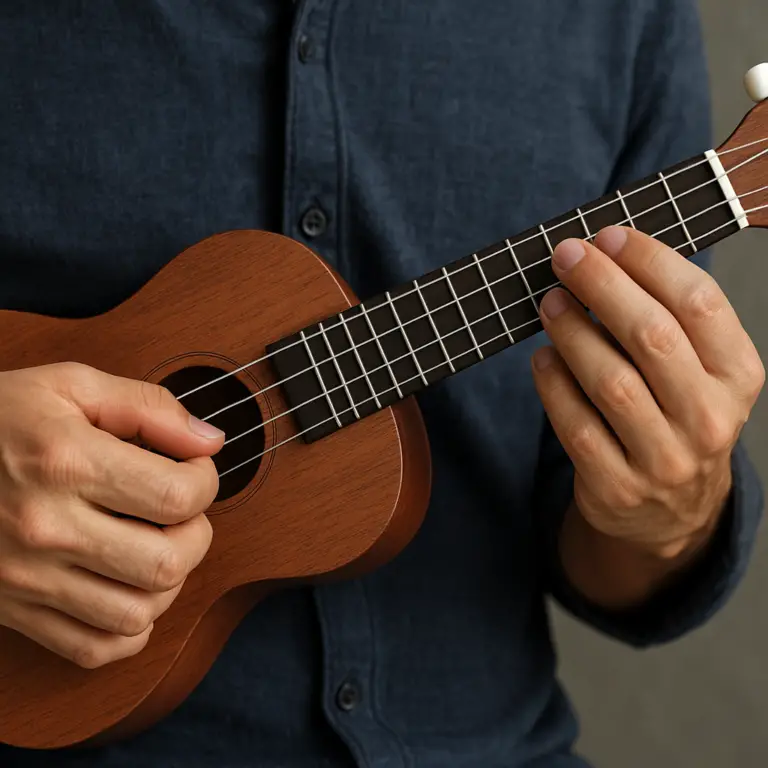
- Hold a simple C chord. On a standard-tuned soprano, that usually means fretting the A string at the third fret. Can you place your fingertip without touching neighboring strings?
- Change to F and G. These common chords use more than one finger. Notice whether your fingers bunch up or your wrist twists uncomfortably.
- Move a finger up the neck. Can you reach a few frets comfortably without squeezing hard or pulling your shoulder forward?
Your fingertips should land close behind the fret, not directly on top of it. If notes buzz or die, that can be technique or setup—not evidence that your hand is “wrong” for the instrument.
Comfort involves more than fret spacing
- Neck thickness and profile: Two instruments of the same size can feel very different.
- Body shape: A deep body may sit differently against your chest or arm.
- String action: High action—the height of the strings above the fretboard—can make every chord feel harder.
- Posture: If you have to grip the neck tightly or bend your wrist sharply, adjust how you hold the instrument before changing sizes.
For broader advice on making a confident first-instrument decision, browse our Guitar Buying Guide. The instrument differs, but the useful lesson carries over: comfort and playability beat a spec-sheet victory.
🎶 Ukulele Size and Tuning: GCEA, Low G, and DGBE
Standard G–C–E–A tuning
Soprano, concert, and tenor ukules most commonly use G–C–E–A tuning. In the common high-G setup, the G string is tuned an octave higher than a low G would be. This creates the bright, characteristic sound in which the strings don’t rise in pitch in a simple low-to-high order.
Because these sizes often share the same tuning, the chord shapes you learn one usually transfer to the others. The instrument’s physical size changes; the basic fingering pattern does not.
High G versus low G
A low-G string replaces the high G with a string one octave lower. It can add bass and make melodies span a wider downward range. The trade-off: it changes the instrument’s traditional high, sparkling sound and may require a string gauge and setup suited to low G.
| Setup | What you hear | Often suits |
|---|---|---|
| High G | Bright, familiar, re-entrant ukulele sound | Strumming, common beginner songs |
| Low G | Fuller lower register and a more linear range | Fingerstyle, melodic arrangements |
A low-G string is an option on many soprano, concert, and tenor ukules, but check that the instrument and strings are appropriate for the conversion. If you’re just starting out, standard high G keeps your setup simple.
Baritone D–G–B–E tuning
Baritone tuning matches the top four strings of a guitar. That can be a welcome bridge for guitarists, but it shifts the reference point for many ukulele chords and tutorials. Before buying, decide whether you want to adapt lessons to baritone or follow standard G–C–E–A materials as directly as possible.
🔊 How Ukulele Size Changes Tone, Volume, and Playability
A larger body and longer strings often support more low-end resonance and a fuller sound. A soprano tends to sound brighter and more compact; a tenor often sounds deeper and sustains notes longer. But don’t treat those patterns as guarantees. Materials, construction, strings, and setup all affect tone.
| Feature | Soprano | Concert | Tenor | Baritone |
|---|---|---|---|---|
| Typical tone | Bright, lively | Balanced, warm | Full, resonant | Deep, mellow |
| Fret spacing | Closest | Moderate | Roomiest among G–C–E–A sizes | Roomiest overall |
| Portability | Highest | High | Moderate | Lowest |
| Common tuning | G–C–E–A | G–C–E–A | G–C–E–A | D–G–B–E |
| Common beginner trade-off | Can feel cramped | Middle-ground choice | Larger body | Different tuning |
Volume isn’t the same as quality
A bigger instrument may project more, but more volume alone won’t make it easier to learn. A loud ukulele with high action can be a chore; a quiet, comfortable one may be much more enjoyable at home.
A personal shop-floor lesson
When we’ve handed beginners instruments to compare, the first reaction is often about sound: “That tenor feels fuller.” A minute later, the conversation changes to the fretting hand. Some players relax as soon as they pick up a concert; others discover the soprano is exactly the right fit. The best tone is the one you enjoy enough to keep playing.
👧 Ukulele Sizes for Kids, Teens, and Adults
Use these as starting points, not age rules. A child’s reach, strength, and comfort matter more than the birthday printed on a form.
| Player | A sensible first size to try | Why |
|---|---|---|
| Young child | Soprano | Small, light, and easier to hold |
| Older child | Soprano or concert | Choose by reach and fret comfort |
| Teen | Concert or tenor | More room as hands and musical goals develop |
| Adult | Concert or tenor | Comfortable middle ground, with room to grow |
| Guitar player | Tenor or baritone | Tenor keeps common G–C–E–A; baritone has guitar-like D–G–B–E |
The first video featured in the article makes the same practical point: size is subjective, and it recommends a soprano for children age six and under because smaller hands may reach its strings and frets more easily. It also suggests tenor as an option for people with very large hands. You can revisit that advice at #featured-video.
A child doesn’t need to “grow into” an oversized ukulele. If the body is awkward to hold or reaching the frets feels like a stretch, try a smaller instrument. On the other hand, a child who’s comfortable on concert can absolutely start there.
🛒 Buying Your First Ukulele: What to Check Beyond Size
Once you’ve narrowed down the size, check the instrument itself. A strong first ukulele doesn’t need elaborate decoration. It needs to stay in tune, feel comfortable, and let you fret notes without a wrestling match.
For beginner advice on choosing an instrument, our Guitar Buying Guide and Guitar Brand Guides offer more buying context across stringed instruments.
Playability: Action, Frets, and Neck Comfort
Action is the distance between the strings and frets. If it’s too high, pressing strings down can feel unnecessarily difficult—especially for a new player still building finger strength. Buzzing, uneven frets, sharp fret ends, or a neck that feels uncomfortable are also worth investigating.
Before committing:
- Check whether open strings ring clearly.
- Play a few notes up the neck and listen for buzzing or dead spots.
- Make sure the strings feel comfortable under your fingertips.
- Ask the shop whether the instrument has been checked and set up.
A beginner struggling with a hard-to-play instrument may blame their fingers. Often, the instrument needs attention. A basic setup by a qualified technician can make a noticeable difference.
Materials, Strings, and Build Quality
Common ukulele body materials include laminate wood, solid wood, and plastic or composite materials. Laminates can be practical and durable for a starter instrument; solid wood models may offer more nuanced resonance but need more care around humidity. The label alone doesn’t determine whether an instrument is comfortable or well made.
Brands such as Kala, Lanikai, Fender, and Cordoba offer instruments across a range of sizes and features. Try the particular model if possible, since brand reputation can’t substitute for checking an individual instrument.
Strings matter, too. Ukules often use nylon or fluorocarbon strings, and their feel and tone vary. New strings may need time to settle and retune frequently at first.
Acoustic or Electric-Acoustic Ukulele?
An acoustic ukulele is the straightforward choice for home practice, lessons, and casual strumming. An acoustic-electric ukulele adds a pickup so you can plug into an amplifier or recording setup. You don’t need electronics to learn, but they can be handy for performing.
If you’re comparing plugged-in instruments, check the pickup controls, battery requirements, and whether the amplified sound is something you actually need. A built-in tuner can be convenient, but a separate clip-on tuner works across many instruments.
Starter Kits, Accessories, and Common Buying Mistakes
Useful beginner accessories:
- Clip-on tuner: Helps you tune accurately.
- Padded gig bag: Protects the instrument during transport.
- Spare strings: Handy when a string wears out or breaks.
- Music stand: Encourages better posture when reading chords or lessons.
- Humidifier or case hygrometer: Useful for players in very dry homes, especially with solid-wood instruments.
Avoid these common traps:
- ❌ Buying the smallest size automatically because you’re new.
- ❌ Choosing baritone without checking how its tuning fits your lessons.
- ❌ Assuming an expensive instrument is automatically easier to play.
- ❌ Ignoring high action, buzzing, or poor tuning stability.
- ✅ Trying the actual instrument and asking about its setup.
📊 Ukulele Size Comparison: A Beginner’s Quick-Reference Table
Here’s the whole decision in one glance. Measurements are approximate; makers and models can vary by a couple of inches.
| Size | Approx. length | Typical scale | Fretboard feel | Sound character | Beginner verdict |
|---|---|---|---|---|---|
| Soprano | 21 in / 53 cm | 13 in / 33 cm | Compact | Bright and traditional | Great for small hands and portability |
| Concert | 23 in / 58 cm | 15 in / 38 cm | Roomier than soprano | Balanced and warm | Best all-round starting point for many adults |
| Tenor | 26 in / 66 cm | 17 in / 43 cm | Spacious | Full and resonant | Strong choice for larger hands and fingerstyle |
| Baritone | 29–30 in / 74–76 cm | 19 in / 48 cm | Largest | Deep and mellow | Great for guitarists; know the tuning difference |
A useful visualization is to imagine the soprano as the easy-to-carry pocket companion, the concert as the comfy everyday chair, the tenor as the roomier studio seat, and the baritone as the instrument that arrived with a guitar’s low end. None is “better” in every context.
✅ How to Choose Your Ukulele Size: A Simple Decision Guide
Follow this step-by-step process instead of guessing from pictures:
- Decide what you want to learn. If you plan to follow standard ukulele lessons and chord charts, start with soprano, concert, or tenor in G–C–E–A.
- Match the body to the player. For a young child or someone who values a very compact instrument, try soprano first. For many adults, compare concert and tenor.
- Test a few chord shapes. Try C, F, and G. Look for clean notes and relaxed hand position, not instant perfection.
- Listen to the tone. Soprano tends brighter; tenor and baritone tend fuller, though construction and strings matter.
- Check tuning and setup. Confirm the tuning and ask whether the action and frets have been inspected.
- Choose the instrument you’ll enjoy picking up. A small, bright soprano may inspire one player; a full-bodied tenor may inspire another.
If you’re still undecided
Our default advice is concert for an adult who wants one dependable first ukulele. Choose soprano if it fits your hands and your priorities are portability and a classic sound. Choose tenor if you know you want additional room, a fuller voice, or more space for fingerstyle.
The sources that favor soprano, concert, or tenor are describing different needs. Terry Carter Music Store leans concert for comfort and projection; Yousician recommends considering concert or tenor for longer-term comfort while recognizing soprano as a valid beginner instrument. Trust the shared advice: try what feels natural, then check tuning and setup.
🎼 Trying Different Ukulele Sizes Before You Buy
If you have access to a music shop, spend ten minutes comparing sizes. You don’t need to know a song. You need only a few simple checks.
- Hold each instrument in playing position. Check whether the body rests comfortably against you.
- Play a few open strings. Listen for clear notes and comfortable string tension.
- Try the same chord on each. Notice whether your fingers have room and whether your wrist stays relaxed.
- Move up the neck. Try a melody or a few single notes.
- Compare tone and volume at the same playing intensity.
- Ask about setup and return terms. A shop’s technician may spot an issue that’s hard for a beginner to identify.
The presenter in the featured video also recommends trying different sizes in person instead of letting price decide the question. We agree: your hands and ears are better judges than a product photo.
If you can’t visit a store, check the manufacturer’s published scale length and return policy, and buy from a seller that clearly states the tuning, size, and setup condition.
🧰 Beginner Ukulele Setup, Tuning, and Care
Tune before you play
A ukulele that’s out of tune can make a correct chord sound wrong. Use a clip-on tuner or a reliable tuning app and check the open strings in order: G–C–E–A for most soprano, concert, and tenor ukules. A baritone is commonly D–G–B–E.
New strings stretch as they settle, so expect to retune frequently at first. That’s normal; it doesn’t necessarily mean the tuners are faulty.
Keep it comfortable and safe
- Wipe the strings and body with a soft, dry cloth after playing.
- Store the instrument in a case or gig bag when it’s not in use.
- Avoid leaving it in a hot car or in direct sunlight.
- If your ukulele has solid wood, protect it from extreme dryness and sudden humidity changes.
- Change strings when they’re worn, damaged, or no longer holding tune reliably.
For instrument-care principles shared across the wider string family, our Acoustic Guitars and Guitar Brand Guides sections offer related buying and maintenance advice.
🎵 Your First Chords and Songs on Any Ukulele Size
On a soprano, concert, or tenor tuned G–C–E–A, you can start with familiar open chords such as C, Am, F, and G. The physical instrument may feel different, but the chord shapes usually carry over between these sizes.
A simple practice routine:
- Tune the instrument.
- Place one chord shape and pluck each string slowly to check for muted notes.
- Change between two chords without stopping.
- Strum gently with a steady down-up motion.
- Practice for a short, regular stretch rather than forcing a long session with sore fingers.
Most importantly, don’t let your first buzy chord turn into a courtroom drama about your hands. Check your fingertip placement, relax your grip, and confirm the instrument’s setup. If a note still refuses to ring, ask an experienced player or technician to inspect it.
A baritone can also play familiar songs, but its D–G–B–E tuning means the chord shapes and reference charts may differ. Choose it because you want that tuning and sound, not because you assume it’s just a larger standard ukulele.