Support our educational content for free when you purchase through links on our site. Learn more
What Should I Look for in a Beginner Ukulele? 🎸

What should I look for in a ukulele for beginners? Start with one that feels comfortable, stays in tune, and has low, buzz-free action. A concert ukulele is a versatile first pick for many adults, while a soprano suits players who want a smaller, brighter instrument.
When we help someone choose their first uke, we ask them to play a few simple chords on more than one size. Often, the instrument they expected to love isn’t the one they want to put down. Comfort and sound beat a flashy finish every time.
Don’t worry if a new ukulele needs frequent tuning at first: fresh strings commonly stretch as they settle. But persistent buzzing, slipping tuners, or difficult fretting deserve a closer look before you buy.
Key Takeaways
- Prioritize playability: Look for comfortable action, smooth frets, stable tuners, and notes that play in tune up the neck.
- Choose by feel and sound: Compare soprano, concert, and tenor sizes if you can; hand size alone doesn’t dictate the best fit.
- Keep materials in perspective: A well-made laminate can be an excellent beginner instrument; solid wood isn’t a requirement.
- Buy useful essentials: A clip-on tuner and a properly sized gig bag are more helpful than a bundle full of extras.
- Compare trusted brands: Explore beginner-friendly options from Kala, Lanikai, Cordoba, and Enya.
Table of Contents
- ⚡️ Quick Tips and Facts
- 🎸 Ukulele Basics: Sizes, Strings, and Sound
- Soprano, concert, tenor, and baritone ukules
- Ukulele tuning and string materials
- 🔍 What Should You Look for in a Ukulele for Beginners?
- 1. Comfortable size and neck feel
- 2. Reliable tuning and quality tuners
- 3. Good intonation and playable action
- 4. Solid construction and dependable materials
- 5. A sound you enjoy hearing
- 6. Beginner-friendly strings
- 7. Useful extras in a ukulele starter kit
- 8. A sensible budget and room to grow
- 🪵 Ukulele Tonewoods and Body Materials Explained
- Mahogany, koa, spruce, and other common woods
- Solid wood versus laminate ukules
- Plastic and travel ukules
- 🏷️ Good Ukulele Brands for Beginners
- Kala, Lanikai, Cordoba, Enya, and other brands
- How to compare beginner ukulele models
- 🛒 Buying a Beginner Ukulele Online or In-Store
- What to check when trying a ukulele in person
- What photos, specs, and reviews can tell you online
- New versus used ukules
- 🎒 Ukulele Starter Kits: What You Need and What You Don’t
- Gig bags, tuners, straps, and picks
- Tuner apps and essential accessories
- 🎼 Acoustic or Electric Ukulele?
- When an electro-acoustic ukulele makes sense
- 🧰 Setup, Tuning, and Care for a New Ukulele
- Why new ukulele strings may keep slipping
- Basic setup checks and when to see a repair technician
- Humidity, storage, and routine cleaning
- ❌ Beginner Ukulele Buying Mistakes to Avoid
- 🎵 Choosing a Ukulele for Your Playing Style
- Small hands, large hands, and younger players
- Strumming, fingerpicking, and singing along
- ✅ Conclusion
- 🔗 Recommended Links
- ❓ FAQ
- What is the easiest ukulele size for a beginner?
- Is a soprano or concert ukulele better for beginners?
- How much should a beginner spend on a ukulele?
- Are cheap ukules worth buying?
- Do beginners need a ukulele starter kit?
- How often should I tune a new ukulele?
- Can adults learn on a soprano ukulele?
- Should a beginner choose an acoustic or electric ukulele?
- 📚 Reference Links
Table of Contents
- ⚡️ Quick Tips and Facts
- 🎸 Ukulele Basics: Sizes, Strings, and Sound
- Soprano, concert, tenor, and baritone ukules
- Ukulele tuning and string materials
- 🔍 What Should You Look for in a Ukulele for Beginners?
- 1. Comfortable size and neck feel
- 2. Reliable tuning and quality tuners
- 3. Good intonation and playable action
- 4. Solid construction and dependable materials
- 5. A sound you enjoy hearing
- 6. Beginner-friendly strings
- 7. Useful extras in a ukulele starter kit
- 8. A sensible budget and room to grow
- 🪵 Ukulele Tonewoods and Body Materials Explained
- Mahogany, koa, spruce, and other common woods
- Solid wood versus laminate ukules
- Plastic and travel ukules
- 🏷️ Good Ukulele Brands for Beginners
- Kala, Lanikai, Cordoba, Enya, and other brands
- How to compare beginner ukulele models
- 🛒 Buying a Beginner Ukulele Online or In-Store
- What to check when trying a ukulele in person
- What photos, specs, and reviews can tell you online
- New versus used ukules
- 🎒 Ukulele Starter Kits: What You Need and What You Don’t
- Gig bags, tuners, straps, and picks
- Tuner apps and essential accessories
- 🎼 Acoustic or Electric Ukulele?
- When an electro-acoustic ukulele makes sense
- 🧰 Setup, Tuning, and Care for a New Ukulele
- Why new ukulele strings may keep slipping
- Basic setup checks and when to see a repair technician
- Humidity, storage, and routine cleaning
- ❌ Beginner Ukulele Buying Mistakes to Avoid
- 🎵 Choosing a Ukulele for Your Playing Style
- Small hands, large hands, and younger players
- Strumming, fingerpicking, and singing along
- ✅ Conclusion
- 🔗 Recommended Links
- ❓ FAQ
- What size ukulele is easiest for beginners to play?
- Should beginners choose a soprano or concert ukulele?
- What features should I look for when buying a beginner ukulele?
- Is a ukulele a good instrument to learn before playing guitar?
- Do I need a solid-wood ukulele as a beginner?
- Why does my new ukulele keep going out of tune?
- 📚 Reference Links
⚡️ Quick Tips and Facts
If you’re also comparing sizes and styles, our guide to what kind of ukulele is best for beginners? is a useful companion. At Guitar Brands™, we’ve helped players choose their first small-bodied string instrument, and our most consistent advice is refreshingly simple: pick the ukulele that feels comfortable, stays in tune, and makes you want to play it again tomorrow.
| Beginner priority | What to look for | Why it matters |
|---|---|---|
| Size and comfort | Try soprano and concert first; consider tenor if you want more fret space | A comfortable instrument makes chord practice less of a finger-twister |
| Tuning | Smooth, stable geared tuners and standard G–C–E–A tuning | Frequent tuning trouble can make early practice frustrating |
| Playability | Low, clean action without buzzing | You shouldn’t need a grip like a climbing carabiner to fret a chord |
| Sound | Clear notes, even volume, pleasing tone | You’ll practice more when you like what you hear |
| Build | Clean fret ends, secure bridge, no cracks or loose hardware | Construction problems can affect comfort, tuning, and durability |
| Extras | A decent gig bag and clip-on tuner are useful | A long accessory list is less valuable than a well-set-up uke |
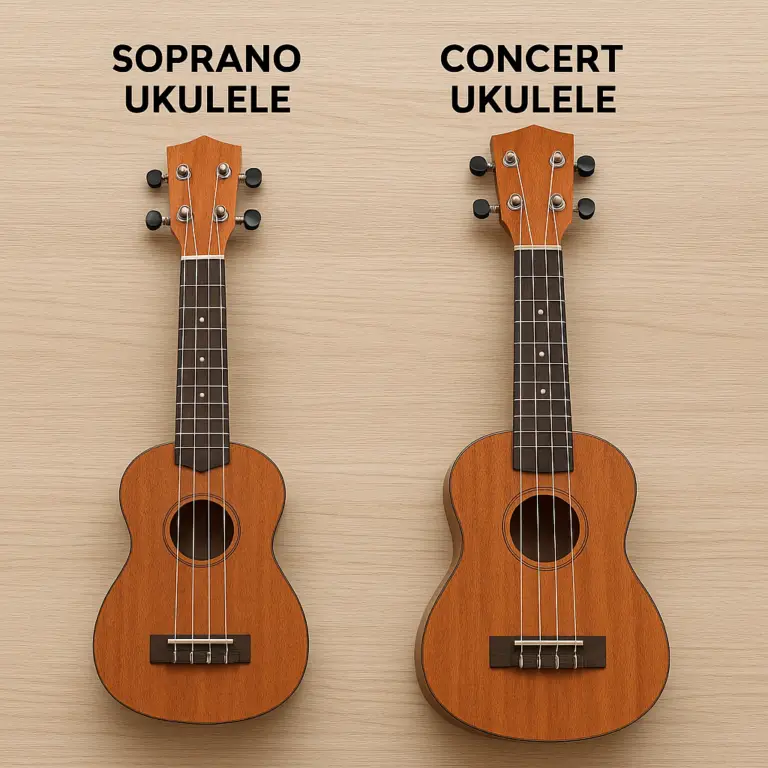
Our quick recommendation: a well-made concert-size ukulele is a sensible first instrument for many adults: it’s still compact, but offers a little more room than a soprano. That said, plenty of beginners love soprano ukes, and a tenor may suit players who prefer wider fret spacing. There are no hand-size rules carved into the headstock.
One detail many first-time buyers overlook? A low-cost instrument that feels hard to play can make a simple C chord seem like a personal feud. We’ll show you how to spot that before you buy.
🎸 Ukulele Basics: Sizes, Strings, and Sound
A ukulele is a small, fretted string instrument, but “ukulele” doesn’t describe just one size or sound. The main choices are soprano, concert, tenor, and baritone. The first three commonly use G–C–E–A tuning; baritone is generally tuned D–G–B–E, like the highest four strings of a guitar. The Ukulele Hall of Fame Museum and instrument makers’ guides offer helpful context on the instrument’s history and family.
If you’re already exploring acoustic guitars, many of the buying instincts carry over: check comfort, construction, and whether the instrument holds its tuning. But a ukulele’s compact scale and nylon-based strings give it a different feel.
Soprano, concert, tenor, and baritone ukules
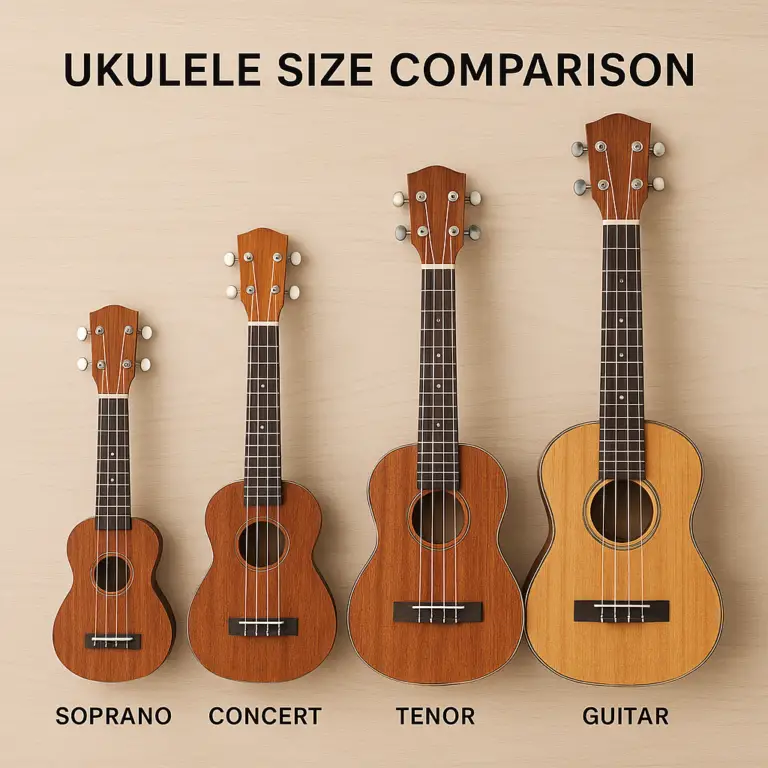
The sizes below are typical ranges, not a manufacturing law. Exact measurements vary by model, and brands may describe their instruments slightly differently.
| Size | Approx. scale length | Typical character | Best for |
|---|---|---|---|
| Soprano | About 13 inches | Bright, compact, traditional ukulele sound | Players who want the smallest, most portable option |
| Concert | About 15 inches | A bit more body and fret room | Many adult beginners and players wanting a versatile middle ground |
| Tenor | About 17 inches | Fuller, often more sustained sound; more fret space | Fingerstyle, larger hands, or a roomier feel |
| Baritone | About 19 inches | Deper, guitar-like sound | Guitarists or players who prefer lower register and familiar chord shapes |
Those are approximate scale lengths; Kala’s ukulele size guide provides a useful maker’s overview. Soprano, concert, and tenor instruments usually share the same chord shapes when tuned alike. Baritone’s different tuning changes the chord shapes, so don’t buy one assuming every beginner ukulele lesson will match exactly.
A useful perspective from Uketropolis’ buying guide is that size should be chosen by sound and comfort, rather than by a strict rule about hand size. That’s good advice: a player with large hands can enjoy a soprano, while someone with small hands may prefer the extra space of a concert.
Ukulele tuning and string materials
Standard re-entrant tuning for soprano, concert, and many tenor ukules is G–C–E–A, with the G string often tuned higher than the C string. This gives the familiar bright, buoyant ukulele sound. Some players use low-G tuning, where the G string is an octave lower, for a wider, more linear range. Check the instrument and string set before switching: a low-G string may need a wound or specially designed string.
| Tuning choice | String order, from G to A | What you’ll hear |
|---|---|---|
| Re-entrant high G | High G–C–E–A | Bright, classic ukulele character |
| Linear low G | Low G–C–E–A | More low-end range and smoother note-by-note runs |
| Baritone standard | D–G–B–E | Lower register, guitar-like tuning relationship |
Most beginner ukules come with nylon, fluorocarbon, or other synthetic strings. Their feel and tone vary by brand and set. New strings often stretch and settle during the first days of playing, so frequent retuning at first is normal. The Fender tuning guide explains the basic tuning process.
🔍 What Should You Look for in a Ukulele for Beginners?
The best first ukulele isn’t necessarily the fanciest, loudest, or covered in the most convincing tropical graphics. Look for reliable tuning, comfortable playability, solid construction, and a sound you enjoy. For more buying advice across instruments, browse our Guitar Buying Guide.
1. Comfortable size and neck feel
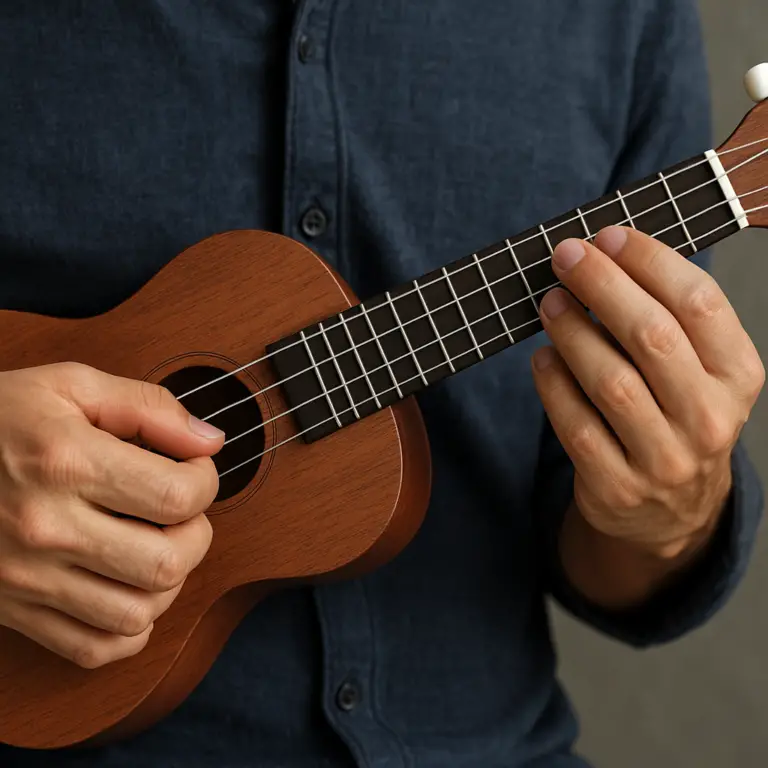
Hold the instrument as you naturally would while sitting or standing. Your fretting hand should reach the first few frets without a strained wrist, and your strumming arm should rest comfortably over the body. A quick size test:
- Hold a soprano and a concert if possible.
- Rest the ukulele against your torso and support the neck lightly.
- Place your fingertips on a few basic chord shapes, such as C, F, and G.
- Notice whether your fingers crowd together or your wrist twists awkwardly.
- Strum a steady down-up pattern and see whether the body stays secure.
At a music shop, try an instrument for more than thirty seconds. As Uketropolis puts it, “Buying an ukulele is like buying a pair of shoes.” The comparison works: looks are no substitute for a comfortable fit. If you’re ordering online, confirm the seller’s return or exchange policy before clicking buy.
2. Reliable tuning and quality tuners
Most modern ukules use geared machine heads. Turn each peg slowly: it should move smoothly, without grinding, slipping, or feeling unusually loose. Enclosed tuners can help keep dust out; open-gear tuners are also perfectly usable if they’re well made.
A ukulele that goes out of tune constantly may have new strings that haven’t settled, loose tuners, a slipping knot, or another setup issue. Don’t judge tuning stability from one quick strum. Tune carefully, play for a while, and check again.
3. Good intonation and playable action
Action is the height of the strings above the frets. High action can make notes harder to press; extremely low action can cause buzzing. Intonation is how accurately the instrument plays in tune along the neck.
Try this simple test:
- Tune each open string.
- Play the same string at the 12th fret.
- Compare the fretted note with its octave.
- Play a few familiar chords near the first and fifth frets.
- Listen for notes that sound sharply or flatly out of place.
A phone tuner can help, though small instruments and noisy rooms can confuse microphone-based apps. If a beginner ukulele is difficult to fret or sounds noticeably out of tune higher up the neck, ask a technician to inspect it. That can be a setup issue, not a reason to abandon the instrument.
4. Solid construction and dependable materials
Inspect the instrument closely. Look for:
- A bridge that sits flat and secure
- A straight-looking neck
- Frets that don’t protrude sharply at the edges
- No cracks, lifted seams, or loose hardware
- Cleanly cut nut and saddle slots
- A finish without obvious damage or rough patches
A modest laminate ukulele can be a better beginner purchase than a poorly made solid-wood one. Construction and setup matter more than a premium-sounding material label.
5. A sound you enjoy hearing
Tone is personal. A soprano may sound bright and “plucky”; a larger-bodied concert or tenor can sound fuller, though the exact result depends on construction, strings, and setup. Strum open chords and single notes, then listen from a few feet away if you can. The sound you hear behind the instrument can differ from what someone else hears across the room.
We’ve watched players choose the prettiest instrument, play one chord, then quietly reach for another. Choose with your ears as well as your eyes.
6. Beginner-friendly strings
A good stock string set should feel comfortable and produce clear notes. Nylon and fluorocarbon are common; neither is automatically best for every player. If the strings feel rough, excessively stiff, or uncomfortable, ask a shop about a suitable replacement set rather than swapping blindly.
For a standard first setup, keep the instrument’s intended tuning and string gauge. Changing to low-G or a very different string type can affect tension and may require a setup check.
7. Useful extras in a ukulele starter kit
Useful kit items include:
- Gig bag: protects against bumps and dust
- Clip-on tuner: quick, readable tuning in a busy room
- Spare strings: handy once you know the correct set
- Instruction book or lessons: helps you build a practice routine
Less essential: a pile of novelty picks, an elaborate strap system, or an accessory bundle that distracts from the instrument’s actual quality. Most players strum a ukulele with their fingers, though picks are a matter of preference. We cover kits and accessories in more detail below.
8. A sensible budget and room to grow
Buy the best playable, properly checked instrument that fits your budget, but don’t assume the costliest option is automatically the right first choice. Uketropolis recommends prioritizing sound and comfort and cautions against “break[ing] the bank.” Its article discusses higher-end entry-level instruments and solid-wood handmade models, but those are not requirements for a beginner.
A sensible decision framework:
| Your situation | What to prioritize |
|---|---|
| Testing the waters | Dependable setup, return policy, tuner |
| Practicing regularly | Comfortable size, stable tuning, quality frets |
| Performing or recording | Stronger projection, pickup options, consistent intonation |
| Traveling often | Durable body, fitted case, climate tolerance |
The turning point isn’t a magical price bracket. It’s whether the ukulele invites you to practice—and whether it stays pleasant to play as your skills grow.
🪵 Ukulele Tonewoods and Body Materials Explained
Tonewood discussions can get heated fast. We recommend treating wood as one factor among several, alongside body design, build quality, strings, and setup. A material name alone can’t guarantee a sound.
Mahogany, koa, spruce, and other common woods
| Material | Common impression | Beginner notes |
|---|---|---|
| Mahogany | Warm, balanced, and often mid-focused | Common on beginner and intermediate models |
| Koa | A traditional Hawaiian wood; often clear and articulate | Appearance and tone vary; not a beginner requirement |
| Spruce top | Can sound bright and responsive | Often paired with other woods for the back and sides |
| Sapele | Similar broad tonal family to mahogany | A common, practical alternative |
| Maple | Often clear and visually striking | The full instrument design still determines much of the sound |
These are general descriptions, not guarantees. A well-built instrument with a different wood can sound more appealing than a poorly made instrument with a celebrated one. For background on a brand’s materials and construction, see Kala’s ukulele buying guide.
Solid wood versus laminate ukules
A solid-wood instrument uses solid wood panels; a laminate uses layered material. Solid wood is often valued for its acoustic response and may change in character with age, but it can be more sensitive to humidity and temperature. Laminate is often more practical for travel and everyday handling.
| Construction | Advantages | Trade-offs |
|---|---|---|
| Laminate | Often durable and less fussy for casual use | May offer less acoustic complexity than a comparable solid-wood instrument |
| Solid top | Can provide a more responsive sound | Requires more mindful storage; quality still varies |
| All solid wood | Potentialy rich, resonant response | Higher care demands; not necessary for a first instrument |
A beginner does not need an all-solid-wood ukulele. A good laminate or solid-top model can be an excellent first instrument.
Plastic and travel ukules
Plastic-bodied models, such as the Enya Nova U, can suit beach trips, camping, or players who want a more weather-tolerant instrument. They’re convenient, but their sound and feel differ from conventional wood-bodied ukules.
Consider one if portability and resilience matter more to you than traditional acoustic character. For a home practice instrument, compare the feel and tone against a wooden model before deciding.
🏷️ Good Ukulele Brands for Beginners
A brand name can help narrow the field, but it can’t replace checking the specific model and its setup. These established makers offer beginner-friendly options across sizes and styles.
Kala, Lanikai, Cordoba, Enya, and other brands
| Brand | Why beginners consider it | What to compare |
|---|---|---|
| Kala | Broad selection, common starter models, several sizes | Model-specific setup and included accessories |
| Lanikai | Offers soprano, concert, tenor, and other options | Neck feel, hardware, and exact model features |
| Cordoba | Known for nylon-string instruments and ukules | Body size, finish, and whether it includes electronics |
| Enya | Acoustic and travel-friendly designs | Material preference and instrument feel |
| Fender | Recognizable brand with ukulele models and accessories | Confirm size, tuning, and included gear |
| Luna | Distinctive visual designs and multiple body styles | Don’t let decoration outrank playability |
| Oscar Schmidt | Long-running line of affordable string instruments | Check the exact model and current specifications |
These names are a starting point, not a ranked verdict. Individual examples can differ, and even a respected brand can ship an instrument that needs adjustment. Our Guitar Brand Guides cover more brand comparisons across the instrument family.
How to compare beginner ukulele models
Use this checklist when comparing two models:
- Match the size and tuning. Don’t compare a soprano with a baritone as if they were interchangeable.
- Check the nut width and scale length. These affect how the neck feels in your hand.
- Confirm body material and construction. Decide whether portability or traditional wooden tone matters more.
- Look for electronics only if you need them. A built-in pickup adds usefulness for amplification, but not necessarily better unpluged sound.
- Read recent owner reviews critically. Look for repeated comments about tuning, sharp frets, buzzing, or damaged shipping.
- Check the seller’s return policy. A quick exchange can save a lot of frustration.
The best brand is the one whose specific instrument passes your comfort and playability checks. That’s less glamorous than choosing by logo—but far more useful.
🛒 Buying a Beginner Ukulele Online or In-Store
Trying instruments in person is ideal, but online buying can work well if the seller provides detailed specifications, a clear return policy, and safe shipping. Uketropolis recommends spending time trying different instruments and says, “if I start playing and I can’t put it down, it’s the one for me!” We like that test. It measures something spec sheets can’t.
What to check when trying a ukulele in person
Take five to ten minutes with each instrument:
- Hold it seated and standing.
- Check whether the neck feels comfortable and the body stays put.
- Play several open chords and a few single notes.
- Listen for rattles, buzzing, and uneven volume.
- Turn the tuners and check that they move smoothly.
- Ask whether the shop can make a basic setup adjustment.
If you don’t know any chords yet, ask a staff member to play the same short passage on a few ukules. You can still compare tone, volume, and feel.
What photos, specs, and reviews can tell you online
Before ordering, verify:
- Size and scale length
- Tuning and string configuration
- Body materials
- Whether a case or tuner is included
- Seller return and warranty terms
- How the instrument is packed and shipped
Reviews are most helpful when they describe a specific issue—such as a slipping tuner or sharp fret edge—rather than simply saying “amazing!” or “terrible!” Look for patterns across multiple reviews, and check whether the review concerns the exact size and model you’re considering.
The Reverb buying-guide video, “Which Ukulele Should You Buy?”, is another useful overview of common ukulele choices. It won’t inspect the exact instrument you order, so pair general advice with seller details and a return policy.
New versus used ukules
A used ukulele can offer good value, but inspect it carefully or buy from a seller who accepts returns. Check for:
- Cracks, loose seams, and bridge lifting
- Bent or damaged tuners
- Deep fret wear
- Neck distortion or buzzing
- Evidence of water or heat damage
- Missing electronics or accessories, if advertised
For a first-time buyer, a shop-checked used instrument may be a safer choice than a very cheap private-sale listing with no inspection. If you’re also considering other string instruments, browse our Guitar Brands Showcase for more brand and model coverage.
🎒 Ukulele Starter Kits: What You Need and What You Don’t
Starter bundles vary widely. Some include genuinely useful essentials; others pad the box with accessories you may never touch. Judge the instrument first, bundle second.
Gig bags, tuners, straps, and picks
| Accessory | Useful? | What to look for |
|---|---|---|
| Gig bag | Yes | Padding, a secure zipper, and a fit for your exact size |
| Clip-on tuner | Very useful | Clear display and ukulele-compatible tuning modes |
| Strap | Optional | Check for strap buttons or a suitable strap attachment |
| Picks | Optional | Many players prefer finger strumming |
| Spare strings | Helpful | Confirm they match your size and tuning |
| Cleaning cloth | Handy | A soft, non-abrasive cloth is enough for routine cleaning |
A thin dust cover is not the same as a padded gig bag. If you plan to carry the instrument around, inspect the bag’s padding and neck support instead of counting “included case” as a guaranteed win.
Tuner apps and essential accessories
A phone tuner app can be a convenient starting point. A clip-on tuner is easier to read in some settings and doesn’t depend on your phone microphone picking out the uke in a noisy room. Either way, tune slowly and one string at a time.
For a beginner, the short essential list is:
- A ukulele that plays comfortably
- A reliable tuner or tuner app
- A case if you’ll travel with it
- A lesson resource or simple chord chart
You can add the rest after you know what kind of player you’re becoming.
🎼 Acoustic or Electric Ukulele?
An acoustic ukulele is the simplest first choice for playing at home, on the couch, or around a small group. An electric or electro-acoustic model makes more sense if you expect to plug into an amplifier, PA system, or recording setup.
| Type | Benefits | Trade-offs |
|---|---|---|
| Acoustic | Simple, portable, no cables or power needed | Limited projection in a loud room |
| Electro-acoustic | Can plug into amplification or recording gear | Electronics add cost and require extra equipment |
| Solid-body electric | Useful for amplified effects and quieter practice with compatible gear | Different feel and sound; not the traditional unpluged experience |
When an electro-acoustic ukulele makes sense
Choose an electro-acoustic model if you have a clear use for amplification—performances, open-mic nights, or recording. Check whether it includes a tuner, volume controls, and tone controls, and ask how it sounds unpluged.
If you’re only learning basic chords in your room, you don’t need electronics to get started. Spend your attention on setup and feel first.
🧰 Setup, Tuning, and Care for a New Ukulele
A new instrument may need a little settling-in. Strings stretch, wood responds to its environment, and shipping can shift small adjustments. Start with tuning and a basic inspection before deciding that the ukulele is defective.
Why new ukulele strings may keep slipping
Fresh strings can stretch during the first several practice sessions. Tune the instrument, play gently for a few minutes, and retune. Repeat as needed. If one string continues dropping dramatically, inspect the tuner and the string’s attachment at the bridge and tuning peg.
Avoid yanking strings hard to “speed up” the process. It’s safer to tune in small steps and let the strings settle naturally.
Basic setup checks and when to see a repair technician
A comfortable setup should let you fret notes without excessive pressure while avoiding persistent buzzing. Check:
- Tuning: use a reliable tuner and the correct reference pitch.
- String seating: make sure strings sit correctly at the nut and saddle.
- Fret edges: feel gently along the neck edges for sharp protrusions.
- Buzzing: play each string open and at several frets.
- Intonation: compare open strings with notes at the 12th fret.
If the instrument has a high nut, high action, a loose bridge, or persistent buzzing, ask a qualified repair technician to inspect it. Don’t file the nut or saddle as your first DIY project. Small adjustments can have large effects.
Humidity, storage, and routine cleaning
Wood instruments can react to temperature and humidity changes. Store a wooden ukulele away from radiators, hot cars, direct sunlight, and damp spaces. Wipe fingerprints and sweat away with a soft cloth after playing.
Plastic-bodied travel models are often more forgiving, but avoid leaving any instrument in extreme heat. The Fender instrument-care resources offer general maintenance guidance; follow the care instructions supplied with your specific ukulele.
❌ Beginner Ukulele Buying Mistakes to Avoid
Ster clear of these common traps:
- Choosing only by appearance. A striking finish can’t compensate for difficult playability.
- Assuming the smallest size is always best. Try concert and tenor too.
- Buying an instrument with uncomfortable action. Beginners need a setup that encourages practice.
- Expecting new strings to stay perfectly tuned immediately. They commonly need time to settle.
- Confusing baritone tuning with standard ukulele tuning. Check the tuning before buying lessons or strings.
- Overpaying for accessories you don’t need. A useful tuner beats a dozen novelty extras.
- Trusting a brand name without checking the model. Quality and features vary within a brand.
- Ignoring the return policy. Online orders can arrive with shipping damage or setup problems.
- Treating tonewood claims as guarantees. Playability and construction matter more than a label.
A beginner instrument should make practice easier, not turn each chord into a troubleshooting session.
🎵 Choosing a Ukulele for Your Playing Style

The right first ukulele depends partly on what you want to play. Sing-along strumming, fingerstyle melodies, travel practice, and amplified performance can point toward different features.
Small hands, large hands, and younger players
A soprano may suit a player who wants a compact instrument, but hand size alone doesn’t decide the matter. Concert and tenor sizes offer more fret spacing, which some players find easier; others prefer a smaller neck. Try the instrument if possible rather than trusting a size rule.
For children, check that the instrument is comfortable to hold and that the strings are easy to fret. Avoid buying an extremely small toy instrument if the goal is learning: poor tuning and difficult playability can make practice needlessly discouraging.
Strumming, fingerpicking, and singing along
| Main goal | Features worth considering |
|---|---|
| Chord strumming and singing | Comfortable body, stable tuning, clear chord sound |
| Fingerpicking | More fret space, clean intonation, a sound with good note separation |
| Travel and casual practice | Lightweight construction, protective bag, durable body |
| Playing with a group | Strong projection or a pickup system |
| Guitar-like familiarity | Baritone tuning, if you’re comfortable with different ukulele lesson materials |
If you’re moving between ukulele and guitar, the same habits—rhythm, chord changes, ear training, and fretting control—can support both. Our Acoustic Guitars and Bass Guitars categories explore other stringed-instrument options, though each instrument has its own technique and tuning.