Support our educational content for free when you purchase through links on our site. Learn more
Soprano Ukulele: 10 Picks for a Bright, Classic Sound 🎶

A soprano ukulele is the best choice if you want a compact, lightweight instrument with a bright, traditional sound—but its close fret spacing isn’t comfortable for every hand. If you’re torn, try a soprano beside a concert model; a few chords will tell you more than a dozen spec sheets.
Our musicians have seen the same small-instrument surprise: someone picks up a soprano because it looks easy to carry, strums one chord, and grins—then discovers the next chord feels cramped. That’s why this guide compares sizes, tuning, setup, beginner-friendly features, and 10 soprano models worth considering.
Key Takeaways
- Choose soprano for portability and a bright, classic ukulele voice.
- Try a concert or tenor if you want more fretboard room or plan to play intricate fingerstyle.
- Standard tuning is G–C–E–A, usually with a high, re-entrant G string.
- Prioritize setup and comfort over decorations. Clean frets, comfortable action, and stable tuning make practice more enjoyable.
- Compare models by what you need: the Kala Makala MK-S is a practical beginner option; Enya’s composite ukules suit travel-minded players; Fender, KoAloha, and Kamaka offer other styles and playing experiences.
- New strings often need frequent retuning at first. Tune patiently, and check your instrument’s setup if problems persist.
Table of Contents
- ⚡️ Quick Tips and Facts: Soprano Ukulele at a Glance
- 🎶 What Is a Soprano Ukulele? Size, Sound, and Playing Feel
- 📜 Soprano Ukulele History and Hawaiian Roots
- 📏 Soprano vs. Concert, Tenor, and Baritone Ukules
- Size, scale length, and fret spacing
- Tone, volume, and portability
- Which ukulele size is right for you?
- 🎼 Soprano Ukulele Tuning, Strings, and Notes
- Standard G–C–E–A tuning and re-entrant G
- Low-G tuning and alternate tunings
- String materials and replacement options
- 🛒 How to Choose a Soprano Ukulele
- Body woods and tonewoods
- Solid wood, laminate, and build quality
- Neck shape, fretboard, and playability
- Acoustic or electric-acoustic soprano ukulele?
- Beginer bundles and useful accessories
- 🏆 10 Best Soprano Ukules to Consider
- Best overall soprano ukulele
- Best beginner soprano ukulele
- Best budget-friendly soprano ukulele
- Best solid-wood soprano ukulele
- Best travel soprano ukulele
- Best electric soprano ukulele
- Best soprano ukulele for kids
- Best left-handed soprano ukulele
- Best soprano ukulele for fingerstyle
- Best classic Hawaiian-style soprano ukulele
- 🎸 Best Soprano Ukulele Brands
- Kala, Enya, and Lanikai
- Cordoba, Fender, and Martin
- How to compare brands and model ranges
- 🎵 Soprano Ukulele Chords, Strumming, and First Songs
- Essential beginner ukulele chords
- Easy strumming patterns and rhythm tips
- Fingerpicking on a soprano ukulele
- Songs that sound great on a soprano
- 🧰 Tuning, Setup, and Common Soprano Ukulele Problems
- How to tune a soprano ukulele
- Why new ukulele strings keep going out of tune
- Action, intonation, and fret buzz
- When to adjust or visit a ukulele technician
- 🧼 Soprano Ukulele Care, Storage, and Travel
- Cleaning strings and the ukulele body
- Humidity, temperature, and safe storage
- Choosing a case, gig bag, or travel cover
- ✅ Soprano Ukulele Pros and Cons
- 🎓 Learning Resources: Soprano Ukulele Lessons and Practice
- A simple practice plan for new players
- Online lessons, chord charts, and tuner apps
- ❓ Soprano Ukulele FAQ
- Is a soprano ukulele good for beginners?
- Is a soprano ukulele too small for adult hands?
- Can you put low-G strings on a soprano ukulele?
- How many frets does a soprano ukulele have?
- How much should a good soprano ukulele weigh?
- Can a soprano ukulele use guitar chords or tabs?
- How long do soprano ukulele strings last?
- 🏁 Conclusion: Is a Soprano Ukulele Right for You?
- 🔗 Recommended Links
- 📚 Reference Links
⚡️ Quick Tips and Facts: Soprano Ukulele at a Glance
Looking for a first ukulele? Our guide to what kind of ukulele is best for beginners can help you compare sizes before you choose. The soprano is the smallest traditional ukulele size, with a bright, nimble sound and a travel-friendly frame that feels right at home on a beach blanket—or tucked into a backpack. 🌴
| Soprano ukulele fact | What to know |
|---|---|
| Common tuning | G–C–E–A, usually with a high, re-entrant G string |
| Typical scale length | About 13 inches (33 cm), though individual models vary |
| Typical fret count | Often 12–15 frets; check the model’s specifications |
| Sound | Bright, light, and distinctly “ukulele” |
| Best suited to | Travel, strumming, compact hands, and players who enjoy closely spaced frets |
| Main trade-off | Less room for fingers and less low-end depth than larger ukules |
| Popular beginner pick | Kala Makala MK-S, with a mahogany body and beginner-focused features |
The Smithsonian’s overview of the ukulele traces its roots to Hawaii and the Portuguese instruments that helped inspire it. For the hands-on part, we’ve found the most useful test is simple: hold one, form a C chord, then try a G chord. If your fingers feel crowded, a concert-size instrument may be a happier fit.
Quick verdict: Choose soprano for portability and classic sparkle. Choose concert or tenor if you want more fretboard room, a fuller low register, or extra comfort for large hands. We’ll compare those trade-offs properly in a moment.
- ✅ Pros: compact, lightweight, cheerful tone, easy to carry
- ❌ Cons: tight fret spacing, smaller body, limited room for some advanced arrangements
- 🎯 Best first step: prioritize a well-set-up instrument over fancy trim. A beautiful ukulele that fights your fingertips is still a tiny, shiny problem.
🎶 What Is a Soprano Ukulele? Size, Sound, and Playing Feel
A soprano ukulele is a small, four-string member of the ukulele family. It’s commonly tuned G–C–E–A, and its shorter scale produces a compact fretboard with the familiar bright, buoyant voice many players associate with the instrument.
The Ukulele Hall of Fame Museum describes the ukulele as an instrument with a distinctive Hawaiian cultural history. In practical terms, soprano is the size that makes you think, “That’s the ukulele sound,” before you’ve even finished the first strum.
The soprano’s characteristic sound
Most standard soprano ukules use re-entrant tuning: the G string is tuned higher than the C string rather than lower. That unusual arrangement gives common chord shapes their bright, close-spaced harmony. Strum a C chord and you get a crisp little burst of sound, not a miniature guitar pretending to be something else.
A soprano’s tone is often:
- Bright and direct, especially when strummed.
- Quick to respond, with a short, lively decay.
- Less bass-heavy than a tenor or baritone.
- Well suited to rhythm, simple melodies, and sing-alongs.
Body wood, strings, construction, and setup all affect the result. A spruce-top soprano may sound a little more immediate and focused, while a mahogany model often has a warmer character. Those are tendencies, not laws of nature—wood doesn’t read the product brochure.
How it feels in your hands
A soprano is easy to carry and can be comfortable for children or players with smaller hands. But its short scale means frets sit close together. That’s a delight for compact chord shapes and a challenge when a song asks for a wide stretch or precise fingerpicking.
Our team’s quick comfort test:
- Hold the ukulele in playing position without squeezing the neck.
- Place one finger on the first fret and another on the third.
- Form a C chord, then a G chord.
- Strum slowly and check whether each note rings cleanly.
- If your fingers keep bumping neighboring strings, try a concert-size model before deciding the instrument itself is the problem.
The Kala Makala MK-S is one familiar entry-level example: Kala lists a mahogany top, back, and sides, a walnut fingerboard and bridge, 12 brass frets, geared tuners, and Aquila Super Nylgut strings. Its modest, practical build makes it a useful example of the soprano format, not a promise that every player will prefer the same setup.
📜 Soprano Ukulele History and Hawaiian Roots

The ukulele became closely associated with Hawaii after Portuguese immigrants brought small stringed instruments to the islands in the late 19th century. The Smithsonian National Museum of American History documents the instrument’s development and its place in American musical history.
The soprano is often described as the ukulele’s original or traditional size. That history explains why shops sometimes call it “standard”: it was long the familiar reference size before concert, tenor, and baritone models became widespread. As the Ukulele Site’s soprano section puts it, soprano models are “fantastic little beauties,” emphasizing both their compact charm and classic sound.
There’s a useful distinction here: “standard” is a historical label, not a guarantee that soprano is the best size for every modern player. Today, the four common sizes serve different needs. A concert or tenor may suit a guitarist looking for more room, while a soprano remains a compelling choice for portability and traditional tone.
The instrument’s cultural story matters, too. Ukulele traditions grew through Hawaiian musicianship and performance; the soprano is not merely a novelty-sized accessory. If you’re learning Hawaiian music, explore recordings and resources from Hawaiian artists, listen closely to their rhythm, and treat the instrument’s roots with respect rather than reducing it to a prop.
📏 Soprano vs. Concert, Tenor, and Baritone Ukules
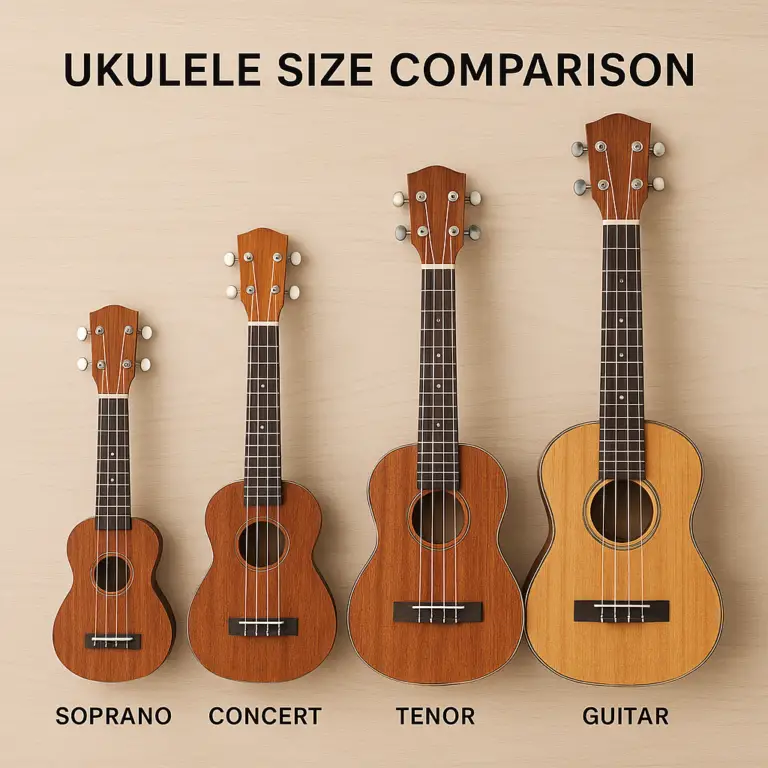
The four common ukulele sizes share four strings, but their scale lengths, body volume, fret spacing, and tonal range differ. Exact measurements vary by manufacturer, so use the table as a practical guide rather than a ruler carved in koa.
| Size | Approximate scale length | Typical feel | Typical sound | A good fit for |
|---|---|---|---|---|
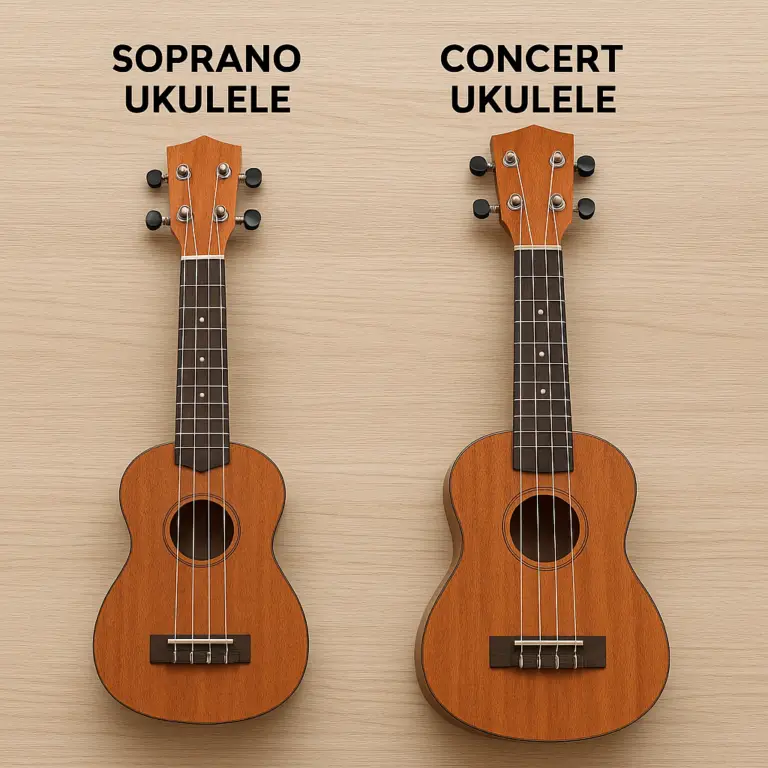
| Soprano | About 13 in / 33 cm | Compact; close fret spacing | Bright, light, traditional | Travel, strumming, small hands |
| Concert | About 15 in / 38 cm | More room without losing portability | A little fuller and louder | Many beginners, larger hands |
| Tenor | About 17 in / 43 cm | Spacious fretboard | Fuller, deeper, more projection | Fingerstyle, guitarists, stage use |
| Baritone | About 19 in / 48 cm | Largest common size | Deepest; often sounds guitar-like | Guitarists, low-register playing |
For another perspective, the Ukulele Site highlights soprano’s role as the classic compact format, while many players favor larger sizes for extra room. Neither view is wrong: they answer different questions. “Which is most traditional?” and “Which is easiest for my hands?” are not the same question.
Size, scale length, and fret spacing
Scale length is the vibrating string length from nut to saddle. A shorter scale places frets closer together, which can make basic chords feel compact but advanced stretches feel cramped. It also influences string tension and response, though string choice and setup matter as well.
When comparing models, look for:
- Nut width and neck profile, not just overall body size.
- The number of frets and how many are practically accessible.
- Whether the upper frets matter for your repertoire.
- A comfortable reach for common chord changes.
- A professional setup if the strings feel unusually stiff or sit high above the fretboard.
Tone, volume, and portability
A soprano’s small body produces a lively voice that cuts through casual sing-alongs. A tenor often provides more body and projection, while a baritone reaches lower notes and commonly uses D–G–B–E tuning. These differences are relative, not absolute: a well-built soprano can sound impressively clear, and a poorly set-up tenor can sound like it’s sulking.
| If your priority is… | Consider… | Why |
|---|---|---|
| Smallest, easiest-to-pack instrument | Soprano | Compact body and short scale |
| More finger room while staying portable | Concert | A comfortable middle ground |
| Fingerstyle, solo melody, or fuller tone | Tenor | More fretboard and body space |
| Lower register or familiar guitar-like chord shapes | Baritone | Lower tuning and longer scale |
If you’re choosing an acoustic instrument for home or travel, our guitar buying guide and acoustic guitar guides offer related advice on fit, construction, and setup.
Which ukulele size is right for you?
Use your hand comfort and musical goals as the tie-breakers:
- Choose soprano if portability, bright strumming, or traditional size is your top priority.
- Choose concert if you want a little more space without a much larger instrument.
- Choose tenor if you fingerpick often, play melody lines, or want more room to fret cleanly.
- Choose baritone if you want lower tuning and a larger, guitar-like feel.
A small instrument isn’t automatically easier. If your fingers are cramped, don’t tough it out to earn a badge. Try a concert or tenor, then pick the one you’ll actually enjoy practicing.
🎼 Soprano Ukulele Tuning, Strings, and Notes
Most soprano ukules arrive tuned G–C–E–A, from the string nearest your chin to the string nearest the floor when you hold the instrument in playing position. The tuning is shared by many concert and tenor ukules, but the string feel can differ with scale length and gauge.
The Kala Makala MK-S specifications list Aquila Super Nylgut strings, a common choice on beginner ukules. Strings can stretch after installation, so a fresh set may need frequent retuning at first.
Standard G–C–E–A tuning and re-entrant G
In standard tuning, the G string is usually the high-G string. This means the pitch order doesn’t simply descend from the fourth string to the first. That “re-entrant” arrangement gives the soprano its characteristic chord voicings and bright, compact sound.
Use a chromatic tuner and tune each string to the correct note:
| String | Note | Common reference |
|---|---|---|
| 4th | G4 | High G |
| 3rd | C4 | Middle C |
| 2nd | E4 | Above middle C |
| 1st | A4 | Above E4 |
Check the tuner’s octave display if it has one; some apps show the same note name in a different octave depending on their settings. Tune slowly, approaching the pitch from below where possible, and recheck all four strings after the first pass.
Low-G tuning and alternate tunings
A low-G setup replaces the high G string with a lower-octave G string. It can provide a wider low-to-high melodic range, which some fingerstyle players prefer. But the string may need a suitable nut slot, and some soprano instruments feel different under the added string tension.
Before switching:
- Confirm that the string set is intended for soprano scale length.
- Check the manufacturer’s guidance for your model.
- If the low-G string binds in the nut or causes tuning trouble, ask a qualified repairer to inspect the slot.
- Remember that chord voicings and tutorial arrangements may assume high-G tuning.
Alternate tunings exist, but beginners should first get comfortable with standard G–C–E–A. It keeps chord charts, lessons, and play-along videos easy to follow.
String materials and replacement options
Common ukulele strings include nylon-based materials and proprietary blends such as Aquila’s Nylgut. Different sets can change brightness, softness, tuning stability, and feel. There’s no universally “best” material: a player who likes a warm sound may choose differently from someone chasing extra snap.
- Check the scale designation. A soprano set is not automatically interchangeable with concert or tenor strings.
- Replace all four strings as a set when possible, so the sound and feel remain balanced.
- Stretch new strings gently after installation, then retune; never yank them like a stubborn shoelace.
- Choose the appropriate G string for high-G or low-G tuning.
🛒 How to Choose a Soprano Ukulele
A good soprano ukulele doesn’t need to be ornate. It needs to stay in tune, fret cleanly, feel comfortable, and sound pleasant to you. A reliable instrument with a modest finish is often a smarter first choice than a decorative model with uneven frets.
Body woods and tonewoods
Common ukulele woods include mahogany, koa, spruce, and acia. Each can contribute to a different look and tonal character, but construction and setup have a major influence too.
| Wood or material | Common character | What to keep in mind |
|---|---|---|
| Mahogany | Often warm and balanced | A popular all-round choice |
| Koa | Traditional Hawaiian association; often clear and articulate | Grain and sound vary between instruments |
| Spruce top | Often bright and responsive | Frequently paired with other woods for back and sides |
| Acacia | Related to koa and used across many price tiers | Model construction matters more than the label alone |
| Laminated wood | Durable, stable, and often accessible | Less sensitive to some environmental changes; tonal nuance varies |
Wood descriptions are broad generalizations. The Forest Products Laboratory’s wood handbook explains how wood properties vary by species and structure; in musical instruments, the finished design and build also matter. If you can, listen to the actual instrument rather than buying the wood name on faith.
Solid wood, laminate, and build quality
- Solid wood: Can respond richly and change subtly with age, but is more sensitive to humidity and temperature.
- Laminate: Uses layered material, often offering durability and consistent construction; sound quality varies widely by model.
- Hybrid construction: Some instruments use a solid top with laminated back and sides, balancing response and practicality.
No construction type guarantees a good ukulele. Look for clean fret ends, a secure bridge, smooth tuners, and an even finish. For additional brand and instrument comparisons, browse our guitar brand guides and Guitar Brands Showcase.
Neck shape, fretboard, and playability
Before buying, check these details:
- Fret ends: They should not feel sharp against your hand.
- Action: Strings should be comfortable to press, without excessive buzzing.
- Intonation: Notes should remain reasonably in tune as you play higher up the neck.
- Nut and saddle: They should sit securely and align the strings properly.
- Neck width and profile: These determine whether chord shapes feel roomy or cramped.
- Tuning machines: Geared tuners are often easier for new players to adjust precisely.
When shopping in person, play a few notes on every string, then compare the same chord on another instrument. If buying online, use a retailer with a clear return policy and consider a setup from a qualified ukulele technician.
Acoustic or electric-acoustic soprano ukulele?
An acoustic soprano is the simplest option: fewer components, no cable, and no battery. An electric-acoustic soprano adds a pickup so you can connect to an amplifier or sound system.
| Type | Benefits | Drawbacks |
|---|---|---|
| Acoustic | Simple, lightweight, ready anywhere | Needs a microphone or external pickup for amplification |
| Electric-acoustic | Easier to amplify and record directly | Adds electronics, controls, and potential setup needs |
| Solid-body electric | Useful for amplified performance and effects | Different feel and sound from a traditional hollow-body ukulele |
If you expect to play live, check the pickup controls and test the instrument through an amp when possible. For casual home strumming, acoustic is usually the fuss-free choice.
Beginner bundles and useful accessories
A practical starter kit may include:
- A padded gig bag.
- A clip-on tuner.
- A spare set of soprano strings.
- A strap, if the instrument has strap buttons or a compatible attachment.
- A chord chart or access to beginner lessons.
Don’t let a pile of accessories distract you from the instrument’s setup. A tuner you’ll use is helpful; a dozen low-quality extras are just clutter with a ukulele-shaped excuse.
🏆 10 Best Soprano Ukules to Consider
These are shortlist picks by use case, not a claim that one ukulele wins for every player. Models and specifications can vary by year, so confirm details on each manufacturer’s current product page before buying.
| Category | Model to consider | Why it stands out | Watch for |
|---|---|---|---|
| Best overall | Kala KA-15S | Popular soprano format from an established ukulele maker | Verify exact materials and included accessories by version |
| Best beginner | Kala Makala MK-S | Straightforward build, geared tuners, and online lesson access | Compact fret spacing may not suit every hand |
| Best budget-friendly | Makala MK-S | Practical entry point with familiar classic styling | Don’t expect premium appointments |
| Best solid-wood option | Ohana soprano range | Multiple soprano models and construction options | Compare the precise model’s solid-wood specifications |
| Best travel-friendly pick | Enya Nova U | Lightweight composite designs are built with portability in mind | Composite tone and feel differ from traditional wood |
| Best electric soprano | Fender Fullerton Tele Uke | Distinctive electric styling and amplified performance options | Not the most traditional acoustic experience |
| Best for kids | Kala Waterman | Durable, colorful, approachable instruments | Check body size and tuning stability on the specific model |
| Best left-handed route | Kala left-handed ukules | Brand lineup may include left-handed options | Confirm the exact model is actually left-handed |
| Best for fingerstyle | KoAloha soprano models | Hawaiian maker with soprano instruments and a distinctive voice | Availability varies; try before committing if possible |
| Best classic Hawaiian-style choice | Kamaka soprano ukules | A storied Hawaiian maker associated with traditional ukulele craft | Model and dealer availability can be limited |
The Southern Ukulele Store video, “THE YEAR OF THE SOPRANO UKULE? – Baton Rouge, UMA, Ohana, KoAloha & Wunderkamer” compares several makers and models, including Baton Rouge, UMA, Ohana, and KoAloha. It’s useful as a listening-oriented second opinion: video demonstrations can reveal tonal differences, though your own hands and room will tell the final story.
Best overall soprano ukulele
The Kala KA-15S is a sensible place to start when you want a recognizable soprano format from a major ukulele brand. Kala’s lineup gives shoppers a range of finishes and tiers, but check the current product page for the exact construction and specifications of the version you’re considering.
Why we like the category fit: familiar sound, broad availability, and a straightforward design.
Potential drawback: a soprano’s small neck remains small, regardless of the logo.
Best beginner soprano ukulele
The Kala Makala MK-S is a practical beginner pick. Kala lists a mahogany top, back, and sides, 12 brass frets, a walnut fingerboard and bridge, geared tuners, and Aquila Super Nylgut strings. The brand also describes it as beginner-friendly and includes access to an online lesson.
Why it works: useful basics without making the instrument complicated.
Keep in mind: new strings may need regular retuning while they settle, and a setup can still improve comfort.
Best budget-friendly soprano ukulele
For an entry-level soprano, the Makala MK-S is worth comparing with other well-reviewed starter instruments. Its strength is a familiar, no-fuss package; its limitation is that an affordable instrument may need closer inspection for fret finish, intonation, and setup.
Buying tip: compare several examples if purchasing in person. At this level, a careful setup can matter more than decorative details.
Best solid-wood soprano ukulele
If solid wood is your priority, explore soprano options from Ohana Music and verify the top, back, and sides on the exact model. A solid top may offer a more responsive sound, but it also asks for sensible humidity care.
Best for: players who value wood construction and plan to care for the instrument.
Trade-off: solid wood doesn’t automatically mean better tone or better setup.
Best travel soprano ukulele
The Enya Nova U range is worth a look if travel durability is high on your list. Composite construction can be practical when an instrument will face changes in location and handling, though players who love traditional wood may prefer a wooden body.
Travel checklist: choose a fitted case, loosen nothing unnecessarily, and avoid leaving any instrument in a hot car.
Best electric soprano ukulele
For amplified playing, explore Fender’s ukulele range and confirm the exact model’s scale, pickup system, and body format. A built-in pickup is helpful for a small stage or direct recording, but it can’t replace a good setup or a comfortable neck.
Try it plugged in. Acoustic resonance and amplified tone are related, but they’re not identical.
Best soprano ukulele for kids
A lightweight, colorful model such as a Kala Waterman may appeal to younger players. Still, don’t assume the smallest instrument is automatically the best fit: younger children may find soprano comfortable, while others benefit from a concert neck with more room.
Choose an instrument that:
- Holds tuning reasonably well.
- Has smooth fret ends.
- Fits the child’s hands without forcing a grip.
- Comes with a case or can be protected safely.
- Encourages playing rather than becoming shelf decoration.
Best left-handed soprano ukulele
Left-handed players can look at Kala’s ukulele lineup, but confirm that the exact instrument is built for left-handed playing. Simply flipping a right-handed ukulele may reverse string order without correcting nut-slot widths, saddle compensation, or other setup details.
A shop can advise whether to buy a dedicated left-handed model or have a right-handed instrument properly restrung and set up for your needs.
Best soprano ukulele for fingerstyle
A KoAloha soprano is worth exploring if you want a Hawaiian-made instrument and enjoy melodic playing. Fingerstyle works on soprano, but the tight fret spacing means clean technique matters. A larger tenor often provides more room for intricate arrangements, so try both before deciding.
Fingerstyle tip: start with short patterns on open strings, then add chord tones. Slow, clean notes beat a fast blur every time.
Best classic Hawaiian-style soprano ukulele
For a traditional reference point, browse Kamaka’s ukules and compare available soprano models. Kamaka is a historic Hawaiian maker; its instruments may be a meaningful choice for players seeking Hawaiian craft and a traditional format.
Availability and model specifications can change. Ask a specialist dealer about current stock, setup, and warranty support before buying.
🎸 Best Soprano Ukulele Brands
Brand reputation can help narrow the field, but it cannot tell you whether a particular neck fits your hand. We recommend comparing the instrument, the setup, and the seller’s support—not just the name on the headstock.
Kala, Enya, and Lanikai
- Kala: A broad lineup spanning beginner instruments through higher-spec models. The Makala MK-S is one widely recognized beginner soprano.
- Enya: Offers modern designs, including composite instruments for players who prioritize easy care and portability. Browse the Enya official site.
- Lanikai: A long-running ukulele brand with soprano choices across different tiers. See Lanikai’s official site.
Cordoba, Fender, and Martin
- Cordoba: Known for nylon-string instruments and a range of ukulele models; check its official ukulele selection.
- Fender: Offers recognizable designs, including electric-acoustic and electric-style ukules. See Fender’s ukulele range.
- Martin: A respected acoustic-instrument maker with ukulele models and a long company history. Visit Martin’s ukulele page.
For Hawaiian-made instruments, also consider KoAloha, Kamaka, and Ohana. Each brand’s model lineup changes, so verify size and construction before ordering.
How to compare brands and model ranges
Use this quick checklist:
- Confirm size: Make sure the model is soprano, not concert or tenor.
- Read the specification page: Check scale length, materials, fret count, and pickup details.
- Check setup support: Ask whether the retailer inspects action and intonation before shipping.
- Read user reviews carefully: Look for repeated comments about tuning, fret edges, and setup rather than one dramatic outlier.
- Compare the return policy: An instrument that feels wrong in your hands should be easy to exchange.
For more manufacturer and product comparisons, see our Guitar Brand Guides and Guitar Brands Showcase.
🎵 Soprano Ukulele Chords, Strumming, and First Songs
A soprano is especially friendly to simple chord-based music. The standard G–C–E–A tuning gives you a huge library of ukulele chords and tutorials, but the close fret spacing rewards relaxed fingers and accurate placement.
Essential beginner ukulele chords
Start with these open chords:
| Chord | Common fingering, G–C–E–A | Practice note |
|---|---|---|
| C | 0–0–0–3 | One finger; a satisfying first win |
| Am | 2–0–0–0 | Keep the fretted note clear |
| F | 2–0–1–0 | Place fingers close to the frets |
| G | 0–2–3–2 | Move slowly; avoid muting neighboring strings |
| Dm | 2–2–1–0 | Check each string individually |
| G7 | 0–2–1–2 | A useful chord for many progressions |
Chord numbers are shown from the G string to the A string; 0 means an open string. Fingering conventions can vary between charts, so follow the diagram used in your lesson.
Practice a clean transition before speeding up:
- Form the first chord and pluck each string separately.
- Fix any muted or buzzing notes.
- Switch to the next chord slowly.
- Repeat the change several times without strumming.
- Add a gentle down-strum once both shapes feel relaxed.
Easy strumming patterns and rhythm tips
Begin with steady down-strums, then add a basic down-up motion. Keep your wrist loose; strumming from a tense forearm makes the rhythm sound stiff and tires your hand.
Try this progression:
- Level 1: Four even down-strums per chord.
- Level 2: Down-up on each beat, slowly.
- Level 3: Add a light accent on beats two and four.
- Level 4: Practice with a metronome, increasing speed only when the pattern stays even.
The ukulele is small, but rhythm is the part that makes it feel big. Tap your foot, count aloud, and keep strumming through a chord change even if one note lands imperfectly.
Fingerpicking on a soprano ukulele
A simple thumb-and-finger pattern is a good starting point:
- Assign your thumb to the G and C strings.
- Use your index finger for E and middle finger for A.
- Pick one string at a time, slowly and evenly.
- Keep each fingertip close to its assigned string.
- Add a chord shape only after the open-string pattern feels controlled.
Soprano’s shorter fret spacing can make fingerstyle passages feel crowded, but it also encourages compact hand movement. If your fingers keep colliding, a concert or tenor may suit your technique better.
Songs that sound great on a soprano
Many popular songs work well with a small set of chords. Try familiar material that uses C, Am, F, and G, then experiment with folk tunes, Hawaiian standards, and simple pop arrangements. For copyrighted songs, use licensed sheet music or reputable lesson resources rather than relying on unverified chord charts.
A useful practice target is one song section, not an entire song. Learn the verse progression cleanly, add the rhythm, then build from there. The little instrument can carry a whole room when the timing is confident.
🧰 Tuning, Setup, and Common Soprano Ukulele Problems
A ukulele that won’t stay in tune can make a new player question their ears. Often, the issue is simply new strings stretching; sometimes it’s a slipping tuner, a poorly cut nut, or a setup problem. Let’s separate the ordinary from the repair-shop-worthy.
How to tune a soprano ukulele
- Clip a chromatic tuner to the headstock, or use a quiet, reliable tuner app.
- Confirm you’re using G–C–E–A tuning.
- Pluck one string at a time, allowing the note to settle.
- Turn the tuning peg in small movements.
- Tune each string, then repeat the full pass.
- Play a few chords and check again.
Tuning upward to pitch can help the string settle against the tuner, but don’t wind aggressively. If the tuner reads the wrong octave, check whether the app is set for ukulele or guitar and verify the intended note.
Why new ukulele strings keep going out of tune
New strings stretch and settle over time. This is normal, particularly during the first days of playing. Gently stretch a string after installation, retune, and repeat; avoid pulling hard enough to damage the string or bridge.
If tuning problems continue, inspect:
- Tuner buttons: Are screws loose or pegs slipping?
- String windings: Are they neat and secure on the posts?
- Nut slots: Is a string binding or ping as you tune?
- Bridge knots: Are the strings secure?
- Temperature changes: Has the instrument moved from a cold car into a warm room?
Action, intonation, and fret buzz
Action is the height of the strings above the fretboard. High action can make fretting tiring; action that is too low can produce buzz. Intonation describes how accurately notes stay in tune as you move up the neck.
Try this diagnosis:
- If open strings buzz, inspect the string seating and setup.
- If one fretted note buzzes, check whether your finger is close to the fret.
- If many notes buzz, ask a technician to inspect relief, fret level, and action.
- If open notes tune correctly but fretted notes sound sharp or flat, intonation or setup may be involved.
Don’t file a nut or saddle as a first experiment. Those adjustments are small, irreversible, and easy to overdo.
When to adjust or visit a ukulele technician
A technician is a good call if:
- Strings sit uncomfortably high.
- Frets have sharp ends.
- The bridge is lifting.
- The neck or body shows cracks.
- The instrument will not intonate despite careful tuning.
- A low-G conversion needs nut work.
For a new purchase, ask the seller whether the ukulele receives a setup before shipment. Some specialist shops include professional setup; UKE Republic, for example, says its ukulele purchases receive a professional setup, while terms and shipping offers should be checked on its store site.
🧼 Soprano Ukulele Care, Storage, and Travel
A soprano is easy to carry, which also means it can end up in places where temperature and humidity are anything but musical. Basic care helps protect the body, neck, strings, and finish.
Cleaning strings and the ukulele body
- Wipe the strings and body with a clean, soft cloth after playing.
- Keep food, drink, and household cleaners away from the instrument.
- Use only products approved for your finish; test cautiously.
- Wash your hands before playing if they’re oily or dirty.
- Replace strings when they sound dull, feel rough, or no longer hold tuning well.
Humidity, temperature, and safe storage
Wood changes with moisture and temperature. The National Wood Flooring Association’s wood and humidity guidance discusses how wood responds to environmental changes; musical instruments are similarly worth protecting from sudden extremes.
- Store the ukulele in a case or gig bag when it’s not in use.
- Avoid radiators, direct sun, damp basements, and hot vehicles.
- Let a cold instrument warm gradually before opening its case.
- If you own a solid-wood soprano, ask the manufacturer about its recommended humidity range.
Composite instruments are often less sensitive to humidity than wooden ones, but they still need sensible handling and protection from heat.
Choosing a case, gig bag, or travel cover
| Protection | Best for | Trade-off |
|---|---|---|
| Soft gig bag | Home, short trips, light protection | Limited impact protection |
| Padded gig bag | Everyday travel and commuting | Bulkier than a thin sleeve |
| Hard case | Flights, frequent travel, stronger protection | Heavier and less convenient |
| Fitted sleeve | Dust and scratches | Minimal impact protection |
Check the case’s interior dimensions against your model. A soprano case should support the body and neck without squeezing the bridge or tuning machines.
✅ Soprano Ukulele Pros and Cons
| Advantages | Drawbacks |
|---|---|
| Very portable and easy to store | Close fret spacing may feel cramped |
| Bright, classic ukulele character | Less low-end depth than larger sizes |
| Lightweight for long casual sessions | Smaller body can offer less acoustic volume |
| Great for simple strumming and chord songs | Some fingerstyle arrangements are easier on tenor |
| Often an approachable entry into ukulele | Small does not automatically mean easy |
| Traditional format with a long history | Setup quality varies between instruments |
Our balanced take: the soprano is an excellent choice when its size and sound match your needs. It is not a universal beginner winner. If the fretboard feels cramped, a concert model may preserve the ukulele character while making practice more comfortable.
🎓 Learning Resources: Soprano Ukulele Lessons and Practice

A short, regular practice routine will do more for your playing than an impressive pile of tabs. Build the basics: tune, form chords cleanly, keep steady rhythm, and play music you actually enjoy.
A simple practice plan for new players
Try this 15-minute routine:
| Time | Activity | Goal |
|---|---|---|
| 2 minutes | Tune and check each string | Start with a reliable sound |
| 4 minutes | Chord shapes and transitions | Reduce buzz and hesitation |
| 4 minutes | Strumming with a steady count | Build rhythm and control |
| 5 minutes | Work one song section | Turn practice into music |
If you have more time, repeat the cycle rather than rushing through ten new chords. Record yourself once a week; it’s a friendly reality check, not an audition for the ukulele police.
Online lessons, chord charts, and tuner apps
- Use a chromatic tuner that lets you select or verify G–C–E–A.
- Choose lessons that state their tuning and instrument size.
- Prefer chord diagrams with clear string order and finger numbers.
- Check whether the tutorial assumes high-G or low-G tuning.
- Use reputable, licensed resources for song arrangements.
The Kala Makala MK-S product page advertises online lesson access with the instrument. For comparison shopping and broader instrument advice, explore our Guitar Buying Guide and Guitar Brand Guides.