Support our educational content for free when you purchase through links on our site. Learn more
Ukulele Meaning in English: More Than “Jumping Flea” 🎸

“Ukulele” in English means a small, usually four-stringed plucked instrument associated with Hawaiian music. The familiar translation “jumping flea” explains the word’s popular origin story, not what the word ordinarily means in a sentence.
The pronunciation can vary, too: you’ll often hear yoo-kuh-LAY-lee, while musicians commonly shorten the name to uke. And though “small guitar” is a handy mental picture, a ukulele has its own tunings, sizes, and sound—so the comparison only goes so far.
Key Takeaways
- Meaning: A ukulele is a small, usually four-stringed instrument.
- Name origin: “Jumping flea” is the best-known translation of the Hawaiian word, though the historical naming story has uncertainties.
- Pronunciation: Yoo-kuh-LAY-lee is a common English pronunciation; uke is an informal short form.
- Not quite a tiny guitar: Ukules differ from guitars in string count, tuning, size, and musical feel.
- Common sizes: Soprano, concert, tenor, and baritone.
Table of Contents
- ⚡️ Quick Tips and Facts
- 🎸 Ukulele Meaning in English: Definition and Main Uses
- What Does “Ukulele” Mean?
- Ukulele as a Noun: Grammar and Plural Form
- 🔊 How to Pronounce “Ukulele”
- Common English Pronunciation Variations
- How to Say “Ukulele” in Hawaiian
- 🌺 Ukulele Origin and Hawaiian History
- The Hawaiian Word “ʻUkulele”
- Portuguese Instruments Behind the Ukulele
- How the Ukulele Became Known in English
- 🧩 What Does “Ukulele” Literally Mean?
- The “Jumping Flea” Translation
- Other Explanations of the Name
- Why the Origin of the Name Is Debated
- 🎶 What Is a Ukulele? Meaning, Features, and Sound
- Ukulele vs. Guitar: What’s the Difference?
- Soprano, Concert, Tenor, and Baritone Ukulele
- 💬 How to Use “Ukulele” in a Sentence
- Everyday Examples and Common Phrases
- Related Words: Ukulele Player, Ukulele Music, and Uke
- ❌ Common Misunderstandings About the Word “Ukulele”
- 📚 Ukulele Meaning in English Dictionaries and Reliable Sources
- 🎼 Ukulele in Hawaiian Culture and Modern Music
- Conclusion
- Recommended Links
- FAQ
- Reference Links
⚡️ Quick Tips and Facts
The ukulele meaning in English is straightforward: a small, usually four-stringed instrument in the guitar family, strongly associated with Hawaiian music. The name, however, has a more colorful story than the definition suggests. 🌺
| Quick fact | Helpful answer |
|---|---|
| Part of speech | Noun |
| Typical number of strings | Four; some ukules have more |
| Common short form | Uke |
| Common sizes | Soprano, concert, tenor, and baritone |
| Common dictionary spelling | Ukulele; ukele is an alternate spelling |
| Standard English plural | Ukules |
| Common pronunciation | yoo-kuh-LAY-lee |
| Hawaiian name | ʻUkulele, written with an ʻokina before the first letter |
Cambridge Dictionary defines it as “a small guitar with four strings,” while Dictionary.com describes a guitar-like string instrument associated especially with Hawaii. Those are useful quick definitions; the instrument’s construction and tuning explain why “small guitar” is convenient shorthand, but not the whole story. (Cambridge Dictionary; Dictionary.com)
- ✅ In everyday English, ukulele means the instrument.
- ✅ Uke is a familiar informal abbreviation, not a different instrument.
- ❌ It is not simply a miniature guitar: ukules commonly have four strings and different tunings.
- 🎵 Say “play the ukulele” or, especially informal usage, “play ukulele.” Both constructions are used. (Cambridge Dictionary)
🎸 Ukulele Meaning in English: Definition and Main Uses
What Does “Ukulele” Mean?
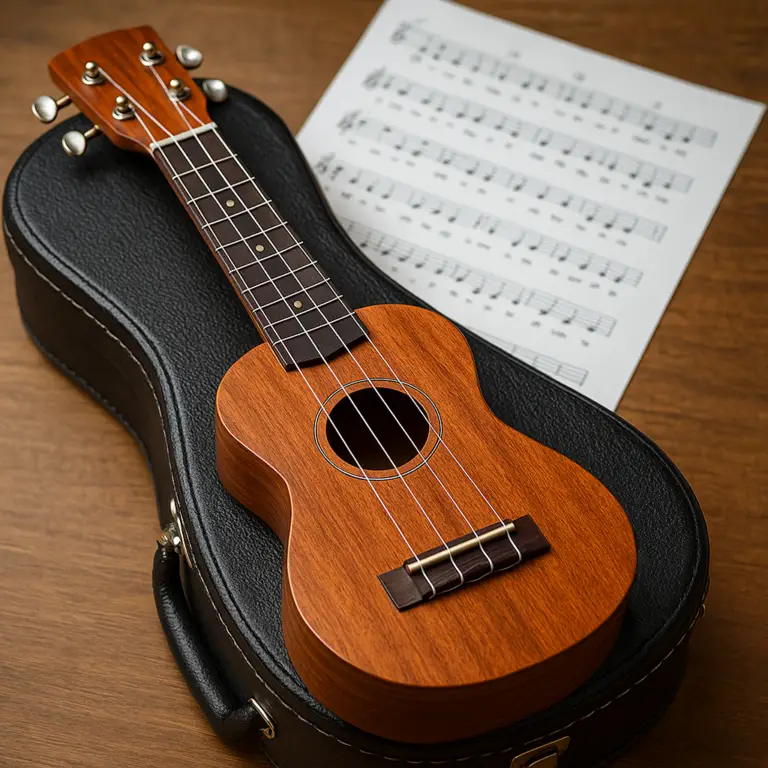
In English, ukulele is a noun for a small, guitar-like, plucked string instrument, usually with four strings. It is closely associated with Hawaiian music, although people play it in many musical styles around the world. (Cambridge Dictionary; Dictionary.com)
The first video featured in this article gives the quick version: “ukulele” means “small four-stringed guitar.” That is a useful, viewer-friendly definition, but “guitar-like instrument” is more precise than treating a ukulele as a guitar in miniature. The two instruments differ in string count, scale length, tuning, and feel. Watch the featured video, then compare the details below.
Ukulele as a Noun: Grammar and Plural Form
The word names an instrument, and English uses it as a count noun or as a more general activity/instrument noun:
- Count noun: “She bought a ukulele.”
- Specific instrument: “He’s learning to play the ukulele.”
- General activity: “They play ukulele at the community music group.”
- Plural: “The shop displayed three ukules.”
- Informal short form: “He brought his uke to rehearsal.”
Most English writers should use ukules as the plural. Dictionary.com also lists ukules, but that form is uncommon; for ordinary writing, ukules is the clear, familiar choice. (Dictionary.com; Cambridge Dictionary)
🔊 How to Pronounce “Ukulele”
A common English pronunciation is yoo-kuh-LAY-lee: four syllables, with the strongest emphasis on LAY. Cambridge gives the UK and US pronunciation as /ˌjuː.kəˈleɪ.li/. (Cambridge Dictionary)
| Version | Pronunciation guide | Notes |
|---|---|---|
| Common English | yoo-kuh-LAY-lee | Widely understood in US and UK English |
| Another English variant | oo-koo-LAY-lay | Also recorded by Dictionary.com |
| Informal uke | yook | Rhymes approximately with “look,” depending on accent |
Common English Pronunciation Variations
You may hear yoo-kuh-LAY-lee, oo-koo-LAY-lay, or pronunciations that sit somewhere between them. Accent, musical community, and familiarity with Hawaiian pronunciation all play a part. There is no need to correct someone mid-song: if the meaning is clear, the conversation has stayed in tune.
For the short form, uke is usually said like yook. Cambridge lists it as an informal abbreviation and provides the pronunciation /juːk/. (Cambridge Dictionary)
How to Say “Ukulele” in Hawaiian
The Hawaiian spelling is ʻukulele. The opening character, ʻ, is an ʻokina, a letter representing a glottal stop; it is not decorative punctuation. Hawaiian spelling also uses the kahakō, a macron over a vowel, to mark a long vowel—but ʻukulele has no kahakō. For guidance on Hawaiian orthography, see the University of Hawaiʻi at Mānoa’s Hawaiian-language resources.
English-language dictionaries commonly provide English pronunciations, not a full pronunciation lesson in Hawaiian. If you are speaking Hawaiian, follow a reliable Hawaiian-language source or a fluent speaker rather than assuming an English pronunciation is identical.
🌺 Ukulele Origin and Hawaiian History

The Hawaiian Word “ʻUkulele”
The instrument’s name is Hawaiian, and its story is intertwined with the islands’ musical history. The Dictionary.com entry traces ʻukulele to Hawaiian components often explained as ʻuku (“flea”) and lele (“to jump” or “leap”), producing the familiar translation “jumping flea.” (Dictionary.com)
That translation is memorable—but etymologies can be tidier in dictionaries than in real cultural history. The phrase is often repeated as if it settles every detail of how the instrument got its name. It does not; the possible connection to a lively musician offers another part of the story.
Portuguese Instruments Behind the Ukulele
The ukulele developed in Hawaii from small Portuguese string instruments brought to the islands by Portuguese immigrants in the nineteenth century. The Smithsonian National Museum of American History documents ukules in its collection, while the Hawaiʻi State Archives offers historical records for exploring Hawaii’s past.
| Instrument or influence | Connection to the ukulele |
|---|---|
| Portuguese machete | A small guitar-like instrument often identified as an important influence |
| Portuguese braguinha | Another small, plucked instrument associated with the ukulele’s development |
| Hawaiian musical culture | Shaped the instrument’s identity, repertoire, and worldwide association with Hawaii |
The precise lineage is often described through several related Portuguese instruments, rather than one single, uncontested “parent.” That’s a good reason to trust museum and archival context over a too-neat one-line origin story.
How the Ukulele Became Known in English
The word entered English through the Hawaiian instrument’s growing visibility beyond the islands. Dictionary.com dates its use to the late nineteenth century, while its entry also links the instrument’s popularity at King Kalākaua’s court with British army officer Edward Purvis, who was nicknamed ʻukulele. (Dictionary.com)
The basic timeline is clear: the instrument took shape in Hawaii, gained a strong association with Hawaiian culture, and the Hawaiian name became the ordinary English name. The details of the nickname’s role are less certain—which brings us to the flea.
🧩 What Does “Ukulele” Literally Mean?
The “Jumping Flea” Translation
“Jumping flea” is the best-known literal gloss of ʻukulele. It is commonly explained by connecting ʻuku with “flea” and lele with “jump” or “leap.” Dictionary.com gives this etymology and describes the name as a nickname for Edward Purvis, whose energetic playing was said to resemble a jumping flea. (Dictionary.com)
A musical metaphor is easier to remember than a genealogy lesson: Purvis’s nimble fingers, the story goes, earned him the nickname, which then became associated with the instrument.
Other Explanations of the Name
The standard popular account links “jumping flea” to Purvis and his lively playing style. Another version emphasizes the nimble movement of fingers over the strings. These explanations are related, but they are not equally established as documented facts.
The safest distinction is:
- Literal gloss: “jumping flea” is the widely reported translation.
- Nickname story: Purvis is associated with the nickname in Dictionary.com’s account.
- Meaning in modern English: the word simply names the instrument; English speakers do not usually use it to mean a flea or a jumping person.
Why the Origin of the Name Is Debated
Etymology sources may present a concise origin, while historical sources can leave room for uncertainty about how a nickname became the instrument’s name. The word’s popular translation and the instrument’s historical development are related questions, but they are not the same question.
So, what should you trust? Treat “jumping flea” as the established popular etymology, and treat the precise Purvis anecdote as a historical explanation reported by sources—not as proof that every detail is settled. That balance respects both the dictionary account and the complexity of Hawaiian history.
🎶 What Is a Ukulele? Meaning, Features, and Sound
A ukulele is a small, fretted, plucked string instrument. Most have four strings, a compact body, and a short scale, though construction and tuning vary by size and model. The sound can be bright and percussive or warm and rounded; the instrument is not limited to cheerful island songs. (Cambridge Dictionary; University of Hawaiʻi at Mānoa)
Ukulele vs. Guitar: What’s the Difference?
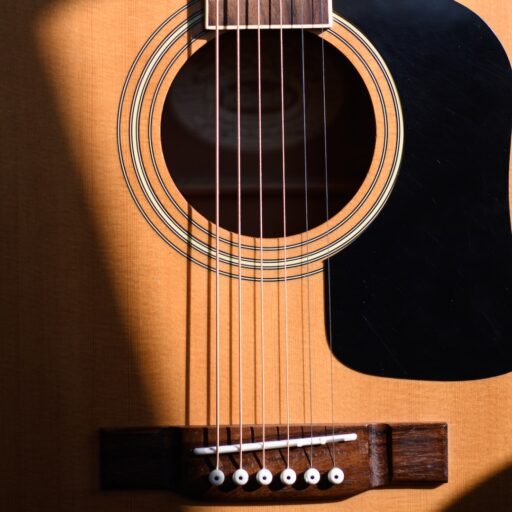
The quick “small guitar” definition helps people picture the instrument, but it can mislead beginners into expecting guitar-like tuning and fingering. A ukulele usually has four strings, while a standard six-string guitar has six; common ukulele tuning is G–C–E–A, though baritone ukules are commonly tuned D–G–B–E, like the highest four strings of a guitar.
| Feature | Ukulele | Standard six-string guitar |
|---|---|---|
| Typical strings | Four | Six |
| Common tuning | G–C–E–A for many soprano, concert, and tenor models | E–A–D–G–B–E |
| Instrument size | Compact; varies from soprano to baritone | Larger body and longer scale |
| Typical feel | Smaller reach and lighter string tension, depending on setup | Wider range and more strings to fret |
| Sound | Bright, focused, and size-dependent | Broader low-to-high range |
| Learning overlap | Chord shapes and strumming concepts transfer | Guitar chord shapes do not transfer directly in every case |
For ukulele basics and instrument-selection advice, our Guitar Buying Guide and acoustic guitar guides can help you compare instrument families without pretending they are interchangeable.
Soprano, Concert, Tenor, and Baritone Ukulele
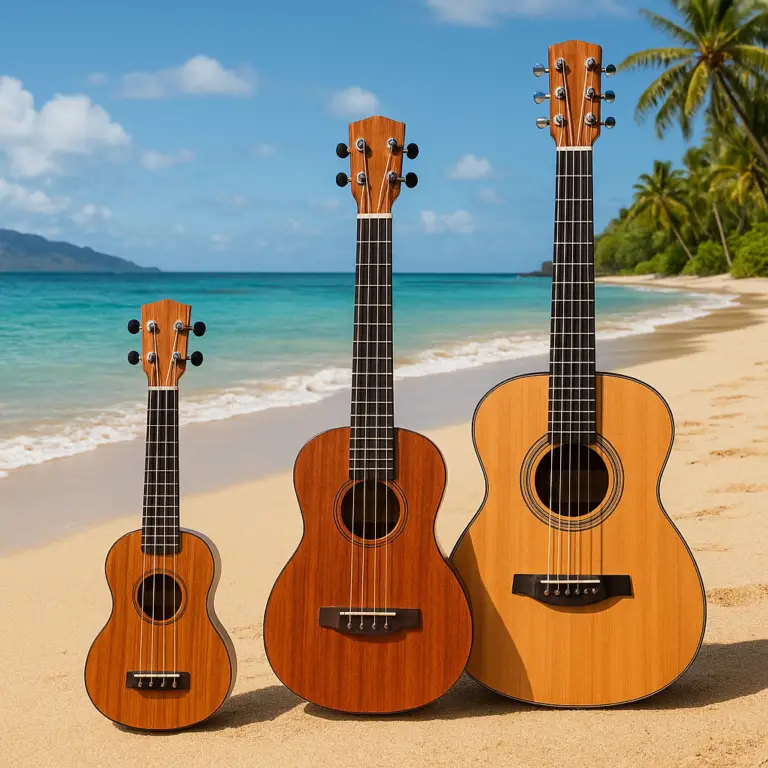
The four best-known sizes are soprano, concert, tenor, and baritone. Larger bodies and longer scales generally provide more room for the fretting hand and can produce a fuller, deeper sound, though tone also depends on wood, construction, strings, and setup. (Dictionary.com)
| Size | General character | Often suits |
|---|---|---|
| Soprano | Small, bright, traditional feel | Players who want a compact instrument |
| Concert | Slightly larger body and fretboard | Players seeking a little more room |
| Tenor | More space and a fuller voice | Fingerstyle players and players wanting a larger neck |
| Baritone | Deepest of the four common sizes; commonly D–G–B–E | Guitarists who prefer familiar top-four-string tuning |
These are broad tendencies, not guarantees. If possible, try the neck and body against your own hands and playing style; a “best size” is the one that feels comfortable and sounds right to you.
💬 How to Use “Ukulele” in a Sentence
Everyday Examples and Common Phrases
Here are natural examples of the word in English:
- “I’m learning to play the ukulele.”
- “She brought a ukulele to the picnic.”
- “The song sounds lovely on ukulele.”
- “He keeps a uke beside his desk for quick practice.”
- “They compared three ukules before choosing one.”
Cambridge Dictionary includes examples involving learning and playing the ukulele, strumming it, and the instrument’s effect on a song’s sound. Its examples also note that a resonator ukulele can be louder and have a different tone from a standard wooden instrument. (Cambridge Dictionary)
Related Words: Ukulele Player, Ukulele Music, and Uke
| Word or phrase | Meaning |
|---|---|
| Ukulele player | A person who plays the instrument |
| Ukulele music | Music played on or written for ukulele |
| Uke | Informal short form of ukulele |
| Ukulele chord | A fingering or chord voicing played on the instrument |
| Ukulele strumming | A rhythmic technique using downstrokes, upstrokes, or both |
The shortened form uke is handy in conversation and music communities. In formal writing, spell out ukulele the first time, then use uke if the tone is casual and the meaning stays clear. For more instrument coverage, browse our Guitar Brand Guides and Guitar Brands Showcase.
❌ Common Misunderstandings About the Word “Ukulele”
-
“Ukulele” just means a small guitar.
It is a useful comparison, but a ukulele is its own instrument, usually with four strings and characteristic tunings. -
Every ukulele has exactly four strings.
Four is typical, but some models have more strings, including eight-string versions. (Dictionary.com) -
“Jumping flea” is what the word means in everyday English.
No: that is a popular etymological translation. In modern English, ukulele ordinarily means the instrument. -
There is only one correct English pronunciation.
Dictionaries record variations, and pronunciation differs by speaker and accent. Cambridge lists /ˌjuː.kəˈleɪ.li/, while Dictionary.com gives additional variants. (Cambridge Dictionary; Dictionary.com) -
A ukulele is only for Hawaiian music.
Hawaiian music is central to its cultural identity, but players also use it in pop, folk, jazz, classical arrangements, and plenty of living-room singalongs. -
Every ukulele is tuned the same way.
Common soprano, concert, and tenor tuning differs from the commonly used baritone tuning. Check the instrument’s size and tuning before following a chord tutorial.
📚 Ukulele Meaning in English Dictionaries and Reliable Sources
Different dictionaries emphasize different parts of the definition. Cambridge focuses on the instrument’s small size and four strings; Dictionary.com adds its Hawaiian association and records the familiar etymology. These descriptions complement each other rather than conflict. (Cambridge Dictionary; Dictionary.com)
| Source | What it contributes | How to use it |
|---|---|---|
| Cambridge Dictionary | Concise definition, pronunciation, grammar, examples, and informal uke | Best for everyday English usage |
| Dictionary.com | Alternate spelling, plural information, sizes, pronunciation, and etymology | Useful for broader word-history context |
| Merriam-Webster | Dictionary entry link | The supplied page currently shows a security-verification screen rather than the entry |
| Smithsonian National Museum of American History | Museum collection context | Useful for examining the instrument as a historical object |
| University of Hawaiʻi | Guidance on Hawaiian spelling marks | Useful for understanding the ʻokina and Hawaiian orthography |
A competing Merriam-Webster page summary reports that the page displays a security check rather than an accessible definition. That is a page-access issue, not evidence that the word lacks a definition. For a definition you can verify directly, Cambridge and Dictionary.com provide accessible entries. Use dictionaries for meaning and usage; use museums, archives, and Hawaiian-language resources for cultural and historical context.
🎼 Ukulele in Hawaiian Culture and Modern Music
The ukulele’s English definition tells us what the object is, but not why it carries such a strong cultural association. Its development and popularity in Hawaii made the instrument a recognizable part of Hawaiian musical life, and its later international popularity carried that association around the world. The Smithsonian’s ukulele collection offers a useful starting point for viewing instruments as artifacts, while the Hawaiʻi State Archives provides a route into broader historical records.
Today, you might hear a ukulele in a traditional setting, a pop arrangement, a school music room, or a resonator model’s punchier performance. Cambridge’s entry even describes a ukulele giving a song “a country vibe,” a reminder that the instrument’s sound is not confined to one genre. (Cambridge Dictionary)
A respectful way to talk about it is to acknowledge both sides: the ukulele is widely played around the world, and its name and cultural identity are deeply connected to Hawaii. Curious about the competing “jumping flea” stories? The distinction is now clear: the translation is widely reported, while the exact historical path from nickname to instrument name deserves more caution.