Support our educational content for free when you purchase through links on our site. Learn more
What Is the Best Guitar for a Beginner? 🎸

The best guitar for a beginner is one that feels comfortable, stays in tune, and suits the music you want to play. For many new players, a well-set-up steel-string acoustic like the Yamaha FG800 is a versatile start; if you’re drawn to rock, blues, or metal, a Squier electric may be the better first guitar.
So, what is the best guitar for a beginner? There’s no single answer for every set of hands. We’ve seen players light up over a simple acoustic they can grab anytime, while others practice longer on an electric because riffs—not campfire chords—are what got them hooked.
That’s why this guide compares acoustic, classical, and electric guitars, plus sizes, beginner-friendly features, essential gear, and specific models worth trying. The right choice isn’t the guitar with the fanciest specs; it’s the one that makes you want to play again tomorrow.
Key Takeaways
- Match the guitar to your music: Choose steel-string acoustic for versatile strumming, nylon-string classical for classical and flamenco styles, or electric for rock, blues, and many lead-guitar sounds.
- Comfort beats reputation: Body size, neck feel, string height, and a reliable setup matter more than a famous name or flashy finish.
- Electric can be easier to fret, but needs extra gear. Acoustic is ready to play without an amp; electric needs an amp or another suitable listening setup.
- Try guitars in person when possible. Compare size, reach, tuning stability, and how easily you can fret a few notes or chords.
- Consider these beginner-friendly models: Yamaha FG800, Cordoba C5, and Squier Stratocaster models.
👉 Shop beginner guitar picks:
- Yamaha FG800: Amazon | Guitar Center | Sweetwater | Yamaha Official
- Cordoba C5: Amazon | Guitar Center | Sweetwater | Cordoba Official
- Squier Stratocaster: Amazon | Guitar Center | Sweetwater | Squier Official
Table of Contents
- ⚡️ Quick Tips and Facts: Choosing Your First Guitar
- 🎸 How Beginner Guitars Have Changed
- 🧭 How to Choose the Best Guitar for a Beginner
- Acoustic, Classical, or Electric: Which Guitar Is Right for You?
- Steel-String vs. Nylon-String Guitars
- Guitar Size, Scale Length, and Body Shape
- Playability: Action, Neck Shape, and Fret Feel
- Sound, Style, and the Music You Want to Play
- 🏆 Best Beginner Guitars: Top Picks by Type
- 1. Best Beginner Acoustic Guitar
- 2. Best Beginner Classical Guitar
- 3. Best Beginner Electric Guitar
- 4. Best Beginner Guitar for Kids
- 5. Best Beginner Guitar for Small Hands
- 6. Best Beginner Guitar for Fingerstyle
- 7. Best Beginner Guitar for Rock and Metal
- 8. Best Beginner Guitar Starter Bundle
- 💵 How Much Should You Spend on a First Guitar?
- New vs. Used Beginner Guitars
- What to Look for in a Guitar Starter Pack
- 🛠️ Essential Beginner Guitar Accessories
- Must-Have Accessories
- Optional Gear That Makes Practice Easier
- 🔍 How to Check a Beginner Guitar Before Buying
- A Simple In-Store Guitar Inspection
- Buying a Beginner Guitar Online
- Why a Professional Setup Can Help
- 🎼 Beginner Guitar Setup and First-Day Basics
- How to Tune a New Guitar
- Choosing Strings and Picks
- How to Hold the Guitar Comfortably
- 📚 Learning Guitar: Your First Weeks of Practice
- Beginer Chords and Easy Songs
- Building a Simple Daily Practice Routine
- Learning With Apps, Videos, or a Teacher
- 🧽 Beginner Guitar Care and Maintenance
- Cleaning, Storage, and Humidity
- When to Change Guitar Strings
- Common Beginner Guitar Problems
- 🚫 Beginner Guitar Buying Mistakes to Avoid
- ✅ Conclusion
- 🔗 Recommended Links
- ❓ FAQ
- Is acoustic or electric guitar easier for a beginner?
- Should a beginner start with a classical guitar?
- What is the best guitar size for an adult beginner?
- What is the best guitar for a child beginner?
- Are cheap guitars good for beginners?
- Do beginner guitars need a setup?
- Can you learn guitar on your own?
- How long does it take to learn basic guitar chords?
- 📖 Reference Links
Quick Tips and Facts: Choosing Your First Guitar
If you’re comparing the best guitar brands for beginners, start with the kind of music you want to play—not a mythical “perfect beginner guitar.” We’ve seen a comfortable, well-set-up instrument inspire far more practice than a flashy model that fights back.
| Quick question | Our practical answer |
|---|---|
| What’s the best guitar for most beginners? | The one that fits your hands, budget, and favorite music. A steel-string acoustic is versatile; an electric may be easier to fret; a classical guitar suits nylon-string styles and players who prefer a softer feel. |
| Is acoustic or electric easier? | Electric guitars often take less finger pressure, but require an amplifier for their full sound. Acoustic guitars need less gear and are easy to pick up and play. |
| Should I choose nylon or steel strings? | Nylon feels softer and suits classical, flamenco, and some fingerstyle playing. Steel gives the familiar bright sound of much folk, country, and pop music. |
| Do I need a costly guitar to learn? | No. Comfort, reliable tuning, and a playable setup matter more than premium materials or fancy features. |
| What’s the first thing we’d check? | Whether the guitar feels comfortable and the strings sit at a reasonable height above the frets. A poor setup can make even a promising instrument feel like a finger-strength exam. |
✅ Try before you buy if you can. ❌ Don’t choose a guitar just because it’s the one a famous player uses.
How Beginner Guitars Have Changed
Beginer instruments are no longer limited to a choice between a bargain acoustic and an oversized starter pack. Today, brands such as Yamaha, Fender, Squier, Epiphone, and Cordoba offer entry-level models across acoustic, classical, and electric styles.
That variety is great—until you’re staring at twelve nearly identical guitars and wondering whether “concert,” “parlor,” or “solid top” is a secret handshake. Here’s the useful background: guitar types are built to create different sounds and playing experiences, not to rank players by seriousness.
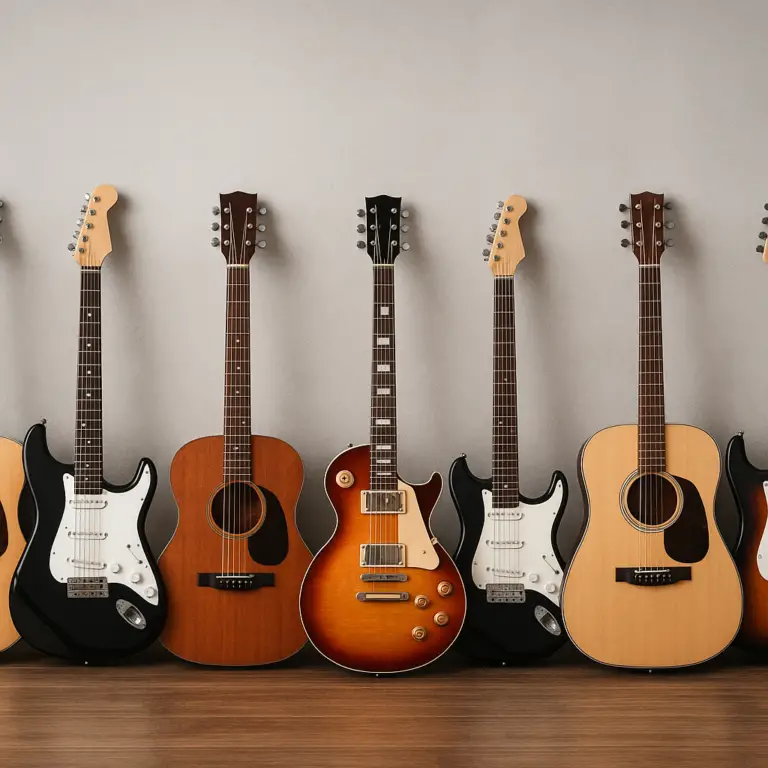
Steel-string acoustics are common for strumming folk, pop, and country. Classical guitars use nylon strings and a wider neck, which can suit classical repertoire and certain fingerstyle approaches. Electric guitars use pickups to send their string vibrations to an amplifier, making them versatile for everything from clean pop to heavy rock. You can explore more options in our acoustic guitar and guitar brand guide sections.
The best starting point is the music you’re excited to play. That advice sounds obvious, but it resolves many “which type is easiest?” arguments before they grow legs.
How to Choose the Best Guitar for a Beginner
Before choosing a model, answer four questions:
- What music do you want to play? Folk and pop often point toward steel-string acoustic; classical and flamenco toward nylon-string; rock and many lead styles toward electric.
- How does the guitar feel in your hands? Check whether you can reach the strings and frets comfortably.
- What gear do you need to get started? An electric guitar needs an amp and cable for amplified playing; an acoustic usually doesn’t.
- Does it stay in tune and feel playable? A shop’s basic inspection or a professional setup can help reveal problems that a shiny finish won’t.
For more brand comparisons and buying advice, browse our Guitar Buying Guide and Guitar Brands Showcase.
Acoustic, Classical, or Electric: Which Guitar Is Right for You?
The three main types can all teach you chords, rhythm, melody, and technique. They differ in feel, sound, and the extra gear they may need.
| Guitar type | Typical strengths | Trade-offs | A good fit if you… |
|---|---|---|---|
| Steel-string acoustic | Self-contained, versatile, bright sound | Strings can feel tough at first; larger bodies may be awkward | Want to strum folk, pop, country, or singer-songwriter music |
| Classical / nylon-string | Softer-feling strings; warm, rounded tone | Wider neck; distinct feel from steel-string guitars | Want classical, flamenco, or nylon-string repertoire |
| Electric | Light strings often feel easier to fret; broad range of sounds | Usually needs an amp and cable for amplified playing | Want rock, blues, metal, pop, or lead guitar |
| Acoustic-electric | Acoustic sound with the option to plug in | Pickup electronics add features you may not need at first | Expect to perform or connect to a sound system |
There isn’t universal agreement on which is “best.” Musical U’s comparison of classical, acoustic, and electric guitars favors steel-string acoustic as a practical all-rounder for learning fundamentals and switching styles later. That’s a reasonable case—but it isn’t a rule. Players motivated by electric guitar may practice more on an electric, while a classical student may best served by nylon strings from day one.
Our recommendation: choose the instrument that fits your musical goal and body. The most useful beginner guitar is the one you’ll reach for tomorrow.
Steel-String vs. Nylon-String Guitars
Steel and nylon strings differ in both sound and feel. Steel strings generally produce a brighter, more cutting tone associated with many acoustic pop, folk, and country recordings. Nylon strings create a gentler, rounded sound common in classical and flamenco music.
| Feature | Steel-string acoustic | Nylon-string classical |
|---|---|---|
| String material | Steel or other metal windings | Nylon trebles with wound bass strings |
| Feel | Often higher tension and a sharper feel against fingertips | Softer-feling strings for many players |
| Neck | Often narrower, but varies by model | Typically wider at the nut |
| Common uses | Strumming, folk, pop, country, singer-songwriter styles | Classical, flamenco, traditional nylon-string playing |
| Beginer consideration | Initial fingertip soreness is common | Wider spacing may help some fingerstyle passages, but can feel unfamiliar |
Nylon can be gentler at the start, but a classical neck isn’t automatically easier. If your hands are small, the wider string spacing may make certain chord shapes harder to reach. And steel-string soreness generally improves as your fingertips adapt—provided you take breaks and the guitar isn’t poorly set up.
A video included in the article, linked here as the featured video, also emphasizes matching string feel, body size, and tone to the player. Its memorable advice is that the right guitar is the one you’re excited to play—with the useful caveat that any new strings may take a little getting used to.
Guitar Size, Scale Length, and Body Shape
A full-size guitar can work for many adults, but “full size” doesn’t guarantee a comfortable fit. Body depth, neck width, scale length, and how the instrument sits against you all matter.
| Body or size | Typical character | Consider if… |
|---|---|---|
| Dreadnought | Large, popular steel-string shape with a strong, full sound | You want a versatile strumming guitar and the body feels comfortable |
| Concert / Grand Auditorium | Often a little more compact than a dreadnought | You want a balanced sound and a less bulky body |
| Parlor | Compact body, often with a focused, intimate sound | You prefer a smaller guitar or play seated |
| Jumbo | Large body with a broad, powerful voice | You like a big sound and can comfortably manage the size |
| 3/4-size or travel guitar | Shorter or more compact overall dimensions | A full-size guitar feels unwieldy, or you need portability |
| Short-scale electric | Shorter distance between nut and bridge than many standard-scale electrics | You want a smaller-feling electric neck or easier reach |
Manufacturers’ size labels aren’t perfectly standardized. Play the actual guitar if possible, especially if you’re shopping for a child or someone with smaller hands. A guitar should let the player sit naturally, reach the frets, and strum without hunching over like they’re inspecting a dropped contact lens.
Playability: Action, Neck Shape, and Fret Feel
“Action” is the height of the strings above the fretboard. If it’s too high, fretting notes takes extra effort. If it’s too low, strings can buzz against the frets. The sweet spot depends on the guitar, playing style, and personal preference.
When you try a guitar, check:
- Can you press a string down close to a fret without excessive force?
- Do open strings ring clearly, without persistent buzzing?
- Can your fretting hand reach the first few chords without sharp discomfort?
- Do the fret ends feel smooth, rather than sharp against your hand?
- Does the neck feel comfortable when you wrap your hand around it?
A guitar setup can adjust elements such as string height and intonation. It can’t change every aspect of a guitar’s design, but it may transform an instrument that feels stubborn into one that’s far more inviting.
Sound, Style, and the Music You Want to Play
The familiar advice to “start on acoustic because it builds stronger fingers” is only part of the picture. Acoustic and electric instruments both develop useful playing skills; an electric’s lighter strings may reduce the effort needed to fret, while an acoustic requires no amp to be heard in a room.
Here’s the trade-off:
- Choose acoustic for an easy grab-and-play setup, unpluged practice, and common strumming styles.
- Choose classical for nylon-string sound and repertoire where that tone is part of the point.
- Choose electric if riffs, effects, solos, or band-style playing are what make you want to practice.
Some beginners worry that effects will cover up mistakes. You can still practice cleanly on an electric with the amp turned down or set to a clear tone. Good practice habits matter more than the guitar type. The instrument should support the music you actually want to make, not an imaginary curriculum.
Best Beginner Guitars: Top Picks by Type
There’s no single winner for every player, so these picks represent dependable starting points across different needs. Check the current model specifications and try the neck and body shape when possible; brands sometimes update details between versions.
| Beginner need | Model to consider | Why it stands out | Keep in mind |
|---|---|---|---|
| Steel-string acoustic | Yamaha FG800 | Dreadnought design and solid spruce top | Large body may not suit everyone |
| Compact acoustic | Yamaha FS800 | Concert-size body in the same series | Still a steel-string guitar |
| Classical guitar | Cordoba C5 | Nylon-string construction for classical playing | Wider neck than many steel-string models |
| Electric guitar | Squier Classic Vibe Stratocaster | Familiar Strat-style layout and versatile pickup configuration | Needs an amp and cable for amplified sound |
| Electric starter option | Squier Sonic Stratocaster | Straightforward Strat-style platform | Compare individual instrument setup and feel |
| Small-body acoustic | Yamaha JR1 | Compact travel- and youth-friendly format | Smaller body has a different sound and feel |
| Electric starter bundle | Squier Affinity Stratocaster Pack | May include key starter items, depending on the current package | Confirm exactly what’s included |
These are starting points, not a substitute for a comfortable fit. You can find more maker comparisons in our brand showcase.
1. Best Beginner Acoustic Guitar
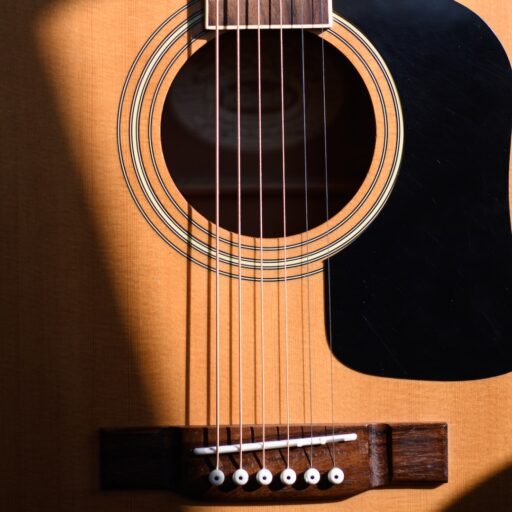
Consider the Yamaha FG800 if you want a traditional steel-string dreadnought for strumming and general acoustic playing. Yamaha lists the FG800 in its FG/FS series. Its familiar shape and solid spruce top make it a common model to compare against other entry-level acoustics.
The Yamaha FS800 is worth trying alongside it. It belongs to the same family but uses a more compact concert body, which may feel more manageable if a dreadnought seems oversized.
Benefits
- No amp needed to play at home.
- Useful for chords, accompaniment, and acoustic songs.
- The FG and FS options let you compare body shapes from the same series.
Drawbacks
- Steel strings may feel uncomfortable at first.
- A dreadnought can be bulky for some players.
- A model’s reputation doesn’t guarantee the particular guitar you receive is well set up.
Our tip: If the FG800 feels too large, don’t force yourself to “get used to it.” Try the FS800 or another comfortable body size.
- Yamaha FG800: Amazon | Guitar Center | Sweetwater | Yamaha Official
- Yamaha FS800: Amazon | Guitar Center | Sweetwater | Yamaha Official
2. Best Beginner Classical Guitar
Consider the Cordoba C5 if you want a nylon-string guitar for classical, flamenco-inspired, or other nylon-string playing. Cordoba’s C5 product page lists the model’s construction and specifications; check the current page for the exact version available.
Nylon strings can be comfortable for new fingertips, but the wider neck may feel like a stretch if you’re used to narrow-neck electric guitars. A classical guitar is a strong choice when its sound and style match your goals—not simply because its strings are soft.
Benefits
- Nylon strings have a different, often gentler feel than steel.
- Suits classical repertoire and nylon-string tone.
- A useful choice when a player specifically wants a classical guitar.
Drawbacks
-
Wider neck may not suit every hand.
-
Sound and technique differ from steel-string acoustic and electric guitars.
-
A classical guitar may not be the best match for standard steel-string pop strumming.
-
Cordoba C5: Amazon | Guitar Center | Sweetwater | Cordoba Official
3. Best Beginner Electric Guitar
A Squier Stratocaster-style guitar is a versatile option to try if you want to play rock, blues, pop, or lead guitar. The Squier Stratocaster range includes models at different levels and configurations. The Squier Sonic and Classic Vibe series are two possible starting points, but compare the particular guitar’s neck feel, setup, and features before deciding.
An electric usually has lower-tension strings than a steel-string acoustic, though exact feel varies. You’ll also need an amp and cable to hear it amplified. A compact practice amp can make home practice simple; the guitar itself won’t deliver its full electric-guitar sound unpluged.
Benefits
- Often easier to fret than a steel-string acoustic.
- Works well for riffs, solos, and a broad range of sounds.
- Lets you practice with headphones when paired with suitable equipment.
Drawbacks
-
Requires additional gear for amplified playing.
-
More controls and sound options can distract from fundamentals.
-
Buying a guitar alone may leave you without everything needed to play.
-
Squier Sonic Stratocaster: Amazon | Guitar Center | Sweetwater | Squier Official
-
Squier Classic Vibe Stratocaster: Amazon | Guitar Center | Sweetwater | Squier Official
4. Best Beginner Guitar for Kids
For younger players, consider a ¾-size or other smaller guitar if a full-size instrument is awkward to hold. The Yamaha JR1 is a compact steel-string acoustic to compare; Yamaha lists it in its JR series.
The right size depends on the child’s reach and comfort—not just age. Have them sit with the guitar, reach the first frets, and hold the body without lifting a shoulder or twisting their wrist. If possible, ask a teacher or shop employee to help check the fit.
Benefits
- Smaller body may be easier to hold and carry.
- Can make practice more comfortable for a younger player.
- A practical option for travel and casual playing, too.
Drawbacks
-
Steel strings can still feel firm.
-
A compact guitar sounds and feels different from a full-size model.
-
Children grow; check that the guitar remains comfortable over time.
-
Yamaha JR1: Amazon | Guitar Center | Sweetwater | Yamaha Official
5. Best Beginner Guitar for Small Hands
There isn’t one magic “small hands” guitar. Try a shorter-scale electric, a compact acoustic, or a model with a neck profile that feels comfortable. The key question is whether you can reach the frets and form chords without straining—not whether the guitar carries a special label.
Try this quick check:
- Hold the guitar in a relaxed seated position.
- Reach for a first-position chord, such as G or C.
- Notice whether your wrist is sharply bent or your thumb is fighting for space.
- Try a few single notes along the lower frets.
- Compare another neck and scale length before choosing.
A shorter-scale instrument can reduce the distance between frets, but the neck width and shape matter too. If you’re unsure, ask a local guitar teacher or shop technician to help you compare. Our Guitar Buying Guide offers more advice for matching instruments to players.
6. Best Beginner Guitar for Fingerstyle
“Fingerstyle” covers a lot: classical guitar, acoustic folk, pop arrangements, and electric fingerpicking all use different sounds and techniques. Pick the guitar according to the music you want to play.
- For classical fingerstyle, try a nylon-string instrument such as the Cordoba C5.
- For folk or pop fingerpicking, compare steel-string acoustics such as the Yamaha FG800 and FS800.
- For electric fingerstyle, choose an electric whose neck and pickup sound suit your style.
A compact body can be comfortable when playing seated; a wider string spacing may suit some fingerpicking patterns. But neither feature guarantees better technique. Comfort and clear notes are more useful than chasing a spec sheet.
7. Best Beginner Guitar for Rock and Metal
If rock or metal is the goal, start with an electric guitar that feels comfortable and stays in tune. A Strat-style Squier is a versatile place to begin; players who want humbucker-equipped sounds can compare models from Epiphone and other electric-guitar makers.
Remember, “metal guitar” features don’t teach rhythm or clean fretting on their own. A basic practice amp can provide useful distortion and volume controls, but spend time learning with a clear tone too. You’ll hear notes more easily and catch unwanted string noise.
What to prioritize
- A neck you can play comfortably.
- Reliable tuning and a functional bridge.
- Pickups and controls that suit the sound you like.
- A suitable amp, cable, and headphones if you need quiet practice.
8. Best Beginner Guitar Starter Bundle
A starter bundle can be convenient if it contains the equipment you actually need. For electric guitar, that may mean a guitar, practice amp, cable, strap, picks, and tuner. For acoustic, look for a tuner, picks, strap if needed, and a suitable gig bag or case.
The word “bundle” doesn’t automatically mean “good value.” Check the included amp’s controls, whether the tuner works with your guitar type, and whether the case fits the instrument. Read recent customer feedback for the exact package, since bundle contents can change.
| Bundle type | Useful inclusions | Check before buying |
|---|---|---|
| Acoustic starter pack | Tuner, picks, bag, strap | Guitar size, bag fit, setup |
| Electric starter pack | Amp, cable, tuner, strap, picks | Amp usability, cable quality, headphone option |
| Classical starter pack | Bag, tuner, footstool or support if desired | Nylon-string suitability, neck comfort |
How Much Should You Spend on a First Guitar?
You don’t need to overspend to get started, but the lowest-cost guitar isn’t always the best deal if it’s hard to tune or uncomfortable to play. Set a budget for the complete setup, not just the instrument.
For an acoustic or classical guitar, include a tuner, picks if appropriate, and a case or gig bag. For an electric, account for an amp and cable—or a suitable headphone-practice option. Leave room for a setup if the instrument needs one.
New vs. Used Beginner Guitars
A new guitar may come with retailer support and a return window. A used guitar may offer better quality for the same budget, but it needs careful inspection.
| Buying new | Buying used |
|---|---|
| Easier to compare retailer warranty and return policies | More variation in condition and maintenance history |
| Often straightforward for first-time buyers | May offer higher-tier construction within your budget |
| Still needs checking for playability and setup | Inspect neck, frets, bridge, tuning hardware, and electronics |
If buying used, ask whether the guitar has had a setup, inspect the neck for obvious warping or damage, and test every control on an electric. If you’re not confident, bring someone experienced. A bargain stops being a bargain when the bridge is staging an escape.
What to Look for in a Guitar Starter Pack
Use this checklist to assess a bundle:
- A playable guitar: Confirm the exact model and size.
- A tuner: Clip-on tuners work with many acoustic and electric guitars; check compatibility.
- A case or gig bag: Verify that it fits the model.
- An amp and cable for electric: Look for useful volume and tone controls, and a headphone output if quiet practice matters.
- Picks and strap: Helpful extras, though preferences vary.
- Clear return and warranty terms: Read the seller’s current policy.
Ignore accessory quantity as a quality score. Ten mystery picks and a thin bag don’t compensate for an uncomfortable instrument.
Essential Beginner Guitar Accessories
You can start with a small kit. The guitar, a tuner, and a way to protect and carry it cover the basics. More gear can wait until you know what you need.
Must-Have Accessories
| Accessory | Why it helps | Notes |
|---|---|---|
| Tuner | Keeps the guitar at standard pitch | Clip-on, pedal, or app options are available |
| Gig bag or case | Protects the instrument during storage and travel | Match the bag to the guitar’s body size |
| Picks | Useful for strumming and picked notes | Try several thicknesses and shapes |
| Spare strings | Handy when a string breaks or wears out | Buy the type and gauge appropriate for the guitar |
| Strap | Helps with standing practice or performance | Confirm strap-button setup on the guitar |
For a broader gear overview, browse our Guitar Buying Guide.
Optional Gear That Makes Practice Easier
- Metronome: Helps you develop steady timing.
- Capo: Changes the pitch of open chords and supports different keys.
- Music stand: Keeps charts or books at a comfortable height.
- Headphones: Useful with an amp or headphone-compatible practice device.
- Humidifier or hygrometer: Can help monitor conditions for a wooden instrument.
An acoustic-electric guitar can be useful when you plan to plug into a sound system, but built-in electronics aren’t essential for learning. A regular acoustic is perfectly capable of teaching chords without a preamp, a battery compartment, or an opinion about your EQ.
How to Check a Beginner Guitar Before Buying
A guitar’s finish can catch your eye; its setup determines whether playing it feels inviting. Check the instrument itself, not just the model name.
A Simple In-Store Guitar Inspection
- Look along the neck. Check for obvious bends, twisting, or damage.
- Inspect the body and bridge. Look for cracks, loose parts, lifting, or other signs of damage.
- Check the strings. They should sit at a playable height and feel consistent along the fretboard.
- Play each string open. Listen for clear notes and persistent buzzing.
- Fret notes along the neck. Confirm that notes sound and that the frets don’t feel sharp at the edges.
- Test tuning. Tune it, play a few chords, and check whether it holds reasonably well.
- Try the guitar in your usual position. A comfortable seated fit is a strong sign.
If you’re buying an electric, test the pickup selector, volume and tone controls, output jack, and each pickup setting through an amp.
Buying a Beginner Guitar Online
Online shopping can work well, especially when the retailer offers a clear return policy. Before ordering:
- Confirm the exact model, size, and string type.
- Check the seller’s return and warranty terms.
- Read recent buyer feedback for recurring issues—not just isolated complaints.
- Check whether the guitar is shipped with accessories or requires separate purchases.
- Plan to inspect the guitar when it arrives and seek a setup if playability is poor.
For official specifications, verify models on the manufacturer’s website, such as Yamaha’s guitar pages, Fender and Squier, or Cordoba.
Why a Professional Setup Can Help
A setup may adjust the guitar’s action, intonation, and other playability details. The precise work depends on the instrument and its condition. It won’t make a dreadnought smaller or turn nylon strings into steel, but it can address common reasons a guitar feels unnecessarily difficult.
If the guitar buzzes badly, feels unusually hard to fret, or won’t play in tune up the neck, ask a qualified technician to inspect it. Don’t try major truss-rod or bridge adjustments without understanding the risks—your first guitar shouldn’t double as a mechanical experiment.
Beginner Guitar Setup and First-Day Basics
When you bring a guitar home, take a few minutes to make it ready to play. A tuned, comfortable instrument makes practice less frustrating and helps you hear progress.
How to Tune a New Guitar
Standard tuning, from the thickest string to the thinnest, is E–A–D–G–B–E.
- Turn on a tuner or open a reliable tuning app.
- Play one string at a time.
- Match the displayed note to the correct string.
- Adjust the tuning peg gradually.
- Repeat the process, since changing one string’s tension can affect the others.
- Play a simple chord and check the tuning again.
For basic pitch reference, see NIST’s explanation of musical notes and tuning. Brand-new strings may stretch and need retuning while they settle.
Choosing Strings and Picks
Use strings designed for your guitar type. Never put steel strings on a classical guitar unless its maker specifically says the instrument is built for them; the extra tension can damage the guitar.
String gauges affect feel and tone. Lighter acoustic strings may feel easier to fret, but they can have a different volume and response than heavier sets. Ask a teacher or technician before changing gauges, especially if the guitar needs a setup.
Picks are inexpensive to experiment with. A thinner pick bends more easily for strumming; a firmer pick may offer more control for single notes. Neither is mandatory—many players use their fingers.
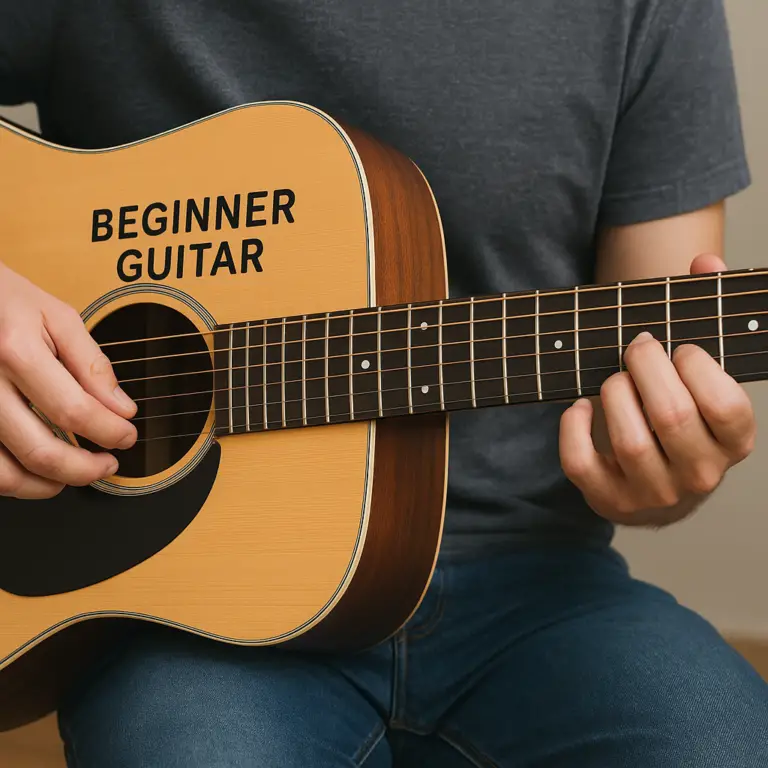
How to Hold the Guitar Comfortably
- Sit upright without tensing your shoulders.
- Let the guitar rest securely against your body or leg.
- Keep your fretting-hand wrist relaxed.
- Place your thumb behind the neck as a starting position, adjusting as needed for the chord or technique.
- Strum with a loose hand rather than clenching your wrist.
A teacher can help you find a comfortable posture. If your hands or wrists hurt sharply, stop and reassess your position; ordinary fingertip tenderness is different from persistent joint or muscle pain.
Learning Guitar: Your First Weeks of Practice
The first week is mostly about learning how to make clean sounds and change between a few chord shapes. It’s normal for chord changes to feel slow. They’re a coordination skill, not a test of whether you were secretly born with guitar fingers.
Beginner Chords and Easy Songs
Start with a small collection of open chords such as Em, G, C, D, and A. You don’t need all of them on day one. Practice placing your fingers close to the frets, one string at a time, and listen for clean notes.
A simple progression such as G–C–D can introduce chord changes and strumming. Use songs you’re allowed to learn from a legitimate source, such as a licensed songbook or an artist’s official materials. The goal is to connect the exercises to music you enjoy.
Building a Simple Daily Practice Routine
A short, consistent routine is more useful than a marathon that leaves your fingertips filing a formal complaint.
| Practice block | What to do |
|---|---|
| Tune up | Check each string before you start |
| Warm up | Play easy notes slowly and cleanly |
| Chord practice | Form two or three chords and check each string |
| Chord changes | Move between shapes at a comfortable tempo |
| Rhythm | Strum with a steady beat or metronome |
| Enjoyment | Finish with a riff, melody, or song you like |
Stop for breaks if your fingertips become sore. Consistency and relaxed technique are better goals than speed.
Learning With Apps, Videos, or a Teacher
- Apps can provide structured lessons, tuning tools, and practice reminders.
- Videos can demonstrate hand positions and strumming patterns, but the camera angle may hide details.
- A teacher can spot posture and technique problems in real time.
- Books and songbooks offer organized lessons and music in a format you can revisit.
Many learners mix these approaches. If a chord continually buzzes or your wrist aches, a teacher’s quick correction may save you hours of guessing.
Beginner Guitar Care and Maintenance
Basic care takes only a few minutes. Store the guitar safely, wipe it down after playing, and check its tuning regularly.
Cleaning, Storage, and Humidity
- Wipe strings and surfaces with a clean, soft cloth after playing.
- Keep the guitar away from direct heat, radiators, and hot cars.
- Store it in a case or on a stable stand away from foot traffic.
- Use products intended for guitar finishes; avoid household cleaners unless the manufacturer approves them.
- Be especially mindful of humidity changes with solid-wood instruments.
The Gibson guitar care guide offers manufacturer advice on maintaining instruments. Follow the guidance for your specific guitar’s finish and construction.
When to Change Guitar Strings
Change strings when they sound dull, feel rough or coroded, won’t stay in tune, or break. There is no universal calendar schedule: playing frequency, sweat, string material, and storage conditions all affect string life.
If you’re changing strings for the first time, follow the manufacturer’s instructions or ask a technician to demonstrate. Replacing one string at a time can help preserve tension and make the process less confusing for a beginner.
Common Beginner Guitar Problems
| Problem | Possible cause | What to try |
|---|---|---|
| String buzz | Fretting technique, low action, or setup issue | Press close to the fret; seek a setup if it persists |
| Guitar goes out of tune | New strings, tuning technique, or hardware issue | Retune carefully and check the instrument’s condition |
| Chord sounds muted | Finger touching a neighboring string | Adjust finger angle and check each string individually |
| Fretting feels difficult | High action, unfamiliar technique, or unsuitable fit | Take a break, check posture, and ask a technician if needed |
| Hands hurt | Strain, tension, or too much practice at once | Stop, relax your posture, and seek help for persistent pain |
Some adjustment is normal; persistent discomfort isn’t a badge of honor. If the guitar seems unusually hard to play, have it checked before assuming you need to build superhero fingertips.