Support our educational content for free when you purchase through links on our site. Learn more
What Is the Best Guitar for Beginners? 10 Picks 🎸

What is best guitar for beginners? It’s the guitar that fits your hands, suits the music you want to play, and feels comfortable enough that you’ll keep picking it up. For many first-timers, a well-set-up acoustic like the Yamaha FG800 is a dependable place to start; if you’re drawn to rock or want lighter-feling strings, an electric such as the Squier Sonic Stratocaster may be a better match.
We’ve seen beginners blame themselves for sore fingers or clumsy chords when the real culprit was a guitar with high action or a body that felt awkward to hold. A quick tryout—and, when needed, a professional setup—can turn the first few practice sessions from a wrestling match into actual music.
Below, we compare beginner acoustic, electric, and classical guitars, explain what to check before buying, and share picks for different players. The best choice may be less obvious than “acoustic first”—and that’s exactly why fit and musical goals matter.
Key Takeaways
- Choose for the music you want to play: acoustic suits unpluged strumming, electric fits amplified styles, and classical guitars offer nylon strings and a traditional sound.
- Comfort and setup matter more than hype: body size, neck feel, string type, and low, playable action can make practice much easier.
- Consider a Yamaha FG800 for steel-string acoustic, a Squier Sonic Stratocaster for electric, or a Yamaha C40 for classical.
- Try before buying when possible, and check the return policy if shopping online.
- Allow for essential gear: a tuner and picks are useful; an electric guitar also needs an amp or headphone-friendly setup.
👉 Shop our featured beginner guitar picks:
- Yamaha FG800: Amazon | Guitar Center | Sweetwater | Yamaha Official
- Squier Sonic Stratocaster: Amazon | Guitar Center | Sweetwater | Fender Official
- Yamaha C40 classical guitar: Amazon | Guitar Center | Sweetwater | Yamaha Official
Table of Contents
- ⚡️ Quick Tips and Facts
- 🎸 What Makes a Guitar Beginner-Friendly?
- Acoustic, electric, or classical: which is easiest to learn?
- How body size, neck shape, and string type affect comfort
- 📜 A Brief History of Beginner Guitars
- 🏆 Best Beginner Guitars: Our Top Picks
- 1. Best beginner acoustic guitar
- 2. Best beginner electric guitar
- 3. Best beginner classical guitar
- 4. Best beginner guitar for small hands
- 5. Best beginner guitar for kids
- 6. Best beginner guitar for adults
- 7. Best beginner guitar for rock and metal
- 8. Best beginner guitar for country and fingerstyle
- 9. Best travel guitar for beginners
- 10. Best left-handed guitar for beginners
- 🔍 How to Choose Your First Guitar
- Match the guitar to the music you want to play
- Choose the right size and scale length
- Nylon vs. steel strings
- Solid top vs. laminate construction
- Electric guitar pickups, bridge types, and controls
- New vs. used: what first-time buyers should know
- 📊 Beginner Guitar Comparison: Acoustic vs. Electric vs. Classical
- 🖐️ Comfort, Playability, and Beginner Guitar Setup
- Action, neck relief, and fret buzz explained
- How to check a guitar before buying
- When to get a professional setup
- 🎒 What Else Do You Need to Start Playing?
- Essential guitar accessories
- Beginer guitar bundles: what’s useful and what’s fluff
- Amplifiers and headphones for new electric players
- 🎼 Your First Weeks of Guitar Practice
- How to hold a guitar and tune it
- First chords, strumming, and simple songs
- A practical beginner practice routine
- Common beginner mistakes and how to fix them
- 🧰 Guitar Care and Maintenance for Beginners
- Changing guitar strings for the first time
- Cleaning, storage, and humidity basics
- 💡 Quick Tips for Buying Your First Guitar
- ✅ Conclusion
- 🔗 Recommended Links
- ❓ FAQ
- What is the best guitar for beginners?
- Is acoustic or electric guitar easier for a beginner?
- Should beginners start with a classical guitar?
- What size guitar should a beginner buy?
- Are cheap beginner guitars worth buying?
- How much should a beginner spend on a first guitar?
- Can adults learn on a beginner guitar?
- How long does it take to learn guitar?
- 📚 Reference Links
⚡️ Quick Tips and Facts
If you’re comparing first instruments, start with our guide to the best guitar brands for beginners, then choose a guitar that fits your hands, musical goals, and willingness to plug into an amplifier. The best beginner guitar is the one that feels comfortable and makes you want to pick it up tomorrow.
| Quick question | Our short answer |
|---|---|
| Acoustic or electric? | Choose the one that suits the music you want to play. Electric strings are often easier to press, but an electric guitar also needs an amplifier or headphone setup. |
| Steel or nylon strings? | Steel strings suit many pop, folk, and country styles; nylon strings have a softer feel and classical tone. |
| Full-size or smaller? | Try the guitar in playing position. Smaller instruments can help with reach and comfort, but size should fit the player—not a rule of thumb. |
| What matters most? | Comfortable playability, reliable tuning, a sensible setup, and a sound you enjoy. |
| Is an expensive guitar necessary? | No. A well-adjusted entry-level instrument can be an excellent first guitar. |
- ✅ Get the guitar set up properly. A guitar with excessively high strings can make fretting feel like a hand workout nobody asked for.
- ✅ Try before you buy when possible. A short test can reveal whether the neck, body, and sound suit you.
- ❌ Don’t choose by looks alone. A beautiful guitar that hurts to play may spend more time decorating a room than making music.
- 🎯 Our practical advice: Prioritize fit and setup before fancy tonewoods or extra electronics.
🎸 What Makes a Guitar Beginner-Friendly?
A beginner-friendly guitar is not necessarily a special “starter” model. It is an instrument that stays in tune, feels manageable, and lets you practice without wrestling the strings. Our Guitar Buying Guide covers the broader shopping process; here, we’ll focus on the details that matter most when you’re learning.
Acoustic, electric, or classical: which is easiest to learn?
There is no universal winner. Your preferred music is a better starting point than a one-size-fits-all claim about difficulty.
| Guitar type | Strengths for beginners | Possible drawbacks | A good fit if you want to… |
|---|---|---|---|
| Steel-string acoustic | Portable, no amplifier required, works well for strumming | Steel strings can feel firm on fingertips; a large body may be uncomfortable | Play folk, country, singer-songwriter, or pop arrangements |
| Electric | Lighter strings and lower string tension can make fretting and bending easier; volume is adjustable | Requires an amplifier or headphone solution; more controls to learn | Play rock, pop, blues, metal, or lead guitar |
| Classical | Nylon strings feel softer to many players; a warm, rounded sound | Wider neck and classical technique may not suit every hand or musical goal | Learn classical repertoire, flamenco, or nylon-string fingerstyle |
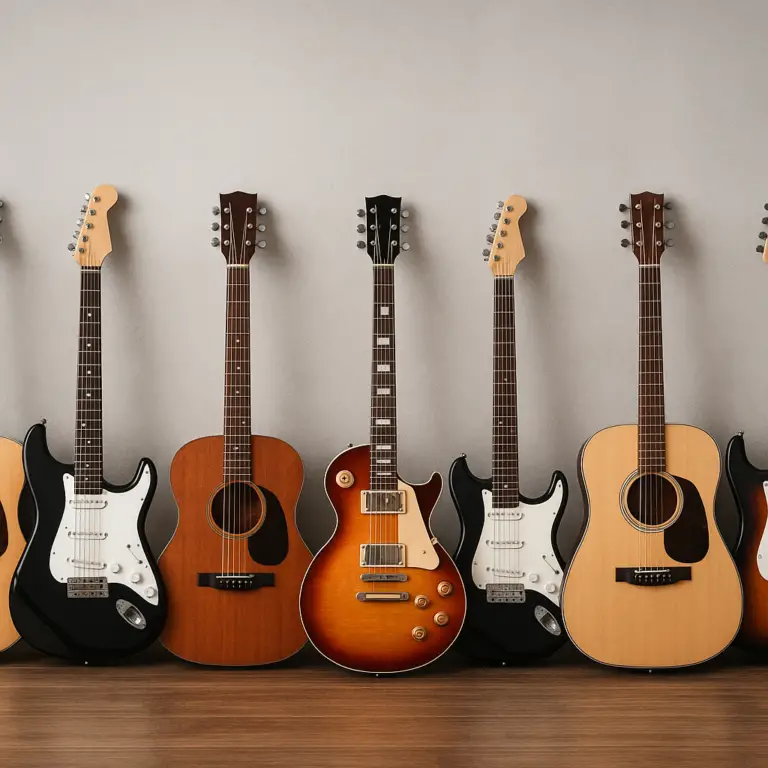
The Yamaha FG800 represents a familiar steel-string acoustic approach, while the Squier Sonic Stratocaster is an example of an accessible electric format. For a nylon-string option, see Yamaha’s classical guitar range.
The featured first video makes a useful point: guitar choice is personal. It compares string types, body sizes, woods, construction, and built-in electronics, then returns to the most practical test—whether you feel excited to play the instrument. We agree. A spec sheet can tell you what a guitar is made of; it can’t tell you whether its neck feels natural in your hand.
How body size, neck shape, and string type affect comfort
Three features can make a guitar feel welcoming—or oddly resistant:
- Body size and shape: A large dreadnought may sound full but feel bulky against a smaller player. Parlor and concert shapes can be easier to hold, though “smaller” does not automatically mean “better.”
- Neck width and profile: A narrower neck can make some chord shapes easier to reach; another player may prefer more room between strings.
- String type and action: Nylon strings are generally less abrasive to fingertips than steel strings. On any guitar, low, well-adjusted action—the height of strings above the frets—can reduce the effort needed to fret notes.
Don’t confuse temporary fingertip tenderness with a guitar that is poorly set up. But if notes require excessive force or the instrument causes persistent discomfort, ask a qualified technician to inspect it. Fender’s overview of guitar setup provides helpful context on adjustment and playability.
📜 A Brief History of Beginner-Friendly Guitars
The guitar’s modern beginner choices grew from centuries of design changes. The classical guitar developed from earlier plucked-string instruments, while steel-string acoustics became popular for louder, brighter playing. Electric guitars later expanded the instrument’s reach into amplified jazz, blues, rock, and pop.
That history explains why there is no single “correct” first guitar. A nylon-string classical guitar, a steel-string acoustic, and a solid-body electric are built for different sounds and playing traditions. The Metropolitan Museum of Art’s guitar collection offers a glimpse at the instrument’s long evolution, while the Smithsonian National Museum of American History documents musical instruments across American music history.
For a modern first instrument, the important question isn’t which design came first. It’s which design will help you play the music you care about.
🏆 Best Beginner Guitars: Our Top Picks
There isn’t one guitar we’d recommend to every beginner, so these picks represent different playing styles and needs. Use them as a shortlist, then check the exact model, size, and setup before buying. For more brand comparisons, visit our Guitar Brands Showcase and Guitar Brand Guides.
1. Best beginner acoustic guitar
Yamaha FG800 is a strong starting point for players who want a traditional steel-string dreadnought. Yamaha lists a solid spruce top and scalloped bracing among its construction details; those features help make it a compelling option for strumming and general acoustic playing. Check the Yamaha FG800 product page for current specifications.
Benefits
- Full, familiar steel-string acoustic sound
- No amplifier needed
- A practical platform for chords, strumming, and songwriting
Trade-offs
-
Dreadnought bodies can feel large for some players
-
Steel strings can be demanding on tender fingertips
-
Acoustic playability still depends heavily on setup
-
Yamaha FG800: Amazon | Guitar Center | Sweetwater | Yamaha Official
2. Best beginner electric guitar
Squier Sonic Stratocaster offers the familiar Strat-style shape and controls in an entry-level format. Its three single-coil pickups provide a range of bright, clear tones, though players seeking thick, high-gain sounds may prefer a humbucker-equipped guitar. See Fender’s official Squier Sonic Stratocaster specifications.
Benefits
- Comfortable, versatile design
- Many pickup combinations for exploring tones
- Electric strings are often easier to fret than typical acoustic strings
Trade-offs
-
Needs an amplifier, headphone amp, or compatible audio setup
-
Single-coil pickups can pick up more electrical hum than humbuckers
-
The guitar’s versatility comes with controls you’ll need to learn
-
Squier Sonic Stratocaster: Amazon | Guitar Center | Sweetwater | Fender Official
3. Best beginner classical guitar
Yamaha C40 is a nylon-string classical guitar frequently considered by new players who want a traditional classical instrument. Its softer-feling strings may appeal to beginners, but its wider neck and classical layout won’t be the best fit for everyone. Check Yamaha’s classical guitar lineup for current product details.
Benefits
- Nylon strings can feel gentler on fingertips
- No amplifier required
- Well suited to classical repertoire and nylon-string techniques
Trade-offs
-
Wider neck may make some chord shapes feel less comfortable
-
Not the same sound or feel as steel-string acoustic
-
A classical guitar is not automatically the easiest choice for every player
-
Yamaha C40: Amazon | Guitar Center | Sweetwater | Yamaha Official
4. Best beginner guitar for small hands
Small hands do not automatically require a short-scale instrument. First, consider neck shape, string spacing, action, and how comfortably you can reach the chords you want to play. A Fender Mustang or another short-scale electric may be worth trying, while a compact acoustic such as a Taylor GS Mini is another option for players who want an acoustic sound in a smaller body.
Benefits
- Shorter scale can make stretches and bends feel more manageable
- Compact bodies may be easier to hold
- Several full-featured guitars are available in shorter scales
Trade-offs
- A smaller instrument may have a different feel and sound from a full-size guitar
- Neck width still matters; scale length is only one part of fit
- Some compact models cost more than basic full-size options
Start by comparing the Fender Mustang range and Taylor GS Mini range. Ask a teacher or shop technician to help you assess fit rather than guessing from your hand size alone.
5. Best beginner guitar for kids
For children, comfort, safe handling, and a proper fit matter more than buying the smallest guitar available. Yamaha offers student-size classical and acoustic models; Fender also makes compact instruments in several ranges. A qualified music teacher or instrument shop can help match size to the player’s reach and posture.
Benefits
- Smaller bodies can be easier for young players to hold
- Correct fit supports better posture and more relaxed practice
- A child who likes the instrument is more likely to keep playing
Trade-offs
- Children grow; a very small guitar may be outgrown
- Some mini guitars have different tuning or scale feel
- A cheap, poorly adjusted instrument can make learning unnecessarily frustrating
For size options, explore Yamaha’s guitar range or Fender’s guitar range. If possible, have the child hold and play the guitar before purchase.
6. Best beginner guitar for adults
Adults can learn on any well-fitting guitar. You do not need a special “adult beginner” model; you need an instrument that matches your musical goals and body comfortably. The Yamaha FG800, Squier Sonic Stratocaster, and Yamaha C40 represent three distinct starting points: steel-string acoustic, electric, and classical.
Benefits
- Broad choice across sizes, shapes, and playing styles
- A good setup can make an entry-level guitar comfortable
- You can choose directly around the music you want to play
Trade-offs
- Large acoustic bodies can be awkward for some players
- Electric guitars require extra equipment
- A model marketed to beginners may still need a setup
Try several neck profiles and body shapes at a shop. If you’re comparing acoustic models, our Acoustic Guitars category can help you narrow the field.
7. Best beginner guitar for rock and metal
For rock and metal, an electric guitar is the natural starting point. Look for a comfortable neck, stable tuning, and pickups suited to the sound you want. Humbucker pickups are often chosen for higher-gain styles because they tend to produce a thicker sound and resist common single-coil hum. Models from Squier, Epiphone, and Ibanez offer a variety of beginner-accessible designs.
Benefits
- Electric guitar supports distortion, effects, bends, and lead techniques
- Easier volume control for quiet practice with headphones
- Many pickup and bridge configurations suit different subgenres
Trade-offs
- You’ll need an amplifier or headphone-friendly alternative
- Floating tremolo bridges can be harder to maintain and restring
- High-gain sounds can expose technique and tuning problems
A fixed bridge is often simpler for a first guitar. Compare the Ibanez electric guitar range and Epiphone electric guitars.
8. Best beginner guitar for country and fingerstyle
Country strumming and fingerstyle often work beautifully on steel-string acoustics, but tone and comfort depend on the player. A smaller concert or auditorium body can be easier to handle than a dreadnought, while a dreadnought may suit players who want more bass and projection. Consider Yamaha, Taylor, and Martin models across several body sizes.
Benefits
- Acoustic guitar is ready to play without an amplifier
- Steel strings give a bright, articulate sound used in many country styles
- Smaller bodies can make fingerstyle playing and seated practice comfortable
Trade-offs
- Fingerpicking requires control and coordination that develop over time
- A bright steel-string tone may not suit players seeking a mellow nylon sound
- Some acoustic body shapes may feel too large for smaller players
For body-size comparisons, look through the Taylor acoustic guitar range and Martin acoustic guitar range.
9. Best travel guitar for beginners
A travel guitar can be a smart choice if a full-size body feels cumbersome or you need an instrument that’s easier to carry. Taylor GS Mini models are compact steel-string acoustics; Yamaha APXT2 models add onboard electronics in a smaller acoustic-electric format. Check current specifications carefully, because travel models vary in scale, body size, and electronics.
Benefits
- Easier to carry and store
- Compact body may suit smaller players
- Some models include electronics for plugging in
Trade-offs
-
Sound and feel may differ from a full-size guitar
-
Shorter scale changes string tension and spacing
-
Small size doesn’t guarantee a comfortable neck
-
Taylor GS Mini: Amazon | Guitar Center | Sweetwater | Taylor Official
-
Yamaha APXT2: Amazon | Guitar Center | Sweetwater | Yamaha Official
10. Best left-handed guitar for beginners
Left-handed players should choose the orientation that feels natural, then look for a properly made left-handed model. Don’t assume you must learn right-handed, and don’t assume every guitar can be flipped without consequences. Reversing a right-handed guitar can affect string order, nut slots, bridge compensation, and controls.
Squier, Yamaha, and Epiphone offer left-handed options in some ranges. Confirm that the exact model is made for left-handed playing before ordering.
Benefits
- Properly configured left-handed guitar puts controls and strings in the intended orientation
- A left-handed model can support a natural playing posture
- Several popular designs have left-handed variants
Trade-offs
- Color and model choices may be more limited
- Stock availability can vary
- Reversed right-handed guitars may need professional modification
Search the Squier lineup and Yamaha guitar range, then verify the handedness in the exact product specifications.
🔍 How to Choose Your First Guitar
The easiest way to choose is to answer a few practical questions before falling in love with a glossy finish. Our Guitar Buying Guide has additional buying advice; these steps help keep your shortlist focused.
Match the guitar to the music you want to play
- Name three artists or songs you want to learn. Their sounds will give you clues about guitar type.
- Choose the right family. Acoustic for unpluged strumming, electric for amplified styles, classical for nylon-string repertoire.
- Consider where you’ll practice. An electric guitar may be ideal if you want quiet headphone practice; an acoustic is simpler if you want to play without extra gear.
- Try the instrument in playing position. Check seated and standing comfort if you plan to perform.
- Ask for a setup check. Even a good model can feel difficult if its action is too high.
Choose the right size and scale length
A guitar’s scale length is the vibrating length of the strings from nut to bridge. A shorter scale can make stretches feel easier for some players, while body dimensions and neck shape also affect comfort. Don’t rely on age or height charts alone—people’s hands and playing preferences vary.
| What to check | What to look for |
|---|---|
| Seated fit | The guitar rests comfortably without forcing your shoulder or wrist into an awkward position |
| Fret reach | You can form basic open chords without painful stretching |
| Neck feel | Your thumb and fretting hand move naturally along the neck |
| Body depth | The instrument doesn’t push your arm or torso into an uncomfortable position |
| Standing balance | The guitar stays stable on a strap without constant adjustment |
Nylon vs. steel strings
Nylon and steel strings feel and sound different. Nylon-string guitars are common in classical music and can feel softer under the fingers. Steel-string acoustics are brighter and are used widely for folk, country, rock, and pop. Electric guitar strings are also metal, but their lower tension and lighter gauges often make them easier to press than acoustic steel strings.
Don’t put steel strings on a classical guitar unless its manufacturer specifically approves them; the instrument is not designed for that tension. For an accessible introduction to acoustic guitar types, consult Yamaha’s acoustic guitar guide.
Solid top vs. laminate construction
A solid top uses a single piece or joined pieces of solid wood for the soundboard. Laminate construction uses layered wood. In broad terms, solid tops can respond and resonate differently as the guitar is played, while laminate designs can be practical and less sensitive to some environmental changes. But materials alone do not tell you whether a particular guitar sounds or feels good.
| Construction | Potential advantages | Considerations |
|---|---|---|
| Solid top | Often valued for responsiveness and resonance | Needs sensible care and can be more affected by environmental conditions |
| Laminate top or body | Durable and practical for everyday use | Tone and response vary by model; “laminate” doesn’t automatically mean poor quality |
| Mixed construction | Combines materials in different parts of the guitar | Check the manufacturer’s exact specifications |
The featured video discusses this trade-off alongside tonewoods and body shapes. We’d add one caveat: listen to and play the actual guitar when possible. Wood descriptions are useful context, not a substitute for your ears.
Electric guitar pickups, bridge types, and controls
Electric-guitar terminology can look like a cockpit at first. Keep the first decision simple:
- Single-coil pickups: Often bright and articulate; can be more prone to electrical hum.
- Humbuckers: Designed to reduce common single-coil hum and often offer a thicker, fuller sound.
- Fixed bridge: Usually simpler to tune, restring, and maintain.
- Tremolo bridge: Lets players change pitch with an arm, but some designs can require more careful setup.
- Pickup selector and knobs: Let you choose pickup combinations and adjust volume or tone.
For many beginners, a straightforward fixed-bridge guitar makes maintenance easier. That’s a practical preference, not a rule; choose the sound and feel you like.
New vs. used: what first-time buyers should know
A used guitar can be an excellent value, but a bargain stops being a bargain if it needs major repairs. If you’re new to guitar, bring along a knowledgeable player or ask a shop technician to inspect it.
Check:
- Neck for obvious twisting or damage
- Frets for sharp edges, deep wear, or buzzing
- Tuning machines for smooth operation
- Bridge and top for lifting, cracks, or separation
- Electronics by testing every control and pickup
- Seller’s return policy and any included case or accessories
Buying new may offer clearer warranty and return options. Used buying offers more choice and potentially better value. Condition and setup matter more than the word “new” or “used.”
📊 Beginner Guitar Comparison: Acoustic vs. Electric vs. Classical
| Feature | Steel-string acoustic | Electric | Classical |
|---|---|---|---|
| Extra equipment | None required to play acoustically | Amplifier or headphone setup generally needed | None required |
| String feel | Firm, depending on gauge and setup | Often lighter-feling and easier to fret | Nylon may feel gentler; neck is often wider |
| Sound | Bright, resonant, unpluged | Amplified and highly adjustable | Warm, rounded, nylon-string tone |
| Common styles | Folk, country, pop, singer-songwriter | Rock, blues, metal, pop, jazz | Classical, flamenco, nylon-string fingerstyle |
| Portability | High | Guitar is portable; full rig adds equipment | High |
| Beginner drawback | Steel strings and body size can be challenging | More gear and controls to learn | Wider neck may not suit every player |
The right choice depends on what you’ll actually play. A steel-string acoustic wins on simplicity; an electric can win on lower fretting effort and quiet practice; a classical guitar makes sense when nylon-string sound and technique are the goal.
🖐️ Comfort, Playability, and Beginner Guitar Setup
A guitar’s setup can matter as much as its model name. If playing feels unusually hard, check the instrument before blaming your hands. Guitar action, neck relief, fret condition, and string choice all affect how a guitar responds. Fender’s setup articles provide manufacturer guidance on common adjustment topics.
Action, neck relief, and fret buzz explained
- Action: The distance between strings and frets. Excessively high action can make notes harder to fret.
- Neck relief: A slight curve in the neck that allows strings to vibrate. Too much or too little can cause playability problems.
- Fret buzz: A rattling sound when a string contacts a fret. It can come from technique, setup, uneven frets, or other causes.
A little adjustment can improve a guitar dramatically, but neck and bridge work should be handled carefully. If you’re unsure, consult a qualified guitar technician rather than turning every screw until the instrument becomes a science experiment.
How to check a guitar before buying
- Hold it as you would while practicing. Check body comfort and balance.
- Play each open string. Listen for rattles or dead notes.
- Press a few notes across the neck. Check that fretting doesn’t require excessive force.
- Test basic chords. Try a chord such as G or C, or the shapes you’re learning.
- Check tuning stability. Tune the guitar, play for a few minutes, then check again.
- Inspect the finish and hardware. Look for cracks, loose parts, or signs of damage.
- Ask about setup and returns. A trustworthy shop should be able to explain what has been checked.
If you’re buying online, review the seller’s return and warranty terms before ordering. Ask whether the instrument receives a setup before shipping.
When to get a professional setup
A setup is worth considering if:
- Strings feel unusually high
- Notes buzz even with careful fretting
- Intonation is noticeably off
- The guitar won’t stay in tune despite fresh strings and sensible tuning
- The action changes after a move between climates
- You’re not sure how to adjust the truss rod or bridge
A technician can also recommend a string gauge that suits your playing. For beginners, comfort is not cheating; it’s a sensible way to make practice more inviting.
🎒 What Else Do You Need to Start Playing?
You can begin with very little. The essentials depend on guitar type, but a few inexpensive accessories can make learning smoother. For equipment ideas across the wider instrument family, browse our Guitar Brands Showcase.
Essential guitar accessories
| Accessory | Needed? | Why it helps |
|---|---|---|
| Tuner | Yes | Keeps the guitar in tune; a clip-on tuner is convenient |
| Picks | Helpful | Try several thicknesses to find a comfortable feel |
| Strap | Optional for seated practice; useful standing | Supports the guitar while you play |
| Guitar stand or case | Recommended | Protects the instrument and makes storage safer |
| Spare strings | Recommended | A broken string shouldn’t end practice for the week |
| Capo | Optional | Changes key while preserving familiar chord shapes |
| Music stand | Optional | Keeps charts or a tablet at a comfortable height |
A phone tuner can work, but a dedicated clip-on tuner is convenient in noisy rooms. For electric guitar, add a suitable amplifier, instrument cable, or headphone-compatible practice device.
Beginner guitar bundles: what’s useful and what’s fluff
Bundles can be convenient, but inspect what’s included. A useful bundle might include a tuner, strap, picks, cable, and a reasonable practice amplifier. A pile of accessories is less impressive if the instrument needs a setup or the amplifier sounds unpleasant.
Before choosing a bundle:
- Confirm the exact guitar model
- Check that the amplifier or accessories are functional and suitable
- Look for a tuner and instrument cable if you need them
- Don’t let a bundle persuade you to buy an uncomfortable guitar
Amplifiers and headphones for new electric players
A beginner electric setup can stay simple: guitar, cable, and a small practice amp. If quiet practice matters, choose an amplifier with a headphone output or a compatible headphone amp. Fender, Yamaha, Boss, and Blackstar all make practice-oriented equipment; compare their official product details before buying.
- Fender Mustang practice amps: Amazon | Guitar Center | Sweetwater | Fender Official
- Boss Katana practice amps: Amazon | Guitar Center | Sweetwater | Boss Official
🎼 Your First Weeks of Guitar Practice
A short, regular routine beats one heroic practice session followed by a week of silence. Start slowly, keep the guitar within easy reach, and make room for songs you enjoy. The Guitar Learning Resources from Fender Play and JustinGuitar beginner lessons provide structured starting points.
How to hold a guitar and tune it
- Sit upright and relax your shoulders. Avoid hunching over the fretboard.
- Rest the guitar securely on your leg or use a strap while standing.
- Keep your fretting wrist relaxed. Don’t squeeze harder than needed to make a clean note.
- Tune each string to standard tuning: E–A–D–G–B–E, from lowest-pitched to highest-pitched.
- Recheck tuning after playing. New strings and temperature changes can affect tuning stability.
A tuner is helpful, but training your ear over time is valuable too. Yamaha’s tuning guide explains basic guitar concepts and care.
First chords, strumming, and simple songs
Start with a few open chords, such as Em, G, C, D, and A, then practice moving between them slowly. Use a light, steady strum rather than trying to play loudly. Clean transitions matter more than speed.
A useful sequence:
- Form one chord and check each string
- Strum slowly and listen for muted notes
- Move to the next chord without rushing
- Repeat the change several times
- Add a simple down-strum pattern before adding more complex rhythms
Pick songs with a small number of chords. Playing something recognizable can make practice feel less like homework and more like, well, playing guitar.
A practical beginner practice routine
Try this 20-minute template and adjust it to your schedule:
| Time | Practice activity |
|---|---|
| 2 minutes | Tune up and loosen your hands |
| 5 minutes | Practice chord shapes or individual notes |
| 5 minutes | Work on chord changes or a short riff |
| 5 minutes | Practice rhythm with a metronome |
| 3 minutes | Play a song or phrase you enjoy |
If 20 minutes feels like too much, practice for 10. Consistency beats duration when you’re building a habit. Stop if you feel sharp pain; ordinary fingertip sensitivity is different from joint or wrist pain.
Common beginner mistakes and how to fix them
- Squezing the neck too hard: Use only enough pressure for a clear note.
- Practicing too fast: Slow down until you can play cleanly, then build speed gradually.
- Ignoring tuning: Tune at the start of practice and recheck as needed.
- Skipping rhythm: Count or use a metronome, even for simple chord work.
- Buying gear before learning what you need: Start with essentials, then add equipment as your interests develop.
- Blaming yourself for a difficult guitar: Ask a teacher or technician to check the setup and fit.
🧰 Guitar Care and Maintenance for Beginners
Basic care helps your guitar stay reliable. You don’t need a workshop full of tools—just sensible storage, clean hands, and an occasional check of strings and hardware. For acoustic-specific information, visit our Acoustic Guitars category.
Changing guitar strings for the first time
- Buy the correct string type and gauge. Check the manufacturer’s recommendation.
- Change one string at a time if you’re new to the process; this keeps tension on the neck.
- Losen and remove the old string carefully.
- Fit the new string at the bridge and tuning post according to the guitar’s design.
- Tune gradually and stretch gently.
- Retune and check again after playing for a while.
Classical guitars and steel-string acoustics use different string-end designs, so buy the right set. If the process feels intimidating, ask a local shop to demonstrate it once.
Cleaning, storage, and humidity basics
- Wipe strings and the guitar body with a soft, clean cloth after playing.
- Store the guitar in a case or stable stand away from direct heat and sunlight.
- Avoid leaving it in a hot car or beside a heater.
- Use products made for guitar finishes; household cleaners may damage some surfaces.
- For solid-wood instruments, follow the manufacturer’s humidity-care guidance.
The Taylor Guitar care guide and Martin care and maintenance resources explain manufacturer-specific upkeep. If a guitar develops a crack, lifting bridge, or sudden neck change, contact a repair professional.
💡 Quick Tips for Buying Your First Guitar
- Choose by music and comfort first. Brand reputation comes next.
- Try several guitars if you can. Small differences in neck feel matter.
- Ask about a setup. A comfortable instrument encourages practice.
- Budget for essentials. Tuner, picks, and—if electric—an amp or headphone solution.
- Check the return policy and warranty. Especially when shopping online.
- Don’t overead tonewood claims. Construction matters, but your ears and hands get the final vote.
- Keep your options open. A beginner guitar doesn’t have to be replaced as soon as you improve; many players keep their first instrument for years.
- Make the final test simple: Can you hold it comfortably, fret a few notes, and imagine wanting to play it again tomorrow? 🎸