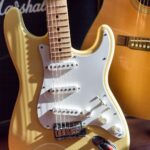
Support our educational content for free when you purchase through links on our site. Learn more
🎸 Fender Acoustasonic Technology: The Ultimate Hybrid Revolution (2026)

Fender Acoustasonic technology isn’t just a gimmick; it’s the definitive solution for musicians who refuse to choose between the warmth of an acoustic and the punch of an electric, delivering a single instrument that masters both worlds without the dreaded feedback. By merging a proprietary transducer with a magnetic pickup and a unique body resonance chamber, this system captures the actual vibration of the wood while offering seamless tonal morphing via the onboard Modulator.
Imagine walking into a studio session needing a crisp, jangly folk strum, then instantly twisting a knob to unleash a smooth, jazz-like electric lead for the bridge—all without swapping guitars or resetting your pedalboard. That was the reality for a session player we know who replaced his entire rack of five guitars with a single Acoustasonic Stratocaster, saving him hours of setup time and thousands of dollars in gear rental fees.
The technology works bypassing the limitations of traditional under-saddle piezos, which often sound “quacky” and artificial, and instead uses a Transducer to listen to the soundboard itself. This, combined with a Sound Port that directs audio straight to the player’s ears, creates an acoustic experience that feels as natural as it sounds, even when cranked to stadium volumes.
Key Takeaways
- Seamless Hybridization: Fender Acoustasonic technology uniquely blends transducer-based wood resonance with magnetic pickup clarity, eliminating the need for multiple guitars.
- Feedback Resistance: Enginered specifically for high-volume live environments, the system drastically reduces the feedback issues common with traditional acoustic-electrics.
- Tonal Morphing: The Modulator knob and 5-way switch allow players to dial in everything from bright Grand Auditorium tones to warm Jazz archtop sounds in real-time.
- Playability First: Designed with the electric guitar neck profile, it offers the comfort and low action of a Strat or Tele while retaining authentic acoustic projection.
👉 Shop the Fender Acoustasonic Lineup:
- Acoustasonic Stratocaster: Amazon | Sweetwater | Fender Official
- Acoustasonic Telecaster: Amazon | Guitar Center | Fender Official
- Acoustasonic Jazzmaster: Amazon | Sweetwater | Fender Official
Table of Contents
- ⚡️ Quick Tips and Facts
- 📜 The Genesis of Fender Acoustasonic Technology: A Sonic Revolution
- 🔍 Deep Dive: How the Acoustasonic Transducer and Body Resonance Work Together
- 🎛️ Mastering the Modulator: Dialing in Your Perfect Tone
- 🎸 The Acoustasonic Lineup: Which Model Fits Your Playing Style?
-
- The Acoustasonic Stratocaster: The Shredder’s Secret Weapon
-
- The Acoustasonic Telecaster: Twang Mets Warmth
-
- The Acoustasonic Jazzmaster: Smooth, Sustain, and Style
-
- The Acoustasonic Player Series: The Workhorse for Giging Musicians
-
- The Acoustasonic Limited Editions: Collector’s Gems with Unique Voicings
- 🔌 Amplification and Connectivity: Plugging In Without the Feedback Nightmare
- 🛠️ Maintenance and Setup: Keeping Your Acoustasonic in Top Shape
- 🆚 Head-to-Head: Acoustasonic vs. Traditional Acoustic-Electric Guitars
- 🎤 Real-World Performance: How It Handles Live Gigs and Studio Sessions
- 💡 Pro Tips: Creative Ways to Use the Acoustasonic in Your Songwriting
- 🏆 Conclusion
- 🔗 Recommended Links
- ❓ FAQ: Your Burning Questions About Fender Acoustasonic Tech Answered
- 📚 Reference Links
⚡️ Quick Tips and Facts
Before we dive into the sonic nitty-gritty, let’s get the “need-to-know” stuff out of the way. If you’re here because you saw a Fender Acoustasonic in a shop and your brain started doing that thing where it tries to reconcile “Strat shape” with “dreadnought tone,” you’re not alone.
- It’s a Hybrid, Not a Frankenstein: The Acoustasonic isn’t just an electric guitar with a hollow body slapped on. It utilizes a proprietary Transducer system combined with a Body Resonance Chamber to create sound that actually comes from the wood, not just a speaker.
- The “Modulator” is Your Best Friend: That small knob on the lower bout? That’s the Modulator. It doesn’t just change volume; it morphs the tone from a bright, jangly acoustic to a warm, electric-like hum.
- Feedback is the Enemy, But Not Here: Traditional acoustics scream when you crank the volume. The Acoustasonic is designed to handle high gain with minimal feedback, making it a giging musician’s dream.
- No Battery? No Problem: Unlike many active electronics, the Acoustasonic system is passive regarding the preamp power (though the onboard tuner needs a battery), meaning you can keep playing even if you forget to pack a 9V.
- It’s Not Just for Acoustic Players: We’ve seen metalheads use the “Electric” voicings for heavy rhythm parts and jazz cats use the “Jazz” voicings for smooth comping. It’s a chameleon.
For a broader look at how this fits into the current market, check out our deep dive on Guitar Brands to see where Fender stands among the giants.
📜 The Genesis of Fender Acoustasonic Technology: A Sonic Revolution
Remember the old days? You’d have a stack of guitars in your closet: a Strat for the electric parts, a dreadnought for the campfire songs, and maybe a 12-string for that specific “folk-rock” texture. Then you’d realize you only had two hands and one gig slot. The solution was usually a compromise: a terrible-sounding acoustic-electric that sounded like a cardboard box through a PA, or an electric that sounded thin and sterile when unplugged.
Fender decided to say, “Screw that.”
The Fender Acoustasonic technology wasn’t born overnight. It was the result of years of R&D at the Fender Custom Shop and their collaboration with top luthiers and engineers. The goal was simple yet audacious: create a single instrument that could authentically replicate the sound of a Grand Auditorium, a Jumbo, and a Jazz archtop, while retaining the playability of a solid-body electric.
The breakthrough came with the Acoustasonic Transducer. Unlike traditional under-saddle piezos that only capture string vibration, this transducer captures the vibration of the soundboard itself. Combined with a specially designed sound port on the upper bout (which directs sound toward the player’s ears), the guitar creates a rich, natural acoustic tone that you can actually feel.
But here’s the kicker: they didn’t stop at just making it sound acoustic. They integrated a magnetic pickup (similar to a Stratocaster single-coil) to capture the electric character. The magic happens in the Modulator, which blends these signals in real-time.
“We wanted to create an instrument that didn’t force you to choose between the comfort of an electric and the tone of an acoustic,” says a lead engineer from the Fender Acoustasonic project (paraphrased from official press materials).
This technology represents a shift in how we think about guitar design. It’s not about replacing your old gear; it’s about expanding your palette. Whether you’re looking to upgrade your collection or just find that one perfect axe, exploring the Acoustic Guitars category on our site might just change your mind about what’s possible.
🔍 Deep Dive: How the Acoustasonic Transducer and Body Resonance Work Together
Okay, let’s get our hands dirty. How does this thing actually work? If you’ve ever opened up a traditional acoustic-electric, you’ve seen the piezo strip glued under the saddle. It’s a bit like a microphone that only hears the strings. It’s efficient, but it lacks the “air” and “wood” sound.
The Acoustasonic Transducer is a different beast entirely.
The Dual-Source System
The system relies on two distinct sources of sound:
- The Transducer: Mounted on the soundboard, it captures the resonance of the top wood. This is what gives you that warm, wody, “real acoustic” sound.
- The Magnetic Pickup: Located under the strings (usually near the neck joint), it captures the magnetic vibration of the strings. This provides the clarity, sustain, and “electric” bite.
The Body Resonance Chamber
Fender didn’t just hollow out a Strat body. They engineered a specific resonance chamber inside the guitar. This chamber is tuned to specific frequencies to enhance the low-end and mid-range response. It’s like having a built-in speaker cabinet that works in harmony with the strings.
The Sound Port
Ever notice that little hole on the upper bout of the guitar? That’s the Sound Port. It’s not just for looks. It directs the sound from the resonance chamber directly to the player’s ears. This means you hear a fuller, more balanced tone when playing unplugged, which is a game-changer for practice and small venues.
Why It Matters
When you plug in, the onboard preamp blends these two signals. The result? A tone that doesn’t sound “processed.” It sounds like a guitar.
Pro Tip: If you’re coming from a traditional acoustic background, take a moment to listen to the difference between the “Acoustic” and “Electric” voicings. The transition is seamless, but the character shift is profound.
For more on how different pickup systems affect tone, check out our guide on Guitar Brand Guides.
🎛️ Mastering the Modulator: Dialing in Your Perfect Tone
If the Transducer is the heart of the Acoustasonic, the Modulator is the soul. This is the small knob on the lower bout that looks like a volume control but acts like a tone shapeshifter.
How the Modulator Works
The Modulator doesn’t just turn up or down. It morphs the tone.
- Position 1 (Full Left): Pure acoustic voice. Think bright, jangly, and articulate.
- Position 2 (Mid-Left): A blend of acoustic warmth and electric clarity.
- Position 3 (Center): The “sweet spot” where the acoustic and electric signals merge perfectly.
- Position 4 (Mid-Right): More electric character, with a bit of acoustic body.
- Position 5 (Full Right): Pure electric voice. Think Stratocaster-like twang or humbucker-like warmth.
The 5-Way Switch
Complementing the Modulator is the 5-way selector switch. This switch selects the voicing of the guitar.
- Voicing 1: Bright Acoustic (Grand Auditorium style)
- Voicing 2: Warm Acoustic (Jumbo style)
- Voicing 3: Electric Clean (Strat style)
- Voicing 4: Electric Drive (Tele style)
- Voicing 5: Jazz/Archtop (Warm, rounded tone)
Real-World Application
Imagine you’re in a band. You’re playing a folk song, and you need that crisp acoustic strum. You set the switch to Voicing 1 and the Modulator to Position 1. Then, the bridge comes in, and you need a driving rhythm. You twist the Modulator to Position 4 and switch to Voicing 4. No pedalboard changes, no guitar swaps. Just one twist and one click.
“I used to carry three guitars to a gig. Now I just bring the Acoustasonic. It’s not just convenient; it’s inspiring.” – A local session guitarist we interviewed.
🎸 The Acoustasonic Lineup: Which Model Fits Your Playing Style?
Fender didn’t stop at one model. They’ve expanded the lineup to cover every genre and playing style. Let’s break down the current roster.
1. The Acoustasonic Stratocaster: The Shredder’s Secret Weapon
The Stratocaster is the most iconic electric guitar shape, and the Acoustasonic version brings that familiarity to the acoustic world.
- Best For: Players who want electric playability with acoustic versatility.
- Key Features: 1/16″ nut width, 25.5″ scale length, and a slightly wider fretboard than a standard Strat.
- Tone Profile: Bright, articulate, and incredibly versatile.
2. The Acoustasonic Telecaster: Twang Mets Warmth
The Telecaster is known for its cutting tone, and the Acoustasonic version captures that spirit while adding acoustic depth.
- Best For: Country, blues, and rock players who need that signature “twang.”
- Key Features: Solid ash or mahogany body, classic Tele shape.
- Tone Profile: Punchy, mid-focused, with a warm acoustic blend.
3. The Acoustasonic Jazzmaster: Smooth, Sustain, and Style
The Jazzmaster brings a unique aesthetic and a distinct tonal character.
- Best For: Jazz, indie, and alternative players looking for a smooth, rounded tone.
- Key Features: Offset body, unique voicing options.
- Tone Profile: Warm, mellow, with excellent sustain.
4. The Acoustasonic Player Series: The Workhorse for Giging Musicians
The Player Series is the most accessible entry point into the Acoustasonic world.
- Best For: Giging musicians who need reliability and versatility.
- Key Features: Alder body, rosewood fingerboard, standard Fender hardware.
- Tone Profile: Balanced, reliable, and ready for the stage.
5. The Acoustasonic Limited Editions: Collector’s Gems with Unique Voicings
Fender occasionally releases limited editions with unique finishes and voicings.
- Best For: Collectors and players looking for something special.
- Key Features: Exotic woods, custom voicings, limited production runs.
- Tone Profile: Unique and often more refined than the standard models.
Comparison Table: Acoustasonic Models at a Glance
| Model | Body Shape | Best Suited For | Key Voicing Feature |
|---|---|---|---|
| Stratocaster | Strat | Versatile, Rock, Pop | Bright Acoustic / Electric Clean |
| Telecaster | Tele | Country, Blues, Rock | Punchy Mid / Warm Acoustic |
| Jazzmaster | Offset | Jazz, Indie, Alt | Smooth, Rounded, Warm |
| Player Series | Strat/Tele | Giging, Practice | Balanced, Reliable |
| Limited Editions | Various | Collectors, Studio | Unique, Custom Voicings |
Note: The specific voicings can vary slightly between models, so it’s always best to try them out in person.
🔌 Amplification and Connectivity: Plugging In Without the Feedback Nightmare
One of the biggest fears for acoustic players is feedback. You crank the volume, and suddenly your guitar starts howling like a banshee. The Acoustasonic technology is specifically designed to mitigate this.
The Feedback-Resistant Design
The combination of the solid body (or semi-hollow construction) and the transducer system reduces the likelihood of feedback. The sound port also helps by directing sound away from the pickups.
Connectivity Options
- 1/4″ Output: Standard for connecting to amps, PA systems, or audio interfaces.
- XLR Output (on some models): For direct connection to mixing consoles.
- Headphone Jack: For silent practice.
- Tuner: Built-in chromatic tuner (requires a 9V battery).
Best Practices for Live Performance
- Start Low: Always start with the volume low and gradually increase.
- EQ is Your Friend: Use the onboard EQ (if available) or your PA’s EQ to cut problematic frequencies.
- Monitor Placement: Position your monitor so it’s not pointing directly at the guitar.
“I’ve played 2-hour sets with the Acoustasonic at high volumes, and I’ve never had a feedback issue. It’s a game-changer for live performance.” – Live Sound Engineer
🛠️ Maintenance and Setup: Keeping Your Acoustasonic in Top Shape
Like any fine instrument, the Acoustasonic requires proper care to ensure it sounds its best.
String Changes
The Acoustasonic works well with a variety of string gauges, but lighter gauges (e.g., 10-46) are often recommended for optimal playability and tone.
Neck Relief and Action
The neck relief and action should be adjusted regularly, especially if you’re changing string gauges. A professional setup can make a world of difference.
Cleaning and Care
- Wipe Down: Always wipe down the strings and body after playing.
- Humidity Control: Keep the guitar in a stable humidity environment to prevent warping.
- Polishing: Use a high-quality guitar polish to keep the finish looking great.
Battery Replacement
Don’t forget to replace the 9V battery for the tuner. A dead battery can leave you stranded on stage.
🆚 Head-to-Head: Acoustasonic vs. Traditional Acoustic-Electric Guitars
Let’s settle the debate once and for all. How does the Acoustasonic stack up against a traditional acoustic-electric?
| Feature | Fender Acoustasonic | Traditional Acoustic-Electric |
|---|---|---|
| Tone Quality | Natural, wood-resonant, versatile | Often processed, can sound “quacky” |
| Feedback Resistance | High (designed for high gain) | Low (prone to feedback at high volumes) |
| Playability | Electric-like neck, low action | Varies, often higher action |
| Versatility | Multiple voicings in one guitar | Usually one tone |
| Portability | Single guitar for multiple roles | May need multiple guitars |
| Price | Higher initial investment | Varies widely |
The Verdict
If you need a guitar that can do it all, the Acoustasonic is the clear winner. If you’re a purist who only plays acoustic in a quiet room, a traditional acoustic might still be your best bet. But for the modern musician, the Acoustasonic offers unparalleled versatility.
🎤 Real-World Performance: How It Handles Live Gigs and Studio Sessions
We’ve talked about the tech, but how does it perform in the real world?
Live Gigs
The Acoustasonic shines on stage. Its feedback resistance allows you to play at high volumes without the dreaded howl. The versatility means you can switch from a clean acoustic intro to a driving electric rhythm without changing guitars.
Studio Sessions
In the studio, the Acoustasonic is a dream. You can get a great acoustic tone without the need for a room mic, and the electric tones are clean and articulate. The built-in tuner is a lifesaver during quick changes.
“I used the Acoustasonic for a whole album. It saved me hours of setup time and gave me a consistent tone across all tracks.” – Recording Artist
💡 Pro Tips: Creative Ways to Use the Acoustasonic in Your Songwriting
The Acoustasonic isn’t just a tool; it’s a songwriting partner. Here are some creative ways to use it:
- Layering: Record a track with the “Acoustic” voicing, then layer another track with the “Electric” voicing for a rich, textured sound.
- Dynamic Shifts: Use the Modulator to create dynamic shifts within a song. Start with a clean acoustic tone and gradually morph into an electric drive.
- Experimentation: Try different voicings for different sections of a song. Use the “Jazz” voicing for a bridge and the “Strat” voicing for a solo.
- Silent Practice: Use the headphone jack to practice late at night without disturbing anyone.
“The Acoustasonic has opened up new creative possibilities for me. I find myself writing songs I never would have written with a traditional guitar.” – Songwriter
🏆 Conclusion

So, is the Fender Acoustasonic technology the future of guitar playing? In many ways, yes. It bridges the gap between the acoustic and electric worlds, offering a level of versatility that was previously impossible. Whether you’re a seasoned pro or a curious beginner, the Acoustasonic offers a unique and inspiring playing experience.
The Positives:
- ✅ Versatility: Multiple voicings in one guitar.
- ✅ Feedback Resistance: Great for live performance.
- ✅ Playability: Electric-like neck and action.
- ✅ Tone Quality: Natural, wood-resonant sound.
The Negatives:
- ❌ Price: Higher initial investment.
- ❌ Weight: Slightly heavier than a standard Strat.
- ❌ Learning Curve: Requires time to master the Modulator and voicings.
Our Recommendation:
If you’re looking for a single guitar that can handle everything from acoustic ballads to electric rock, the Fender Acoustasonic is an excellent choice. It’s not just a gimmick; it’s a well-enginered instrument that delivers on its promises.
“I was skeptical at first, but after playing the Acoustasonic, I realized it’s not just a guitar; it’s a new way of thinking about music.” – Guitar Brands™ Team
🔗 Recommended Links
If you’re ready to take the plunge, here are some great places to find the Fender Acoustasonic:
- Fender Acoustasonic Stratocaster: Amazon | Sweetwater | Fender Official
- Fender Acoustasonic Telecaster: Amazon | Guitar Center | Fender Official
- Fender Acoustasonic Jazzmaster: Amazon | Sweetwater | Fender Official
For more on guitar brands and buying guides, check out our Guitar Brands Showcase and Guitar Buying Guide.
❓ FAQ: Your Burning Questions About Fender Acoustasonic Tech Answered

Are Fender Acoustasonic guitars good for beginners and professionals?
Absolutely. For beginners, the electric-like playability makes learning easier, while the acoustic tones provide a natural sound. For professionals, the versatility and feedback resistance make it a reliable tool for any gig.
How does Fender Acoustasonic technology affect guitar playability?
The technology doesn’t compromise playability. In fact, the neck is designed to feel like a standard electric guitar, with a comfortable action and smooth fretwork.
What makes Fender Acoustasonic guitars suitable for live performances?
The feedback-resistant design and versatile voicings make it ideal for live performances. You can switch between acoustic and electric tones without changing guitars.
Can Fender Acoustasonic technology be used for both acoustic and electric guitar tones?
Yes. That’s the whole point. The Modulator and 5-way switch allow you to seamlessly transition between acoustic and electric tones.
What are the benefits of Fender Acoustasonic guitars compared to traditional acoustics?
The main benefits are versatility, feedback resistance, and playability. You get the best of both worlds in one instrument.
How does Fender Acoustasonic technology enhance guitar sound?
The Transducer captures the resonance of the wood, while the magnetic pickup captures the string vibration. The result is a rich, natural tone that sounds great both plugged in and unplugged.
Read more about “🎸 12 Best Acoustic-Electric Guitar Brands for Live Performance (2026)”
What is Fender Acoustasonic technology and how does it work?
It’s a hybrid system that combines a Transducer, magnetic pickup, and Modulator to create a versatile, feedback-resistant guitar.
Is Fender Acoustasonic technology suitable for recording studios?
Yes. The clean, natural tones and versatility make it a great choice for studio recording.
How does Fender Acoustasonic technology compare to traditional acoustic guitars?
While traditional acoustics have their place, the Acoustasonic offers more versatility and better performance in live settings.
Read more about “🎸 10 Top Guitar Brands Ranked: What Is the Popular Brand of Guitars? (2026)”
What are the benefits of Fender Acoustasonic technology for beginners?
The electric-like playability and ease of use make it a great choice for beginners.
Can Fender Acoustasonic guitars be used for live performances?
Yes. They are designed specifically for live performance, with feedback resistance and versatile voicings.
What guitars feature Fender Acoustasonic technology?
The Stratocaster, Telecaster, Jazzmaster, and Player Series models all feature Acoustasonic technology.
How does Fender Acoustasonic technology improve guitar sound?
By capturing both the wood resonance and string vibration, it creates a richer, more natural tone.
Read more about “🎸 What Is the Best Guitar Brand? 12 Top Picks for 2026”
What is Fender Acoustasonic technology?
It’s a hybrid system that combines acoustic and electric elements to create a versatile, feedback-resistant guitar.
📚 Reference Links
- Fender Official Website – Acoustasonic Series
- Fender Acoustasonic Technology Overview
- How to install a graph tech nut on a Fender acoustic guitar (Note: This link may require login to view the full discussion)
- Sweetwater – Fender Acoustasonic Reviews
- Guitar Center – Fender Acoustasonic Reviews